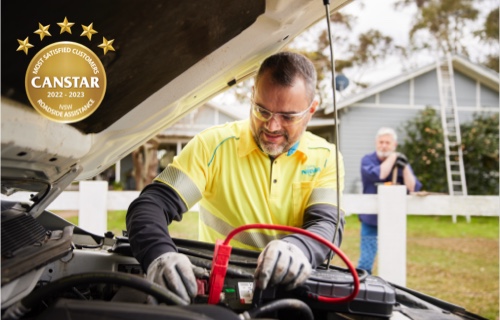








Getting your car serviced properly, for a fair price, need not be difficult
Like the meaning of life, or the relationship between the sexes, car servicing is a subject whose fundamentals seem to be beyond the understanding of mere mortals.
You take your car in for a service. It's running nicely. You get a bill for hundreds of dollars. Why?
Servicing entails a relationship of trust. You give your car to an expert, who decides what will be done and how much will be charged.
Unless you're a mechanic, you have no way of checking in detail whether in fact the work has been necessary, or properly done, or if your bill is accurate. You take the experts' word for it, pay up and drive away.
However, many car owners don't.
Consumer complaints about repairs and servicing account for around a quarter of annual car-related complaints received by state government agencies throughout Australia.
Getting your car serviced properly, for a fair price, need not be difficult. As a consumer, the usual rule for ensuring satisfaction applies: knowledge is power.
Is servicing really necessary? Yes.
Any machine needs regular adjustment and lubrication. Certain parts also inevitably wear out.
The servicing intervals for your car are determined by the engineers who designed and built it. They are expressed in kilometres or months - whichever occurs first - and are the minimum required to keep your car running normally.
Usually, service intervals are 10,000 or 15,000 km/six or twelve months. You will find them in your owner's handbook.
In severe conditions your car will need more frequent servicing. Cold weather and frequent short trips - a common car usage pattern in the city - constitutes severe conditions because the car's engine rarely reaches its normal operating temperature.
Servicing may be expensive, but the payoff comes at trade in time. A car with a complete, documented service history is worth much more that one which comes with no evidence of maintenance. This applies whether you're selling privately or offering it as a trade in.
If your car is covered by a manufacturer's warranty and develops a problem, you risk losing any claim on the warranty if you have not had the car serviced according to the manufacturer's recommended intervals and specifications.
Should I get my car serviced by the dealer I bought it from or an independent workshop?
In new car territory, you're on very solid ground with a legitimate warranty claim if you have had your car serviced by the selling dealer. The manufacturer can hardly argue with you either.
The notion that you must take your car back to the dealer you bought it from to get "looked after" for servicing is a myth. You are entitled by law to fair treatment and competent work - wherever you go.
That said, franchised dealers have access to the latest technical advice, training and equipment from the manufacturers whose cars they sell. The manufacturer has a vested interest in keeping its customers happy, so if you have a problem with the dealer's servicing the manufacturer will usually help sort it out.
However franchised dealers tend to be relatively expensive. Their workshops don't exist as a sideline to new car sales - they are often the business's cash lifeline.
A franchised dealer's spotless, high tech workshop is no guarantee of competence or knowledge of the concept of customer service.
Car manufacturers are not legally entitled to make it a condition of your warranty that you get your car serviced at one of their franchised dealers.
Let's say you have been using an independent workshop for several years and are happy with their work and charges. You can still use them when you buy a new car, and preserve your warranty rights, as long as:
- You adhere to the manufacturer's servicing schedule;
- your preferred workshop is correctly licensed; and
- genuine or approved replacement parts are used.
What's a fair price for a mechanic to service my car? Again, it depends.
It is up to the individual workshop - be it independent or a franchised dealer's service department - to set its own labour rate, so they will vary. Shop around.
Generally, the hourly labour rate starts at $45-$50 in independent country workshops. At the other end of the scale, $100 per hour is common in Sydney.
Manufacturers indicate how long each service should take in their schedule. Most cars are serviced according to an alternating minor/major system, with the minor service taking less time and costing less.
Some cars will have recommended service times listed alongside the intervals in your owner's handbook. If not, your dealer or the manufacturer can supply you with this information.
Parts are also required. At the minimum, you'll be up for engine oil and a filter.
Some workshops will put expensive, high profit fuel and engine oil additives in your car. These products are claimed to improve economy and/or prolong engine life, but the claims are doubtful. No car makers recommended the use of such additives - most in fact advise specifically against them, in some cases suggesting that their use may void your warranty.
When you put your car in for a service, insist that no additives are used.
How can I make sure I´m not being ripped off?
- Be aware of the labour rate, time required, and parts needed for the particular service you're buying - i.e. 10,000km, 40,000km - and ask for a detailed quote beforehand.
- Insist that if a mechanic finds something out of the ordinary, which requires attention and expense over and above the normal service procedure, you must be contacted beforehand to authorise the extra work, given an explanation of the problem and the cost to fix it.
- Insist that the bill is itemised in detail. Hours/rates/parts required/prices - everything should be listed. "Miscellaneous items" have a habit of costing big dollars on service bills - what exactly are they? Check the bill hours against the manufacturer's recommended hours.
- When you drive home, check that the workshop actually did the work you paid for by looking at the engine oil and tyre pressures - two basic maintenance items which you need to know how to do yourself anyway. New engine oil is translucent and honey coloured; oil which is due for replacement is black and has a burnt smell. Tyre pressures should be as per the advice in your handbook.
What can I do if I'm unhappy with the work? Complain.
Firstly, ask to speak to the service manager or, in the case of an independent workshop, the owner. Explain the problem. Most workshops will try to fix it to your satisfaction, because they want you to come back.
If this fails, and you have a relatively new car which is still under warranty, complain to the manufacturer. Most have customer assistance telephone numbers, which you will find in your owner's handbook.
The next step, if necessary, is to call a Technical Enquiry Officer at the NSW Motor Vehicle Repair Authority to discuss your complaint. This is a free service.
An officer will advise you on what steps you can take, including having an inspector help you negotiate a settlement with the workshop.
If the dispute cannot be solved by negotiation, you can apply to the Motor Vehicles Division of the Fair Trading Tribunal to hear the matter. The Tribunal will hear your claim, then make an order. You can, of course, lose as well as win.
You can contact a Motor Vehicle Repair Industry Authority Technical Officer on (02) 9712 2144 or you can reach the NSW Department of Fair Trading on 13 32 20.
NRMA Approved Repairers
The NRMA Approved Repairer scheme was established to give Members the reassurance of dealing with workshops that adhere to our strict code of ethics, which covers pricing, work standards, customer service and dispute resolution procedures.
Only when a workshop meets these standards can it display the NRMA Approved Repairer sign.
NRMA Approved Repairers are required to act in the best interests of Members. This means providing you with answers to your questions, transparent pricing and contacting you for authorisation if extra work is needed.
NRMA Approved Repairers also agree to NRMA arbitration if a Member's complaint proves difficult to solve. NRMA Approved Repairer status will be withdrawn if the repairer generates excessive Member complaints, or fails to adhere to the code of ethics.
Find the location of your nearest NRMA Approved Repairer.
Article by Bill McKinnon, January 2005