
Tips for driving in the rain
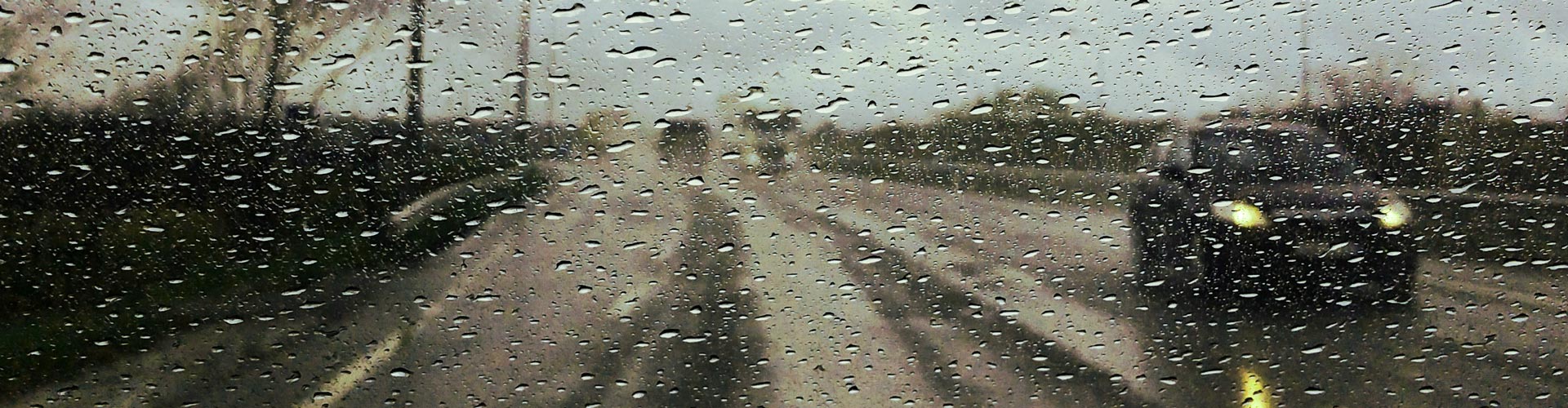
Heavy rainfall and storms in fire affected areas can lead to dangerous conditions such as road sediment, flash flooding, landslides, rock falls and falling trees. We urge motorists to put safety first and keep up to date on road closures through Live Traffic NSW before planning a trip.
At some stage motorists of all levels will find themselves driving in the rain. The fundamental thing to remember is that wet-weather driving demands you drive much slower. Expert tips from NRMA Driver Training can also help you avoid an accident when traversing wet roads. If floodwater has reached the lower level of your vehicle’s doors before receding, do not turn on the engine as it may be water-affected. Learn more about flood-hit cars here.
Below is a list of things to remember when driving in the rain.
Exercise extreme caution when a deluge follows a long dry spell
During a dry spell, engine oil and grease collect on the road. When it rains, it moistens these lubricants creating a slippery road surface. Continued rain will eventually wash away the oil, but the first few hours will be the slipperiest, so bear that in mind if you’re on the road following a rain shower.
Allow for more travel time
During rain, traffic will often be moving more slowly due to poor visibility and potentially treacherous conditions. Your normal route could even be flooded or jammed, so don’t blow a fuse if it is – everyone’s in the same car-shaped boat. Allowing yourself an extra ten minutes travel time on a rainy day will take the stress out of your commute.
Turn on your headlights
Most modern cars have daytime running lights and automatic headlights that will switch on during low-light conditions, but in an older car you may need to switch on your headlights. Not only will this help you see the road, your headlights will help other drivers see you.
Drive in the tracks of a car ahead of you
Following another car’s tracks on wet roads can reduce the amount of water between the road and your car’s tyres because the car in front is displacing it for you. Maintain a safe distance, though, and keep a keen eye on their brake lights so you can quickly anticipate their actions.
Avoid using cruise control in the rain
While claims that using cruise control in the rain can result in aquaplaning are largely apocryphal, it is true that turning it on during wet weather is potentially dangerous. Cruise control maintains a set speed and doesn’t take road conditions into account – if it’s set to 100km/h, that’s the speed it will take into a bend. Wet roads significantly affect the grip of a car’s tyres, and it can be much harder for a driver to take sudden corrective actions safely. In short, save cruise control for long, dry stretches of highway.
Brake earlier and easier than normal
This increases the stopping distance between you and the car in front of you and lets the driver behind you know you’re slowing down. Use your turn signals earlier, so that other drivers can read your intentions easily and have plenty of time to react.
Stay alert for pedestrians and cyclists
Visibility is lower and rain deadens sound, so the usual visual and audio cues for measuring car distances become obscured. Pedestrians are also impatient to get out of the rain and might make rash crossing decisions.
Take extra care near schools, intersections, and public transport stops where foot traffic is higher.
Defog your windscreen
Rain can cause your windscreen to fog up. Make sure you turn on your rear demister and defog your windscreen completely before setting out. Air conditioning (as opposed to flow-through ventilation) is much more effective at clearing windscreen fog because the air it produces is drier.
Avoid large puddles
Water splashing up into your car’s engine compartment could damage its internal electrical systems and a puddle might also be concealing a pothole, which could damage a rim or knock your suspension out of alignment. If you can’t gauge a puddle’s depth, try to avoid it if it’s safe to do so. After you are across the puddle, tap on your brake pedal lightly to dry some of the water off your rotors.
Give trucks and buses extra space
The tyres on large vehicles such as trucks and buses can splash enough water onto your windscreen to block your vision completely for a couple of seconds. Avoid passing buses and trucks in the rain whenever possible, but if you must, do it as quickly as safety allows.
Traction and stability control are helpful on rain-soaked roads
Traction control helps maintain grip by putting the brakes on tyres that are struggling for traction, while a stability control system monitors your steering input, intervening with the brakes and/or reducing engine power. These systems assist in maintaining control but do not make the vehicle immune to skidding or loss of traction. Always drive cautiously in the wet.
How to manage aquaplaning if it happens
Aquaplaning occurs when the water in front of your tyres accumulates faster than your car’s weight can push it away. The water pressure causes your car to rise up and slide on a thin layer of water between your tyres and the road. If you find yourself aquaplaning, don’t brake or turn suddenly, as you may skid. Ease your foot off the accelerator and if you must brake, do it gently. If your car has anti-lock brakes (ABS), then brake normally – the car’s computer will automatically adjust for optimal braking pressure and frequency. If your car doesn’t have anti-lock brakes, then use a light pumping action.
How to recover from a skid
If you find yourself skidding, ease your foot off the accelerator, and steer in the direction you want the car to go.
Don’t attempt to cross running water
A metre of fast-moving water can wash away most vehicles. Just 15cm can knock a person off his or her feet. Even a high-riding four-wheel drive designed for creek crossings can come unstuck in deeper or flowing water. In urban areas, most areas subject to flooding have indicators showing how deep the water is. If it’s not safe, take an alternative route or wait for the water to subside.
Keep your tyres inflated properly
Don’t put off replacing worn tyres and make sure you keep your car’s tyres inflated to the manufacturer’s recommended pressure, as grip and correct inflation make an enormous difference to stopping distances. Slow down when roads are wet, and avoid puddles to prevent aquaplaning. If you have any doubts about the wet-weather performance of your car’s tyres, get a mechanic to assess them.
Make sure your wipers are in good nick and functioning correctly
If wiper blades are brittle or damaged, they will not effectively remove water from the windscreen and may leave streaks, reducing visibility. Ensure you replace worn blades BEFORE you’re caught in a deluge. Some wiper blades are better than others, so ask The NRMA for recommendations. Not sure how to replace wiper blades? Here are six easy steps to replace your windscreen wipers.
In very heavy rain, stop
When rain is so heavy that the edges of the road and other vehicles are not visible at a safe distance, pull over and wait for the rain to ease off. If you can’t stop at a rest area and the roadside is your only option, pull off as far as possible and wait it out. Keep your headlights on and turn on your hazard warning lights to alert other drivers. Be very careful to pick a safe spot to pull over, as everyone’s visibility is dramatically reduced.


