From helping Australians transition from horse and cart to automobiles and navigating the challenges that have come with the changes in transportation, to entering into a new future of mobility – the NRMA has always championed the needs of motorists and kept people moving.
NSW branch of the National Roads Association is created to improve the State’s main roads, chaired by racing car driver Boyd Edkins.
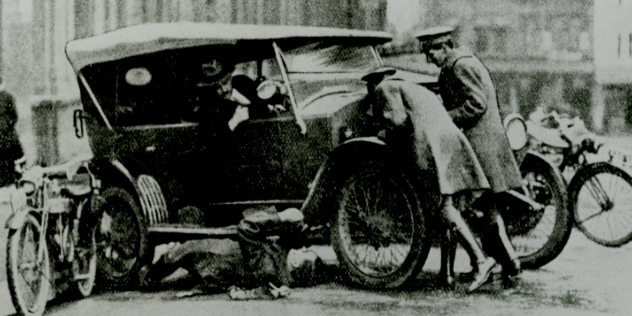
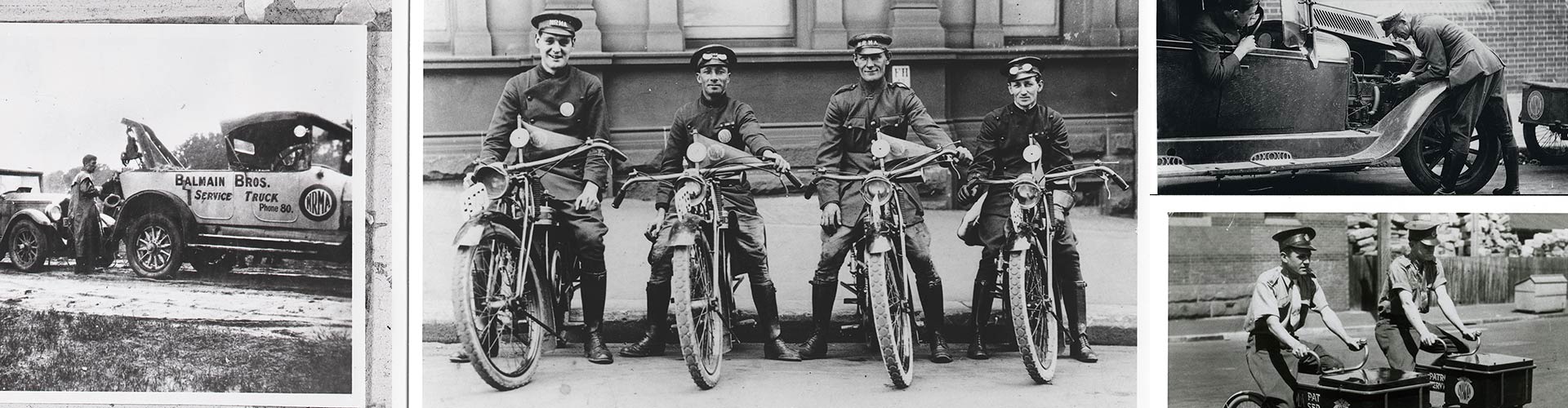
Earliest known image of NRMA road service, circa 1920
National Roads Association plans to extend its services to “cover everything necessary for the advancement and protection of motorists" and changes its name to NRMA, signalling discovery of the fundamental goal to keep people moving.
NRMA continues to lobby parliament about laws and issues affecting motorists.
By the end of the decade NRMA has successfully helped to introduce road limits. It is also credited with the improvement of road signs throughout NSW.
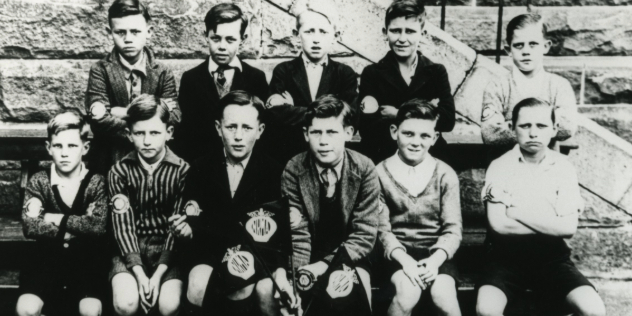
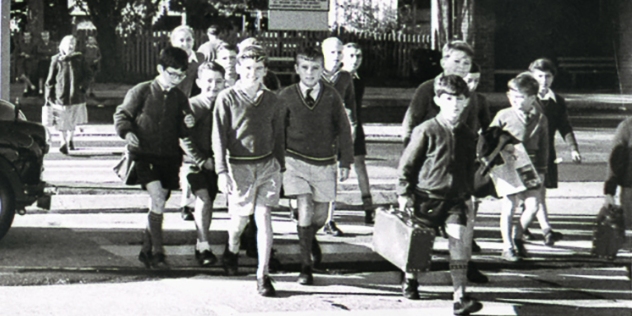
NRMA road safety initiative responsible for instigating a school safety program.

School safety program
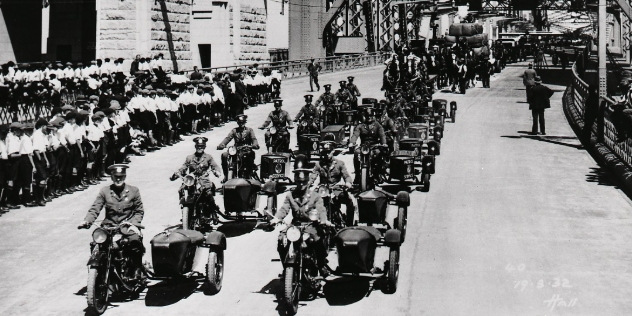
In 1932, the NRMA led the transport section in the opening procession of the Sydney Harbour Bridge – and immediately began lobbying to ban horse-drawn vehicles because they were holding up traffic.

NRMA at opening procession of Sydney Harbour Bridge
NRMA offers first-aid courses, lectures on how to drive well and safely, and continues support of school safety patrols.

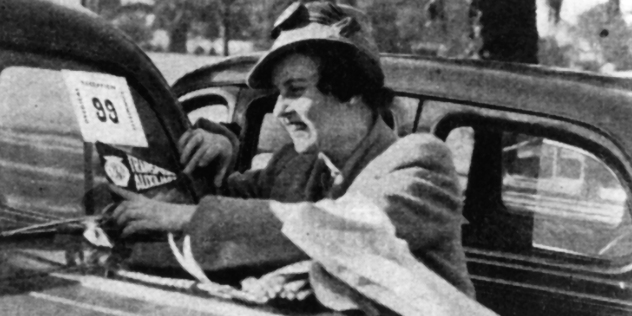
Member of Women's Auxiliary Transport Corps
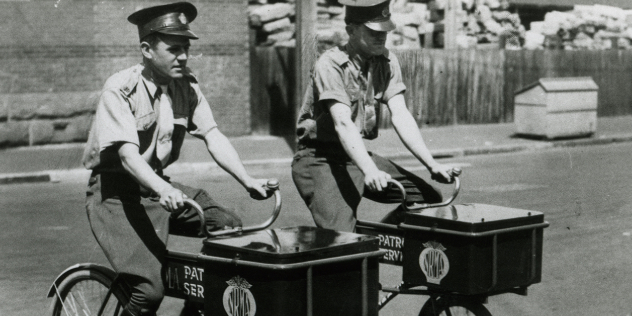
Road patrol considers the use of bicycles in CBD to save on petrol.

Road patrol bicycles in Sydney CBD
Road toll increases by one-third; NRMA starts a new road safety campaign to stem the increase.
Road death toll rises. NRMA works tirelessly to improve road conditions for the remainder of the decade.
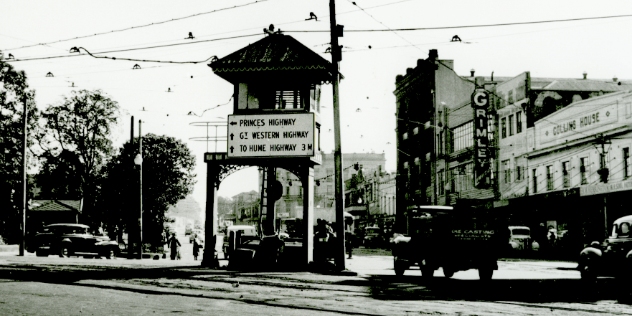
NRMA arranges for a large direction sign to be erected at the intersection of Parramatta Road and City Road, Broadway, to help deal with traffic congestion.

Traffic direction sign erected on Parramatta Road intersection
Fifty school crossings equipped with traffic lights as a result of an NRMA campaign.

School crossing equipped with traffic light
NRMA pushes to introduce practical driving courses in the secondary school curriculum after the highest death toll is recorded on NSW roads.
After eight years of campaigning, NRMA finally sees speed zones introduced on State highways.
Seatbelts become compulsory to wear in 1971 after NRMA supported the mandatory installation of approved seatbelts in 1967.
NRMA launches campaign to “alert motorists to the urgent need for Australia to conserve its crude oil resources.”
NRMA wins the Federation Internationale de L'Automobile award for road safety.
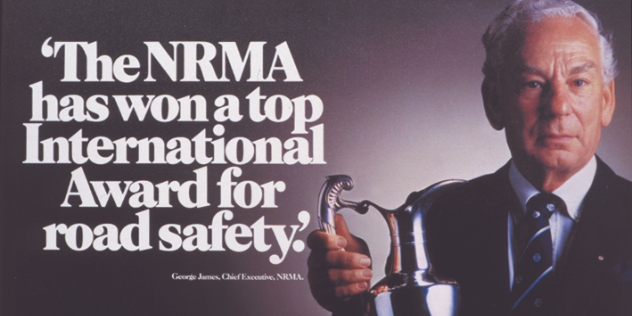
NRMA wins road safety award
Sponsorship of NRMA CareFlight begins.
NRMA persuades NSW Government to reintroduce emission testing for new cars.
NRMA launches Clean Air 2000 Campaign.
NRMA supports trials of a 50km/h speed limit in residential areas.
NRMA starts young driver education program.
NRMA KidSafe signs shown to have helped reduce the number of Road Service rescues of children accidentally locked in vehicles.
NRMA assists State Government in development of Clean Car benchmarks.
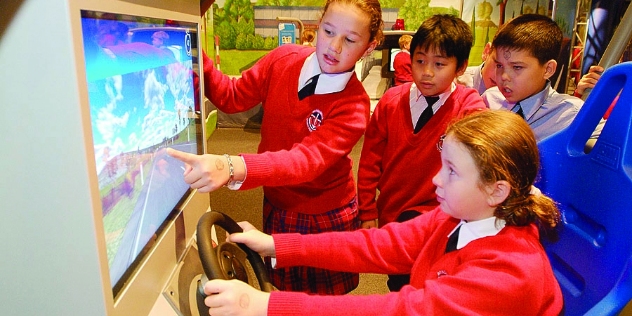
RoadZone, an interactive safety exhibition for 9-14 year olds (initially launched in 1999) is revitalised and relaunched.

Schoolchildren at RoadZone
NRMA launches Free2go Membership program offering free roadside assistance to 17 to 18 year old drivers.
NRMA announces 100 percent ownership of Thrifty Australia.
NRMA establishes partnership with Outback Links, committing to ongoing help for farmers in drought-stricken parts of Australia.
2016
-
NRMA launches Fuel Check within the
My NRMA app, providing motorists with real time information on the cheapest petrol in NSW.
- NRMA announces first Reconciliation Plan (RAP) committing to make a practical contribution towards creating positive change for Australia’s First Nations Peoples.
Artist Riki Salam's piece for the NRMA's RAP: Keep Country Moving.
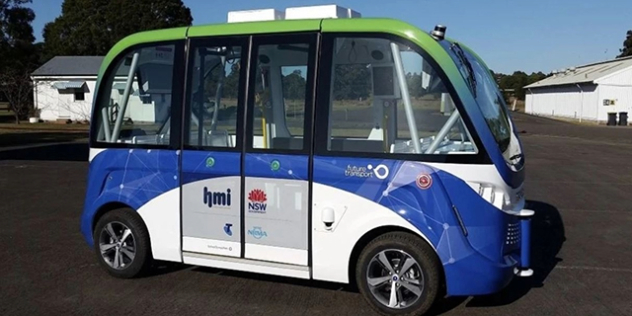
- NRMA proposes legislative change to allow the trialling of autonomous vehicles in NSW and subsequently joins the first autonomous shuttle trial in the state.
- NRMA launches the Indigenous Learner Driver Mentor Program in partnership with Australian Red Cross.
- NRMA announces build of Australia's largest electric vehicle fast-charging network, suitable for a range of electric cars and free for all EV drivers.
- NRMA increases portfolio of holiday parks to 31, acquiring Australia Tourist Park Management (ATPM).
- NRMA invests and takes ownership of Manly Fast Ferry, in a bid to broaden transport offerings for Members.
Autonomous shuttle trial, NSW
- NRMA launches NRMA Blue, a new Membership option for those looking to save through everyday discounts, while bolstering the selection of benefits for current Members with roadside assistance.
- NRMA acquires Fantasea Cruising, operators of the Palm Beach to Patonga, Ettalong and Wagstaffe ferry service.
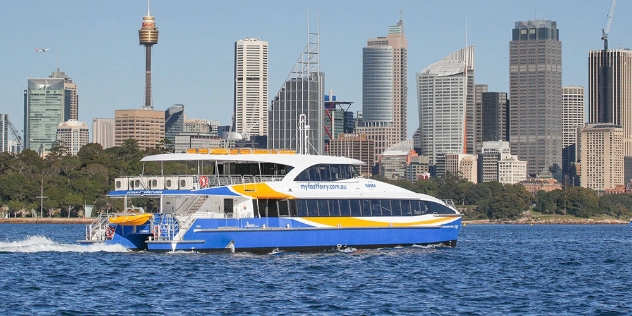
- NRMA add a new vessel to My Fast Ferry fleet, providing transport to an additional 400 passengers at a time between Manly and Circular Quay.
- NRMA publishes the 'Blue Highways' report, outlining the potential for fast ferries to play a bigger role as a heavy lifter in Sydney's transport system.
My Fast Ferry vessel
NRMA secures more than $1b in funding for local roads following the 'Rate your Road' campaign, that saw 23,000 Members nominate roads requiring improvements.
NRMA announces Centenary program to celebrate 100 years of keeping people moving.
NRMA launches SIXT, a leading global brand providing high-quality mobility services with a track record in growth and innovation.