15 weird road rules you need to know
Most NSW drivers know the big-ticket rules: don’t speed, run a red light or hold your phone. But the rule book also reaches into smaller moments, from eating a burger at the lights to leaving your keys behind for the mechanic.
Some widely shared ‘rules’ are myths, while one particularly memorable example was repealed years ago. Here’s what NSW law actually says.
1. Keep control at the lights
Using a stop at traffic lights to eat your burger or touch up your makeup might land you in more trouble than a smudge of lipstick or BBQ sauce.
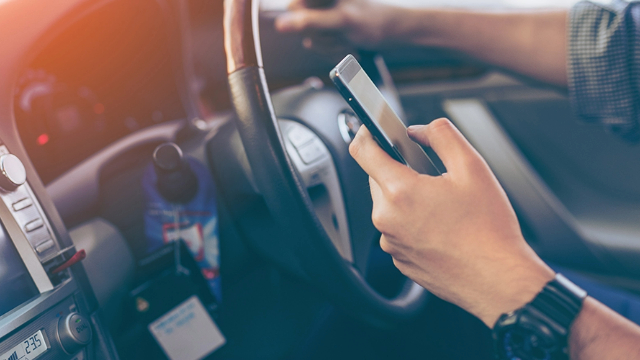
Despite what you may have heard, NSW law does not say drivers must keep at least one hand on the steering wheel at all times. Instead, NSW Road Rule 297 says you must have proper control of your vehicle.
Taking a quick bite is not automatically illegal, but juggling a burger, drink and chips while trying to pull away could be another story. If what you’re doing affects your ability to control the car, you could still be fined. The safest option is to wait until you’re properly parked.
2. Save the horn for actual warnings
Using your horn to say hello to a mate might seem harmless, but it isn’t what the horn is there for.
Under NSW Road Rule 224, you can use it when necessary to warn another road user or animal of your vehicle’s approach or position.
That means a short beep to warn a bin chicken wandering into your path may be allowed. Leaning on the horn because it looked at you funny, though, is not.
There are also exceptions for an anti-theft device or alcohol interlock.
3. Take the keys with you
Leaving your car for a moment? If you move more than three metres away from your car, NSW Road Rule 213 says you must switch off the engine. If nobody aged 16 or older remains in the vehicle, you must also remove the ignition key.
If nobody remains in the car, you must secure the windows and lock the doors. A window is considered secure if it is closed or left open by no more than 2cm.
The rule does not specifically prohibit hiding a removed key inside your car. Still, it could cause issues with your insurer if the car is stolen. If you’re considering leaving it for a mechanic or the like, handing the key over directly or using the workshop’s secure key drop is a much safer bet.
4. Think twice before flashing your headlights
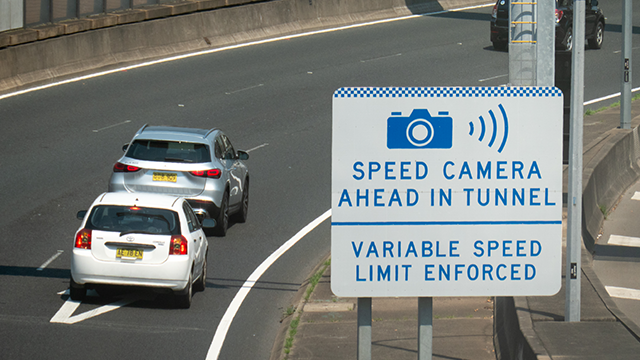
It can be tempting to flash your headlights when you spot a speed camera or police car ahead, but NSW has a direct rule covering the practice.
Road Rule 218-1 says a driver must not flash the vehicle’s headlights unless the vehicle is responding to an emergency. There is a separate allowance for briefly switching from low beam to high beam immediately before overtaking.
You must also avoid using high beam within 200 metres of an oncoming vehicle or one travelling ahead, and must not use lights in a way that dazzles another road user. In short, save the light show for situations the rules actually allow.
5. Keep your number plate clean
Your number plate needs to be clearly visible and readable from up to 20 metres away.
If it is caked in mud after a weekend adventure, hidden behind a bike rack or obscured by anything else, you could be fined. Transport for NSW also says plates must be visible within a 45-degree arc above, beside and to either side of the vehicle.
Carrying bikes? You may need an auxiliary plate mounted where it can be seen. The full requirements are explained in the NSW Government’s number plate display rules.
Giving the plate a quick wipe takes seconds. Contesting a fine will take considerably longer.
6. The mud-splashing rule is no more
This is one of the stranger NSW road rules that regularly does the rounds online, and it really did exist.
Former Rule 291-3 required drivers to take care not to splash mud on people in or around a bus, including those getting on, getting off or waiting at a bus stop.
The provision was repealed in 2020 and is now marked as repealed in the current NSW Road Rules. Splashing a waiting passenger with mud is therefore no longer its own specific road-rule offence.
It is still spectacularly inconsiderate, though, so do ease off when you see a puddle beside a bus stop.
7. When u-turns at traffic lights need a sign
This is one that many get confused about. The rule is not that every U-turn needs a sign. It depends on where you are making it.
At an intersection controlled by traffic lights, you cannot make a U-turn unless there is a ‘U-turn permitted’ sign. You can generally make one at an intersection without traffic lights unless a sign prohibits it, provided it is otherwise safe and legal.
U-turns are also prohibited across certain continuous dividing lines and on freeways. NSW Government guidance explains the differences in its U-turn and three-point-turn rules.
U-turn rules differ between states, so brush up on local rules before you cross the border.
8. Fog lights are not everyday lights
Fog lights might look impressive, but they are not designed for clear-weather cruising.
In NSW, you can use them when driving in fog, mist or other conditions that reduce visibility, including heavy rain, dust or smoke. Once conditions clear, the fog lights need to go off.
Contrary to another popular claim, cars are not required to have fog lights switched on whenever it is foggy. The NSW Government lights and horns guidance advises drivers without fog lights to use low-beam headlights in poor visibility.
9. Give intersections some breathing room
Found what looks like the perfect parking space near a corner? Check your tape measure before celebrating.
Unless a sign says otherwise, you generally cannot park within 10 metres of an intersection without traffic lights. At an intersection with traffic lights, the distance increases to 20 metres.
There is sometimes an exception on the side of the main road opposite where another road creates a T-intersection, but it does not give you free rein to park wherever you like. You must also keep at least 20 metres away from a level crossing.
These distances help drivers, cyclists and pedestrians see each other clearly. The NSW Government’s parking rules set out the details.
10. Don’t jump the ferry queue
Waiting to drive onto a ferry, punt, bridge or railway crossing? Stay in line.
Under NSW Road Rule 79-2, drivers in a line of traffic must keep as close to the left as practical and must not break out of the queue to get ahead of another vehicle.
An authorised person can allow a vehicle to take precedence at a ferry or punt, but unless someone official waves you forward, queue-jumping is off the menu.
11. Don’t crowd post boxes or fire hydrants
That convenient-looking space beside the post box may not be a legal parking spot.
The NSW parking rules say you must not park within three metres of an Australia Post letterbox, unless you are briefly stopping to post or collect mail or pick up or drop off passengers.
You must also keep at least one metre away from a fire hydrant, fire hydrant indicator or fire plug indicator. Saving yourself a short walk is not worth blocking something emergency services may urgently need.
12. No pets or people in the driver’s lap
Love having your pup along for the ride? That’s fine, but your lap is not a passenger seat.
NSW Road Rule 297 prohibits a driver from having a person or animal in their lap while the vehicle is moving. For motorcycle riders, an animal must not be carried between the rider and the handlebars.
The rule applies specifically to the driver’s lap, not every passenger’s lap. Even so, properly restraining pets is the safer choice for them, you, and everyone else in the vehicle.
13. Give five seconds’ warning before pulling out
Your indicator is meant to warn other road users about what you are going to do, not confirm what you have already started doing.
When pulling out from the side of the road or a parking area, you must indicate for at least five seconds before moving – NOT as you pull out. When turning, changing lanes, merging or making a U-turn, you must give enough warning for other road users to react.
That last-second flick of the indicator as you cross the line or pull out from a park can get you in trouble with the law or cause a nasty accident. The NSW Government explains the requirements in its indicating and turning guidance.
14. Passenger screens count too
Is your front-seat passenger catching up on their favourite show? Make sure the screen is not visible to you.
Under NSW road rules, a driver must not drive with a screen or any other visual display unit operating if its image is visible from the normal driving position. The rule applies while the vehicle is moving or stationary in traffic, but not when it is legally parked.
There are exceptions for driver aids such as navigation, reversing cameras and vehicle-monitoring equipment, provided the device is built into the car or secured in an appropriate mounting. NSW Government guidance on mobile phones, screens and GPS devices has the full details.
15. Headphones are legal, but there’s a catch
Unlike driving with a pet in your lap, wearing headphones is not specifically prohibited by NSW road rules.
However, the general requirement to maintain proper control of the vehicle still applies. If your headphones distract you, prevent you from responding appropriately, or contribute to unsafe driving, you may find yourself in trouble.
There are also stricter mobile phone rules for learner and provisional drivers, who cannot use a phone while driving even when it is operating hands-free or connected by Bluetooth.
Hope that helps! NSW’s road rules can be quirky, but most come back to the same ideas: maintain control, remain visible and predictable, and don’t make life harder for everyone around you. Learn the genuine rules, forget the myths, and keep the mud inside the wheel arches.