Uluṟu's best kept secret: Unlocking Kata Tjuṯa's Indigenous heritage

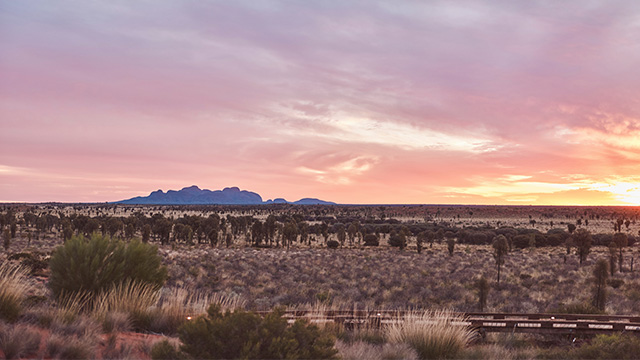
Nothing quite prepares you for the first time you glimpse Uluru – the immensity, grandeur and changing colour of the world’s largest monolith. This is the original ‘Rock’, and it is as spectacular as it is spiritual – a World Heritage-listed icon that has attained the status of a pilgrimage. It’s a sight that will sear into your mind. The Anangu Traditional Owners have been living here for more than 65,000 years.
As they have the rest of the World Heritage-listed national park, known collectively as Uluru-Kata Tjuta. Bigger, wider and taller than Uluru, Kata Tjuta – ‘many heads’ – is a mind-blowing collection of 36 enormous domed rocks, huddled about 35 kilometres west of ‘the rock’. They go shoulder to shoulder in deep valleys and steep-sided gorges, home to ancient plants that predate dinosaurs. This is, arguably, one of Australia’s best-kept secrets, barely talked about among most Australians, let alone the world.
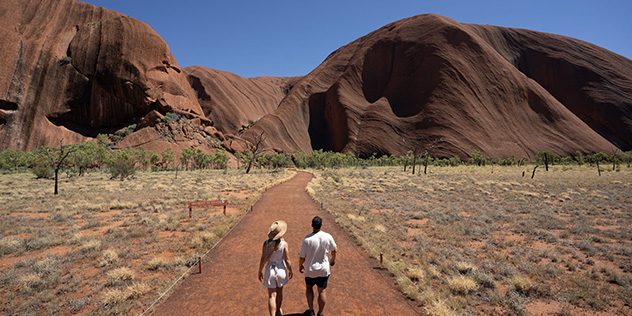
The tallest rock, Mt Olga, is 200 metres more sky-scraping than Uluru. And there are trails throughout – don’t go off track or take photos, however, because this is a sacred men’s site, and more than 65,000 years' worth of stories are preserved in these staggering domes.
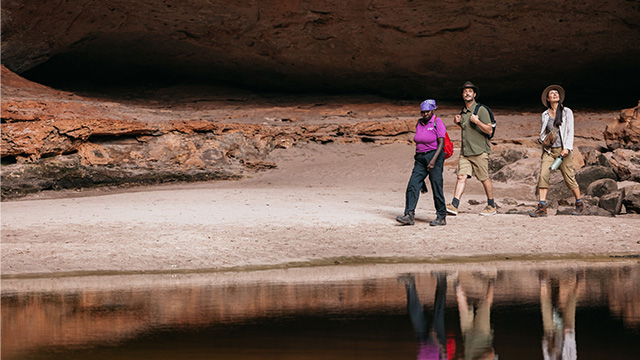
You’ll learn these finer points of Anangu etiquette on a tour through the region with Sammy Wilson from SEIT Patji. Sammy (whose original name is Tjama Uluru) is a legend in these parts, and the grandson of Paddy Uluru. He guides visitors through parts of the Red Centre's most dramatic landscapes, weaving through the Mars-like landscapes on a walk that will take your breath away on so many levels. Groups of tiny birds lift into a mad, twittering flight above you.
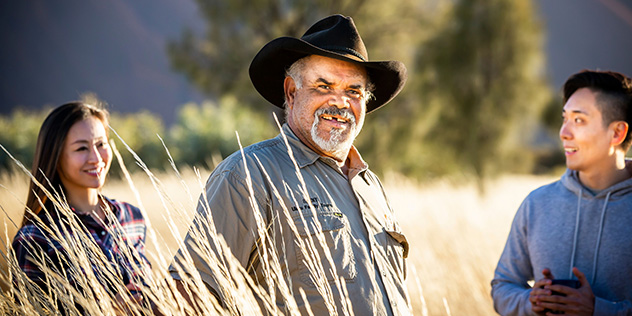
You’ll pass giant, popcorn-shaped pieces of ochre-coloured rock. And ancient cycads ease into the chasms, like they need a crutch – but they have been holding that very same position for centuries. End your tour at sunset taking in the great expanse of the desert overlooking Uluru and Kata Tjuta.
Like Uluru, Kata Tjuta is made of rusting rock, but the latter is a series of several domes, rather than one massif, that rise unbidden from the flat red surrounds, an oversized collection of marbles balancing on top at improbable angles.
The other reason for Kata Tjuta’s exceptionality is that, to the Anangu, Kata Tjuta is a place of particular cultural significance – so much so that the domes have the rare distinction of having dual World Heritage status, both for their Indigenous cultural importance as well as for their natural beauty.