
Fresh EV cascade: the new electric vehicle arrivals coming in 2026
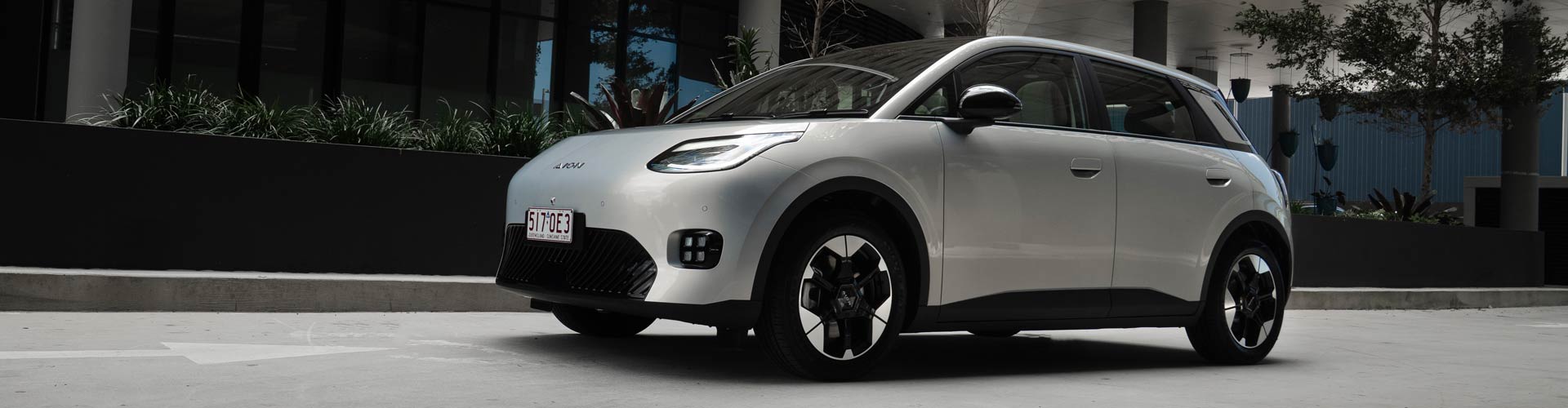
The steady drip-feed of EV announcements for Australia is turning into a much broader wave for 2026. Established brands and newer arrivals alike are locking in more battery-electric models, spanning everything from city hatchbacks and family SUVs to electric utes and high-end performance cars. Keep an eye on Open Road’s electric car reviews for all the best electric SUVs in Australia as we put these through their paces when they come to market.
BMW iX3
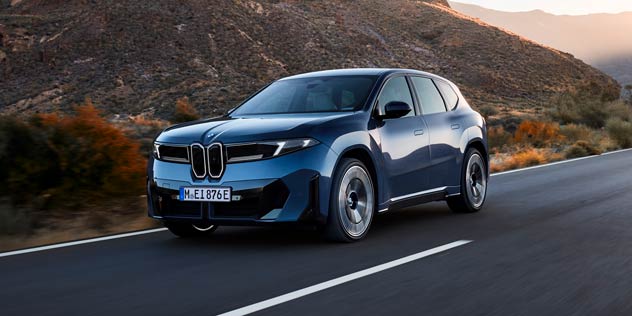
BMW’s new iX3 is due in Australia in mid-2026, priced from $109,900 before on-road costs.
As the German carmaker’s first Neue Klasse model, the launch edition is the iX3 50 xDrive which uses dual-motor all-wheel drive with 345kW and 645Nm. Battery size is 108kWh, with a claimed 805km of WLTP range. BMW says DC charging can peak at 400kW, while AC charging is 22kW. It is a mid-size electric SUV, but the standout figure here is range, which on paper puts it right at the sharp end of the segment.
All-new BMW i3
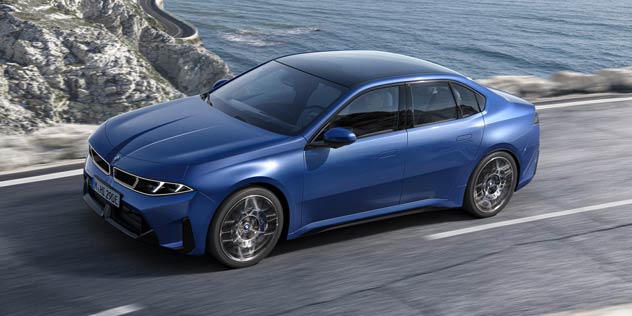
BMW’s new i3 is not due in Australia until 2027 but is already shaping as one of the longest-range EVs on the horizon. Pricing is still to be announced.
The first variant confirmed is the i3 50 xDrive, a mid-size electric sedan with dual-motor all-wheel drive. BMW quotes 345kW and 645Nm, plus up to 900km of WLTP range. DC charging is rated at up to 400kW and AC charging at 22kW. Despite reviving the i3 name, this is a proper sedan rather than a small hatch like the German carmaker’s first-generation electric model.
GAC Aion V
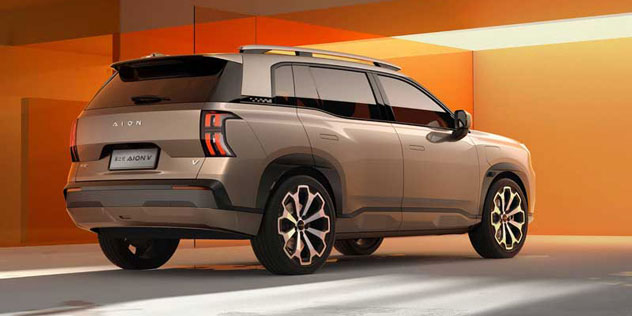
The GAC Aion V is a five-seat medium electric SUV that was launched in late 2025 ahead of its market arrival. It uses a 75.26kWh battery, with a single front-mounted motor producing 150kW and 210Nm. Claimed WLTP range is 510km.
Charging is rated at 11kW AC and up to 180kW DC, with GAC quoting 10 to 80 per cent in 24 minutes, while a very competitive battery warranty (eight-year/200,000km) makes a compelling case. Pricing starts from $42,590 for a Premium trim and $44,590 for a Luxury trim before on-roads.
GAC Aion UT
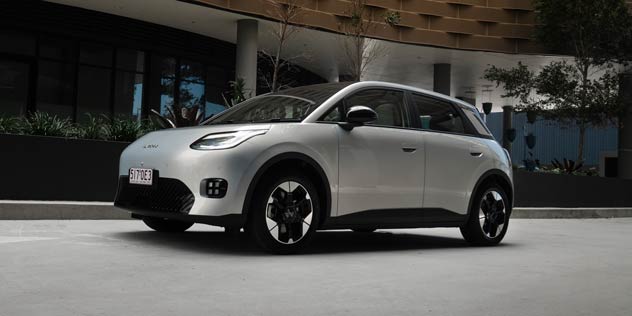
GAC’s Aion UT is due from Q2 2026 as a compact electric hatch aimed at the affordable end of the market. Pricing starts from $31,990 for the Premium and $35,990 for the Luxury.
The UT uses a 60kWh battery and offers up to 430km of WLTP range, with more specs to come. This is a five-door hatchback pitched mainly at urban buyers, with a focus on value and standard equipment rather than outright performance. The same competitive battery warranty as the Aion V (eight-year/200,000km) also makes the Aion UT a decent value proposition.
Geely EX2
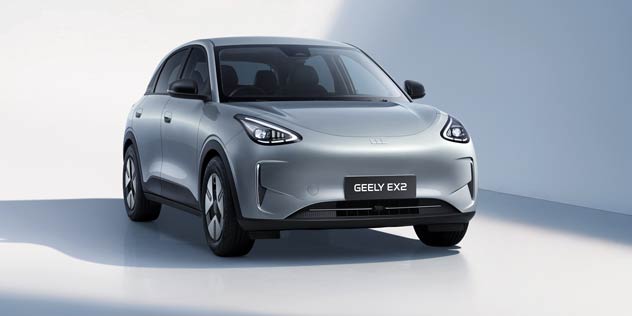
Geely’s EX2 is due in Australia in the second half of 2026 as a small five-door electric hatch. Pricing is still to be announced.
The EX2 is rear-wheel drive and positioned as a more affordable, city-friendly EV that measures 4100mm long on a 2650mm wheelbase. Range is expected at around 310km, with battery, power and torque figures to come closer to launch.
Honda Super-One
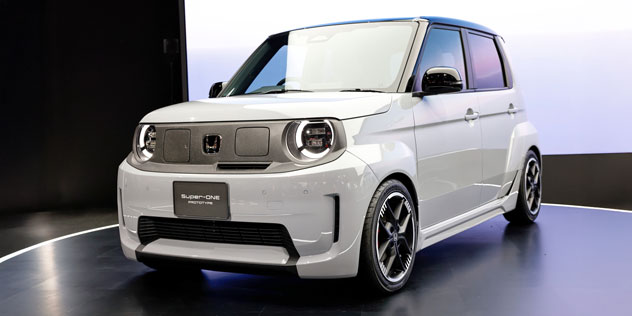
Honda’s Super-One is due in Australia in 2026 as a tiny, kei-inspired city EV. It measures less than 3600mm long and less than 1600mm wide, with a weight of about one tonne.
Expected range is around 300km, but battery size, power and torque have not yet been confirmed. Honda is instead leaning heavily on the car’s playful character, including Boost Mode, synthetic engine noise, and simulated gear changes. It is clearly aimed at urban buyers who want something small, light and a bit more engaging than the average city EV.
Hyundai Elexio
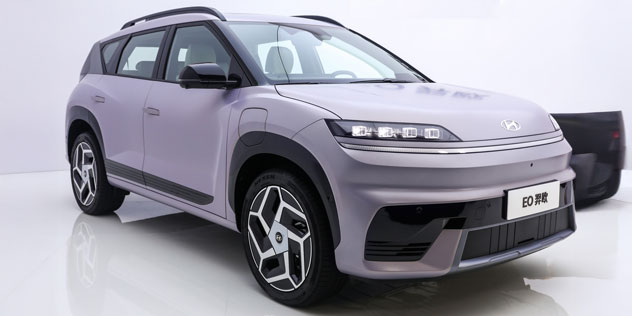
Hyundai’s Elexio is due in Australia from early 2026 as a family-focused electric SUV. It uses an 88.1kWh battery and Hyundai quotes a 722km CLTC figure, which the supplied text says should translate to roughly 550km WLTP. Pricing, power and torque are still to be confirmed.
Charging from 30 to 80 per cent is claimed to be around 27 minutes. Luggage space is listed at 506 litres, expanding to 1540 litres.
Jaecoo J5 EV
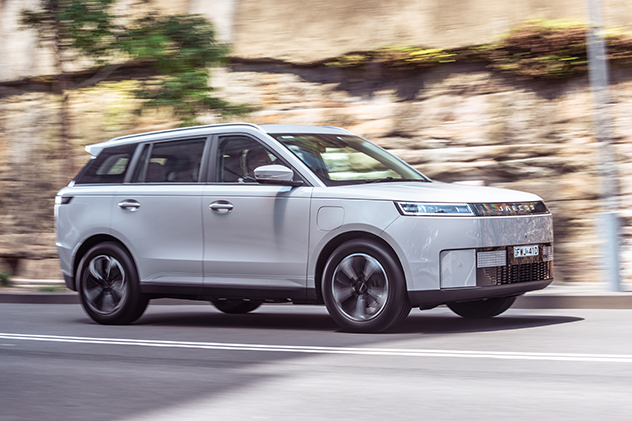
The Jaecoo J5 EV is a compact electric SUV expected in early 2026, with pre-orders already open. Priced from $35,990 and available in a single variant, it uses a 60.9kWh battery, a single motor with 155kW and 288Nm, and a claimed WLTP range of 402km.
DC charging is listed at 130kW, with a claimed 30 to 80 per cent top-up in 30 minutes. It also brings a 480-litre boot and a fairly straightforward family SUV brief.
KGM Torres EVX
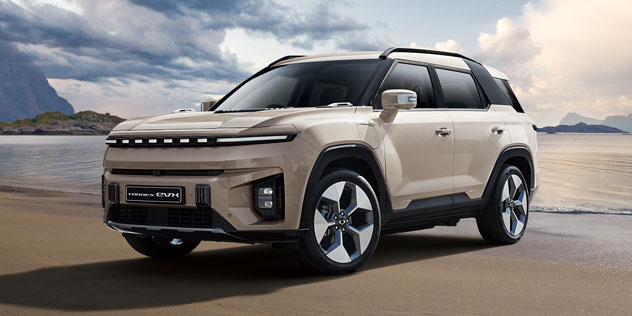
KGM’s Torres EVX is a medium electric SUV offered in a single variant priced from $58,000 before on-road costs. It uses an 80.6kWh LFP battery and has a claimed WLTP range of up to 462km.
DC charging from 10 to 80 per cent is quoted at around 42 minutes on a 100kW charger (KGM doesn’t quote the max charge speed but says at 300kW it is only five minutes faster). It also offers 1500kg braked towing capacity and a 465-litre boot, expanding to 1526 litres with the rear seats folded.
Mazda 6e
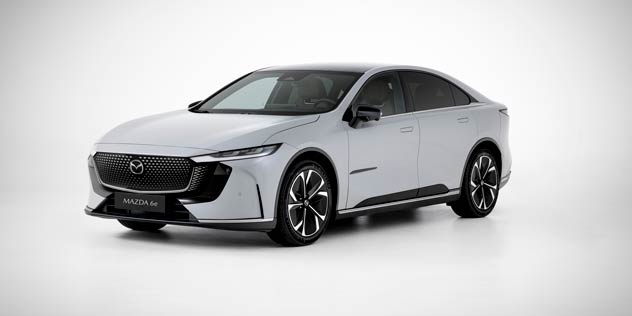
The all-electric Mazda 6e is due in Australia around mid-2026 as a rear-wheel drive electric sedan aimed at the Tesla Model 3 end of the market. This mid-size sedan is larger than the old Mazda 6, with a starting price of $55,000 before on-road costs.
Australian versions get a 78kWh LFP battery and a single rear-mounted 190kW electric motor, with WLTP range quoted at 500km. Torque is yet to be confirmed locally, though European figures point to 320Nm.
Mazda CX-6e
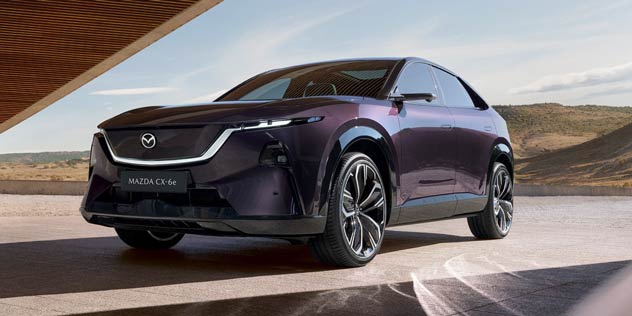
The Mazda CX-6e is due around the middle of 2026 as the SUV counterpart to the 6e sedan, and presents as a rival for cars like the Tesla Model Y. Final Australian pricing is still unknown.
European market details suggest a rear-wheel drive mid-size SUV with a single 190kW/290Nm electric motor and a 78kWh LFP battery. Claimed WLTP range is 483km, while DC fast charging peaks at 195kW. The CX-6e measures 4850mm long with a 2902mm wheelbase, which puts it squarely in family SUV territory.
MG4 Urban
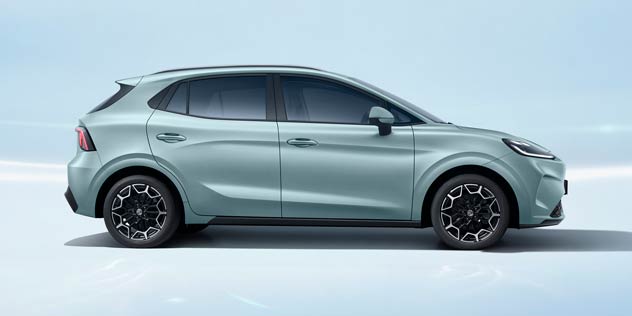
MG’s new MG4 Urban is tipped to land in the $30,000 to $35,000 range as an affordable electric hatch. Two battery sizes are planned, 43kWh and 54kWh, though final local range figures are still to be confirmed. It uses a front-wheel drive layout and offers a 382 litre boot. Full local specs are not yet announced, but the brief is clear: this is MG’s value-focused MG4 aimed at budget-conscious buyers.
MG U9
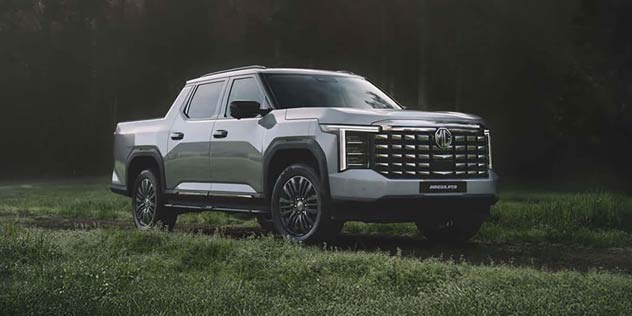
MG’s U9 is shaping up as a full-size electric ute, though final launch timing, pricing, battery size and range are still unknown.
What is known is that it uses dual motors with outputs of 200kW and 125kW for a combined 325kW, driving all four wheels. It is a large five-seat utility measuring 5500mm long, 1997mm wide and riding on a 3300mm wheelbase. Braked towing capacity is listed at 3500kg, with gross vehicle mass also at 3500kg. On paper, it is pitched as a proper work-and-family electric ute rather than a soft lifestyle model.
Polestar 5
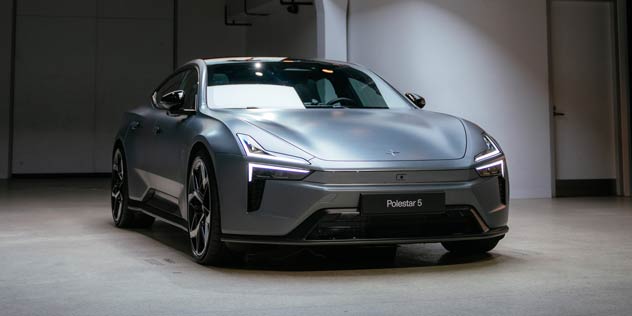
The Polestar 5 is due in Australia in 2026 as a large four-seat electric GT priced from $171,100 before on-road costs.
It uses a 112kWh battery, with claimed WLTP range of 678km. Outputs are 550kW and 812Nm, and Polestar quotes 0-100km/h in 3.9 seconds. DC charging peaks at 310kW and AC charging at 11kW. It sits at the more expensive end of the market, but the headline numbers make it one of the more serious long-distance performance EVs on the way.
Škoda Enyaq RS and Enyaq Coupé RS
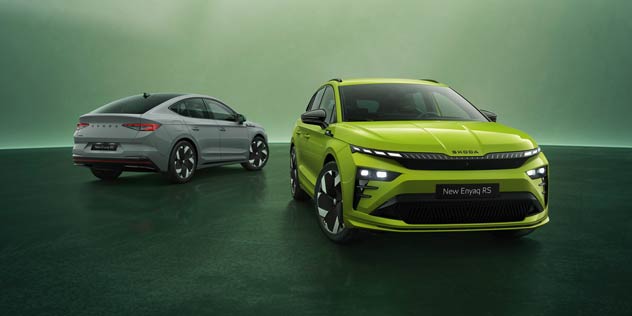
Škoda’s updated Enyaq RS range includes both SUV and coupé body styles, with pricing from $75,490 for the SUV and $76,490 for the Coupé.
Both use a 79kWh net battery and dual-motor all-wheel drive producing 250kW and 545Nm. WLTP range is quoted at 523km for the SUV and 534km for the Coupé. Škoda says DC fast charging peaks at 185kW, with a 10 to 80 per cent top-up in about 26 minutes. While these are the performance flagships of the Enyaq line-up, they still have a family-friendly bent.
Subaru Trailseeker
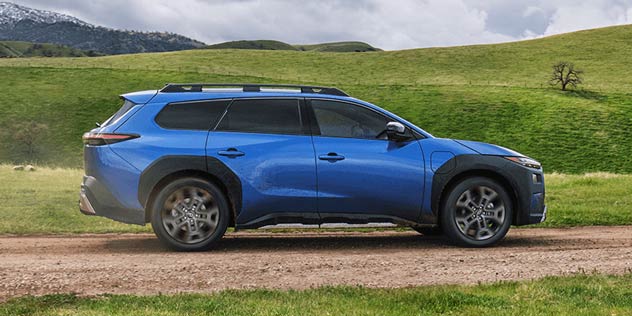
Subaru’s Trailseeker is due in Australia in Q2 2026 as a larger, more adventure-focused electric SUV than the Solterra. Pricing is still to come, but specs include a 74.7kWh battery and dual-motor all-wheel drive, with total output of 280kW.
Subaru quotes up to 533km of range under ADR 81/02 testing (which will be around 30 per cent less in the real world), plus a 10 to 80 per cent DC fast charge time of around 30 minutes. Ground clearance is 211mm and braked towing capacity is 1500kg, giving it a more rugged nature than many rival electric SUVs.
Subaru Uncharted
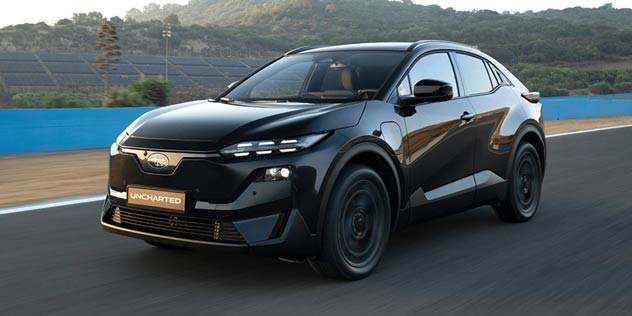
Subaru’s Uncharted is due in Australia in mid-2026 as a smaller electric SUV with a sportier brief than its siblings, the Solterra and Trailseeker. It will sit in the fastback-style end of the market and, on paper at least, looks aimed at buyers who still want Subaru’s usual all-wheel drive flavour in a more compact EV package. Pricing is yet to be confirmed.
Power comes from a dual-motor all-wheel drive set-up producing 252kW, backed by a 74.7kWh battery and a preliminary WLTP range of up to 522km. Subaru says DC fast charging peaks at 150kW, with a 10 to 80 per cent top-up in about 30 minutes, while standard Subaru touches like 211mm of ground clearance, X-Mode and downhill assistance control help make it a more SUV-like drive than many electric rivals.
Suzuki eVitara
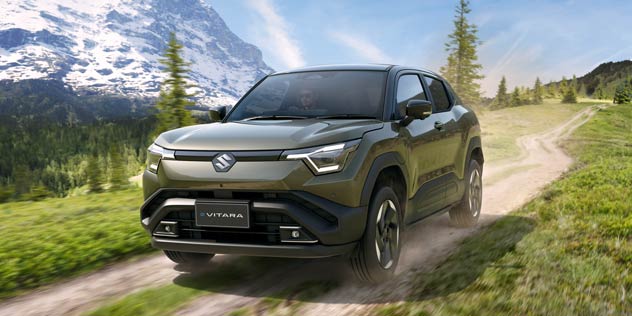
Suzuki’s first EV for Australia is due around June or July 2026. The eVitara is a small electric SUV expected to start above $50,000, though pricing is not yet locked in.
Two versions are planned. The Motion uses a 49kWh battery and a front-mounted motor making 106kW and 193Nm. The Ultra steps up to a 61kWh battery and dual-motor all-wheel drive with 135kW and 307Nm. Claimed WLTP range sits between 344km and 395km depending on the variant, and Suzuki quotes a 10 to 80 per cent DC charge time of 45 minutes.
Tesla Model Y L
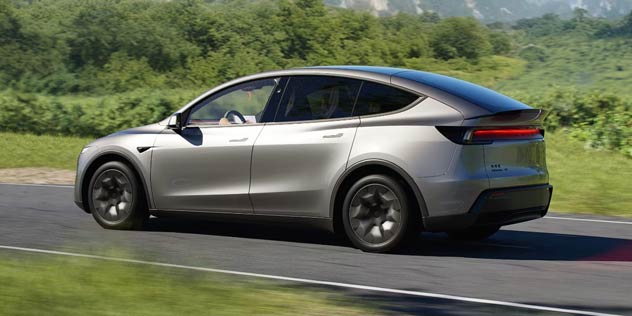
The Model Y L is Tesla’s longer-wheelbase, six-seater three-row version of the Model Y, due in Australia between June and July 2026. It is listed at $74,900.
This larger SUV brings all-wheel drive, six seats, a claimed 681km WLTP range, a 0-100km/h time of five seconds and a 201km/h top speed. Tesla is also pitching it on cabin space, adaptive suspension and vehicle-to-load capability.


