Pedestrian and cyclist deaths spike as NSW road toll rises in 2025

NSW has recorded a troubling rise in road deaths in 2025, with pedestrians and cyclists accounting for the sharpest increases, according to the latest national road-toll statistics.
The new figures underscore growing safety challenges for vulnerable road users, even as Australia’s road toll continues to perform comparatively well on a per capita basis against other developed nations.
Nationally, Australia recorded 1314 road fatalities in the 12 months to December 31, 2025 – a 1.7 per cent increase on 2024 and the fifth consecutive year-on-year rise, noting historical lows during the pandemic. While the upward trend is concerning, Australia’s road toll remains well below historical highs and, when adjusted for population growth, continues a longer-term downward trajectory.
On a per capita basis, Australia recorded approximately 4.9 deaths per 100,000 people in 2025, down significantly from more than 30 deaths per 100,000 in the early 1970s. Compared with many OECD countries, Australia – and NSW in particular – continues to rank among the safer jurisdictions for road travel, despite recent setbacks
NSW recorded 355 road deaths in 2025, an increase of 28 lives lost compared with the previous year. The state also experienced a rise in its per capita fatality rate, from 3.9 to 4.1 deaths per 100,000 people, making it the only large jurisdiction to record a clear increase on this measure. Tasmania also saw a per capita rise, while other states and territories remained steady or declined.
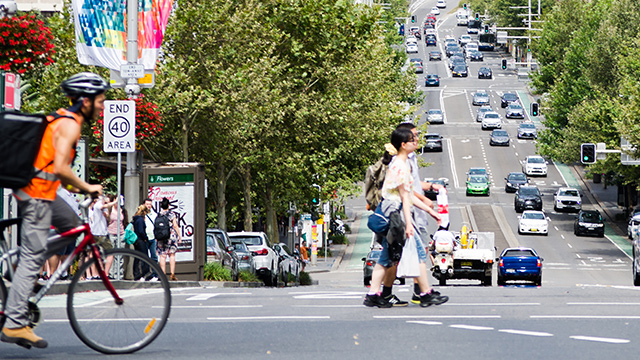
Within the NSW figures, vulnerable road users were overrepresented. Cyclist fatalities rose sharply, increasing by 200 per cent year-on-year, while pedestrian deaths climbed by 25.6 per cent. Motorcycle deaths were also up 11.6 per cent, despite a national decline of 4.3 per cent in rider fatalities. These trends point to a growing need to better protect those most exposed on the road network.
Across Australia, vulnerable road users accounted for 512 deaths in 2025, including 197 pedestrians and 49 cyclists – increases of 13.2 per cent and 32.4 per cent respectively. While these numbers remain lower than those recorded for vehicle occupants, the rate of increase has outpaced other road user groups.
The Australian Automobile Association said the 2025 figures represented the longest sustained rise in road deaths in more than 70 years and renewed its call for a national crash investigation body to better understand the underlying causes.
“The starting point to addressing our worsening road toll is to understand what’s causing it to rise in the first place,” said AAA chief executive Michael Bradley.
— Michael Bradley, AAA chief executive
The 2025 data also showed that single-vehicle crashes continue to account for the majority of fatalities. In total, 675 fatal crashes involved a single vehicle, up 7.5 per cent on 2024, while fatal multi-vehicle crashes fell slightly to 547.
Men continued to account for the majority of road deaths, with 997 fatalities recorded in 2025, a 3.3 per cent increase year-on-year. Female fatalities fell to 317, down 2.2 per cent.
NRMA spokesperson Peter Khoury said the NSW results reinforced the need for a broad, evidence-based approach to road safety, rather than reactive policy responses.
“There’s no single fix,” Khoury said. “We need better enforcement, better education and better roads. Police remain our most effective enforcement tool, supported by technology where it makes sense, and long-term investment in safer infrastructure is critical.”
While the rise in fatalities – particularly among pedestrians and cyclists – is a sobering reminder that progress cannot be taken for granted, the broader picture shows Australia remains a global leader in road safety outcomes. The challenge for NSW and the nation is to arrest the recent upward trend while continuing the long-term gains that have saved tens of thousands of lives over the past five decades.