How to watch the 2026 Formula 1 Australian Grand Prix
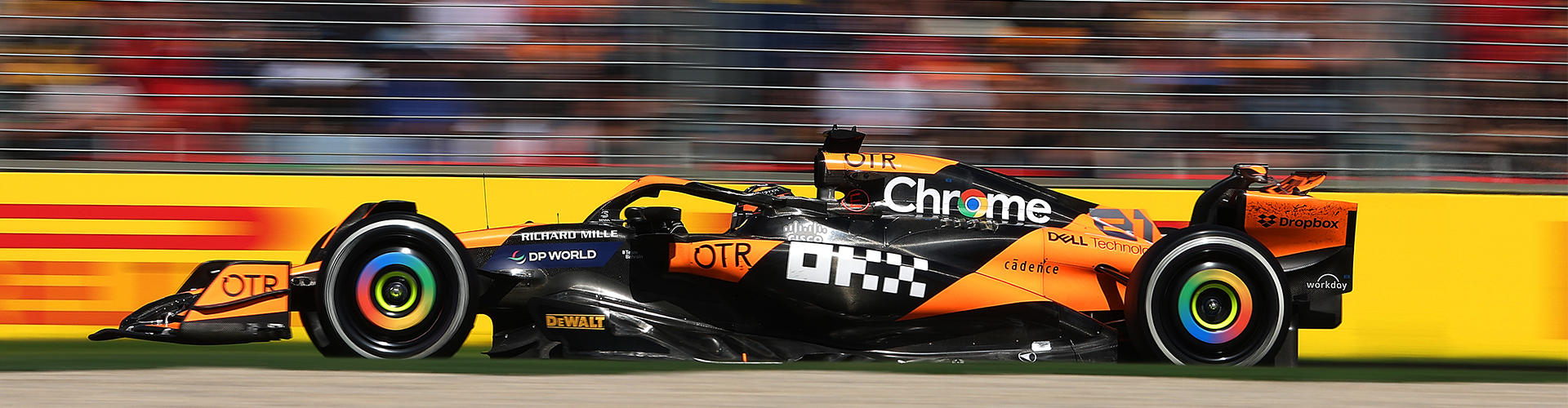
Australia has long played host to the inaugural round of the Formula 1 calendar, and in 2026 Melbourne’s tricky street circuit will again challenge drivers as they chase victory around converted Albert Park roads.
A baptism of fire for teams and drivers alike, the Australian GP also gives a glimpse into how the competition stacks up in real race conditions, and how fruitful off-season testing and development has really been.
Formula 1 has had a big shake-up entering into the 2026 championship, and Melbourne will act as a brutal proving ground for an all-new era of design regulations and cars, new teams, and some new drivers.
With stakes high and some big questions set to be answered, the world will have its eyes on Melbourne for the Australian GP. Here’s how you can catch the action too.
When is the 2026 Formula 1 Australian Grand Prix?
The 2026 Australian Grand Prix will span three days from Friday the 6th to Sunday the 8th of March.
Practice 1 and 2 will run on the Friday from 12:30-1:30pm and 4-5pm AEDT respectively, giving fans and teams a first glimpse at how this new generation of F1 cars handle Melbourne’s unforgiving conditions.
Saturday will host the final practice session from 12:30-1:30pm, with teams only afforded 2.5 hours of tweaking and setup finalisation before qualifying decides the starting grid at 4-5pm.
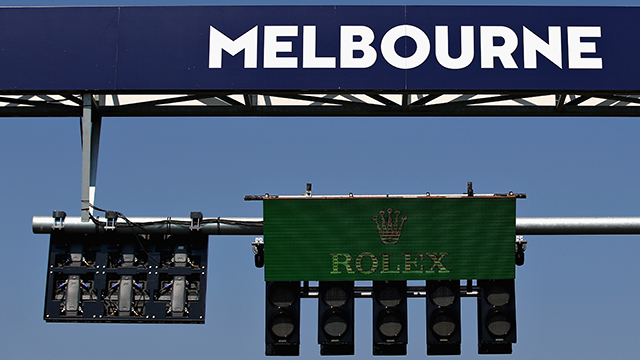
On Sunday, the 2026 Australian Grand Prix will begin at 3pm. The race should run for about 90 minutes, however this can be longer or shorter depending on whether there are incidents requiring a safety car deployment or race restart.
How to watch the 2026 Formula 1 Australian Grand Prix
For fans who just want to catch Sunday’s race without splurging for a subscription service, the 2026 Australian Grand Prix will be broadcast on Channel 10 – as well as 10 Bold and 10 Play channels.
Foxtel and Foxtel Now will offer coverage of each F1 practice session, qualifying and the race in up to 4K resolution.
Kayo Sport adds another dimension to the spectacle with on-screen statistics and additional views.
What’s new in Formula 1 in 2026?
The results of some sweeping changes to Formula 1 will be revealed in Melbourne at the 2026 Australian Grand Prix. Here’s a quick look at what to expect:
New cars
2026 will herald an all-new generation of design and technical regulations for Formula 1. The result? Brand new cars and (hopefully) even better racing.
Shorter, narrower and lighter, 2026 F1 cars will are designed to make overtaking easier and more organic than their predecessors allowed. Aerodynamics have been overhauled to allow drivers to follow each other more closely, so expect a lot more close quarters combat.
Powertrains will also move to a 50/50 split between combustion and electric power, giving drivers more scope for strategic deployment of their batteries for more acceleration.
New teams
For the first time in 10 years, Formula 1’s running will have 11 teams and 22 cars – up from 10 teams and 20 cars.
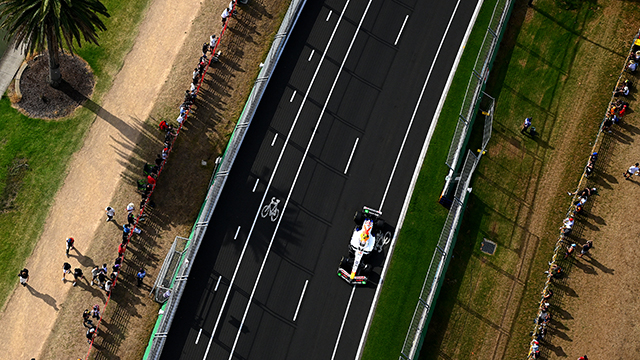
Cadillac joins the grid in 2026, alongside Audi (rebranded from Sauber), with all other teams – including Red Bull Racing, Racing Bulls, Mercedes, McLaren, Haas, Ferrari, Williams, Aston Martin and Alpine – returning.
New drivers
The 2026 season will also see a new driver get into an F1 cockpit for the first time when England’s Arvid Lindblad will join Racing Bulls (Red Bull Racing’s junior team) alongside Kiwi Liam Lawson.
Okay, ‘new’ might be a bit of a stretch here, but 2026 will also see the return of Sergio Perez (formerly Red Bull Racing and Max Verstappen’s teammate) and Valtteri Bottas (formally Mercedes, wing manning Lewis Hamilton).
Paired up as the drivers for debutant Cadillac, there is a lot of excitement about what might happen when you combine two veterans of the sport with a brand-new team.
How NRMA members can save on the 2026 Formula 1 Australian Grand Prix
Heading to Melbourne for the race and looking to save some cash?
Members save on Melbourne accommodation including Rydges Hotels & Resorts, QT Hotels & Resorts, and Independent Collection.
Planning a drive to Melbourne or into its surrounds while you’re there? Members also save on SIXT car rental and don't forget to download the My NRMA app for cheap fuel, dining discounts and more.