Simply Amazing: An Art-Filled Road Trip through Central NSW

A sculpture trail in Central New South Wales adds another dimension to a rural road trip.
From small things, big things grow.
It started with the letter ‘a’, which sat alone for three years. As funds grew and farmers and tradespeople volunteered their time and skills, more 2.5m steel alphabet characters materialised.
In 2017, to much excitement, seven bright red letters rolled through the Central NSW town of Forbes on the back of a semi-trailer, en route to their permanent home among golden grasses and river red gums west of town. It was the first installation of Sculpture Down the Lachlan (SDL), an art trail following a 100km section of the Lachlan River, Australia’s fourth longest, between Forbes and Condobolin.
Spelling ‘amazing’, the sculpture became a metaphor for what the community had achieved, and motivation for their ambitious plan for a world-class art trail. Council adopted it as their tourism tagline: Amazing Forbes NSW.
From one sculpture to an art trail
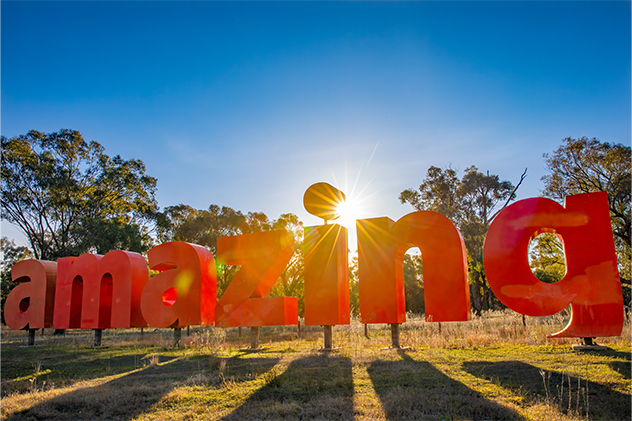
Amazing was designed by local artist Rosie Johnston, who conceived SDL after visiting Bondi’s Sculpture by the Sea in 2011. Her vision for large-scale artworks immersed in the Australian landscape, attracting tourism and diversifying the rural economy, was eagerly taken up by Forbes Art Society and supported by council and government grants.
Following drought, COVID, mouse plague and floods, SDL officially opened in 2024. We’re here on an art-themed road trip, adding Parkes to make it a triangular route.
“Forbes is a quintessential country town, but it’s got a quirky edge,” says tourism manager Nina Hooper at the visitor centre in an artfully repurposed shearing shed.
“The thing I love is in the middle of our very traditional country town we’ve got a Gillie & Marc statue, which is really cool.”
Cool and controversial, says councillor and artist Michele Herbert of The Pyramid in Albion Park, representing love and acceptance, the nudity of Rabbit Woman and Dogmen having garnered letters of complaint.
“But it makes you think,” says Nina.
“And that’s what art is supposed to do.”
The sculptures, 12 in town and 13 along Lachlan Valley Way, tackle themes of nature, history and culture, and issues including conservation, rural challenges, immigration and Indigenous injustice.
There are humorous ones too, like bronze mongrel Leroy lifting his leg on a street pole and Rosa the bronze kelpie, both by artist Brett Garling of Dubbo, waiting for her master outside the Post Office.
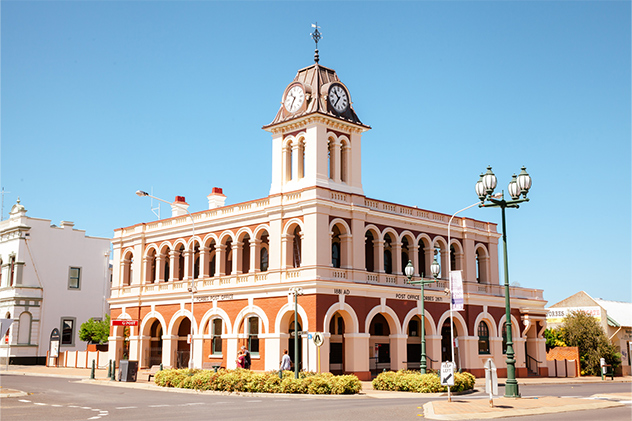
Forbes historic Old Post Office building
Forbes: art, history and country life
Art is vital for rural communities, says Coralie Crouch, who teaches pottery from her home studio, with students travelling from Parkes for lessons. She says it’s more difficult for people to find time for hobbies now, though, especially working women.
Michele, also chair of council’s heritage committee, hopes the town’s new art and culture centre, being built in the old ambulance station, will facilitate more opportunities for art, with its workshop and event spaces.
Civic pride is palpable, with smartly painted gold-rush-era buildings around formal Victoria Park. We lunch at Vandenberg Hotel, where Henry Parkes, known as the Father of Federation, addressed 2000 people from the balcony in 1887.
Lake Forbes, an annexed oxbow of the Lachlan River, curves through town, edged by parklands, playgrounds and a free camping area. We walk sections of the 10km lake track, taking in the Wiradjuri Dreaming Story Poles, which offer insight into local Indigenous culture. There’s plenty of history here too, at the museum and cemetery, where bushranger Ben Hall is buried.
Sleeping in a silo
Hot wind blows dry seed heads across the road like tumbleweeds as we head to Top Paddock Silo Stay.
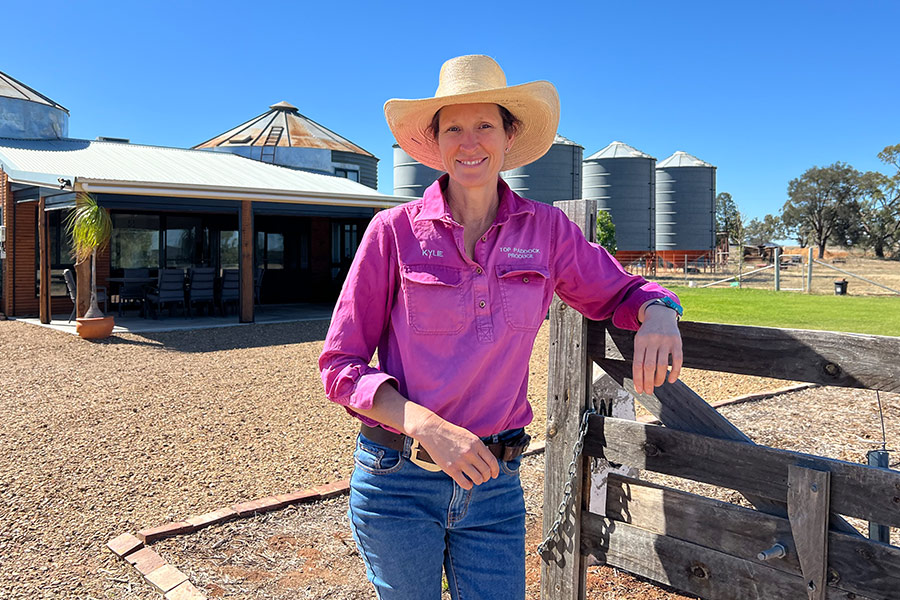
Owners of the beef property beneath Mount Tallabung, Kylie and Adrian Matthews, have joined two old wheat silos with an open-plan kitchen and dining room. It’s a celebration of corrugated iron, polished concrete, timber and glass.
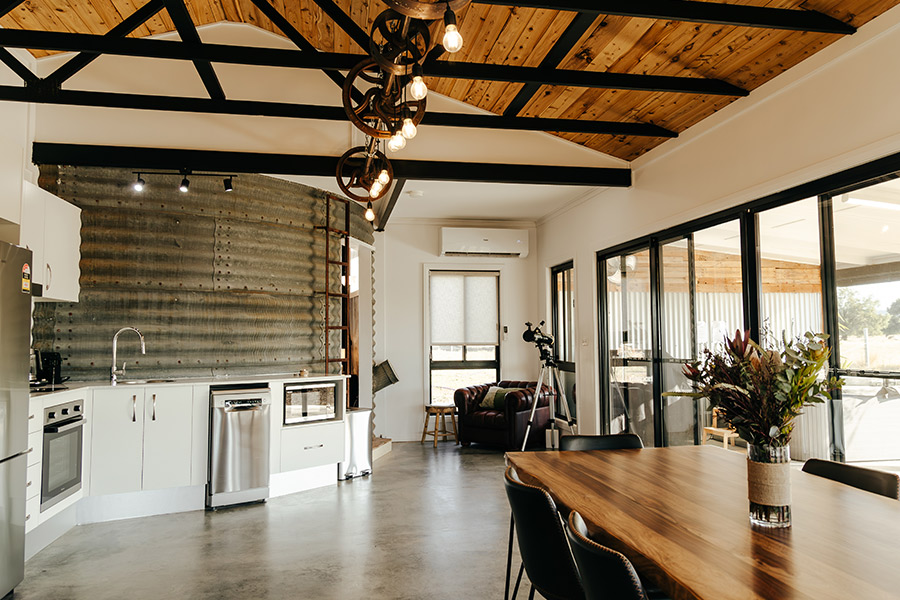
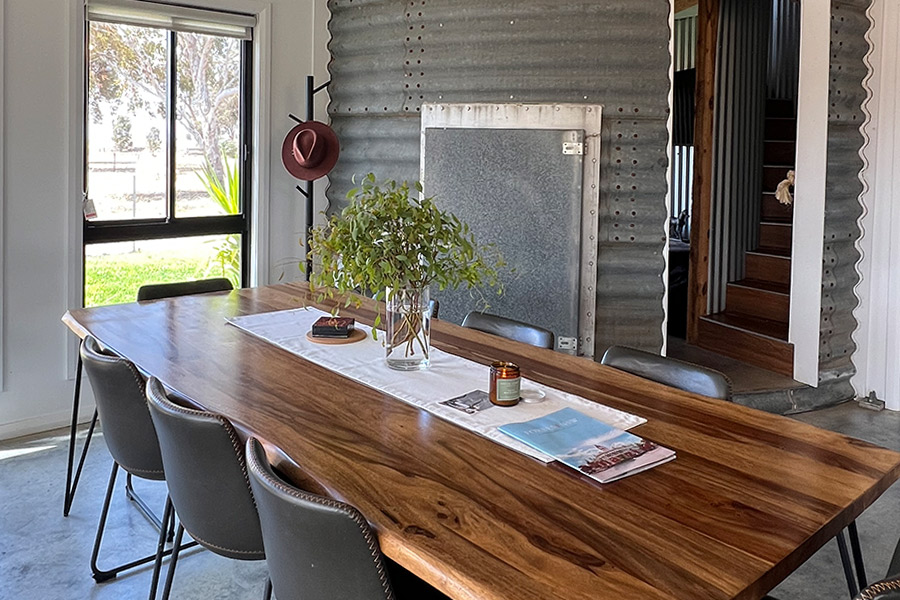
We pour ourselves a wine, sit at the honeyed timber table and watch the sunset over the paddocks before heating up our pre-ordered beef bourguignon.
In the morning, peacocks strut across the lawn and Labrador Ted begs for a pat before we head out with Kylie on a farm tour, after she’s taught Pilates in town. She farms regeneratively and has planted more than 4000 tree seedlings. As we give Braveheart, the 550kg hand-raised steer, a scratch, a stud bull demonstrates his worth with the ladies.
Sculptures Down the Lachlan
We head back towards Forbes to Gum Swamp Wildlife Refuge, a wetland haven where bird hides overlook drowned river red gums, their bleached limbs perfect perches for waterfowl.
This is the start of the Lachlan Valley Way section of SDL, with artworks every 10km along the Travelling Stock Reserve, a corridor of Crown Land used for droving cattle and sheep during drought.
Wide-open spaces see sculptures scale new heights.
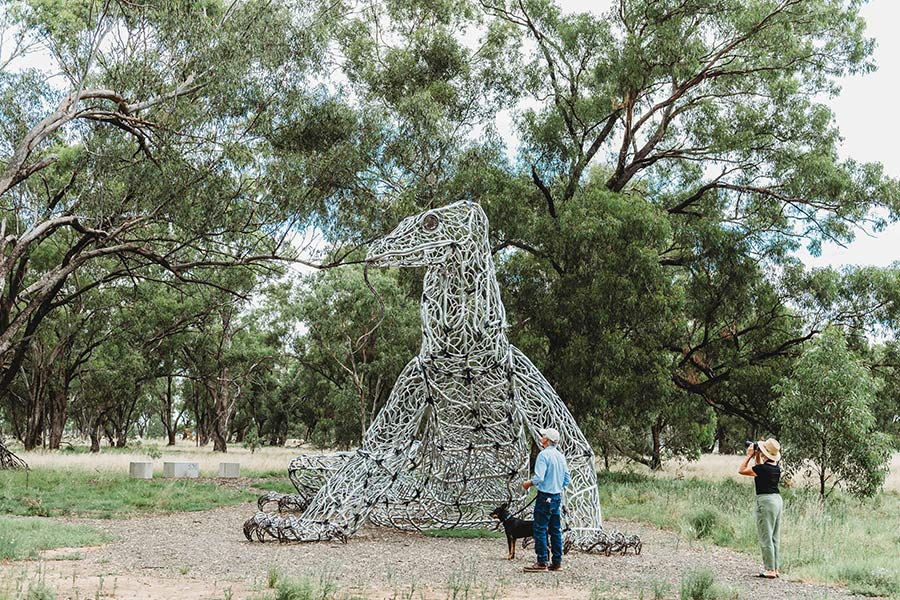
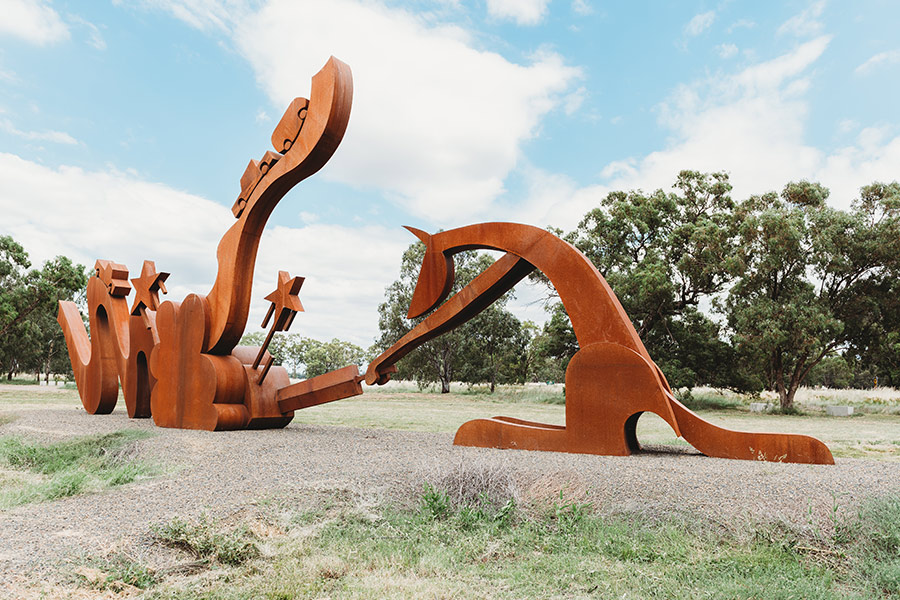
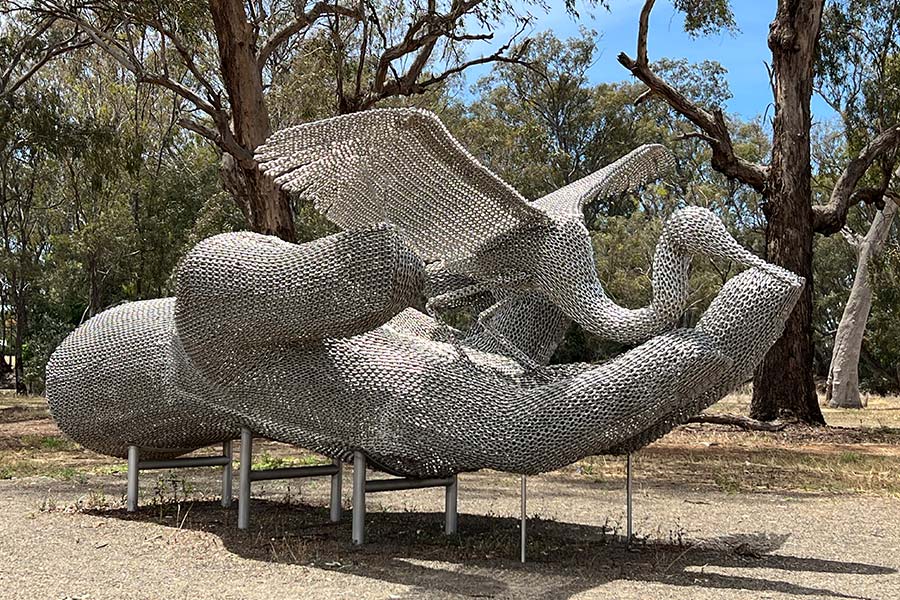
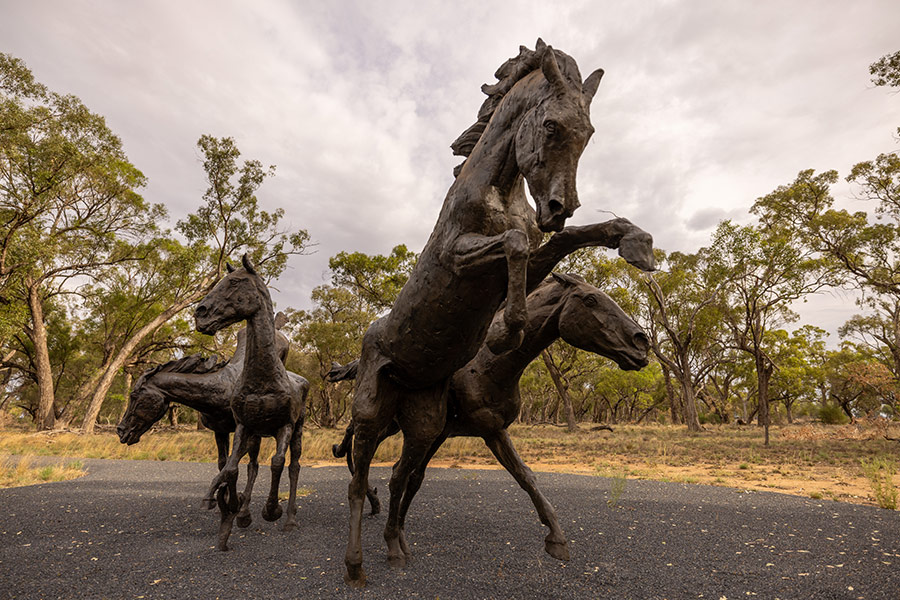
A dinosaur-sized filigree steel goanna, Varanus, pauses between gum trees, tongue probing the air; a kangaroo with a cricket bat reverses perspectives in Road Kill; the stainless-steel chain Bird in Hand channels environmental responsibility; and life-size leaping bronze brumbies embody Aussie spirit.
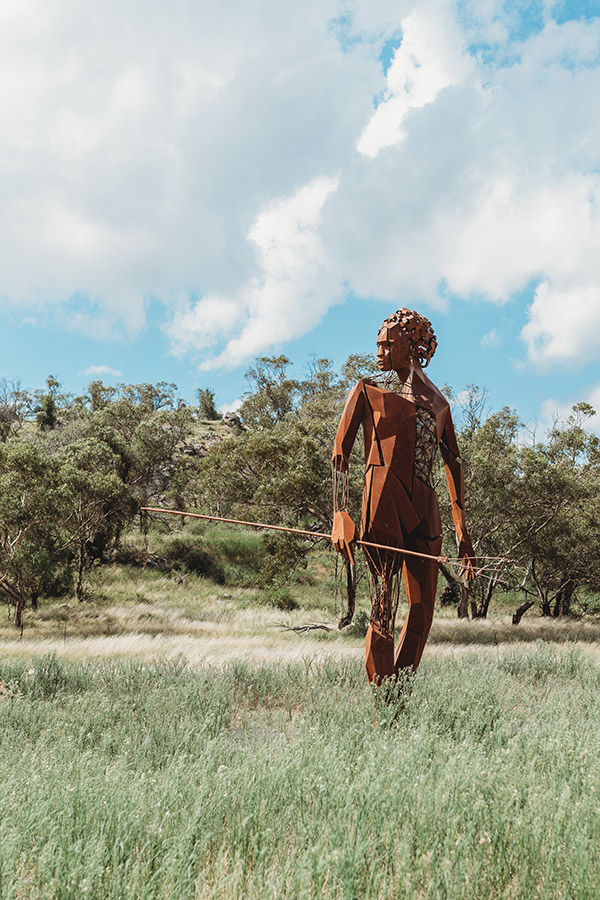
The standout in scale and placement is a noble Indigenous hunter looking pensively over his shoulder. Magnificent from a distance, the 6m-high faceted Corten steel figure is captivating up close. Artist Damian Vick says it’s the most powerful and important sculpture of his career to date.
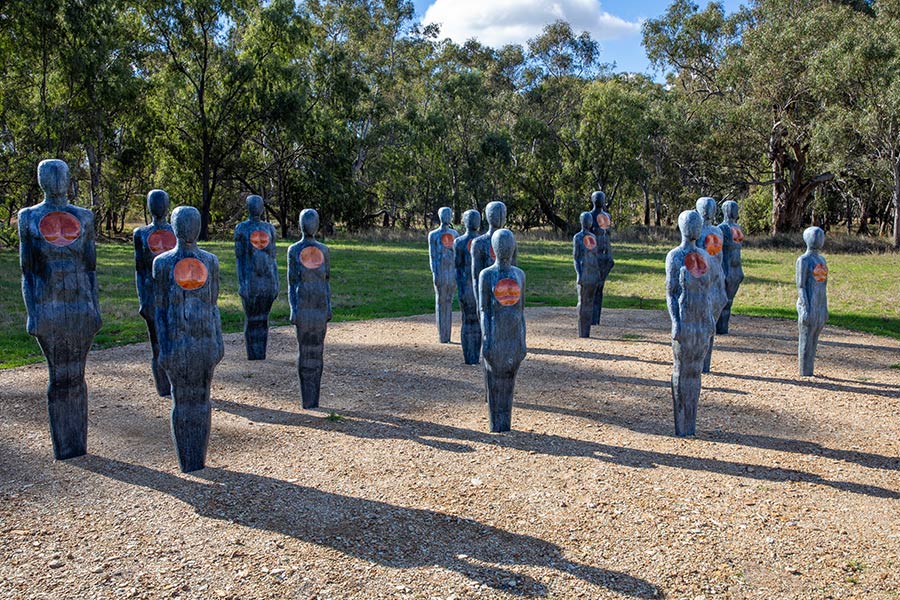
Tears well as I walk among 15 androgynous bronze figures with varnished timber hearts. Between the Silence and the Heartbeat is a moving representation of indifference to Indigenous deaths within white society by Adelaide artist Clancy Warner.
Condobolin and the quirky Utes in the Paddock
Condobolin, or Condo as it’s known locally, marks the end of SDL and lightens the mood with Utes in the Paddock.
I’ve longed to see this quirky Aussie collection since reading about it in Open Road in 2009, when it was at Burrawang Station in Ootha. It now resides in a paddock behind Condo’s flash new visitor centre and café.
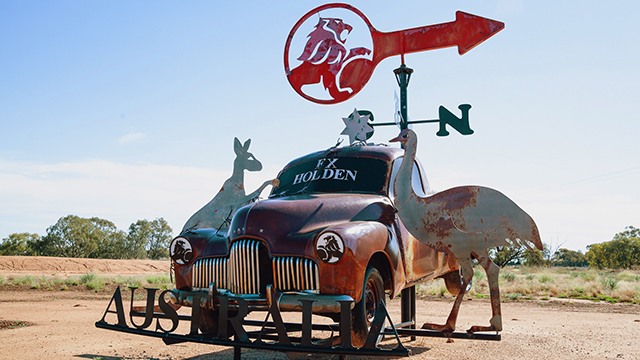
Utes in the Paddock sprang to life after station owners Graham and Jana Pickles visited Cadillac Ranch in the US. They replicated the concept using old Holden utes painted by outback artists as an antidote to extended drought.
They enlisted local mechanic and NRMA Roadside Assistance operator Mick Taylor to salvage utes from paddocks and barns and prepare them for painting.
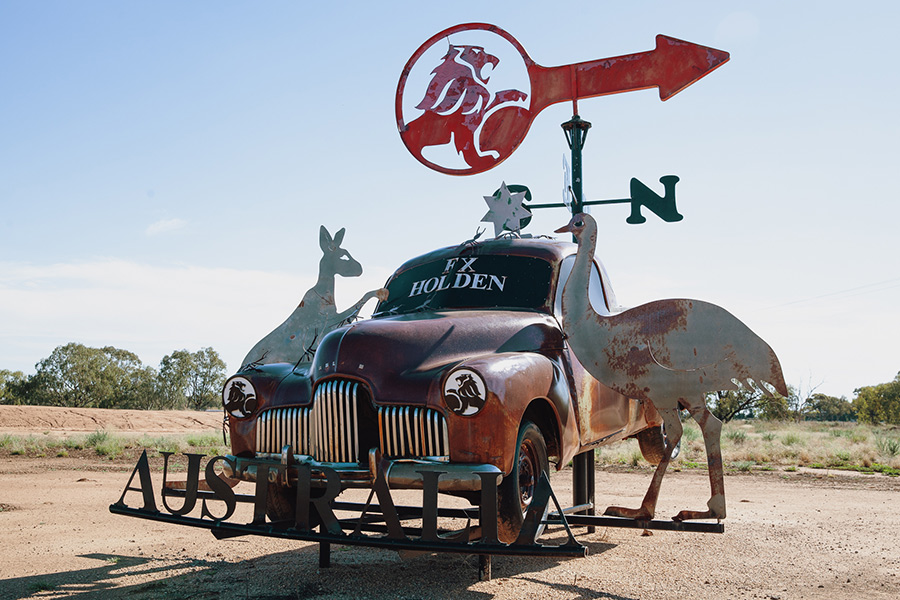
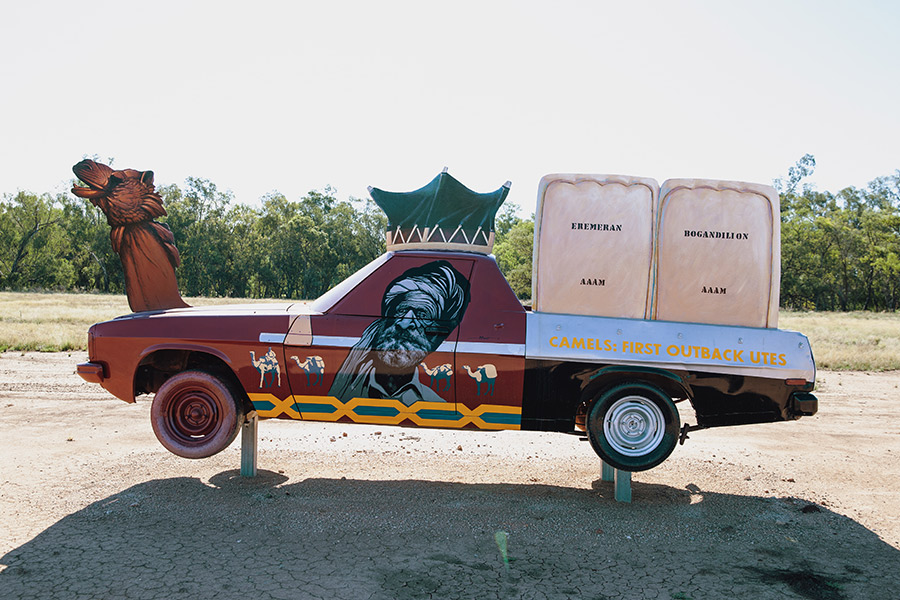
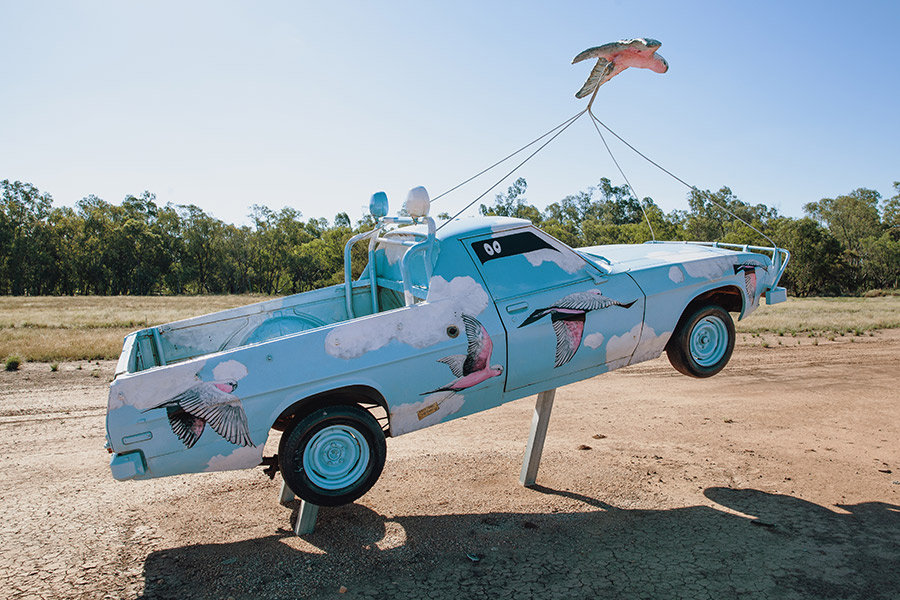
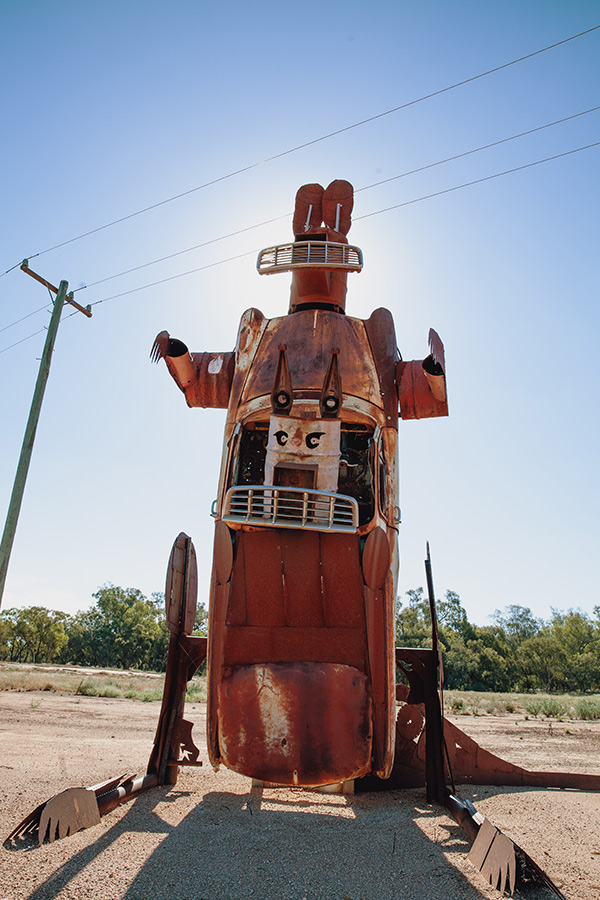
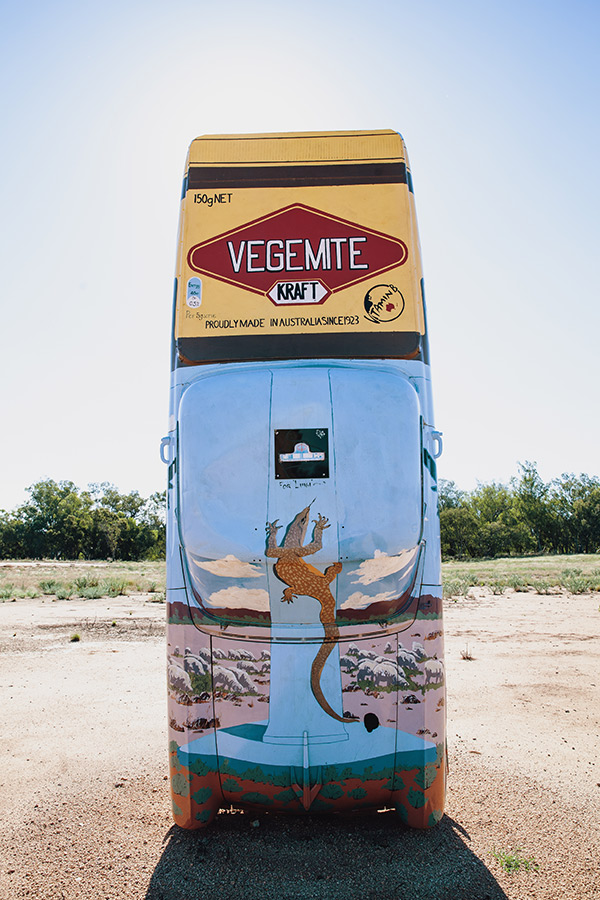
I catch up with one of the original artists, Condo local Karen Tooth. She’s recently published a spiral-bound history-cum-colouring book on the utes, full of intriguing titbits about the artists, including Midnight Oil musician Jim Moginie, Mental as Anything original bass player Steve Cockburn and Archibald Prize winner Adam Cullen.
“I’d never painted something so big before,” says Karen. “It was exciting to be involved with some really well-known artists. They were good mentors, encouraging and inclusive.”
When the Pickles sold Burrawang Station, they offered the utes to Lachlan Shire, hence their new location.
Karen’s creation, Dame Edna’s Looute, featuring Dame Edna in an outdoor dunny, is a favourite. But they’re all ingenious – UteZilla (kangaroo with joey),
Drizakubra (iconic outback clothing) and Clancy Stops the Overflow (Clancy with horse Banjo rescuing a bottle of Bundy rum).
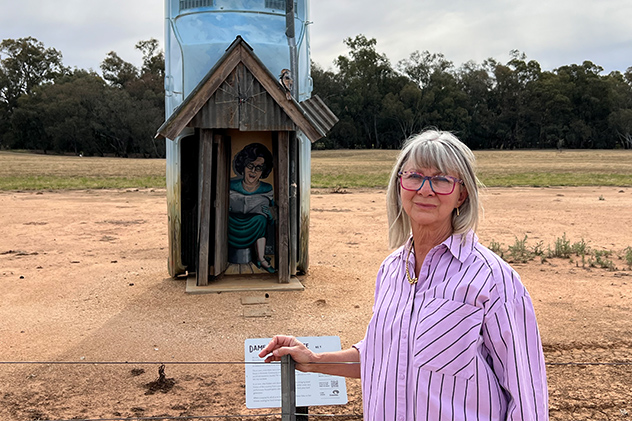
Artist Karen Tooth with Dame Edna's Looute
Indigenous culture in Condobolin
Lightning Ridge artist John Murray, who painted the first ute in 2008, recently collaborated with local Indigenous artist Bev Coe on a new ute for inside the visitor centre.
We see more of Bev’s work, including large-scale weaving, on a walk through the Wiradjuri Study Centre, a hub for cultural appreciation, learning and development.
A gallery space features work by local Indigenous artists, backdropped with a mural by Darren Cooper. Timber doors and conference tables with intricately carved crocodiles are practical works of art within the circular-designed compressed-earth building.
The Lachlan River edges town, but man-made Gum Bend Lake, 3km west, is the spot for aquatic activities from boating to birdwatching. Free camping, a children’s playground and walking track make it popular with families.
We score the newest accommodation in town at Condobolin RSL, where they’re still building the motel room steps as we arrive. After a drink at the RSL, it’s an easy walk to the Railway Hotel for dinner and Café Romo for breakfast.
Before heading to Parkes, we detour to Mount Tilga, 10km north of town, once claimed to be the geographical centre of NSW. It’s a bit of a climb, but the vista over the Lachlan Valley is a 360-degree diorama of landscape art.
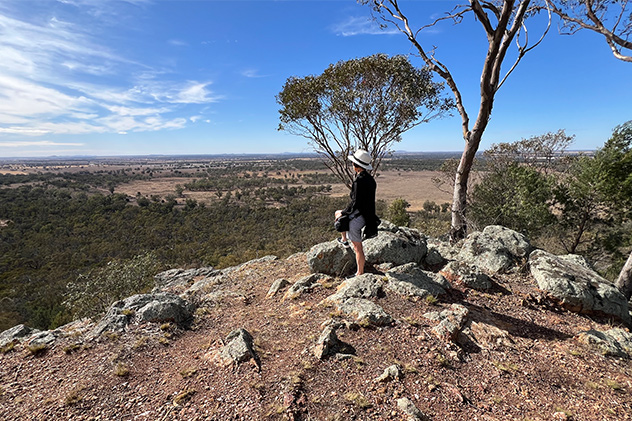
View from Mount Tilga outside Condobolin
Parkes: history, Elvis and public art
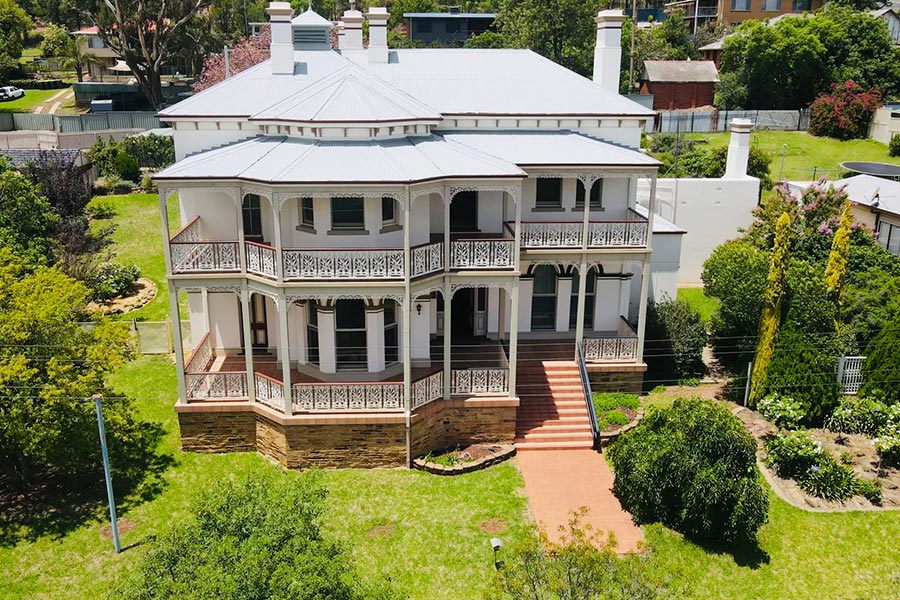
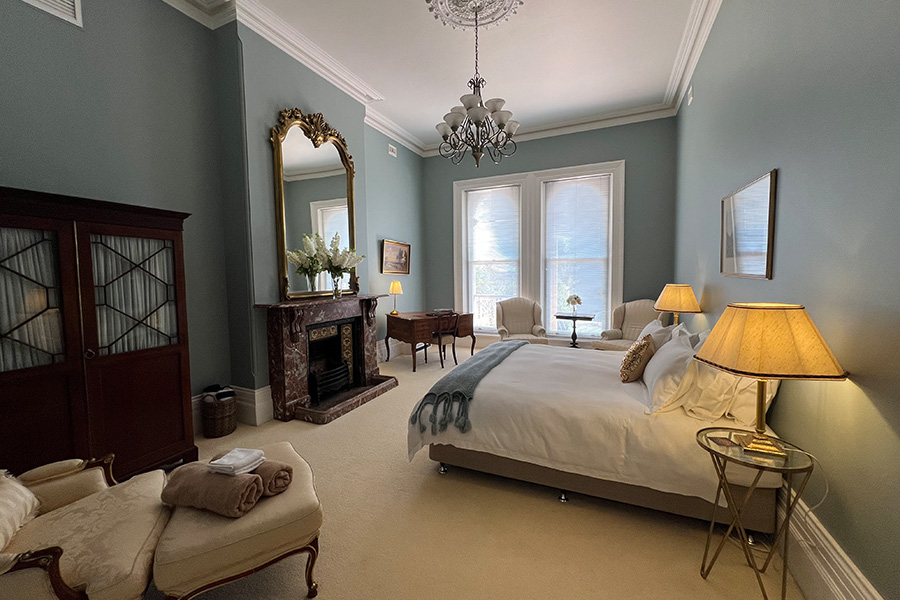
We end our trip with a stay at elegant and luxurious Buchanan 1894, a two-storey Victorian mansion from Parkes’ gold-rush days.
Current owners Steve Lindsay and Dave Johnstone bought the property in 2023 and spent 12 months restoring it between farming chores on Cora Lynn Station at Peak Hill.
Divided into private suites with communal access to the grand staircase leading to the library and balcony, it feels sumptuously aristocratic, minus servants, filled with art and antiques from Steve and Dave’s private collection.
Around the corner from Café Bella, Roasted Kombi Café and numerous hotels in Clarinda Street, we ignore our kitchen in favour of eating out.
We’ve been to Parkes before for the joyful and jocular Elvis Festival, the largest in the southern hemisphere, but apart from a visit to CSIRO’s Observatory, also known as The Dish after the Aussie movie of the same name, we haven’t explored much of town.
We start at the Henry Parkes Centre, a hub of history and culture with museums, Elvis exhibits, Gates of Graceland and Musical Hall of Fame.
At the Wiradjuri Amphitheatre, we walk Garradyang Garden, featuring plants commonly used by Wiradjuri people, with silhouetted steel native animals peeping between the plants.
More public art is planned beside the boardwalks of new wetlands currently under construction on the edge of town. Waterbirds have already moved in, well before installation of the planned accessible viewing hides.
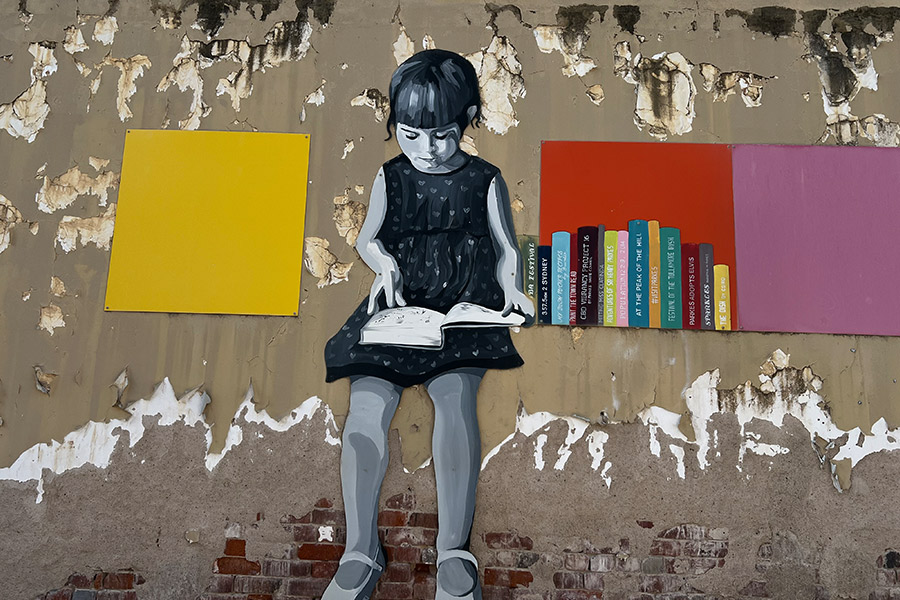
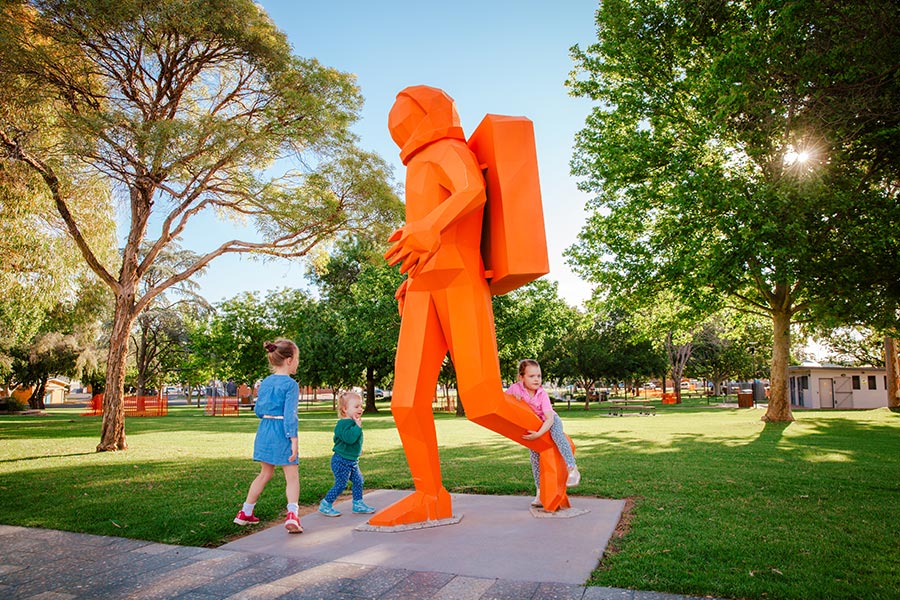
The public art trail around town makes a leisurely stroll from the Buchanan. There’s a statue of Henry Parkes and Elvis, of course, along with colourful graphic-style murals by local artist Jac Clark.
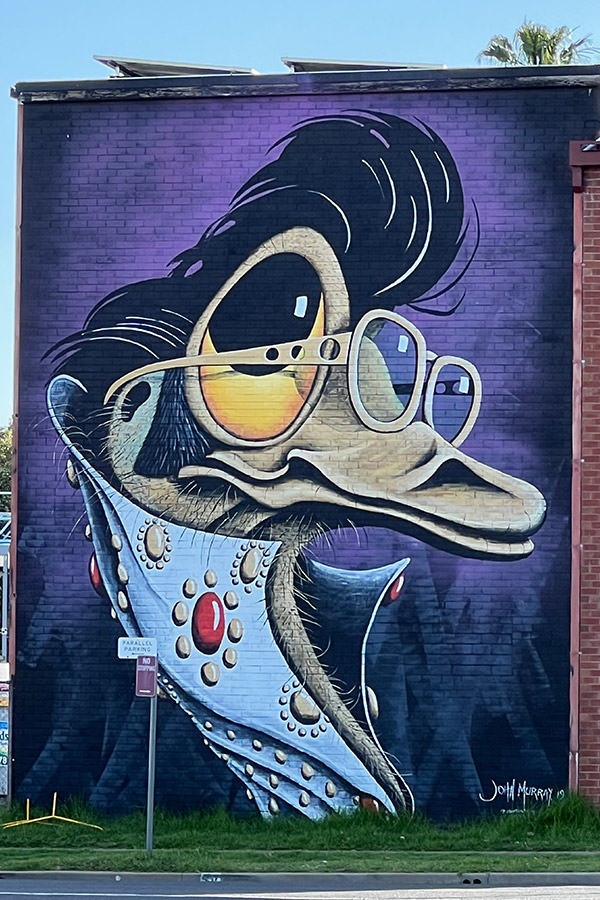
But it’s a mural by John Murray that makes me smile – a coiffed, spectacled, jumpsuited Emu Elvis trying to look sexy. Quirky, cool and uncontroversial.
Forbes, Condobolin and Parkes might be a small triangle in Central NSW, but it’s ‘amazingly’ big on art.