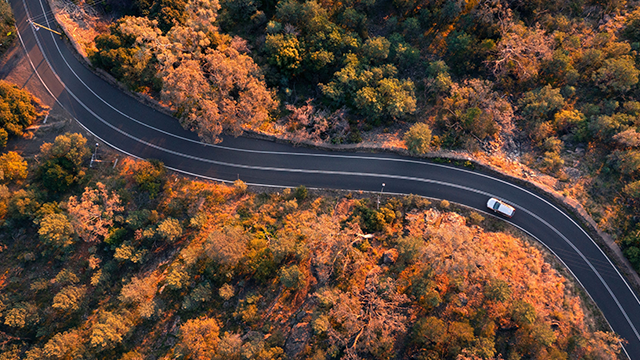
Glamping road trip: Sydney to Capertee Valley and Mudgee

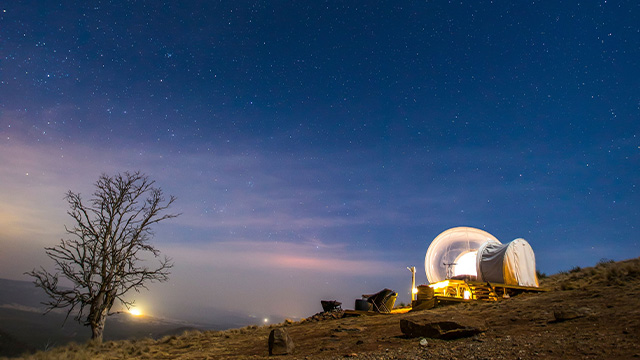
There are many things you hope won’t make national headlines when you’re about to spend the night, by yourself, in an inflatable bubble on the side of a very beautiful and quite isolated mountainside. “Serial killer on the loose” is one. “Pack of lions escapes from nearby zoo” would also be fairly unsettling.
But given my accommodation for the evening is the utterly unique Bubbletent in Capertee Valley, which is seemingly suspended by nothing other than air, like some kind of tent soufflé, I’d wager reading you’re in the path of a “destructive bomb cyclone” is possibly even worse.
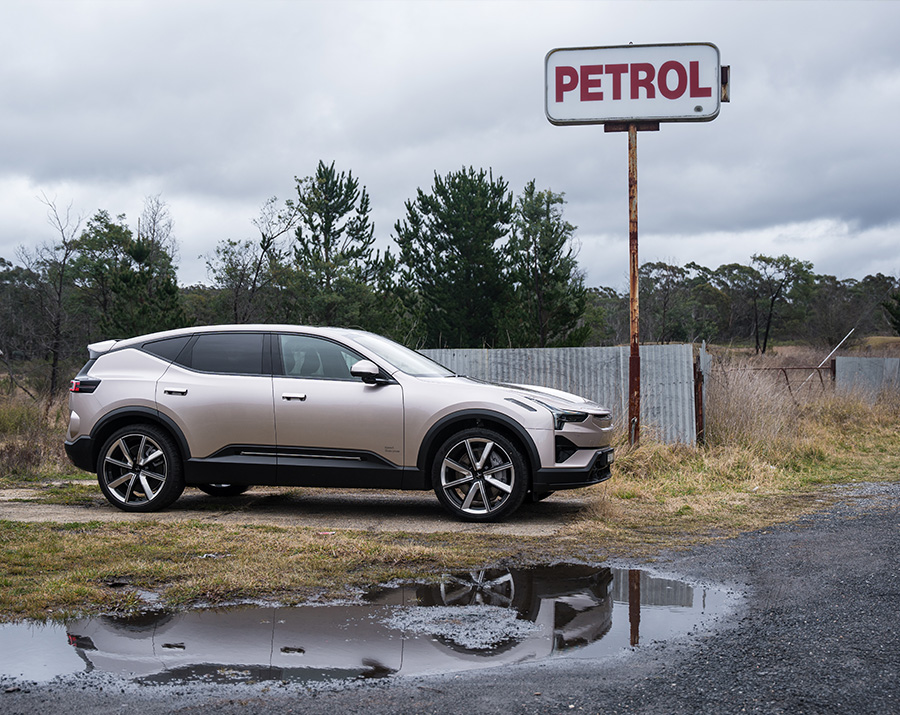
My adventure to visit two of NSW’s most jaw-dropping glamping sites – in a Polestar 3, no less, which has the longest claimed driving range (706km) of any EV on sale in Australia – is sadly coinciding with a cataclysmic weather event. And things are getting biblical on the journey out there.
Rain is hammering the windscreen and, as I round a corner on the far side of Capertee about three hours from Sydney, the road is partially blocked by a gumtree, its entire root system torn mercilessly from the earth.
Not even this, however, can prepare me for the sense of wildness that encompasses the landscape around Bubbletent. Set on a 1000-acre farm halfway between Mudgee and Lithgow, Bubbletent is the brainchild of entrepreneur Sonny Vrebac, and one of its many curios is that its exact location is a closely guarded secret. The goal is to ensure the privacy of your stay and from the moment I arrive, I feel utterly alone. Which, it turns out, is exactly as Sonny intended.
“We want it to feel like you’re away from everyone else,” he says. “As if you’re the only people on the mountain.” And what a mountain. Capertee Valley is the widest canyon in the world – not even America’s Grand Canyon can match it – but it’s the region’s plunging valleys and colossal sandstone cliffs, which shine like golden beacons in the afternoon light, that truly set it apart.
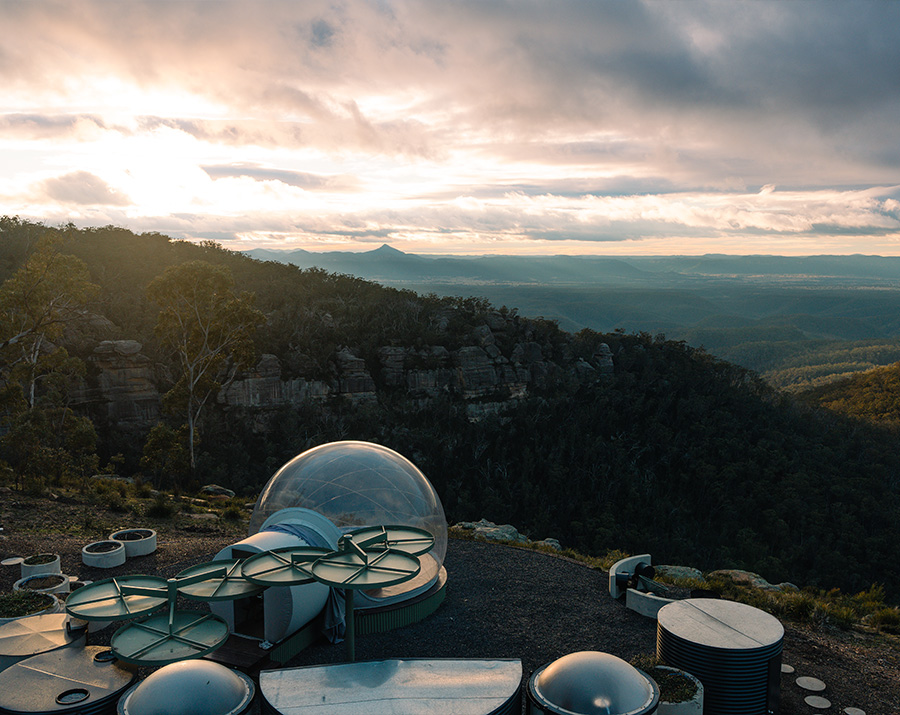
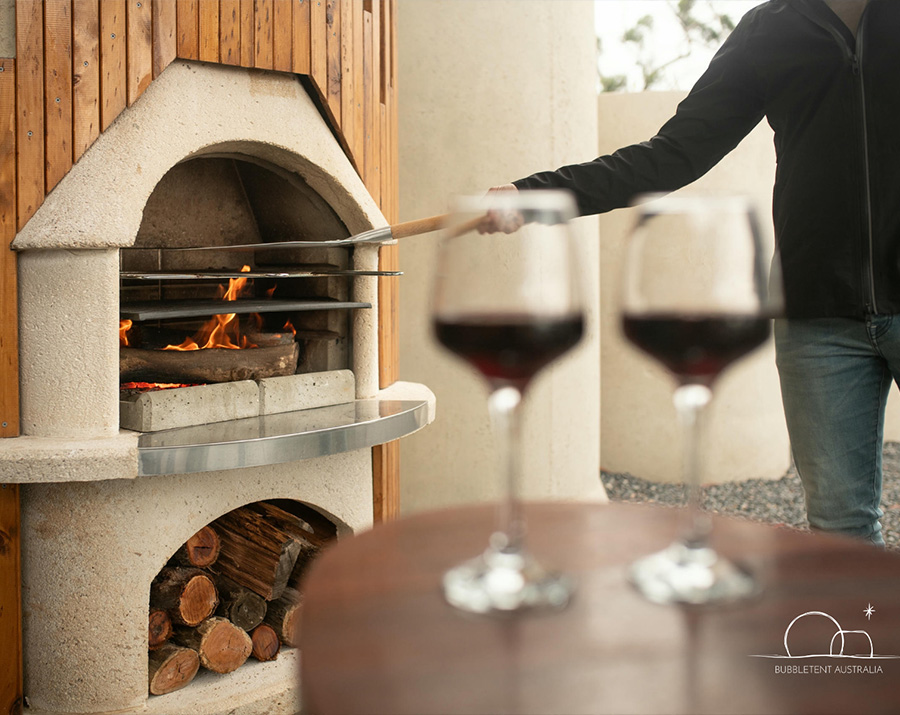
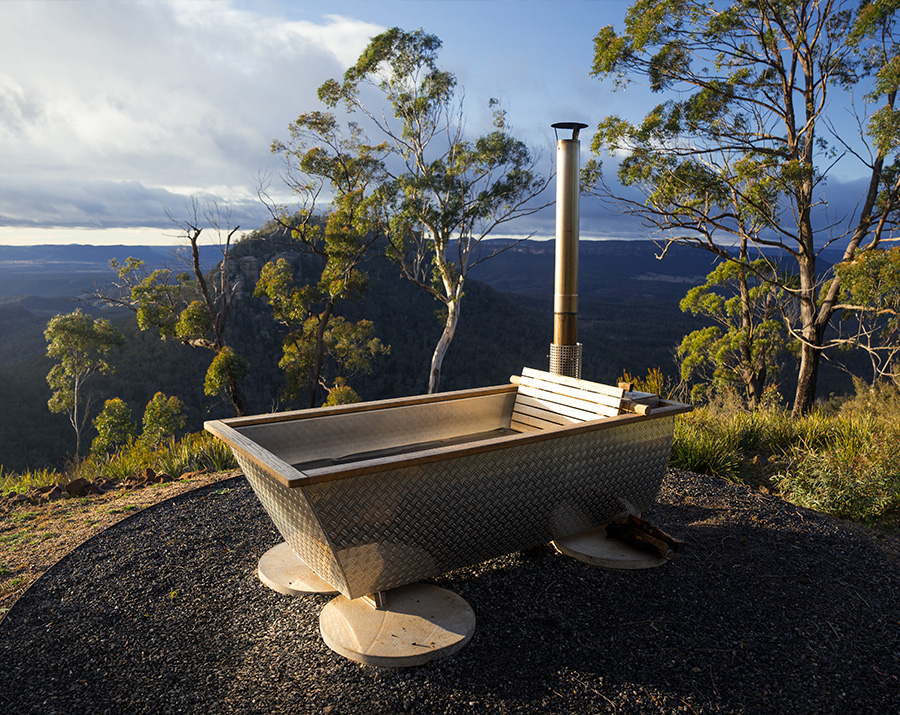
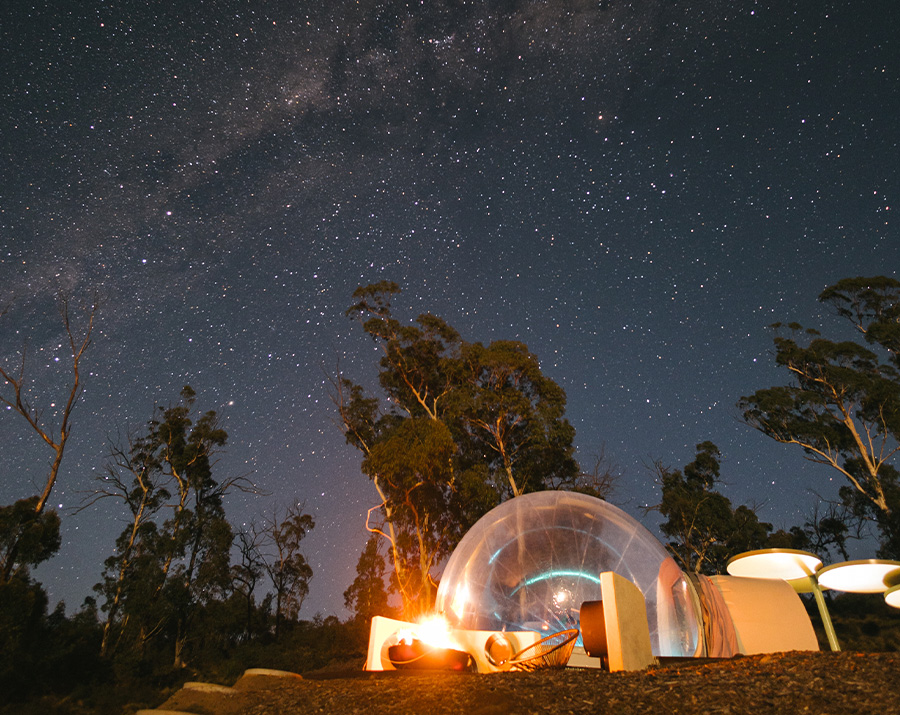
There are currently five ‘bubbles’ placed carefully around the property and plans are afoot to add others. Each setup is slightly different to ensure it maximises your view of the valley and, of course, the stars. Astrotourism, or stargazing, is a big focus at Bubbletent and each site is named after a constellation.
My abode, Ophiuchus, is incredibly well equipped and includes a fully stocked kitchen, pizza oven, enclosed toilet, proper shower, firepit and a woodfired outdoor bath. Despite the strong winds, the entire site is wonderfully protected, as if I’m in the eye of the storm itself.
So what’s it like to sleep in a see-through tent on a storm-swept winter night? Surprisingly cosy. The bubble, which operates on an airlock system, is amazingly resistant to the wind and you only hear the occasional rustle as the plastic exterior moves about. Geothermal heating keeps the interior at a pleasant 20°C and the bed is reassuringly comfortable.
It’s not until I switch off the lights, however, that Bubbletent plays its trump card. Because you’re in a dome, interior lights reflect off the plastic walls and make it tricky to see out. When things go dark inside, you’re transported into the wilderness, as if someone has picked up your bed and hurled you onto the edge of a towering cliff face.
Sadly, heavy clouds mean I can’t see any stars, but at 4am I wake suddenly beneath a totally clear sky, its inky blackness ablaze with thousands and thousands of glittering pinpricks. Another magnetic moment is waking up to the sunrise. In a world of harsh alarms, stirring gently as the sky slowly turns pink and clouds stream through the valley below feels utterly restorative.
With the sun beginning to climb, I point the Polestar’s chiselled nose towards the highway and begin the hour’s journey to our next glamping stop – the award-winning Sierra Escape on the outskirts of Mudgee. It’s an easy drive (Rylstone provides a perfect stop for a spot of breakfast) and gives me the chance to take stock of the Polestar 3.
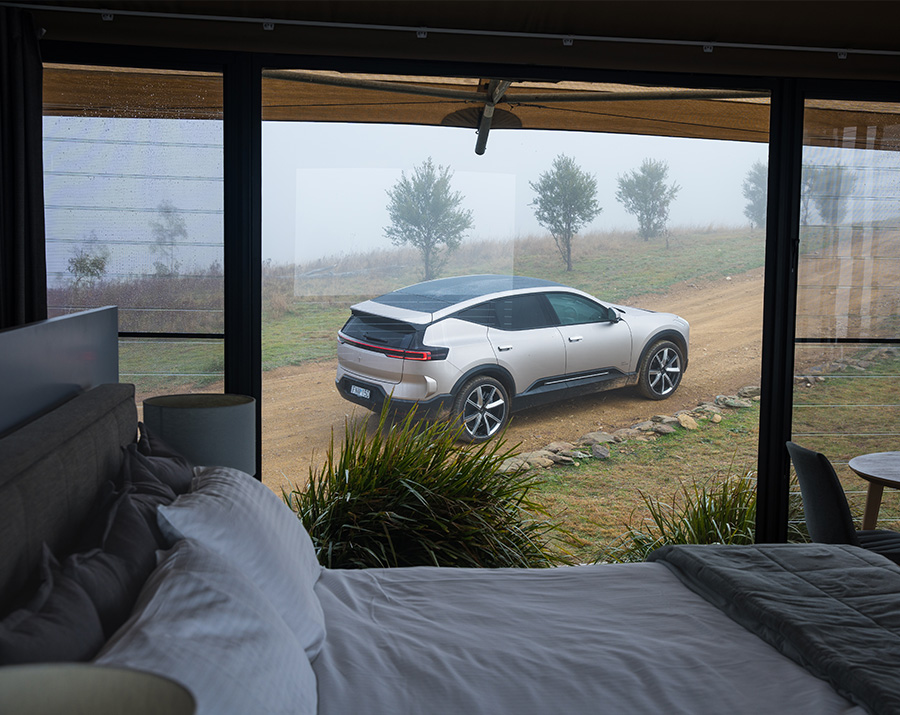
It’s a striking machine, especially in our test car’s golden hue, and it’s a shape that holds the eye with its mix of vents, angles and pumped-up guards. The leather seats are superbly comfortable and, because the cabin is so quiet and the air suspension is so supple, it’s an ideal road-trip companion – except, that is, for range.
Our particular car is the ‘Long Range’ model with a claimed WLTP driving range of 706km and initially I’d hoped to complete the circa-600km round trip from Sydney on a single charge. But, as I cruise into Mudgee, the battery has already tipped below 20 per cent, our consumption cruelled by this test car’s enormous optional 22-inch wheels.
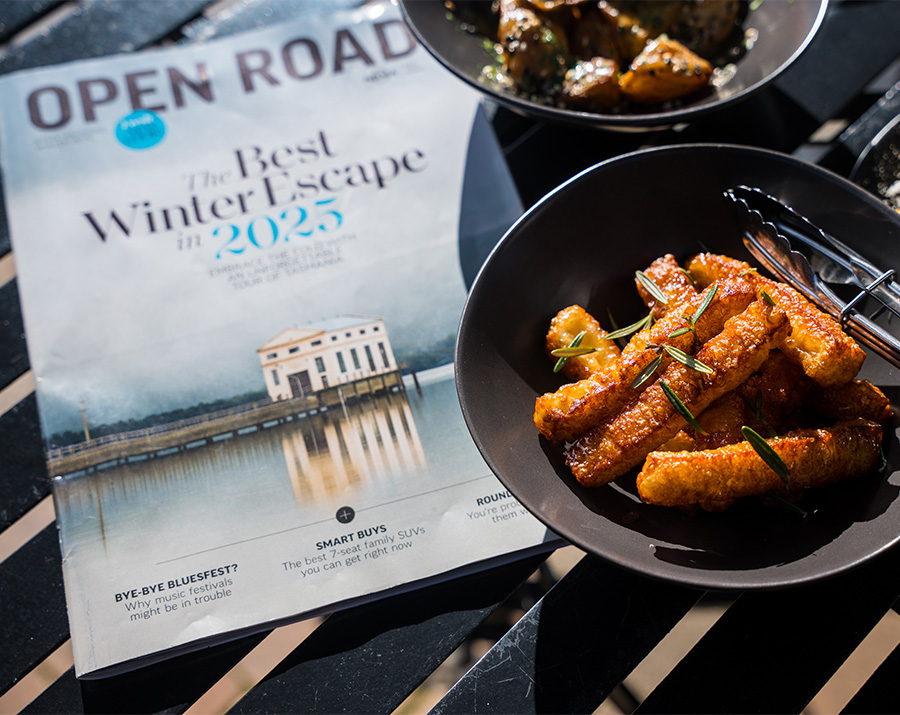
Still, there’s plenty to do while I wait for some juice at an NRMA charger. Mudgee is a foodie haven and with so many options to choose from, I finally settle on the cellar door at Gilbert Family Wines, which is an easy stop on the outskirts of town. Set in a beautiful sandstone building, Gilbert’s winter menu offers a delectable spread of small plates, ranging from a generous helping of pulled pork to broccolini linguini, and halloumi chips drizzled with rosemary and honey which are so sweet and salty and savory that they verge on life changing.
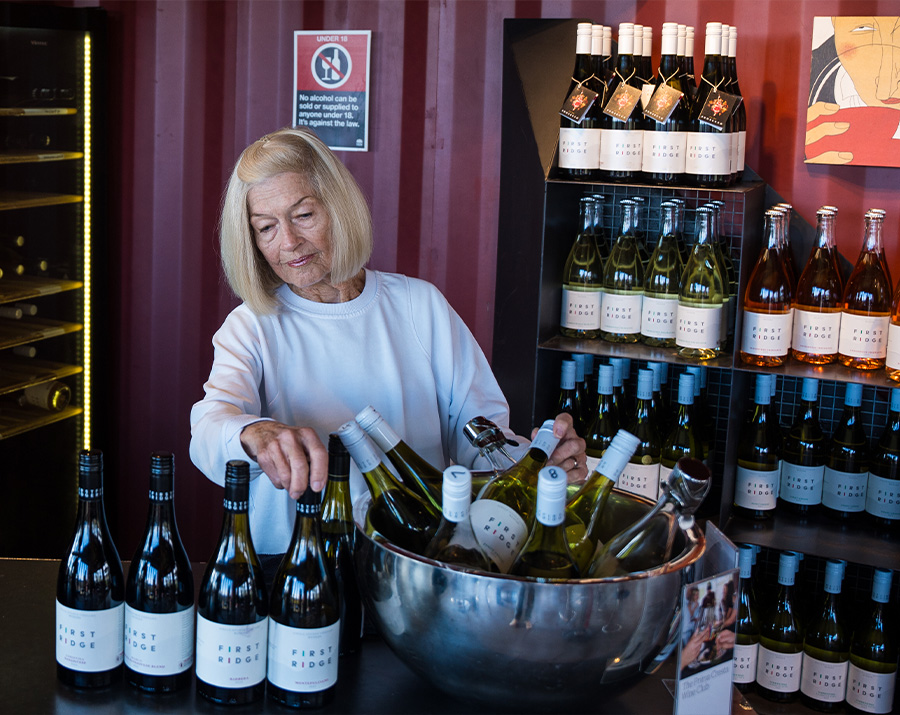
If delicious food is a Mudgee hallmark (Alby & Esther’s cafe is another must-visit thanks to Melbourne-quality coffee and a locally sourced menu) then wine is its lifeblood. There are dozens of award-winning cellar doors to explore (Bunnamagoo and Yeates are two standouts) but few offer such spectacular views as First Ridge.
Nestled on a hillside on the town’s southern edge – Mudgee is named after the Wiradjuri word ‘Moothi’ which translates to ‘nest in the hills’ – First Ridge specialises in vibrant Italian varietals and offers complimentary tastings. Our hot tip? Opt for a bottle of the barbera or, if the weather is warm, the crisp sangiovese frizzante.
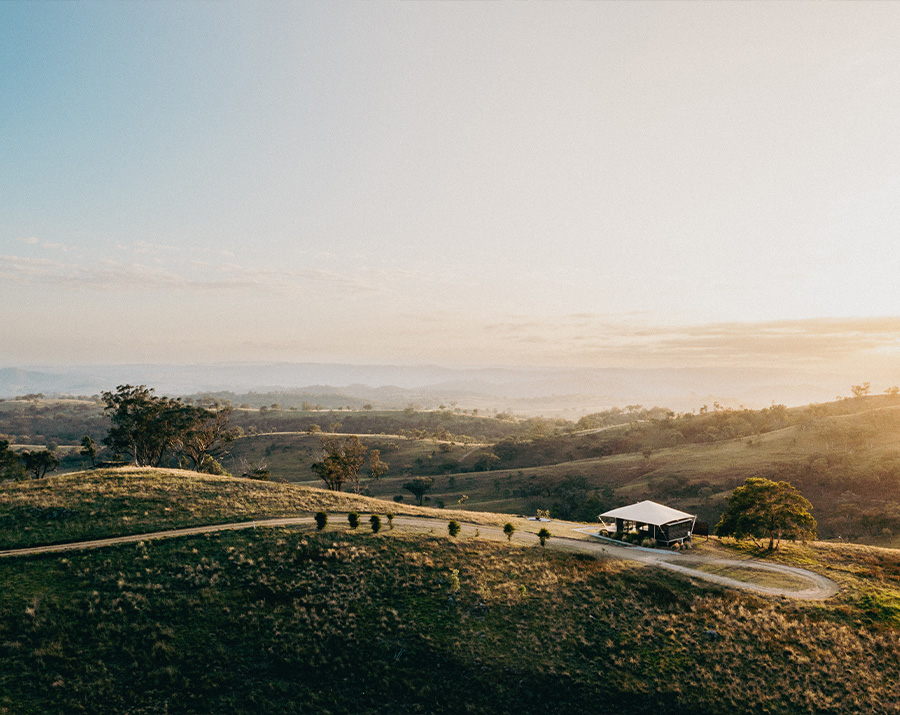
It takes about 30 minutes to get to Sierra Escape and I’m kicking myself because the sun is already beginning to fade as I park up next to my tent. It’s spectacular out here, perhaps not quite as geographically stunning as Bubbletent, but there’s an ancient quality and calmness to the plunging landscape that sets it apart.
— Alex Inwood
The tent itself is more hotel-like too, a luxury suite that’s been relocated onto the side of a mountain, and it’s not long before I have the woodfire crackling and the outdoor bath steaming. There’s another bathtub inside, along with a king-sized bed (complete with electric blanket) and a kitchenette.
I have just enough time to explore the communal infinity pool atop a nearby hill before I lower myself into the blisteringly hot bath, my skin prickling as the last rays of sun fight to stream over the horizon.
There’s again the sense that I’m the only human for miles, but where Bubbletent felt truly isolated, Sierra is remote yet still connected to society. It’s calmer here, too, though much of that is down to the wind which has finally, mercifully, died off.
There’s still enough of a breeze to give the canvas walls and roof an occasional reassuring ruffle, though, and with the electric blanket set to just-so, I enjoy a comfortable sleep before waking at 6am to catch the sunrise. What I find instead is a total whiteout, with fog so thick that it lends the landscape an otherworldly glow. While it robs the view, it does allow me to share a lovely moment with a mob of eastern grey kangaroos, who don’t seem to notice or mind having a tea-swilling companion wandering beside them.
As I listen to the gentle sound of them pulling grass from the earth, I realise this is the true magic of glamping: to truly immerse yourself in nature, disconnect and enjoy life’s quiet moments, without having to give up its creature comforts. It’s no wonder glamping and other eco-tourism experiences are booming in Australia.
Booking info
Bubbletent bookings start at $575 during September and stretch to $855 for the Ophiuchus tent we stayed in. Sierra Escape (inset pic) ranges from $450 to $590 per night. Both sites require a two-night minimum stay.
Long Range missile?
How close did we get to the Polestar 3 Long Range’s official WLTP claim of 706km? Not very. All up we covered 660km at an average of 23.3kWh, meaning this specific car has a real-world range of circa-480km from its 111kWh battery. That’s a 226km deficit, but in fairness to the Polestar, there were a few things counting against it.
Its optional 22-inch alloys were larger and less economical than the standard 20s. And most of our journey was spent at 100km/h, which is kryptonite for an EV’s efficiency. Generally speaking, an EV will use less electricity in urban environments or in stop/start traffic than on the open road.