
Your Guide to Battery Care, Safety and Recycling

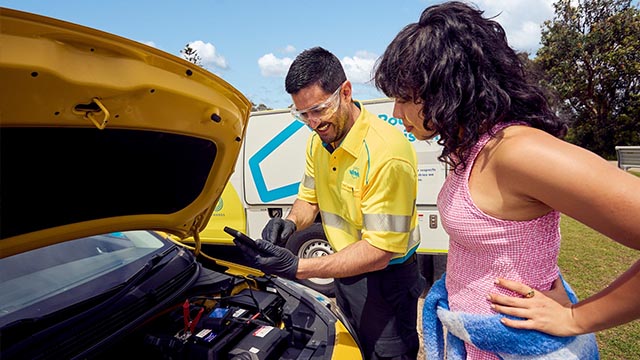
Car batteries last about three to five years. During that time, they power your car, making sure everything works when you need them to. However, to maximise the lifespan, your battery needs to be used safely and looked after well.
This guide walks you through what you need to know about battery care, safety and recycling, including whether a wrongly fitted battery can damage your car, whether you should remove an old battery yourself, and what to do with it once it reaches the end of its life.
| In short: |
|---|
|
What do you actually need to know about car batteries?
Your battery powers the electrics of your car including the computer, central locking system and the lights. As a ‘wear’ item, it slowly loses capacity over its life and eventually needs replacing, usually after three to five years.
Beyond that, three important things are worth paying attention to:
- Batteries have to be the correct type and size for your car.
- They need to be fitted and secured properly so they do not move or vibrate.
- The terminals (the electrical contact points) should be kept clean and free from corrosion to maintain a good connection.
Batteries contain materials such as lead and acid that can be hazardous, but they are also recyclable. For this reason, used or flat batteries need to be handled and disposed of differently from ordinary household rubbish.
If your battery is underperforming, you can have it tested, especially if it is a few years old. If the test shows that it is nearing the end of its life and won’t get you much further in a reliable way, you can arrange a replacement.
The NRMA offers free battery health checks for members. Call 1300 906 479.
Can a wrongly fitted car battery damage your vehicle?
Yes, it can. A battery can be incorrectly fitted if it is the wrong size or used for the wrong type of vehicle. It can also apply when the battery is not properly secured, or is not connected correctly.
Here are some examples of incorrect battery fitting:
- When a battery is not secure in its tray.
- When a battery isn’t clamped down, resulting in unpredictable vibrations and movements.
- Wrongly connected battery which affects the flow of power.
- Incorrect battery registration, which is needed in some news vehicle models. This ‘tells’ the car there is a fresh battery, and it adjusts its charging process.
If you have a loose battery, you run the risk of damaging the battery’s terminals which would disrupt the connection between the battery and the car.
Some newer vehicles need their electrical systems powered during a battery change to prevent certain settings from being lost. Others need the new battery registered so the charging system can manage it correctly. Your NRMA Patrol will apply the right steps for the battery and the car that you have.
Should I try to remove an old car battery myself?
It is best not to. Removing a car battery can seem like a five-minute DIY job, but it can prove risky if you don’t know what to expect.
Here are some reasons to be careful when handling an old battery:
- Car batteries are heavier than they look.
- They contain acid, so a cracked or leaking battery can be hazardous to handle. If you are not sure how to handle it safely, it is best to leave it to a professional.
- There is also an electrical risk: if handled wrongly, they can short circuit and spark dangerously.
- On many cars, the battery is not under the bonnet. It can be under a seat or in the boot, so reaching it can mean removing trim, and parts of the car.
The safer and easier option for most people is to have a professional replace their battery. An NRMA Patrol comes to you, removes the old battery safely and fits the new one with the right tools.
Do I have to clean my car battery?
Only when necessary. As you drive around, a crusty white, blue or greenish deposit can build up around battery terminals. This is an indication of corrosion which interferes with the connection between the battery and the car.
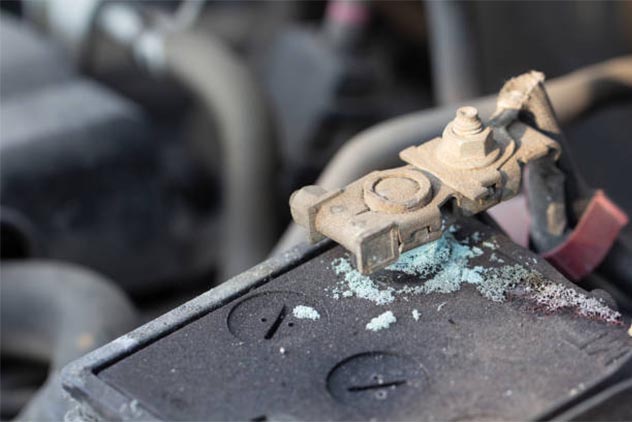
This interference might prevent your car from starting and create the semblance of a car battery being flat, when it is not. Keeping the terminals clean helps the battery deliver its full power and can extend its working life.
If you want to clean the residue off yourself (with the risks in mind), you should disconnect the battery first and wear gloves and eye protection, as the residue is corrosive.
Alternatively, an NRMA Patrol can take care of fitting a battery, cleaning the terminals and checking the connection.
What should I do with my old car battery?
Car batteries should be recycled at the end of their life. A standard battery contains lead and acid, which are harmful and unsafe. They can’t be treated like any other household waste.
Luckily, car batteries are among the most recyclable products. Every component of a standard battery including lead, plastic and acid are all reusable. If you replace a car battery yourself, make sure to take the old one to an approved battery collection point or recycler.
If an NRMA Patrol replaces your battery, you don’t need to worry because taking the old one away for recycling is part of the end-to-end service.
You don’t have to be a member to request battery replacement from the NRMA. A Patrol will come to you anywhere in NSW or the ACT.
Keep your battery in good shape
A significant part of battery care comes down to fitting the right battery properly, keeping the terminals clean, and recycling the old one responsibly. It’s also important to have a quality battery fitted by a professional.
- If you are a member of the NRMA, you can request a free battery health check to see how much life is left in your battery.
- Need a new battery in NSW or the ACT? The NRMA can come to you.
- In an emergency, call 13 11 22
- Book ahead by calling 1300 726 751
Book online or call 1300 571 746 to arrange a battery check or replacement for your vehicle.


