
Warning Signs You Need Your Car Battery Tested

Your car needs a battery to work. It cranks the engine, powers the AC and headlights, and supports multiple other electrical features. Batteries work hard, and as time goes on, they wear out and get weaker. This can lead to your car engine taking a little longer to start, the headlights dimming out, or the dreaded flat battery where nothing works at all.
Recognising the signs of a battery nearing the end of its life is very important. Knowing what to do when you see these signs matters as well.
This guide shows you the exact warning signs you need your car battery tested, why cars are harder to start in winter, what a battery test involves, and whether it is worth testing before the battery gives out.
| In short: |
|---|
|
What are the signs a car battery needs replacing?
A number of things can point to a battery that needs replacing. Here are a few of them:
- A car engine that’s slow to start
- Dim or flickering headlights
- A fast clicking sound when you turn your key
- A warning light on the dashboard
- Malfunctioning electrical features, including slow power windows or damaged central locking
- Needing repeated jump starts
- A swollen battery case
If any of these sound or look familiar, a quick professional check will confirm how much life your battery has left.
Remember that the general lifespan of a battery is three to five years. If you’re nearing that deadline, a check may be worthwhile.
Why is my car harder to start in winter?
Winter is particularly harsh on car batteries. The chemical reactions inside a battery slow down on cold days, causing it to deliver less power. This reduced current output from the battery makes starting your car difficult. Also, the engine oil of the car thickens during cold periods, which adds a layer of difficulty for the engine to turn over.
Batteries have a cold cranking amps (CCA) rating, usually indicated on the battery label. CCA ratings are a measure of how much starting power the battery can deliver in low temperatures, and that figure drops as the battery ages.
A car battery at its full capacity and in good health shouldn’t struggle in cold weather. However, batteries that have been used for a while and are weakened or damaged may show signs of trouble during the first cold of winter.
Note: If your car struggles to start particularly during colder months, have the battery checked so you know how much time it has left.
Read more: The NRMA guide on how cold weather affects your car battery.
Is it worth getting your car battery tested before it fails?
Definitely. Battery failures never happen at a convenient time, and there is nothing more frustrating than having a car that won’t start when you are already running late or have somewhere important to be. A test that takes less than ten minutes is nothing in comparison to this kind of disruption.
Instead of waiting for your car’s battery to leave you stranded, you can have battery checks done at intervals in order to avoid the headache. A test tells you how much life it has left, and you can decide to replace it on the spot or plan to get a new one at a set time in the future.
NRMA members have access to a free battery health check that comes with a printout of the results showing the condition of the battery and its likely life expectancy. This is a handy thing to do before you go on a long trip or at least every couple of years, to give you peace of mind. Call 1300 476 053 or book online today and our mobile team will come to you.
Should you replace your car battery before a long trip?
It depends. The heat from long drives and the action of starting and running your car demand a lot of your car’s battery. If your battery isn’t in great condition to begin with, there is a chance that it might fail under that load.
However, replacing your battery just because you have a road trip planned is not 100% necessary, especially if you have a perfectly healthy battery. A battery test and advice from a specialist about its lifespan is a better alternative.
A quick battery test before heading out on a long trip means you have one less thing to worry about when you’re on the road. A replacement, if you need one, can be sorted before you go.
What does a car battery test involve?
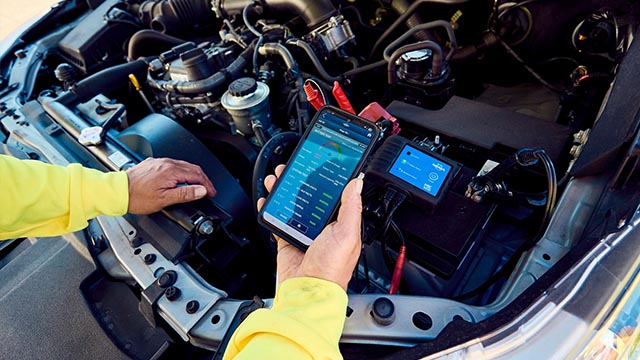
A battery test is quick and easy, and it doesn’t matter which type of battery you have. With the NRMA, your Patrol will connect a manufacturer-specified tester to the terminals of your battery and checks its condition. The whole process takes about ten minutes, depending on how accessible your battery is.
The benefit of the NRMA is that a Patrol will come to you, no matter where you are in NSW or the ACT. After the test, you get one of four results:
- Good battery
- Charge and retest
- Bad cell
- Bad battery
A good result means you are fine to carry on, while a bad cell or bad battery result indicates that a replacement may be needed. And the good news is it can usually be arranged on the spot.
What does a car battery test actually check?
A battery check primarily looks at the state of your car battery. During their visit, your NRMA Patrol will also test:
- The starter motor
- The charging system, including the alternator
- Any bad cells inside the battery
These checks show whether the problem is with the battery or another part of the engine and vehicle. If the results point to a fault with the alternator, starter motor or wider electrical system rather than the battery, you’ll get specific advice about the next best steps.
Can someone test my car battery at home?
Yes. In NSW and the ACT including metro Sydney and Newcastle, Wollongong, Canberra and much of the regional NSW, the NRMA offers a mobile battery replacement service that comes to you at home, at work or if you’re roadside. This is a 24/7 service. It covers compact cars, SUVs, 4WDs, commercial vehicles and recreational car batteries.
You can schedule a time that’s convenient online, or call if your car is broken down and you need help. Service is available around the clock and when the situation is urgent (for example if you’re stuck with small children or pets in the car), our team will do everything possible to make your job a priority.
Free battery health checks are an NRMA member-only benefit, but you can call us on 1300 726 751 for a battery replacement, whether you’re a member or not.
Know where your car battery stands
If your car is showing battery problem warning signs like being slow to start, or the battery is more than three years old, it is worth having it tested. A 10-minute check can save you from a flat battery at the worst possible time.
Book ahead for peace of mind and the NRMA can come to you. Submit your request online or call 1300 726 751.


