
Best ways to stop your car getting stolen

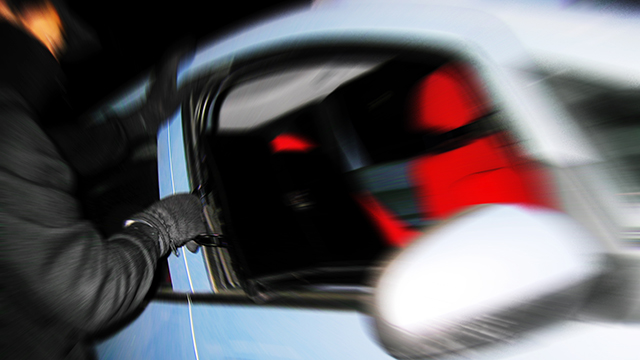
In the 1980s, car theft became a serious issue. Between 1973 and 1983, the number of cars stolen doubled and, in 1983 alone, an estimated $60 million in insurance claims were lodged (about $250 million in today’s money).
The NRMA decided something needed to be done, so it introduced a ‘stealability’ survey that pressured car makers to improve their security measures.
The manufacturers responded, leading to the development of anti-theft technologies such as the engine immobiliser, and reports of stolen cars declined steadily.
As recently as 2020, car theft was at historic lows. In 2015, fewer than 1500 people in NSW were arrested for car theft, while in Victoria fewer than 20,000 car thefts were reported in 2018 and 2019.
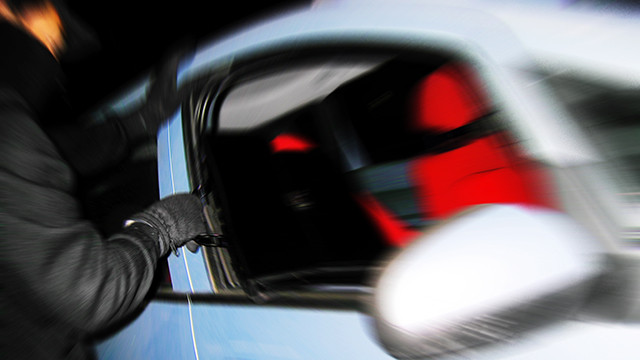
Unexpectedly, however, the 2023-2025 period has seen a spike in car thefts. In NSW, more than 2500 arrests were made during 2024, while in Victoria there were over 30,000 car thefts reported (nearly half of the 65,000 car thefts across the nation according to the Australian Bureau of Statistics).
Moreover, the Insurance Council of Australia says car theft claims jumped from $270 million in 2015 to $428 million in 2024, a 96 per cent rise.
Many factors have led to this spike in stolen cars, but the single most salient seems to be that car thieves are getting better at circumventing anti-theft technology. This includes cloning key signals to operate keyless entry and starting features and even plugging into the car’s on-board diagnostics system to override security features.
What can you do to avoid becoming a car theft statistic? There are some simple measures that will minimise risk.
Lock your car
This might seem like Captain Obvious advice, but leaving a car unlocked and unattended for any length of time makes it an easy target. That goes double for turning on the car to warm it up on cold mornings and then ducking inside to grab something. You might as well hand the thief the keys.
Consider where you park
Car thieves tend to operate under the cover of darkness or in locations where they can avoid attention. If you’re parking in a public place at night, aim for a well-lit area or at least one that has a lot of passing foot traffic.Secure carparks are always a sure bet (albeit at a cost), while a public carpark fitted with security cameras is a better option than one that isn’t.
Key security
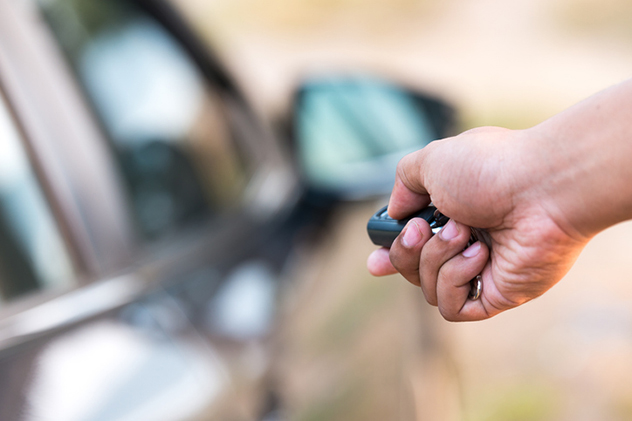
Proximity keys (which permit keyless entry and start) are a wonderful convenience, but they can be a security risk.Don’t leave your key fob lying around, especially in a public place. Car thieves are always on the lookout for such careless behaviour and it’s not hard to yoink a set of unsupervised keys off a table.
Second, don’t leave your key fob in close proximity to your car (i.e., if you park near the front door, don’t hang the car key on a hook just inside the door). If it’s too close, even a locked car can be in sensor range and ‘ready’ to open – making life much easier for any would-be car thief.
Keep keys far away from windows and doors (which allow the signal to transmit more easily) and if that’s not possible, consider storing the keys in a signal blocking bag while they’re not in use.
Tech-based protection
Most modern vehicles come standard with an engine immobiliser, but there are plenty of additions available if you want to bump up security for your pride and joy.
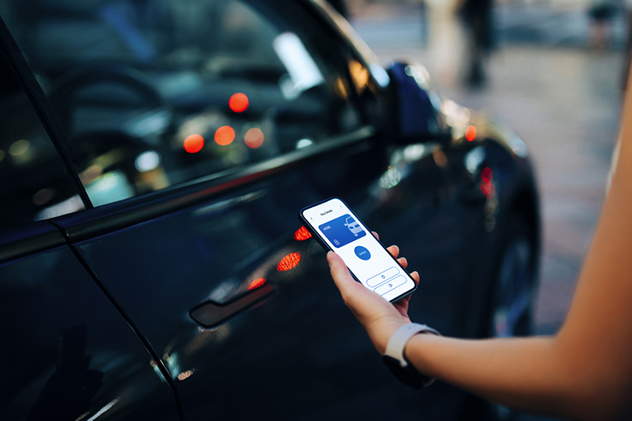
Many newer cars can also be linked to a smartphone app and disabled remotely. If your car is a couple of years old, ask your dealer if there have been any engine immobiliser upgrades in the interim. Some makes (such as Kia and Hyundai) have been historically vulnerable to high-tech theft, but upgrading the vehicle’s software at a dealership can immediately reduce theft risk.
Tried and true after-market solutions such as a car alarm or kill-switch (a hidden button that disables the battery or fuel pump) offer good secondary protection.
Finally, a GPS tracking system won’t prevent theft, but it can immediately locate the car, which makes it easier to retrieve and gives police a better chance of catching the culprit.
Steering lock
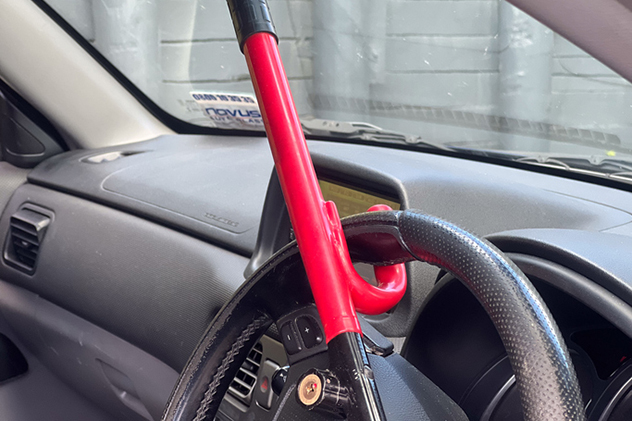
Most of us who came of age in the 1990s owned a steering lock for our rustbucket first cars. Suddenly making a comeback in 2026 after the abovementioned spike in car thefts, a steering lock is a steel contraption that stretches across the steering wheel and locks in place, making it impossible to turn the wheel more than a few degrees in either direction.
A professional car thief can usually dispatch with a steering lock in short order, but it does serve as a useful visual deterrent – if your car has one and a similar vehicle a few spaces over doesn’t, the thief will likely opt for the easier pickings.
Don’t leave valuable items inside
A large number of reported car thefts are not actually what the Americans call ‘grand theft auto’ (kids stealing them for a joyride or dubious individuals taking them to chop-shops or driving them into a cargo container for overseas resale), but items stolen from the vehicle.The advice here is simple: don’t leave anything valuable in your car. And ‘valuable’ doesn’t mean gold ingots and diamond necklaces; it means anything a thief could sell at a pawn shop or on a social media page.
Blankets and luggage covers don’t help. If the cargo blind is shut, it’s just a public announcement to car thieves that there’s probably something worth pinching inside.


