Do you need a child seat in a taxi or Uber?

Protecting your most precious cargo is important every time you hit the road, so ensuring your young ones are in a correct (and properly fitted) child seat is an absolute must-do.
Despite being crucial safety equipment, child seats can be bulky and cumbersome to travel with – especially while also handling your kids.
So what happens if you need to travel in an Uber, taxi or other ridesharing vehicle with a child?
NSW and other Australian states have strict laws relating to proper child seat use, and it always remains the driver’s responsibility to ensure all passengers are correctly restrained.
Following the guidelines below can help ensure your child is kept as safe as possible while riding in a taxi, Uber, or with any other rideshare platform.
— NRMA spokesperson
Do I need a child seat in a taxi or Uber in NSW?
For children less than 12 months old, NSW road legislation does not issue separate rules between a private vehicle, taxi or Uber. This means:
- Children up to the age of 6 months must use a rear-facing restraint.
- Children aged between 6 and 12 months must use either a rear-facing restraint or a forward-facing child car seat with an inbuilt harness.
Beyond 12 months, the laws and requirements deviate.
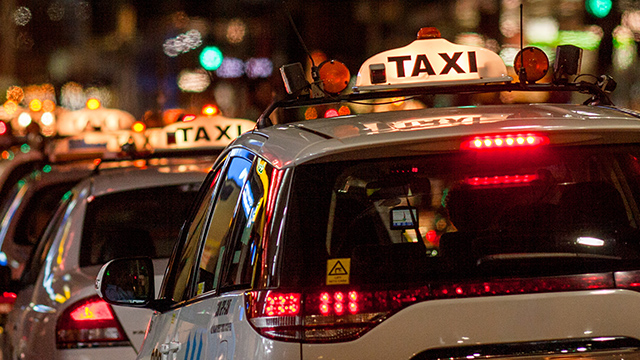
In taxis, children more than 12 months of age are required only to use a seatbelt and do not need a child seat, as long as they are not seated in the front row.
Whether riding in a private car, taxi or Uber, children from 12 months to four years of age must not sit in the front seat of a vehicle that has two or more rows of seats. They may sit in the front seat of a vehicle that only has one row of seats but must use an approved child car seat suitable for their age and size.
Children aged four to seven years cannot sit up front in any vehicle that has two or more rows of seating. The exception to this is if the back row is occupied by children less than seven years of age.
If these conditions are met, and a child between four and seven years of age does need to sit up front, they will need to use an approved child seat.
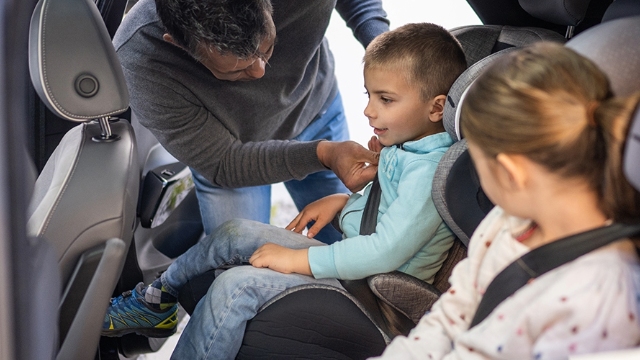
Taxis in NSW are required to have the necessary child restraint anchorage point(s) fitted, and all wheelchair accessible taxis are required to carry an approved child car seat.
Regardless of whether the vehicle is a taxi, rideshare or privately owned, babies and children are never allowed to share a seatbelt or ride on another occupant’s lap.
It’s important to note that, while child-seat laws in NSW are relaxed somewhat for taxis, the NRMA still strongly recommends that children aged one to seven are correctly restrained in an appropriate car seat for their age and size, regardless of where in the vehicle they are seated.
RELATED: The NRMA calls for funding child seats, installation and education programs
Do I need a child seat in a taxi or Uber in the ACT?
A child seat is not required in taxis for children less than seven years of age in the ACT, however they are under no circumstances permitted to ride in the front seat.
While this is the law, the NRMA still recommends the use of the correct child seat at all times.
Like NSW, the same rules that apply for child seats in privately owned vehicles apply for rideshares and Uber in ACT.
What about child-seat rules for taxis and Ubers in other states?
Generally across Australia, rideshare vehicles such as Uber are seen as private vehicles, meaning they do not receive special exemption from child-seat laws and operators are subject to all the same laws.
The only exceptions are in Western Australia and Queensland, where rideshare vehicles follow the same rules as taxis.
If you’re outside NSW or ACT, check with that state’s road and traffic authority before planning your next taxi or rideshare trip with a young child. To ensure the safety of your child when travelling, the NRMA recommends they are restrained in the correct car seat for their age, no matter what kind of vehicle you’re travelling in.
What about child-seats in hire cars?
When you’re hiring a car, child-seat rules are the same as if you were driving your own private vehicle — the correct car seat for your child’s age and size is required by law, and it’s the driver’s responsibility to ensure it’s fitted and used properly.
Away from your car while travelling but need a child seat? Hire car company's such as Sixt, which is owned by the NRMA and provides NRMA members with discounted rates, can have one fitted before your arrival. Simply request a car seat while making your booking.