How to legally mount your mobile phone in a car (NSW Road Rules Explained)
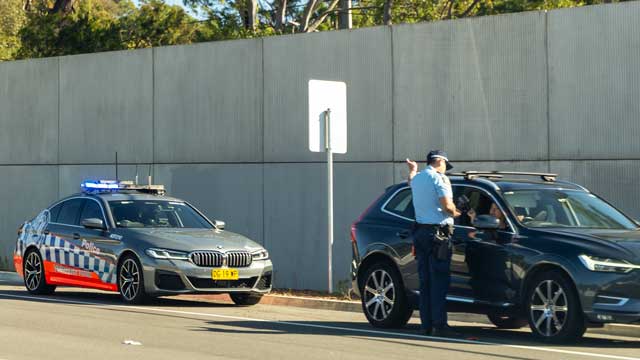
Trying to use a mobile phone while driving causes driver distraction and can result in serious crashes or collisions with pedestrians. This is reflected in the size of the penalty this offence, which in NSW is $423 (or $562 if caught in a school zone) and five demerit points.
In 2024, a staggering 330,926 fines were issued nationwide for illegal mobile phone use (40,931 by police and 289,995 by phone detection cameras) according to federal government data.
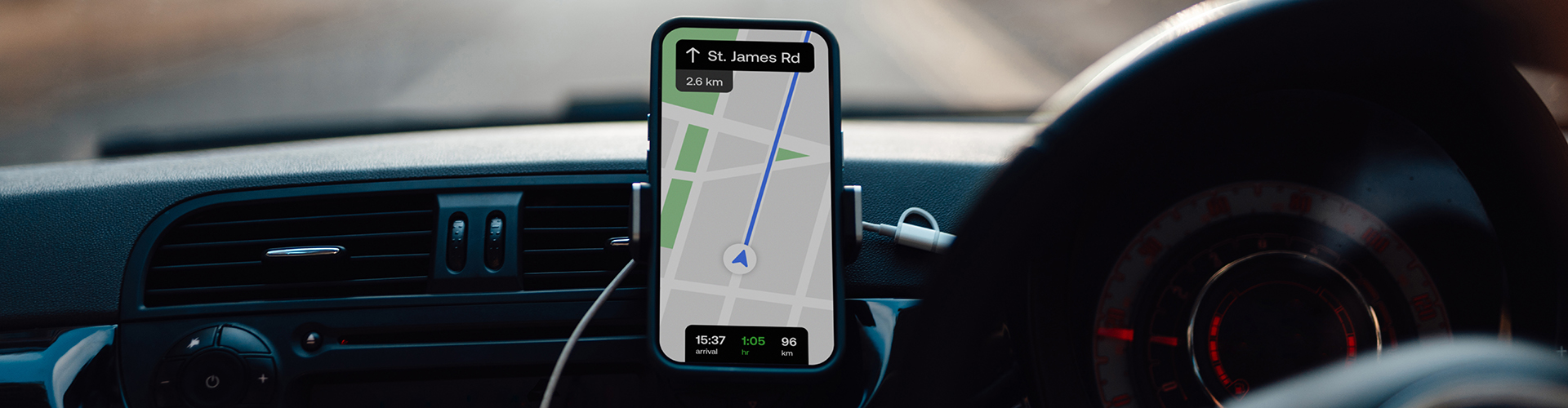
Most cars built in the past 10 years will have Bluetooth connection or a digital dash, making it possible to receive audio instructions from your phone’s satellite navigation app or see the map on the centre screen, but if your vehicle doesn’t have Apple CarPlay/Android Auto or native sat nav, you may wish to monitor your phone’s screen to assist with navigation.
In this case, you’ll need to mount your phone in a cradle as it’s illegal to hold and use your phone, even while stationary at traffic lights or stuck in traffic. There are also limitations on how you can use your phone when it’s mounted in a cradle.
Here’s everything full licence holders need to know about legally mounting and using a mobile phone their your car. Remember, L and P plate licence holders cannot use a mobile phone when driving under any circumstance in NSW or ACT.
What are the laws around mounting a mobile phone in your car?
While Transport for NSW stresses that any mobile phone use can be a distraction and should be minimised for safety, the only specific law that governs mobile phone mounts is NSW Road Rule 297(2). This says, ‘A driver must not drive a motor vehicle unless the driver has a clear view of the road, and traffic, ahead, behind and to each side of the driver.’
If you are involved in a crash and it is determined your mobile phone was obstructing your view of the road, you could be charged.
What sort of device can I use?
In its fact sheet published in 2023, Transport for NSW recommends using the smallest device possible (no more than 5.5 inches in a passenger vehicle and six inches in vans and other vehicles with larger windscreens). Anything larger, it believes, could “significantly obstruct” the driver’s vision.
Mobile phones have grown in size since 2023 and most newer models are around the six-inch mark. Some after-market satellite navigation systems are larger still. It’s important to use common sense – don’t try to mount a cellular-enabled iPad, for example.
Where should I position the mobile phone cradle?
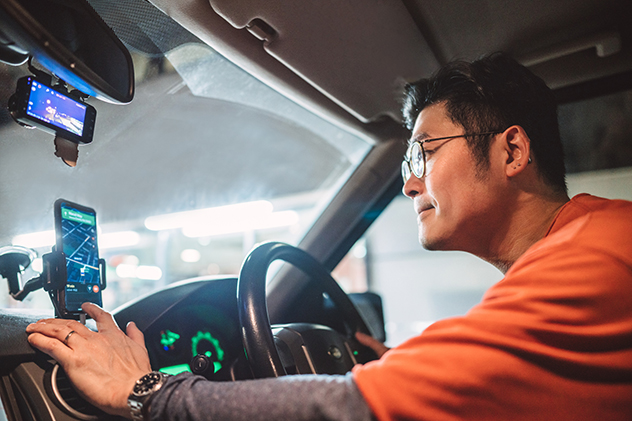
Transport for NSW recommends mounting the phone as low down on the windscreen as possible to minimise its intrusion on the driver’s field of view. The ideal position is at the bottom right-hand corner of the windscreen. If this is not possible, then at the bottom of the centre of the windscreen (below the rear vision mirror) is the next best place for it.
Do not position it so far from the driver’s field of view that the road ahead leaves their peripheral vision, and don’t put it anywhere it could interfere with the activation of an airbag (check your car’s handbook for possible airbag locations).
What sort of mobile phone mount should I buy?
There are endless options available but most work in a similar manner. And, as with most products, you get what you pay for.
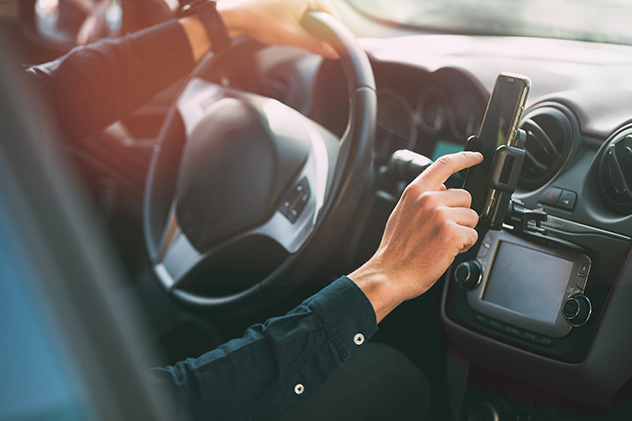
In years gone by, some phone cradles needed to be fixed to the dashboard with adhesives or screws, but in 2025 most have a suction cup which sticks to the windscreen. Some can be attached to the car’s air vent or gaps in the dashboard (see image above), but this obviously limits where you can locate the cradle.
Make sure the mount employs a ball joint or similar that allows you to tilt the phone up, down, left and right so the screen properly faces the driver.
Aim for a compact unit that minimises obstruction. Avoid those that hang from the rear-vision mirror or have long stalks.
Quad Lock’s Mag Case products are not cheap, but they come with a phone-specific case (covering most current Apple/Android models), hold the unit securely, and can be locked in place or removed with a flick of the wrist.
When can I use my phone while driving?
Provided the phone is mounted legally, a driver may touch it to do the following things:
- make or receive a phone call
- operate audio playing functions
- use a driver’s aid (such as satellite navigation)
Even if the phone is mounted, you can still be fined for using it to send text messages, use social media, or do anything beyond the uses specified above. And don’t forget, additional restrictions apply to P-platers.