Eight must-dos when taking your EV to the snow

At a Glance
- EVs can be taken to the snow, but plan your charge stops
- Cold weather, climbs and cabin heating can reduce EV driving range
- Precondition the battery while still on charge and use heat seating before dialling up the cabin temp
- Keep ESC and traction control on, avoid fast steering or braking inputs and use quality all-weather or winter tyres
Ski season is on its way, with icy roads and snow warnings already putting winter driving back on the radar for motorists heading into alpine and highland regions.
For electric vehicle drivers, the fundamentals of snow driving are much the same as they are for any other car: slow down, check the weather, carry the right gear and know the road rules before you go.
But EVs add a few extra things to think about. Cold temperatures can affect battery efficiency, cabin heating can use more energy, and the distance between reliable chargers can matter more when you’re climbing into colder terrain.
So what do you need to know if you’re taking your EV to the snow or into highland and cold regions this winter?
Can you take an EV to the snow?
Yes, you can take an EV to the snow. Like any vehicle, an EV needs to be prepared properly for alpine driving, especially when it comes to tyres, charging, snow chains and road conditions.
In many ways, EVs can be well suited to cold-weather trips. They usually have a low centre of gravity thanks to the battery pack, power delivery is smooth and usually more responsive, and electronic traction systems can help manage grip.
The main difference is that EV drivers need to plan range and charging more carefully. Cold weather, steep climbs, wet roads, snow, headwinds, roof racks and cabin heating can all increase energy use and reduce driving range.
Are EVs any good in snowy conditions?
EVs can be good in snow, provided they have the right tyres and are driven smoothly.
The instant torque that makes EVs feel responsive in everyday driving can also cause wheel spin if the accelerator is used too sharply on snow or ice. That is why gentle inputs matter. Accelerate slowly, brake early, turn gradually and avoid sudden inputs.
It is also important to trust the car’s electronic stability control and traction control systems. These systems are designed to help manage grip when the road surface is slippery. Don’t turn them off unless a manufacturer specifically instructs you to do so in a particular situation.
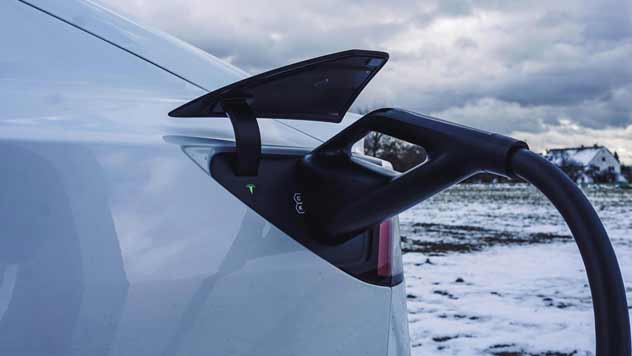
Eight must-dos for taking your EV to the snow this winter
1. Start with more charge than usual
The first rule of EV alpine weather driving is simple: don’t cut it fine.
Cold weather can reduce battery efficiency, while long climbs, wet roads, snow, headwinds, roof racks and cabin heating can all increase energy use. That means the range showing on your dashboard at sea level may not play out the same way on the way to Jindabyne, Perisher, Thredbo, Charlotte Pass, Falls Creek or Mount Hotham.
As a general rule, EVs will lose 10 to 20 per cent of range in 4-10 degrees, and 20-30 per cent in freezing weather according to Recurrent Auto. Leave with a full or near-full battery where possible, and aim to arrive at your destination or next charger with a larger buffer than you might use on a regular highway trip.
For alpine driving, a 20% battery buffer is a sensible minimum. More is better if the weather looks poor, if you’re carrying passengers and luggage, or if your destination has limited charging.
2. Plan your charging stops before you leave
EV drivers should map out EV charging stops before heading into alpine regions, rather than waiting until the battery is low.
Check where the chargers are, what speed they offer, whether they suit your vehicle’s plug type and whether there are recent user check-ins showing they are working. Plan to charge well before you get under 20 per cent State of Charge (SoC) - a charger that looks perfect on a map is not much help if it is offline, occupied or busy with snow-season traffic.
It is also worth identifying a back-up charger on the way in and out. Winter resort traffic can be heavy, and queues can build quickly at popular charging points. It’s also worth taking a Type 2 cable and the portable mobile charger in case you need to use untethered AC chargers or the humble powerpoint.
3. Precondition the car while it is still plugged in
One of the easiest ways to save range is to warm the cabin and battery while the car is still connected to power.
Many EVs allow drivers to precondition the cabin via an app or in-car timer. This means the car can be warm before you leave, without drawing as much energy from the battery once you’re on the road.
Preconditioning can also help the battery reach a better operating temperature, which may improve efficiency and charging performance in cold conditions.
4. Use seat heaters before turning up the cabin heat
Cabin heating uses energy, and in cold weather that can have a noticeable effect on range (though some modern EVs have heat pumps which reduces this impact).
Where fitted, heated seats and a heated steering wheel are usually more efficient than heating the entire cabin to a high temperature. That doesn’t mean shivering through the drive, but it does mean using heating more strategically.
Set a comfortable cabin temperature, use seat heating where available, and avoid constantly blasting hot air at maximum power unless needed for demisting or safety.
5. Fit good quality all-weather tyres
Tyres matter more than almost anything else in cold, wet, icy or slushy conditions.
For most Australian drivers, dedicated winter tyres probably are not realistic unless you live in alpine regions or regularly drive in snow. They can also wear faster in warmer conditions and may not make sense for a once-a-year ski trip.
A good quality set of all-weather tyres can be a more realistic option for many EV owners, particularly those who frequently drive through cold, wet or highland regions. Look for tyres that suit your vehicle’s weight, wheel size and load rating, and check they are in good condition before the trip.
Whatever tyre you use, tread depth and pressure are critical. Cold weather can reduce tyre pressure, which may increase rolling resistance and affect both handling and range. And remember, NRMA Members get a discount with Tyroola.
6. Know the snow-chain rules before you go
Snow-chain rules apply to EVs just as they do to petrol, diesel and hybrid vehicles.
In NSW alpine areas, snow-chain requirements vary depending on the road, vehicle type and conditions. Drivers heading into Kosciuszko National Park should check the latest requirements before travelling, while chains are compulsory to carry between the June and October long weekends.
AWD and 4WD vehicles may not be required to carry chains in some NSW areas, but drivers should not assume they are exempt everywhere. Requirements vary by state, resort and road condition, and authorities can direct drivers to fit chains when conditions deteriorate.
7. Check whether your EV can take chains
This is a big one for any car owner: not every car can safely use every type of snow chain.
Some EVs have limited clearance around the wheels, tyres, brakes, suspension or wheel arches. Larger alloy wheels and low-profile tyres can make the issue worse. Using the wrong chains can damage the car.
Before hiring or buying chains, check your owner’s manual and confirm the correct chain type for your vehicle, tyre size and driven wheels. Some manufacturers recommend specific chain brands or low-clearance chain designs.
If your EV cannot use conventional chains, ask whether approved alternatives are available, but don’t assume snow socks or other traction devices meet local legal requirements.
8. Slow down early, turn gently and trust the car’s safety systems
Snow driving rewards patience. Plan ahead for every stop, corner and descent.
When coming to a stop, slow down much earlier than usual. Brake gently and progressively, rather than leaving it late and asking the tyres to do too much at once. Modern anti-lock braking systems help prevent wheel lock-up, but drivers still need to allow much longer stopping distances on ice, snow or slush.
The same applies to turning. Slow down a lot before the corner, almost to a crawl if conditions are poor, then turn gently and smoothly. Avoid fast steering inputs, sudden braking or sharp acceleration mid-corner.
Leave ESC and traction control switched on. These systems are there to help the car maintain stability and grip when the road surface becomes slippery.
Before you leave: quick EV snow-trip checklist
Before heading into alpine or cold-weather regions, EV drivers should check:
- Battery State of Charge and that you have a realistic range buffer
- Charger locations, plug type, charging speed and recent user check-ins
- Live Traffic NSW or relevant state road condition updates
- Weather warnings and resort access information
- Snow-chain rules for the specific road, resort and state
- Whether the vehicle can safely use chains
- Tyre pressure, tread depth and tyre quality
- Windscreen washer fluid, wipers and demister function
- Charging cables, adapters and app access
- Warm clothing, waterproof gloves, torch, water and emergency supplies
Transport for NSW warns that driving in alpine areas is different from a daily commute, with motorists needing to be prepared for snow, ice, road closures and changing conditions. Drivers heading to the Snowy Mountains are also advised to check Live Traffic NSW and road conditions before travelling.
The bottom line
Taking an EV to the snow is not difficult, but it does reward preparation.
The biggest difference is that drivers need to think about range more carefully in cold conditions, especially when climbing into alpine areas with limited charging options. Start with more charge than usual, plan your route properly, use good quality tyres, know the snow-chain rules and drive gently.
Do that, and an EV can be a quiet, capable and comfortable way to get to the snow this winter.