Spec battle: Hyundai Kona Hybrid vs MG ZS Hybrid+

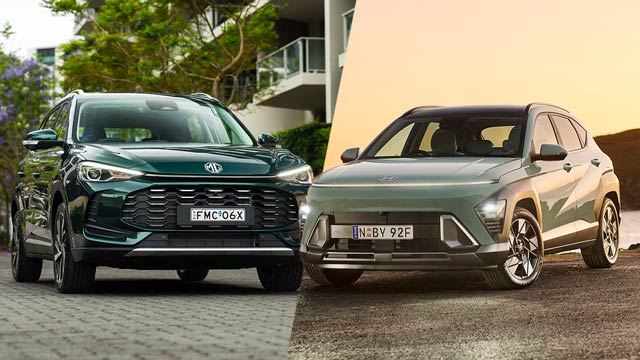
Small hybrid SUVs are quickly becoming a stepping stone for drivers who want to cut fuel bills without jumping straight into a battery electric car. In that space, the Hyundai Kona Hybrid and MG ZS Hybrid+ are two of the most talked about options.
Hyundai has just tidied up its small SUV line-up with the 2026 Kona range, cutting the powertrain choice back to a 2.0-litre petrol and 1.6-litre petrol hybrid, and simplifying the model walk to three trims: Kona, Kona Elite and Kona Premium.
The MG ZS, on the other hand, leans into sharp driveaway pricing, with the ZS Hybrid+ available in Excite and Essence guises.
Both are front wheel drive, both pair a small petrol engine with an electric motor, and both are pitched squarely at city and suburban life. One car plays the value and big-power card, the other leans harder into efficiency and safety kit.
Let the spec battle begin.
Hyundai Kona Hybrid vs MG ZS Hybrid+: pricing and variants
Hyundai Kona Hybrid
For 2026, the Kona Hybrid is offered across all three trims:
- Kona Hybrid 1.6-litre petrol hybrid, six-speed dual clutch transmission, front wheel drive – $36,950
- Kona Elite Hybrid 1.6-litre petrol hybrid, six-speed dual clutch transmission, front wheel drive – $39,950
- Kona Premium Hybrid 1.6-litre petrol hybrid, six-speed dual clutch transmission, front wheel drive – $45,700
Those figures are manufacturer list prices and do not include dealer delivery or on-road costs, so real world drive-away pricing will sit higher once stamp duty and dealer charges are added.
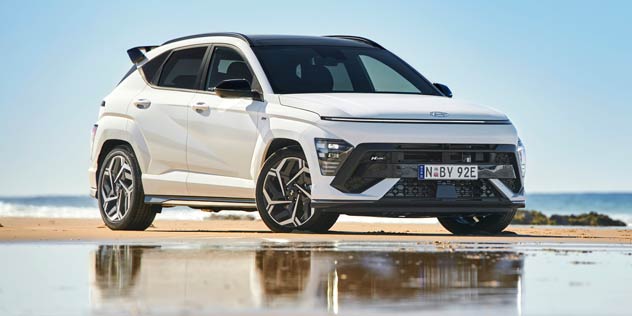
An N Line option pack, with sportier styling and larger wheels, can be added to Elite ($3500) and Premium ($3000) grades if you want something a bit more extroverted.
MG ZS Hybrid+ Excite and Essence
MG keeps things straightforward with two hybrid trims, both using the same Hybrid+ powertrain and (more affordable) national driveaway pricing:
- ZS Excite Hybrid+ – $29,000 MRLP ($30,888 driveaway)
- ZS Essence Hybrid+ – $31,800 MRLP ($33,888 driveaway)
The ZS Hybrid+ sits near the top of the broader ZS family, which also includes cheaper non-hybrid petrol variants. That means you are stepping into fairly generous equipment levels even with the Excite, while the Essence adds extra comfort and cosmetic upgrades for roughly $3000 more.
Hyundai Kona Hybrid vs MG ZS Hybrid+: Powertrain, performance and economy
Hyundai Kona Hybrid
Under the Kona Hybrid’s bonnet sits a 1.6-litre SmartStream four-cylinder petrol engine backed by an electric motor and small lithium-ion battery. On the spec sheet you get:
- Engine output: 77kW at 5700rpm and 144Nm at 4000rpm
- Electric motor: 32kW and 170Nm
- Combined system output: 104kW and 265Nm
- Transmission: six-speed dual clutch automatic
- Drive: front wheel drive
Fuel and emissions numbers (ADR81/02 lab tests) for the hybrid are:
- 3.9L/100km combined
- 95g/km CO2 combined
On paper, the Kona Hybrid is tuned to sip rather than sprint. The total power and torque figures are modest, but the electric motor’s low-down pull should help it feel more responsive around town than the raw numbers suggest.
MG ZS Hybrid+ Excite and Essence
The ZS Hybrid+ takes a different approach. Here the 1.5-litre petrol engine is really just one part of the story:
- Engine capacity: 1498cc
- Engine output: 75kW and 128Nm
- Electric motor output: 100kW and 250Nm
- Combined system output: 158kW and 465Nm
- Traction battery: 1.83kWh
- Drive: front wheel drive via a three-speed hybrid transmission
That combined output is not insignificant for a small front drive SUV. On paper the MG should have much stronger in-gear shove for highway overtakes and steeper hills.
Lab fuel figures tell a slightly different story:
- 4.7L/100km combined
- 115g/km CO2 combined
The AAA’s Real World Testing Program has shown many models using more fuel than their official numbers, sometimes by a decent margin (33 per cent in the case of the 2024 Kona Hybrid), so treat these as best case rather than guaranteed results.
Given the specs, you would expect the Kona to be thriftier for most drivers, especially if you spend a lot of time in stop-start traffic, while the MG should feel brisker and more effortless on open roads.
If you want the strongest shove in the segment and care less about squeezing every last kilometre out of a tank, the MG ZS Hybrid+ wins on power and punch. If your priority is fuel economy and lower CO2 on paper, the Hyundai Kona Hybrid promises to come out ahead, even if both are likely to run higher than their claims in real traffic.
Hyundai Kona Hybrid vs MG ZS Hybrid+: Interior, tech and features
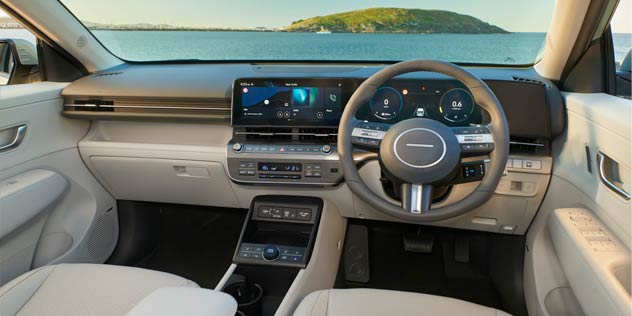
Hyundai Kona Hybrid
Hyundai has pushed the Kona’s cabin upmarket compared to the last generation, and the hybrid variants share the same dashboard and layout as their petrol siblings. Across the range you will see:
- 12.3-inch multimedia system with digital radio
- Bluelink connected car services and over-the-air software updates
- Smart key with remote start
- Dual zone climate control with rear air vents
- Open-style centre console
- Leather-appointed steering wheel and door armrests
Moving up the trims brings more comfort and tech:
- Kona Elite Hybrid adds leather-appointed interior, heated front seats and driver's seat with two-way lumbar support, eight-way powered front passenger seat, electrochromic mirror, privacy glass, 18-inch alloy wheels and rain sensing wipers
- Kona Premium Hybrid piles on dual projector LED headlights, ten-way powered driver’s seat and eight-way for the passenger, a full 12.3-inch digital instrument cluster, satellite navigation with live traffic, Bose eight-speaker audio, ambient mood lighting, a new powered sunroof with sunshade relaxation mode for front seats, heated and ventilated front seats, heated rear outer seats, heated steering wheel, smart powered tailgate and cloth-knit headlining
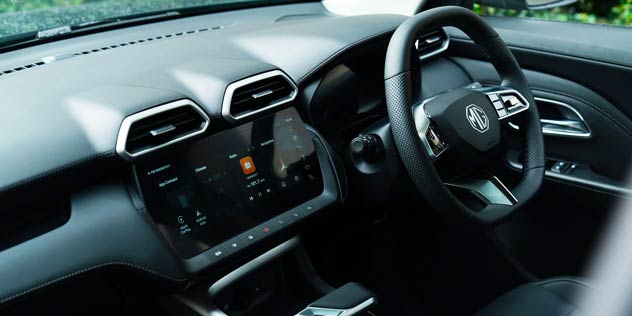
MG ZS Hybrid+ Excite and Essence
The ZS Hybrid+ cabin is simpler but still ticks the major boxes buyers expect in this class. Across both Excite and Essence trims you get:
- Central 12.3-inch touchscreen plus Apple CarPlay and Android Auto
- Bluetooth connectivity
- Push-button start and keyless entry
- Rear parking sensors and reversing camera
- Multi-function steering wheel and digital driver display
- Cloth or leather-look upholstery depending on trim
The Essence Hybrid+ adds more creature comforts and showroom appeal, such as:
- Electronic panoramic sunroof
- Leather steering wheel and upgraded interior trims
- Six-way electrically adjustable seating
- Additional storage zones and front row LED reading light
The Kona Hybrid, particularly in Elite and Premium trims, delivers a more upmarket cabin with richer materials and a longer options list. The MG ZS Hybrid+ fights back via value: even the Excite variant is well specified for the money, and the Essence brings a panoramic sunroof and extra comfort features without straying far north of $30,000 driveaway.
Hyundai Kona Hybrid vs MG ZS Hybrid+: Safety and driver assistance
Hyundai Kona Hybrid safety
Hyundai’s SmartSense suite is standard across the Kona range, and the hybrid powertrain does not miss out. Key features include:
- Forward and multi collision avoidance assistance with vehicle, pedestrian, cyclist, direct oncoming and junction turning detection
- Blind spot collision avoidance assistance
- Rear cross traffic collision avoidance assistance
- Smart cruise control with stop and go
- Lane keeping assistance and lane following assistance
- Intelligent speed limit assistance
- Driver attention warning and leading vehicle departure alert
- Safe exit warning
- Multi collision avoidance braking
- Seven airbags, including a front centre airbag
- Parking distance warning front and rear
The Kona Premium Hybrid ups the ante again with:
- Blind spot view monitor
- Surround view monitor
- Parking collision avoidance assistance – reverse
- Remote smart parking assistance and reversing assistance
- Parking distance warning front, rear and side
MG ZS Hybrid+ safety
The MG ZS Hybrid+ carries a solid set of safety gear across the range. This includes:
- Autonomous emergency braking
- Lane change and keeping assistance and emergency lane keeping assistance
- Lane departure warning
- Intelligent cruise assistance
- Unsteady driver warning
- Intelligent speed limit assistance
- Blind spot detection
- Rear cross traffic alert
- Rear parking sensors and electric parking brake
- Forward and rear collision warning
- Door opening warning
- Front, side and curtain airbags (six in total)
Both cars offer modern active safety suites, but the Kona Hybrid’s feature list runs marginally deeper, especially in Premium trim where you get big car tech like blind spot camera views and remote parking. The ZS Hybrid+ covers the fundamentals well, yet Hyundai Kona Hybrid wins this round for safety tech depth.
Hyundai Kona Hybrid vs MG ZS Hybrid+: Space, practicality
Hyundai’s spec sheet for the Kona shows:
- Length: 4350mm (4385mm for the N Line)
- Width: 1825mm
- Height: 1585mm for hybrid models
- Wheelbase: 2660mm
- Ground clearance: 170mm for hybrid variants
- Cargo area: 407 litres seats up, 1241 litres seats folded (VDA)
MG’s ZS Hybrid+ is slightly larger overall:
- Length: 4430mm
- Width: 1818mm
- Height: 1635mm
- Wheelbase: 2610mm
- Ground clearance: 161mm
- Boot volume: 443 litres seats up, 1457 litres seats folded
So the ZS Hybrid+ has the longer body and taller roofline, and that shows in boot numbers. For prams, camping gear or a big supermarket run, those extra litres and extra height will be welcome, and rear passengers are likely to enjoy the more upright seating position and bigger glasshouse effect.
The Kona fights back with a longer wheelbase, which increases leg room, and a slightly wider body. The cabin feels more cocooned and polished, with a more modern dashboard layout that gives the impression of extra width up front.
Hyundai Kona Hybrid vs MG ZS Hybrid+: Towing
If you plan to tow, the spec sheets make a very clear case.
For the Kona Hybrid:
- Braked towing capacity: 1300kg
- Unbraked towing capacity: 600kg
- Maximum towball weight: 130kg
For the MG ZS Hybrid+ (all variants):
- Braked towing capacity: 500kg
- Unbraked towing capacity: 500kg
That means the MG is limited to very light trailers, small box trailers or a lightweight camper at best. The Kona Hybrid, by contrast, gives you more capacity for a small camper, heavier box trailer or two e-bikes with a bit of a safety buffer. The higher roof rack rating also makes it easier to carry larger roof pods, kayaks or surfboards without crowding the limit.
If your primary need is passenger and luggage space for school runs, holidays and big grocery trips, the MG ZS Hybrid+ edges ahead thanks to its larger boot and taller body. If towing or heavy roof loads are part of your life, the Hyundai Kona Hybrid is clearly the better tool, with far stronger towing and roof ratings.
Hyundai Kona Hybrid vs MG ZS Hybrid+: Ownership and running costs
Hyundai and MG both pitch themselves as value brands on ownership, but they go about it in slightly different ways.
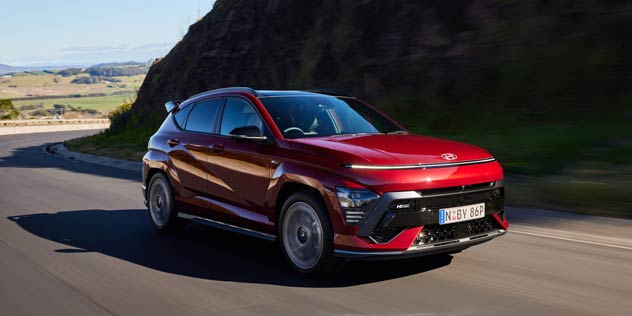
The Hyundai Kona Hybrid is covered by a five-year, unlimited kilometre new car warranty (extendable to seven years) and a capped-price servicing program, with service intervals typically every 12 months or 15,000km for this engine and hybrid system. There is also roadside assistance available when you service within the dealer network, which many owners will find reassuring if they are doing regular highway kilometres.
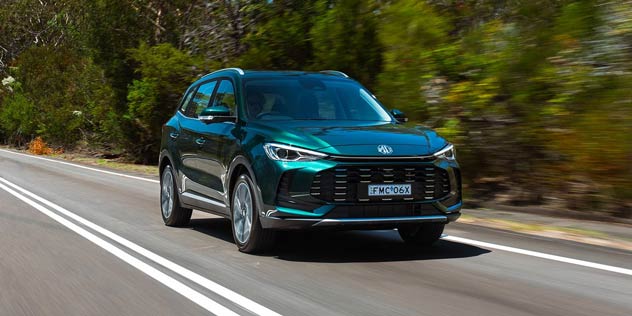
The MG ZS Hybrid+ range is backed by a market-leading ten-year/250,000km warranty period for the vehicle and separate high-voltage battery coverage, and there’s capped-price servicing across the same period. On paper, scheduled servicing over the first several years tends to sit at the more affordable end of the small SUV market, and national drive-away pricing keeps the purchase side simple.
Exact costs will depend on how far you drive each year and where you service, but MG’s longer warranty and sharp service pricing make a strong case for budget-conscious buyers. Hyundai’s after-sales program counters with a more extensive dealer network and long experience with hybrids and EVs.
Looking purely at warranty length and likely total service spend, the MG ZS Hybrid+ has the advantage, especially for owners who plan to keep the car for a long time and rack up serious kilometres. Hyundai’s package is still solid, particularly if you value dealer network coverage and brand familiarity.
Verdict: which one should you buy?
On paper, these two small hybrid SUVs are walking different lines.
The MG ZS Hybrid+ Excite and Essence lean hard on value and performance. For just over $30,000 drive-away, you get a hybrid with serious combined outputs, a roomy body, a big boot and a long warranty. Step up to the Essence and it adds a panoramic sunroof and extra kit without blowing out the budget. For buyers who mainly do city and outer suburban kilometres, tow light loads, and want that extra overtaking shove on tap, the MG makes a compelling case.
The Hyundai Kona Hybrid takes a more conservative, efficiency focused route. It asks more up front, especially in Premium trim, but answers with lower official fuel use, deeper active safety tech, a more polished cabin, and significantly stronger towing and roof load numbers. For families who regularly head out of town, carry bikes or boards, and value the added safety net of advanced driver assistance, those attributes matter.
If you are shopping with a hard budget and want maximum performance and space per dollar, the spec sheets point you towards the MG ZS Excite or Essence Hybrid+. If you are prepared to spend more for lower fuel numbers, richer safety tech and extra towing flexibility, the Hyundai Kona Hybrid Elite or Premium still looks like the smarter long-term play.