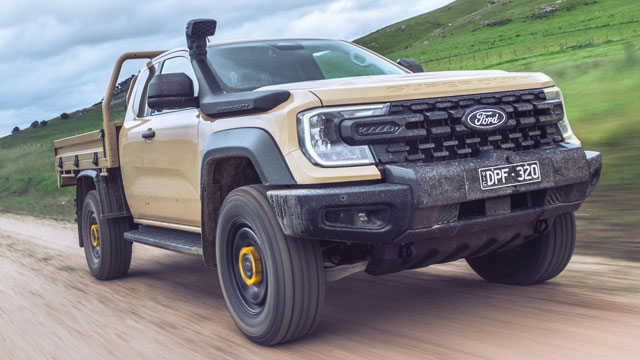
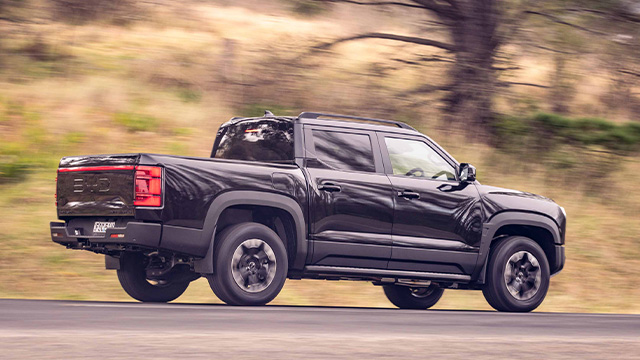
Ford Ranger PHEV v BYD Shark 6 v GWM Cannon Alpha

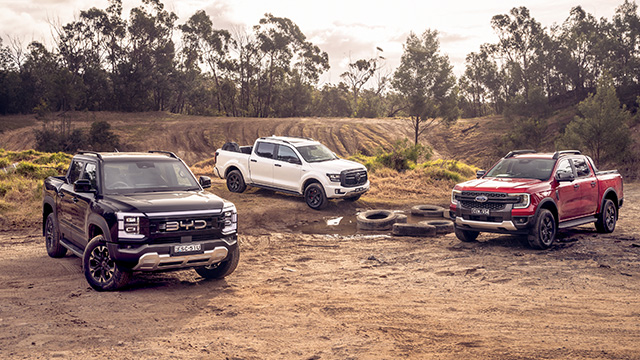
It wasn’t so long ago that Australians were being told the electric ute would “end the weekend”. Now, they’re beginning to power them. The electrified utility segment has suddenly come to life with three new players and others are in the pipeline.
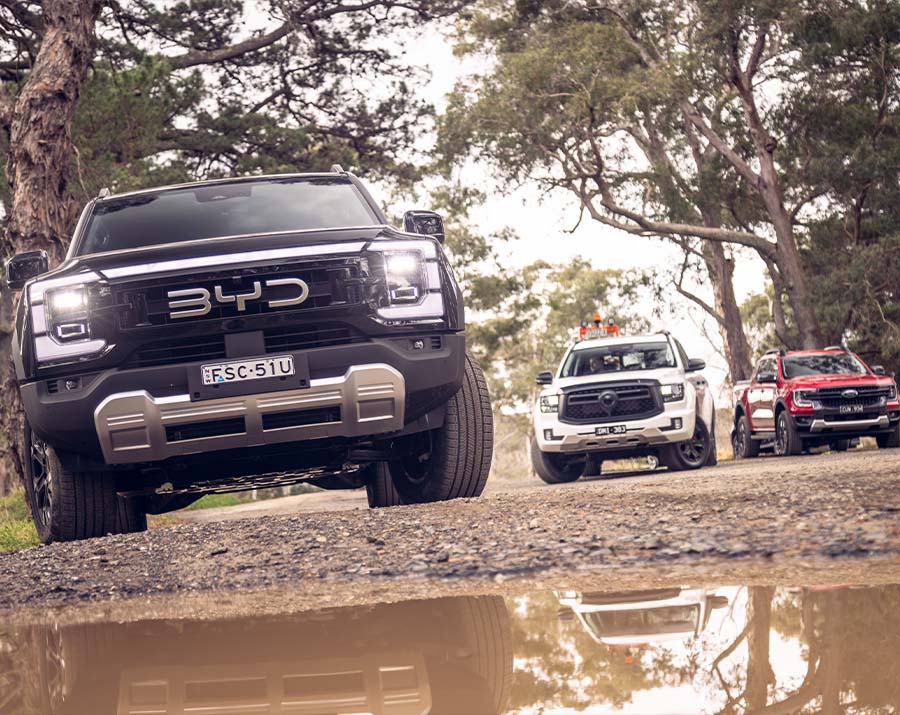
The BYD Shark 6 was one of the first to market, a Chinese player that has reset expectations and stolen significant sales from legacy brands. The GWM Cannon Alpha added another option with proper off-road and load-carrying credentials. Meanwhile, Ford’s Ranger portfolio was broadened in June with the South African-built Ranger PHEV.
Although they are all plug-in hybrid models – using a small petrol engine that is complemented by electric assistance which can be replenished via a power point – each employs the technology in a distinctly different way.
How do these PHEV utes comparo on pricing safety and spec?
All three measure up strongly on safety, with a full airbag count, adaptive cruise control, tyre pressure monitoring, overhead and reversing cameras, front and rear parking sensors, plus the usual suite of acronyms including AEB (autonomous emergency braking).
Each achieved a five-star safety rating, or at the very least, inherited it from a derivative variant. The devil is in the detail as far as on-road practice goes, though: the Shark’s driver aids border on incessant, with constant beeping and bonging, and the GWM is a close second.
There are pros and cons to each vehicle’s warranty and after-sales provisions. The Ford’s five-year/unlimited kilometre matches industry standard, while the GWM stands out with a seven-year/unlimited kilometre fixture. The BYD splits the two, offering a six-year/150,000km new vehicle warranty.
The Ford will set buyers back $1995 to service over five years (12-month/15,000km intervals), while the BYD is set at $2489 for the same period (12-month/20,000km intervals) and the GWM is $3240 (12-month/15,000km intervals).
Under the bonnet
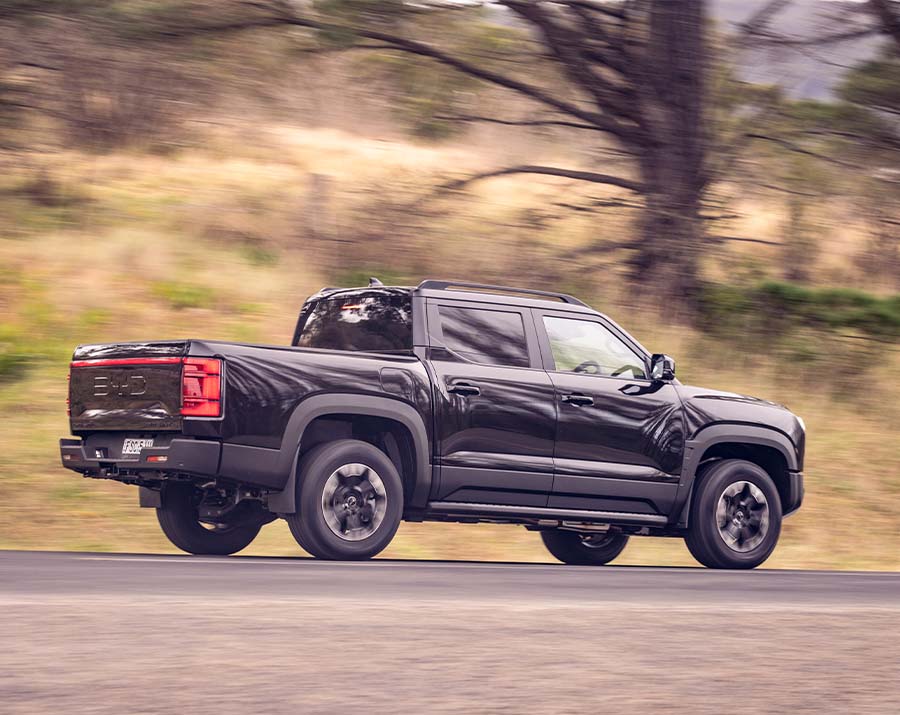
Powertrain credentials could be spun to make any of our candidates look like the segment poster child. The BYD Shark is the fastest in a straight line (0-100km/h in 5.7 seconds) and offers faster recharging rates (55kW DC, 7kW AC), yet it makes do with a lower 2.5-tonne towing capacity and a pseudo all-wheel-drive system.
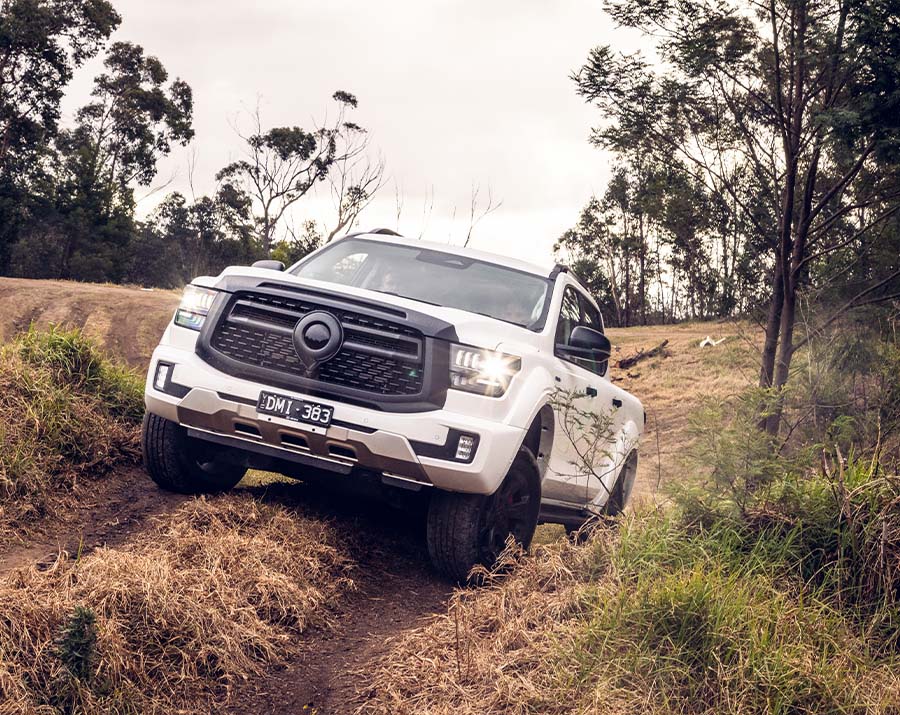
The GWM promises the best electric-only range on paper (at 115km claimed versus 100km for the Shark and 49km for the Ranger), together with the best on-paper efficiency claim (1.7L/100km combined), a proper four-wheel-drive system with front and rear locking differentials, and a 3.5-tonne towing capacity.
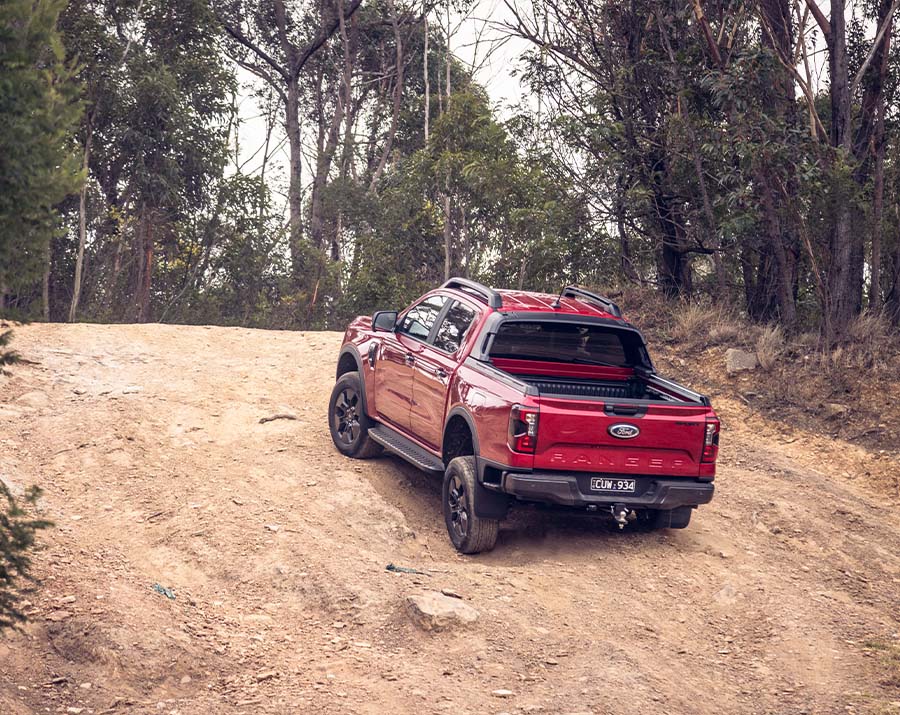
The Ranger treads a slightly different path, forgoing the big electric-only range and boasting a superior 808kg payload capacity (versus 685kg for the GWM and 790kg for the BYD) and benchmark 3.5-tonne towing capacity. Its much smaller 11.8kWh battery misses out on DC charging capability, meaning it is the slowest to recharge and places more reliance on its petrol engine.
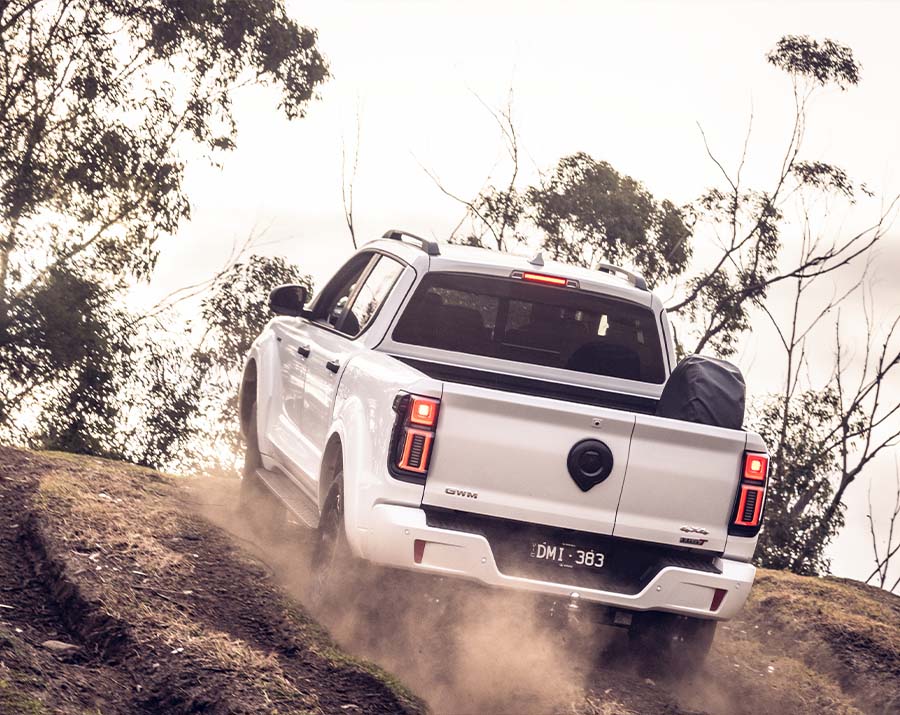
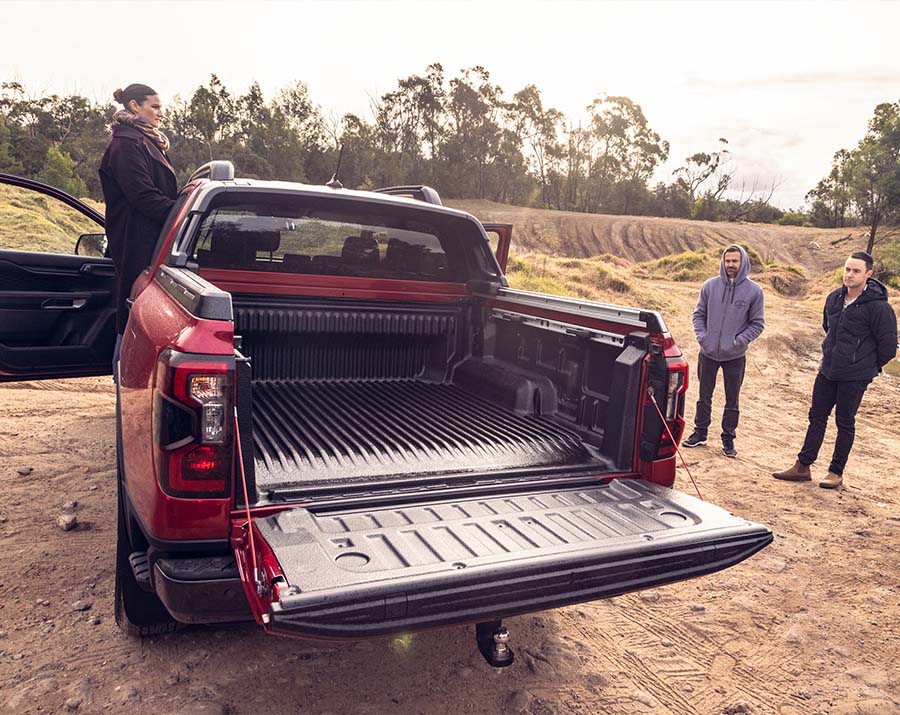
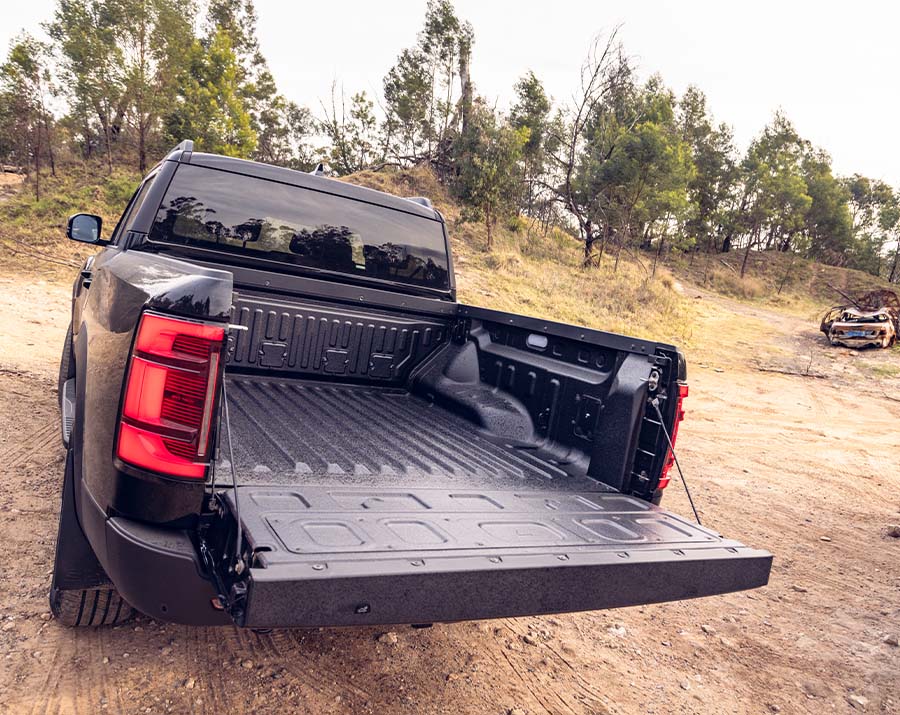
The Ford’s tray proportions and amenity are the strongest, however. The GWM’s sparse layout with four basic tie-down points and the spare wheel clumsily mounted vertically in the tray means it places third, even with its damped tailgate offering drop-down and barn door opening options. The Shark adds two extra tie-down points, three household power outlets and rear tray lighting, which immediately elevate it to second.
The Ranger shines with six fixed tie-down points, an additional four moveable tie-down points courtesy of a rail system on the outer perimeter of the tray, plus two power outlets and lighting. Tub steps, allocated spaces for tray load dividers, and clamp pockets seal the deal.
With respect to towing, the Ranger is the only one with an integrated trailer brake controller, while its reversing camera offers the best clarity and accuracy when hitching a trailer, which we’ll detail in the driving section.
Which plug-in hybrid ute has the best interior?
The BYD’s cabin is the quietest of our three and feels the most sophisticated, with quality materials throughout and excellent seat comfort across both rows. Polarising orange stitching, a tiny font in the instrument cluster and a lack of intuitive touchscreen operation are minor detractions.
The Ranger feels more like a work truck inside, particularly with respect to rear passenger amenity. It’s a tighter affair, with less knee and shoulder room, an upright rear-seat position and harder contact points from the second row. But it matches the BYD with fitment of a household power outlet.
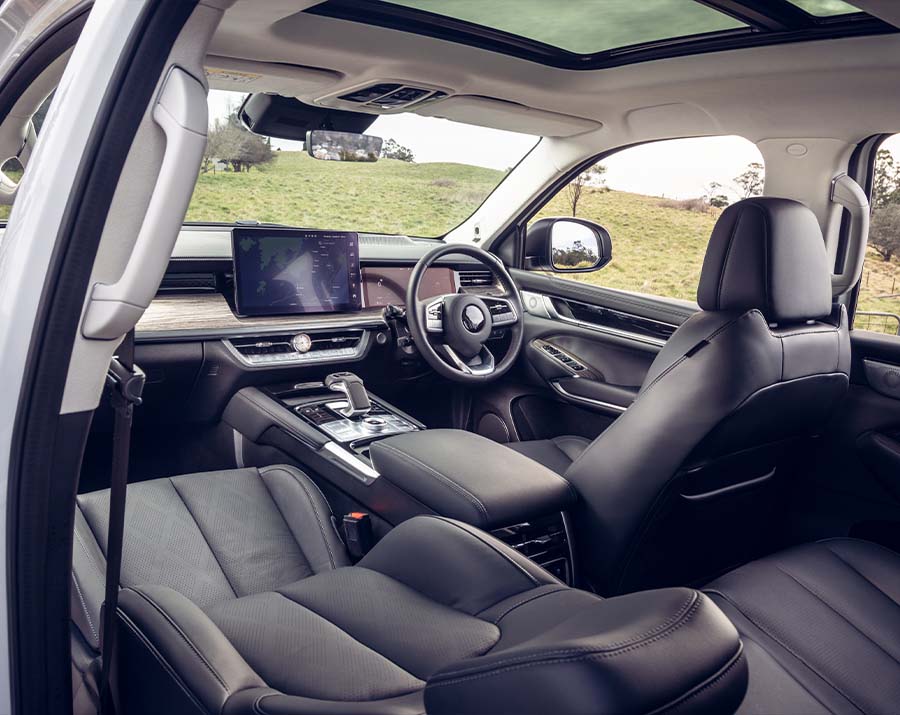
GWM’s interior is the roomiest, with extra trinkets and features that distinguish it for comfort: soft-touch contact points all round, rear backrest adjustment and rear-seat heating/cooling. It adopts an old-world take on luxury, with a woodgrain dash, massaging front seats, a sunroof, and even an analogue clock.
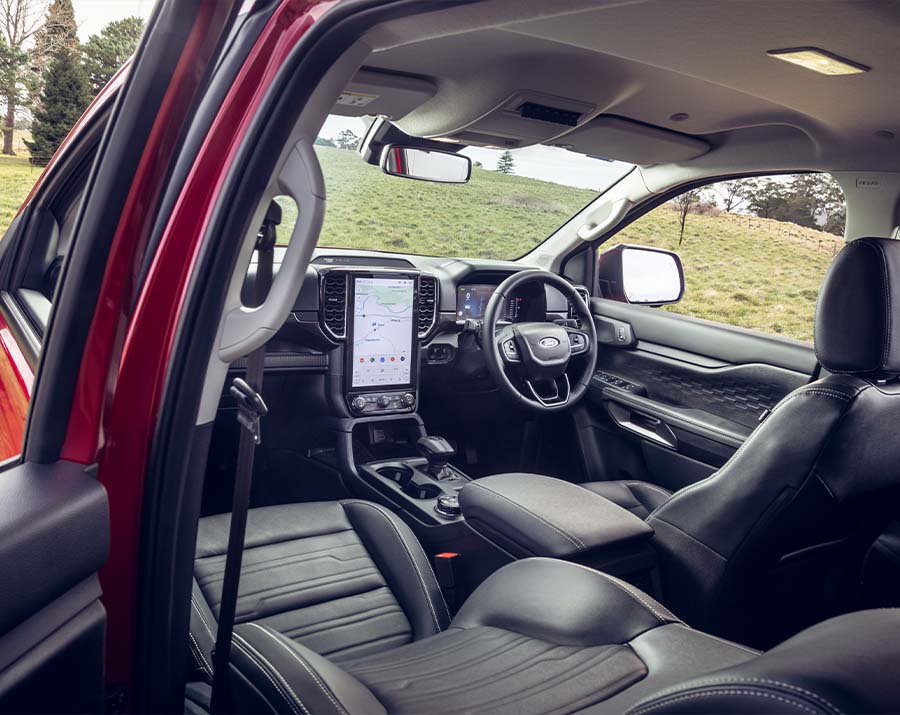
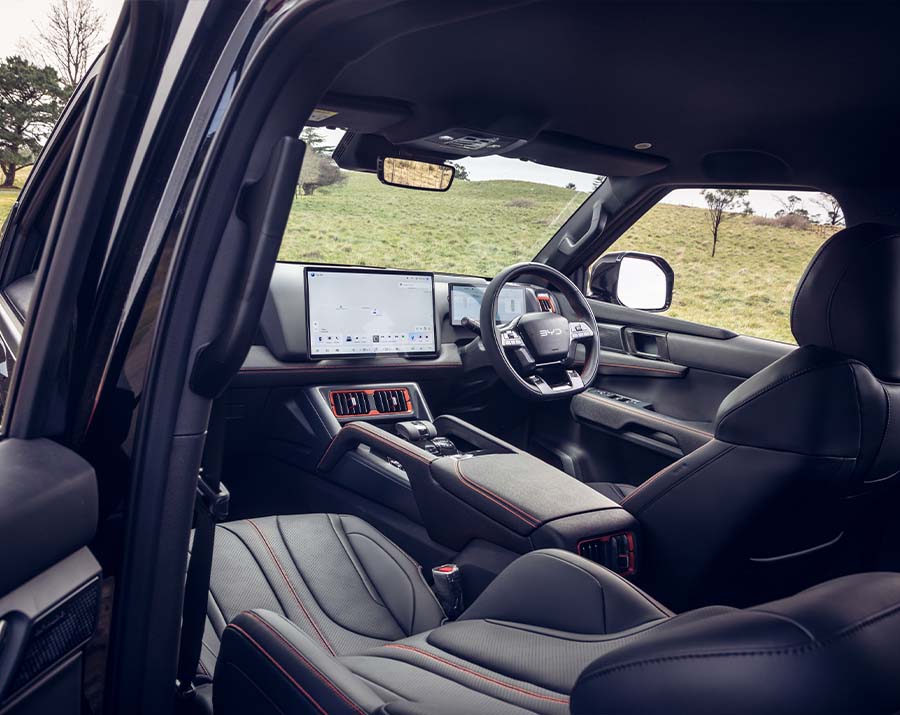
How do they perform on the road?
The BYD driving experience is underlined by a distinct digital veneer, with an immediacy to its steering and hushed cabin acoustics to make it the quietest of the three. Similarly obvious is the heightened level of electric punch from its drivetrain, offering acceleration more akin to a pure electric car in terms of response and feel.
Those characteristics were highlighted during a stint towing a 2.2-tonne load, with benchmark response up to highway speed interspersed by a strange high-pitched wail from the petrol engine as it attempted to retain 70 per cent battery charge. The Shark is the thirstiest of our three under load, at 18.5L/100km.
Unladen, the BYD drive experience is heavily afflicted by wobble and tremoring. On rougher country roads, which are common across Australia, small frequency bumps reverberate through the cabin to become a clear detraction.
If it’s a soft and cosseting ride you’re chasing, the GWM delivers. It feels the biggest and heaviest of our three (which it is, at 2810kg), with more body roll keyed into the chassis and suspension, and slower reactions to driver inputs. The comfort-orientated tune isn’t infallible, with more thudding and road noise evident.
The Cannon Alpha abruptly transitions between electric and petrol power, with a coarse engine note and a narrower torque band undermining its hybrid performance. Another blight is the inconsistency around tuning of the regenerative braking system, which applies braking suddenly on descents.
The GWM proved the most efficient on an 80km run where we left each ute in its default hybrid mode, consuming 2.9L/100km (compared with 6.7L for the Ford and 10.4L for the BYD). It also offers the best real-world EV range, near bang-on its 115km claim. The Shark managed 80km, while the Ford covered 31km.
Under tow, the GWM struggled to match the control of the Ford or BYD, while the additional weight only served to highlight the drivetrain’s thrashy qualities.
That brings us to the Ranger. Long revered as the ride and handling benchmark of the segment, the Ranger PHEV extends that legacy with a level of polish and composure that are absent from the competition. The steering feels accurate and well-weighted, while the chassis maintains the fine balance between comfort and road holding on a mix of surfaces.
Those traits are undermined slightly by relatively poor rear-seat amenity, and middling noise and vibration suppression inside the cabin. But the biggest hole in the Ranger’s armoury relates to its hybrid system. Aside from a meagre 31km of real-world electric range, the Ranger leans heavily on the 2.3-litre four-pot rather than the electric battery – which arguably defeats the purpose of a hybrid. With 411Nm, the four-pot does offer a more endearing sound and requires fewer down-changes as you push for speed.
Under tow, the Ranger continues its benchmark stability in this instance, but it’s not all skittles and rainbows. The Ford is the slowest of our three under tow in terms of acceleration, while we suspect its 15.5L/100km fuel reading in the towing portion of the test (lineball with the GWM) would actually be thirstier than an equivalent Ranger V6 diesel.
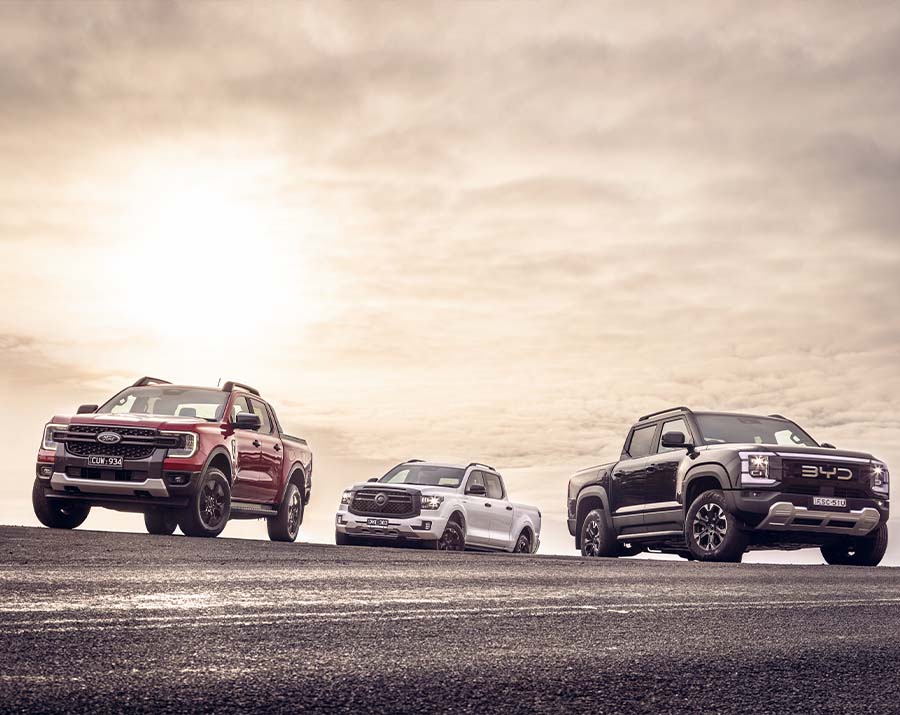
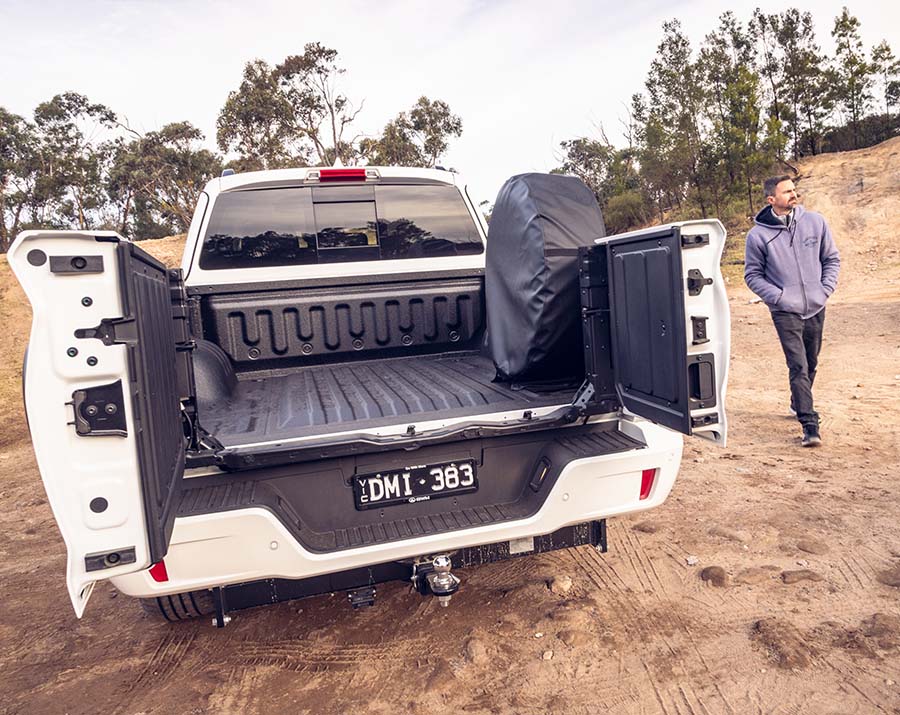
How do they perform off-road?
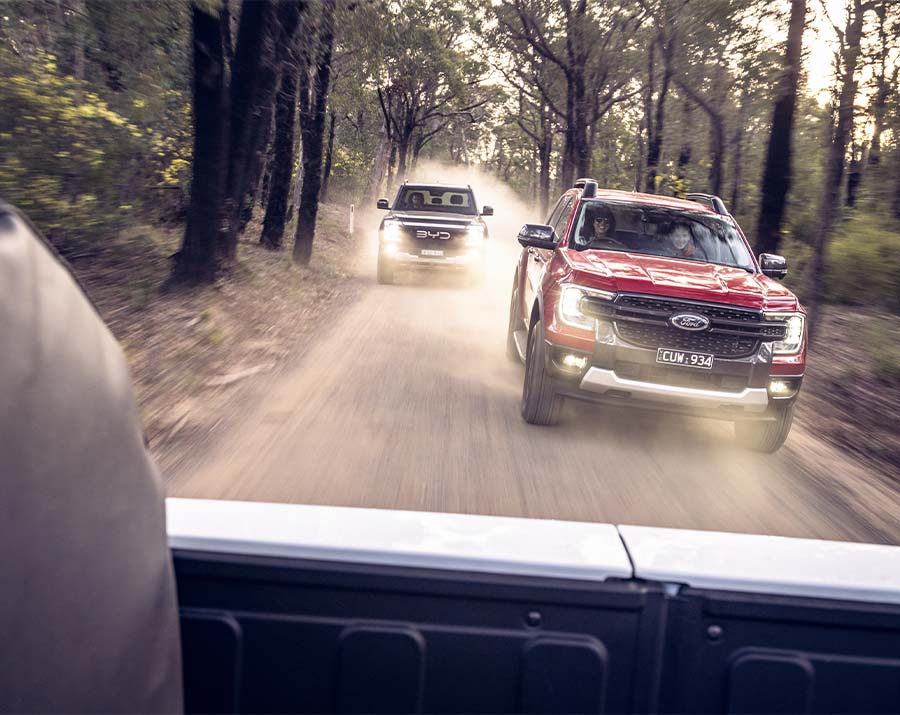
There were two clear standouts during a short off-road component of our comparison test – and they weren’t the BYD. The Ford and GWM cemented their utility during a stint in the dirt, with excellent wheel articulation and dependable drive along a heavily eroded section of uphill moguls, plus control and poise on a tricky downhill descent.
The Ford’s additional polish in throttle response and light steering gave it a slight nod initially, however the GWM’s superior traction control system (which was far more proactive) and the installation of a front differential lock lent it a small overall advantage.
The BYD? It got as far as halfway up our hill simulation, with its double wishbone rear suspension losing out in terms of rear-wheel articulation, and its faux all-wheel-drive system failing to communicate between both axles. The result was spinning tyres and no drive on the more heavily eroded sections.
The NRMA verdict: Which plug-in hybrid ute is best?
There are genuine merits to all three here, meaning we could justify one or the other as our winner. The GWM is in a league of its own for real-world EV range, around-town efficiency and has off-road prowess; the BYD’s value equation and tech story are impressive, and the Ranger’s on-road acumen is excellent.
But given this is a ute comparison, the deciding factor ought to come down to utility – and here the Ranger remains the benchmark. Even though it’s far from perfect, the Ford’s supreme on-road performance, towing capability and off-road wares are the ones to seek if you’re intent on using your ute as a tool of trade. There’s also the advantage of a far-reaching national dealer network, something its rivals can’t emulate at the time of writing.
Specifications
| Ford Ranger PHEV Sport | GWN Cannon Alpha Ultra | BYD Shark 6 | |
| Engine | 2.3-litre 4cyl turbo hybrid | 2.0-litre 4cyl turbo hybrid | 1.5-litre 4cly turbo hybrid |
| Power | 207kW | 300kw | 321 kW |
| Torque | 697Nm | 750Nm | 650Nm |
| Gearbox | 10-speed automatic | 9-speed automatic | E-CVT |
| Economy | 2.9L/100km (claimed) | 1.7L/100km (claimed) | 2.0L/100km (claimed) |
| ANCAP | 5 stars | 5 stars | 5 stars |
| Price | $75,990 (plus ORCs) | $66,990 (plus ORCs) | $57,990 (plus ORCs) |