2026 Toyota HiLux Review

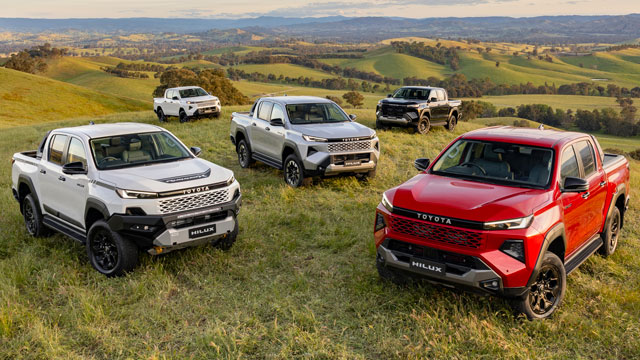
The Toyota HiLux is a vehicle that needs little introduction in Australia.
Toyota’s venerable ute has been among the nation’s top selling new cars over the past decade, banking (for the most part) on a strong track record of durability, decent towing and off-road credentials.
In Toyota’s bid to continue the HiLux’s sales dominance, engineers have introduced a tweaked design, new technology, an overhauled interior and better driveability and passenger comfort.
For 2026, the revamped Toyota HiLux takes on an armoury of new utility players in Australia, many from established brands and some from car makers you’ve probably never heard of.
Are the changes enough? Yes and no.
How much does the 2026 Toyota HiLux cost?
The Toyota HiLux range has had a major price bump as part of the 2026 update, with the line-up now starting at $33,990 plus on-road costs.
That price is for the entry manual 4x2 WorkMate and represents a $5000 increase over its predecessor.
Similar increases are applied across the slightly rationalised 16-vehicle HiLux model walk, with a manual SR5 double-cab another case in point, climbing from $60,670 (plus on-road costs) for the old model to $63,990 (plus on-road costs) for the new one. Our Toyota Hilux pricing story has the full rundown.
Toyota has justified the increases with additional equipment and specification (which we’ll get to in the sections below), as well as scrapping the previous 2.7-litre petrol four-cylinder engine that was previously available in entry models.
As before, the HiLux will be offered in in single-, extra- and dual-cab body styles, with 4×2 and 4×4 drivelines, and in WorkMate, SR, SR5, Rogue and Rugged X model grades. A flagship GR version will join the line-up later, presumably some time in 2026; ditto an electric model offering.
Nevertheless, the HiLux remains cheaper than its benchmark rival, the Ford Ranger, which starts at $37,130 plus on-road costs for 4x2 cab chassis XL model with a 2.0-litre turbo diesel engine, and is subject to a comparable premium across most models in the line-up.
What is the 2026 Toyota HiLux like inside?
The 2026 Toyota HiLux has been adequately modernised inside, however those seeking additional room over the predecessor should prepare for disappointment.
That’s because cab proportions (and in fact all proportions) are identical; Toyota says it considered spatial changes for 2026, but decided against it citing customer feedback.
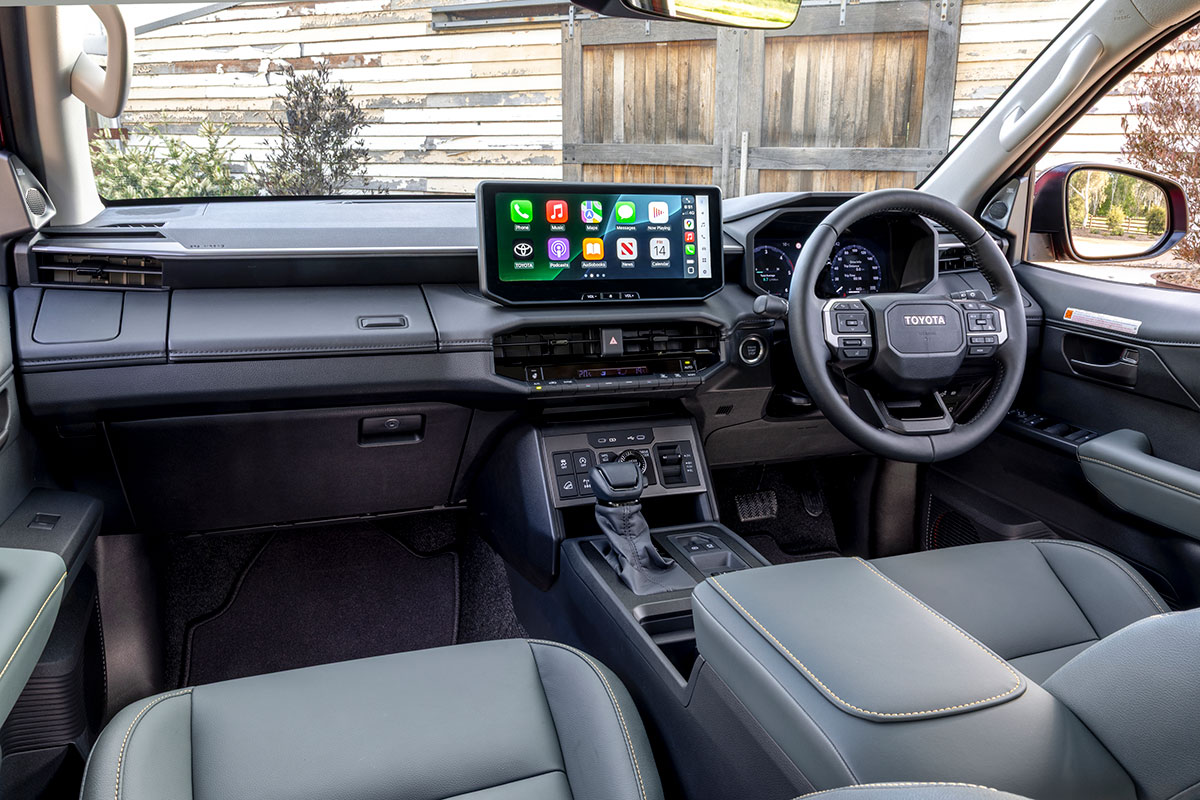
In any case, the interior of the HiLux has been subject to a light refresh as part of the update, replete with new dashboard and door skins, and armed with a suite of new technology both in front of the driver and occupying the dashboard centre fascia.
The dashboard itself is better equipped with storage compartments and open cubbies, together with a bank of hard-wired buttons and switchgear to spare you navigating through needless screen menus. Annoyingly, Toyota has ditched a volume knob inside, meaning you’ll have to manually press up and down buttons either on the dash or steering wheel.
Dual USB-C ports now grace the front and rear rows, while rear air vents are present on mid-level and high-tier grades.
Rear seat space is nothing to write home about, with smaller proportions than like-minded rivals including the Ranger and especially the Kia Tasman, the new gold standard for dual-cab ute interior finish. Furthermore, there’s no option to recline the rear seat, tainting the rear seat experience for adults or taller kids.
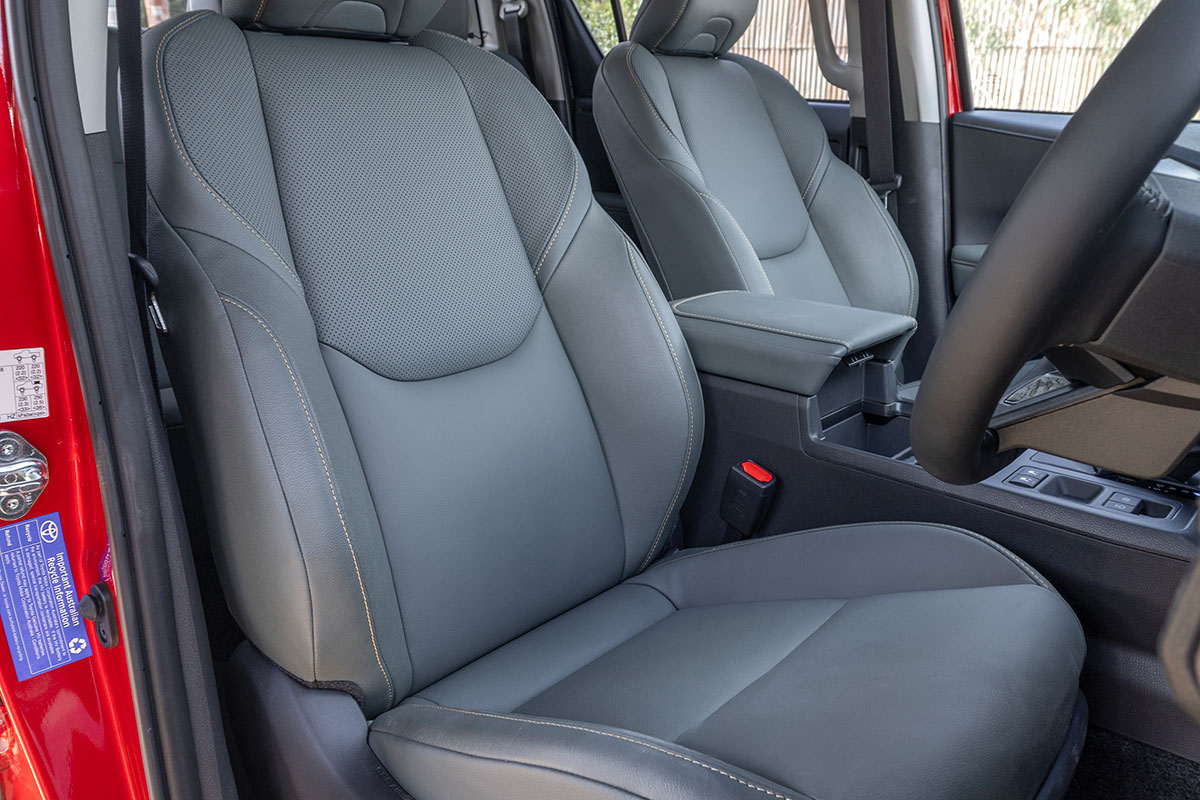
Elsewhere, the HiLux’s seats have been purportedly redesigned and offer decent comfort and support, there’s a redesigned steering wheel, gear shifter and the introduction of an electric parking brake on certain grades. We’ll reserve judgement on how the seats fare over the course of a longer journey, but in passing, they do nicely at launch.
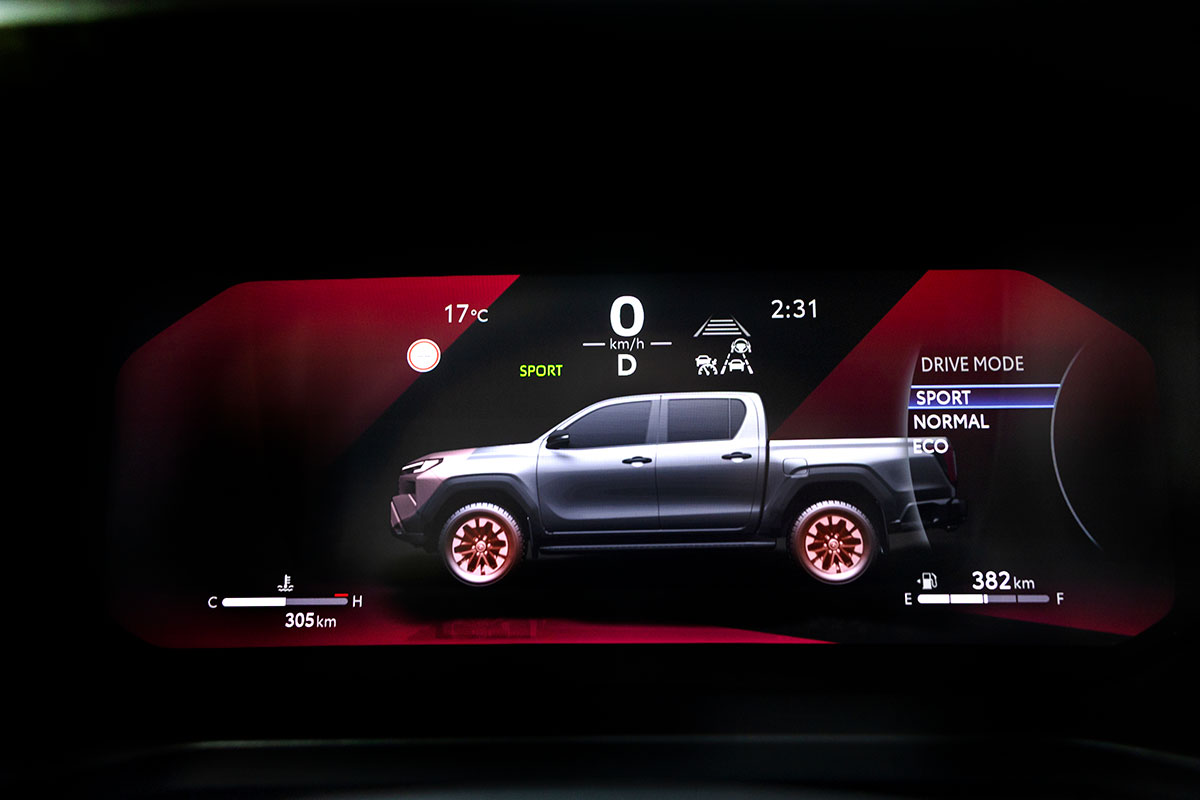
The ninth-generation Toyota HiLux employs a 12.3-inch touchscreen infotainment system while a digital instrument cluster lives in front of the steering wheel, measuring either 7.0 inches or 12.3 inches depending on grade.
The font on both screens is concise and legible, meaning you quickly come to terms with the vehicle’s technology and how to navigate it painlessly – on launch, at least.
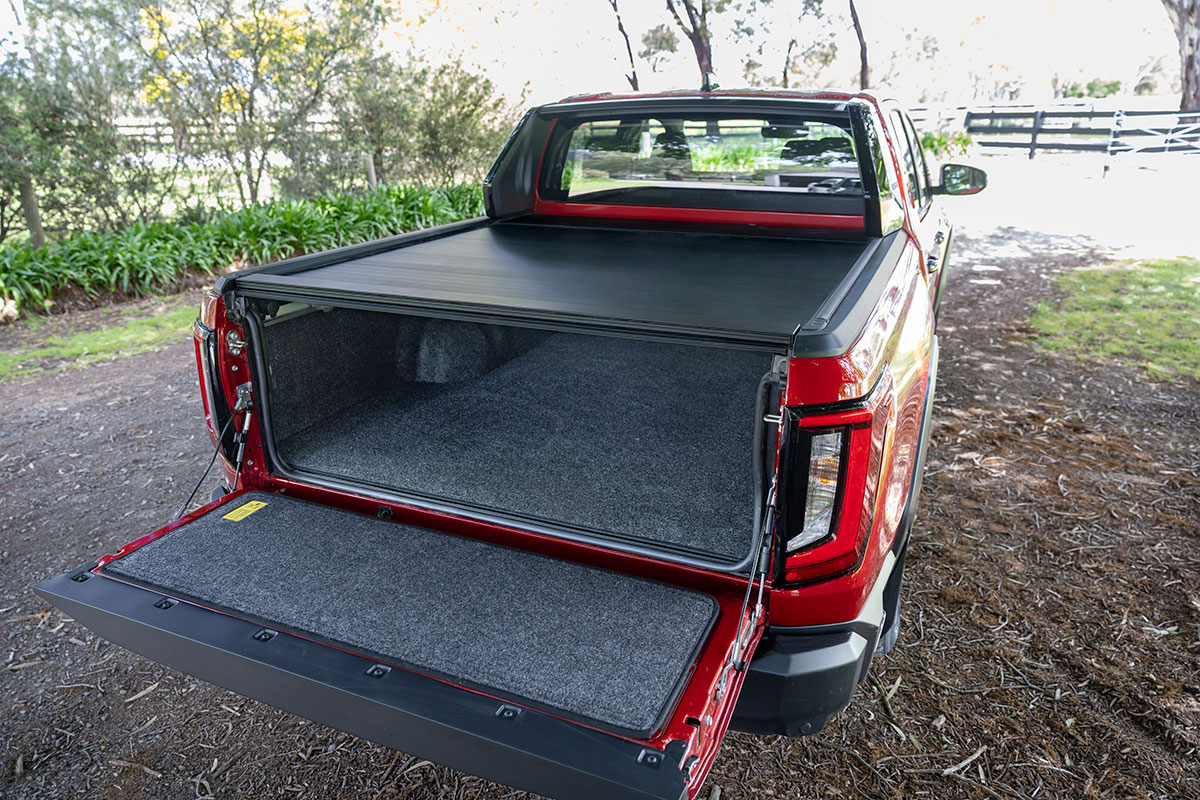
Finally, the tray area. This also presents a disappointment in the 2026 update, with notable holes including no external power or lighting available on regular HiLux models, only four bare tie down points, and no tray protection as standard. Furthermore, dimensions are unchanged – all despite the moderate pricing increases applied across the range.
What equipment does the 2026 Toyota HiLux come with?
Equipment levels on the updated Toyota HiLux vary depending on model grade, but generally, specification has marginally improved as part of the 2026 update.
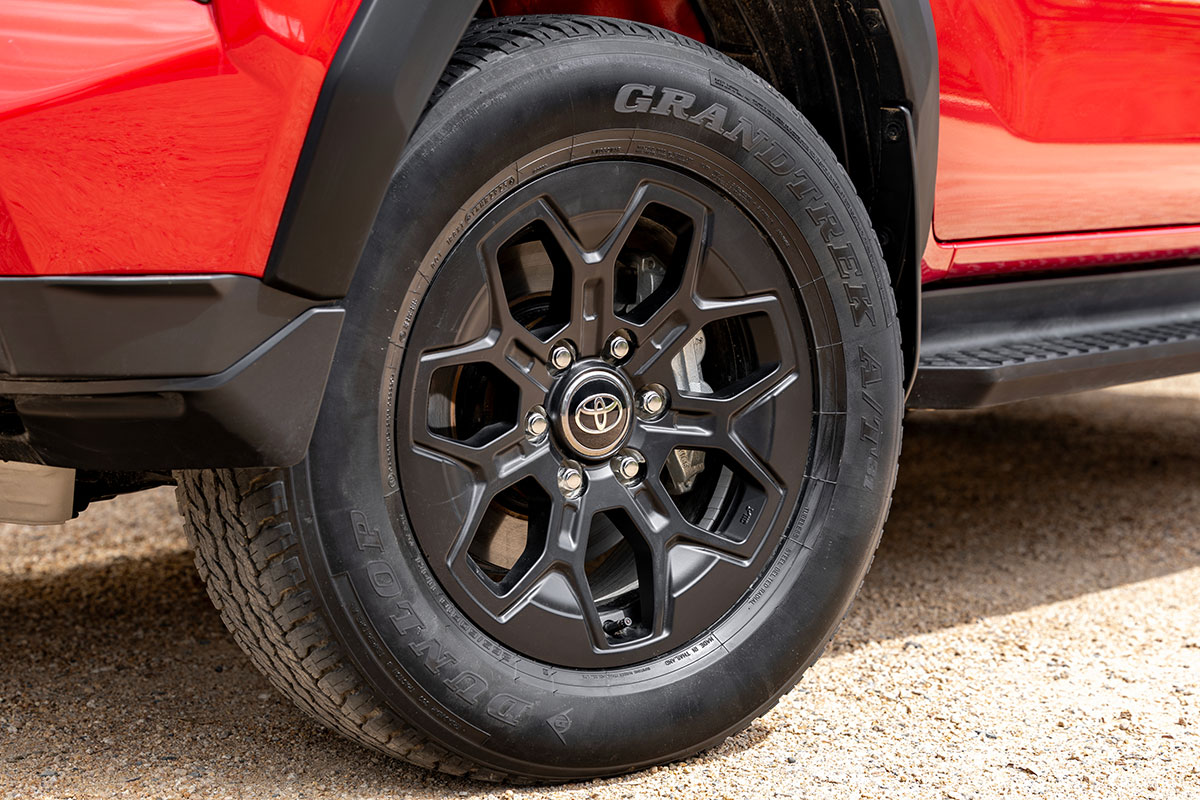
Standard equipment on entry models include 17-inch wheels, LED daytime running lights with halogen head lights, body coloured front bumper and grille, electric exterior mirrors with integrated blinker, air-conditioning and reversing camera.
Other items including a 360-degree camera, artificial leather seats, electric front seat adjustment, wireless phone charging, dual-zone climate control and larger alloy wheels begin to take effect as you continue through the model walk.
Importantly, the popular SR5 HiLux grade offers 18-inch alloy wheels with larger front brakes and ventilated rear disc brakes, integrated towbar, high-grade auto-levelling LED headlights, LED tail-lights and rear fog lamp (pick-up only), privacy glass, auto retracting and heated exterior mirrors and seven exterior paint choices.
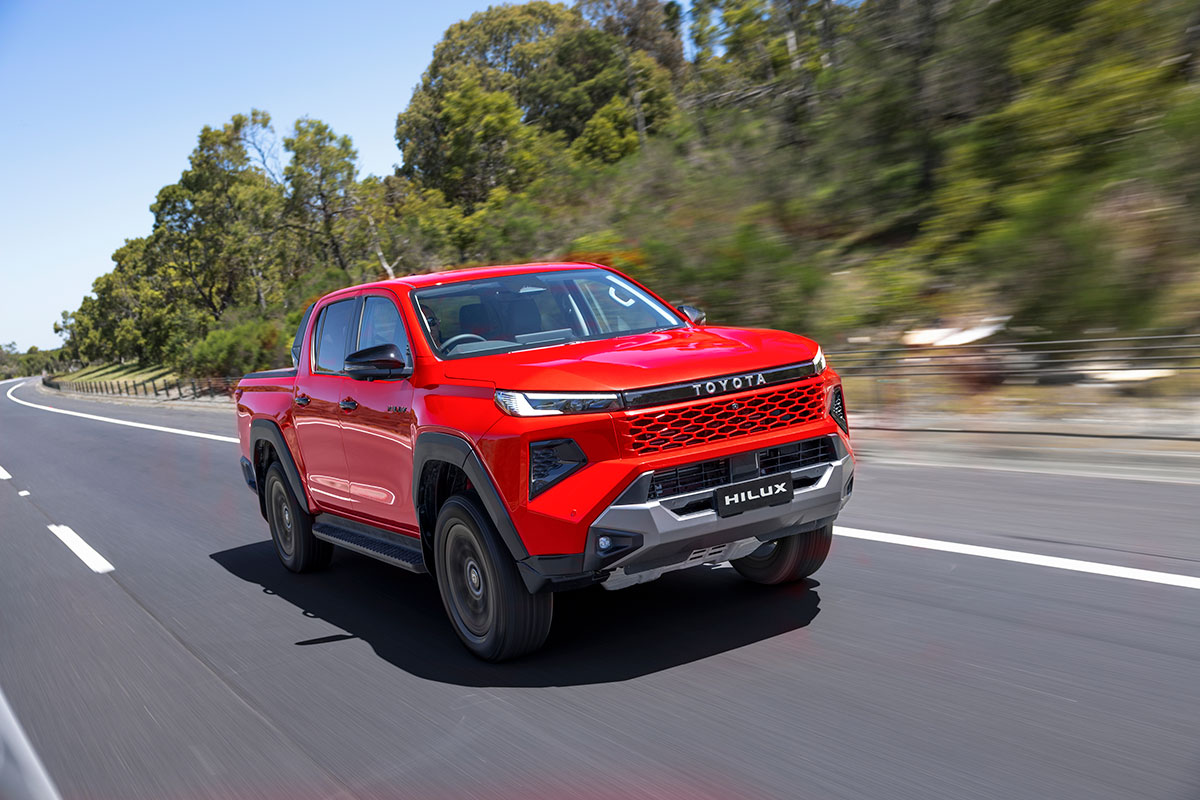
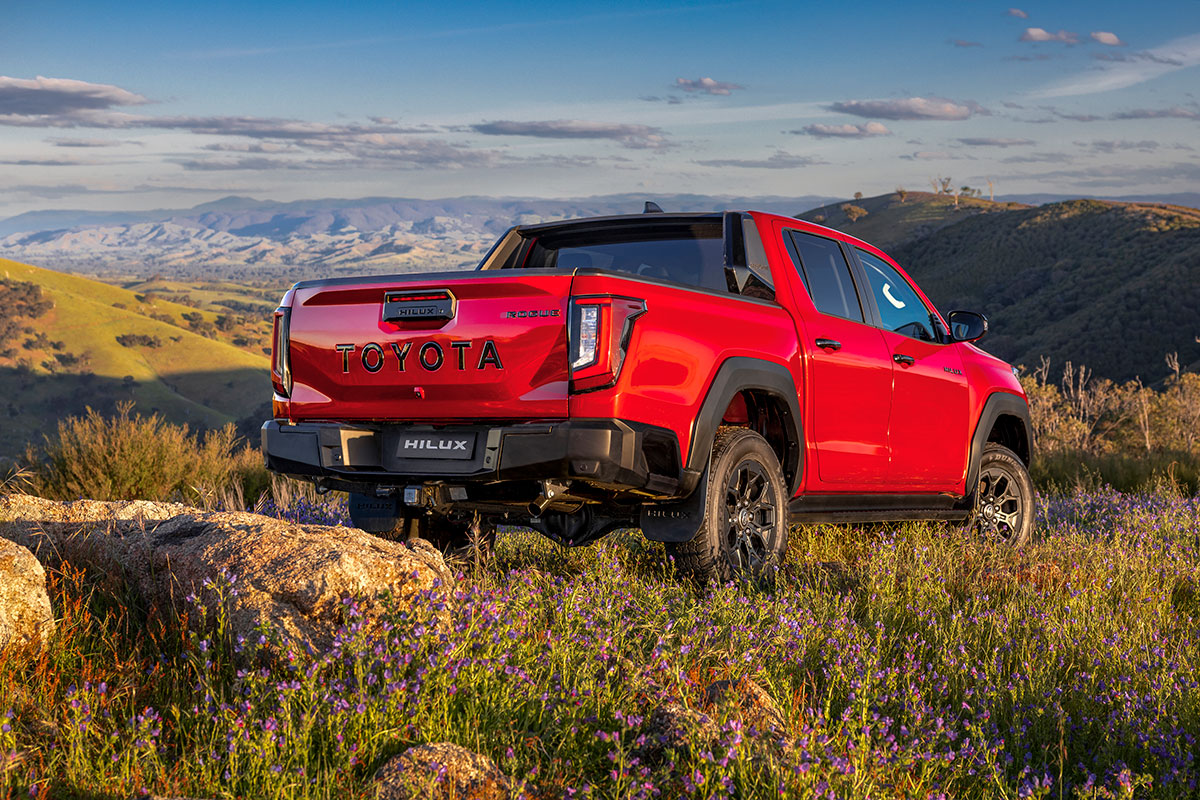
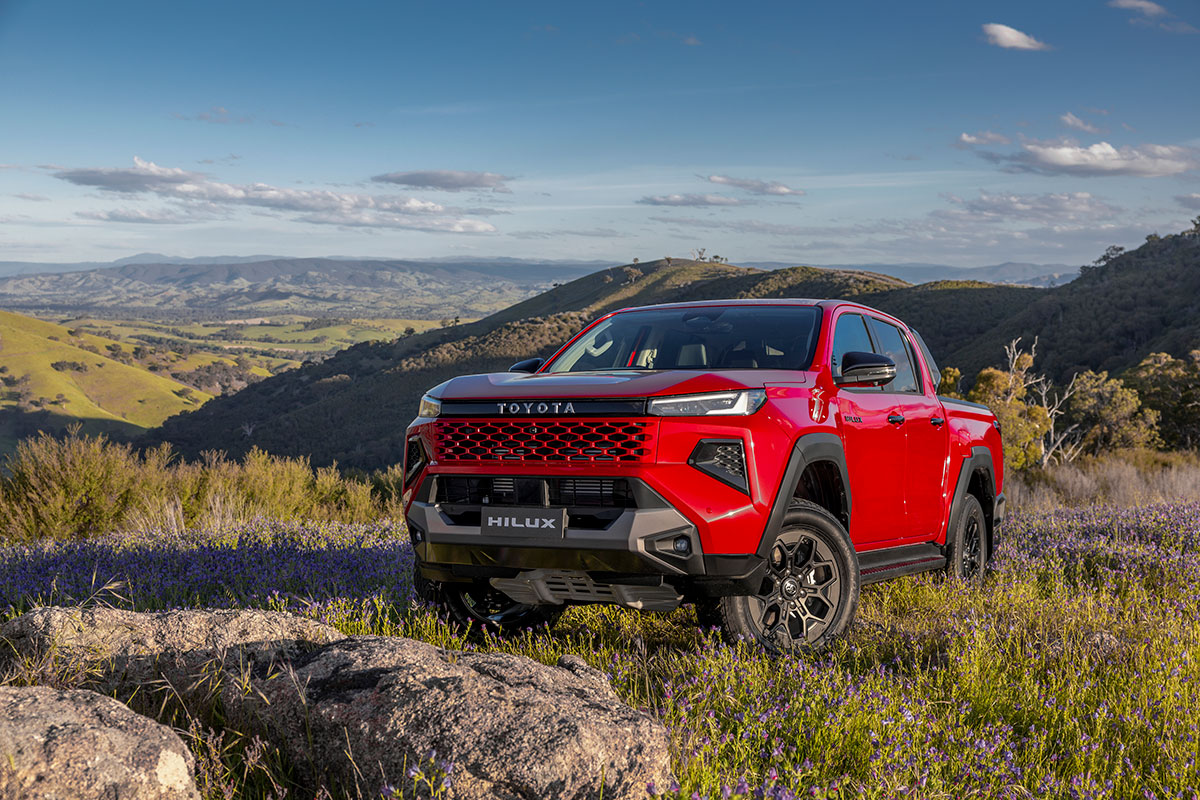
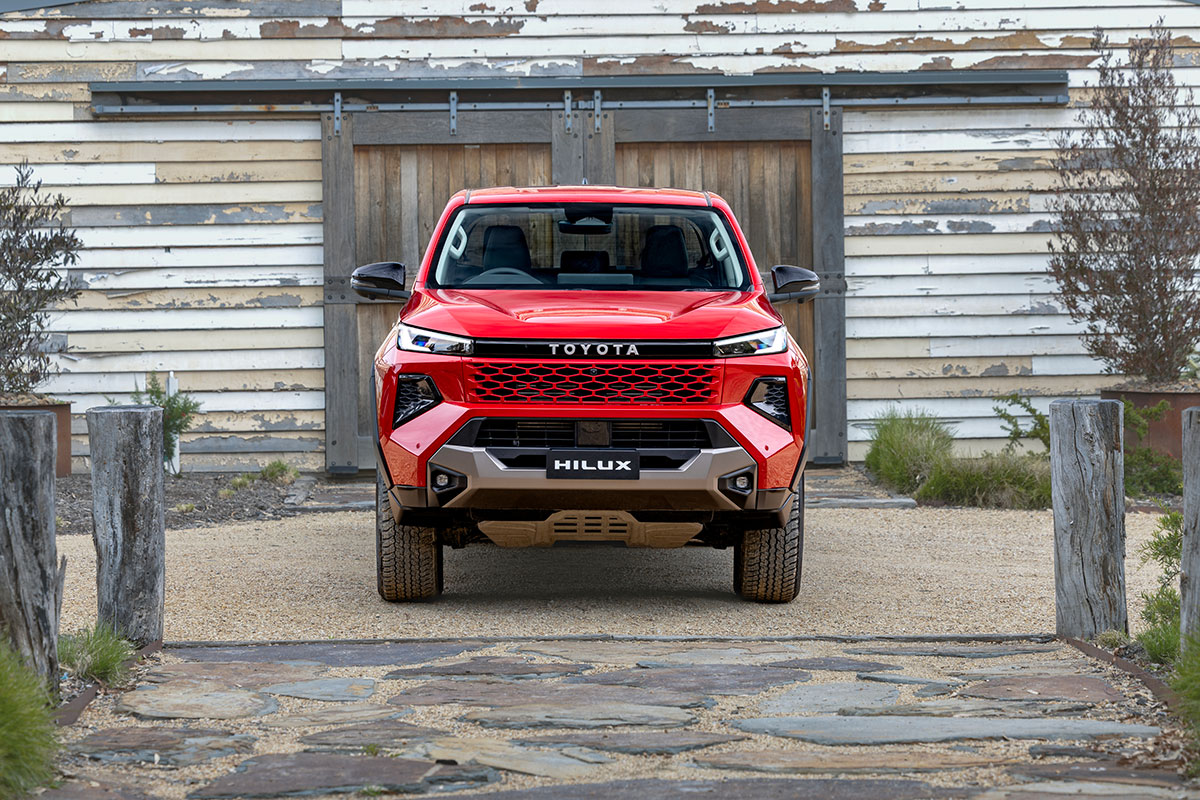
Across the HiLux line-up, the 2026 changes are heralded physically by a reworked front end with higher-set headlights, a body-coloured mesh grille and an angular front bumper design. From the a-pillars to the back of the cabin, the design carries over from the eight-generation HiLux (first introduced in 2015).
Toyota has taken a leaf from Ford and Kia’s book by integrating on the lower section of tray immediately behind the wheel arches, enabling easier access into the tray area, which is otherwise unchanged in dimension.
How safe is the 2026 Toyota HiLux?
The HiLux’s continues with a fairly familiar safety suite for 2026, comprising autonomous emergency braking pre-collision safety system, active cruise control, rear cross-traffic alert, lane departure alert and lane trace assist, road sign assist and blind spot monitoring.
All HiLux grades also benefit from expanded Toyota Connected Services functionality, which enables services including SOS Emergency Calling.
The predecessor HiLux carried a five-star ANCAP safety rating under ageing protocols, however the new model is yet to be tested.
What powers the 2026 Toyota HiLux?
The entire Toyota HiLux line-up now draws power from a familiar 2.8-litre turbo-diesel four-cylinder engine, with the entry 2.7-litre petrol grade now deleted from the line-up.
The oiler now stands alone in the mid-size ute segment by offering a choice of manual or automatic transmissions. Manual variants boast 150kW/420Nm outputs, while the automatic bumps torque to 500Nm.
As before, the HiLux is available in 4x2 and 4x4 grades, with the middling SR grade and above bringing off-road niceties including tyre pressure monitoring, a locking rear differential, Multi Terrain Select and downhill assist control.
As part of the 2026 update, Toyota says it revisited the suspension tune on HiLux to deliver a more supple ride quality when unladen, while also introducing electrically assisted power steering to ensure lighter weighting at low speeds together with less unwanted kickback – both criticisms levelled at the hydraulic power steering of the predecessor.
Even though the HiLux’s ladder frame chassis is fundamentally the same, Toyota says there are new hydraulic engine mounts and 'shear-type' cabin mounts, claimed to reduce vibration and improve ride comfort.
In terms of load carrying, the 2026 Toyota HiLux offers an unchanged 3.5-tonne braked towing capacity in 4x4 grades (750kg unbraked) together with a payload of about 965kg on SR5 dual-cab models.
A tow bar is still an optional extra for most grades, while those regularly towing will also need to pony up for an aftermarket brake controller depending on their trailer.
What is the 2026 Toyota HiLux like to drive?
The 2026 Toyota HiLux offers a more refined and polished driving demeanour than its predecessor to gently progress on-road and off-road experiences.
That said, the HiLux does nothing in truly moving the needle for ride and handling mix, at a time where fledgling brands are circling keenly, and rivals are becoming even more polished.
The biggest on-road tell-tale in the new HiLux is its electrically-assisted power steering system, which has wrought a lighter steering feel at low speeds together with a more consistent input during road driving – helping the HiLux feel less agricultural than before.
The new suspension tune has also helped dial up road compliance; the HiLux is still afflicted by the tremoring common on all dual-cab utes, however it feels less pronounced than before, especially over small-amplitude imperfections. Larger hits are still reflected through the chassis accordingly.
The cabin feels quieter than before, too, with less engine and road noise infiltrating the space. The higher echelons of the rev range will still filter into the cab, but there’s less vibration and harshness than before.
And that brings us to the engine’s performance. Toyota insistence on retaining the 2.8-litre diesel means there is an inherent carryover element to the way the HiLux performs – and that’s without the insight of payload or tow testing at the national launch this month.
In regular conveyance the HiLux piles on speed in a linear fashion and offers enough grunt to get around cars in front before the overtaking lane ends. Expect an abrupt flare-up in engine noise during headier driving, though the oiler will muster energy when called upon.
In the company of the Ranger’s polished V6 diesel, however, the enduring 1GD-FTV diesel feels its age, with a narrower rev band and a slow-moving six-speed automatic transmission that feels less intuitive moving with up or down the gears.
A sweetener here is the continued availability of the six-speed manual transmission, which feels thoroughly refreshing with its smooth shifts and easy take-up. Like the auto, the manual will sit at a miserly 1500rpm at highway speeds, but a torque hole means you’ll regularly be shifting back a gear to keep the oiler at its sweet spot.
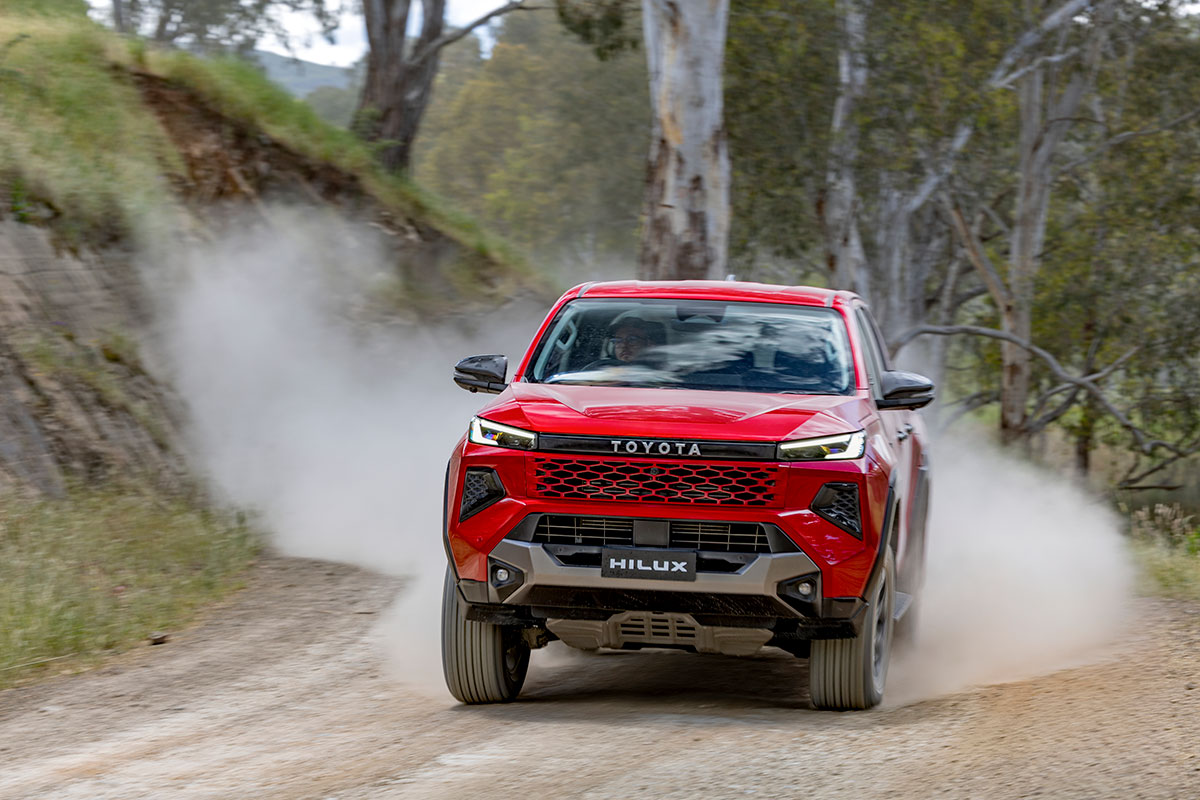
In an off-road setting the HiLux brings some noteworthy improvements over its predecessor, with a more refined (and quieter) traction control suite, improved wheel articulation and more effective navigation of tight spaces courtesy of its electrically assisted steering system.
To this end the HiLux remains one of the off-road front-runners in the segment, with less head toss and more control in this 2026 trim. On test, the newcomer offers excellent throttle modulation and clever, predictive electronics; so much so, we didn’t once rely on its rear diff lock to get us out of trouble.
The NRMA’s take on the 2026 Toyota HiLux
You could argue the 2026 Toyota HiLux highlights a Toyota specialty in model updates, bringing just enough change to keep pace with the competitive ute segment, but without any true innovation or development breakthroughs to surpass it.
The counterpoint, according to Toyota, is that the HiLux’s likeness to its predecessor brings familiarity to customers, plus ultimate peace of mind. In short: if it ain’t broke, don’t fix it.
While the underbody and tech changes do elevate the HiLux experience, we reckon Toyota has missed a few golden opportunities to truly captivate the space.
At a time where more affordable rivals are doing just that, Toyota has run the risk of resting on its laurels. Time will tell as to whether the public and fleets around the country agree.
What we liked
- A quieter driving experience with improved passenger comfort and ride
- Improved off-road ability, less head toss and more refined traction control system
- You can still get a manual transmission – the only option in the class
What could be better?
- No change to cabin proportions, meaning the HiLux is one of the tighter rear seat offerings in class
- Sparse tray area with no option for lighting, power outlets or additional tie down points
- So many carryover elements despite a significant uptick in price, jury is out on towing and payload performance