
Tesla Model Y tops EV real world range tests
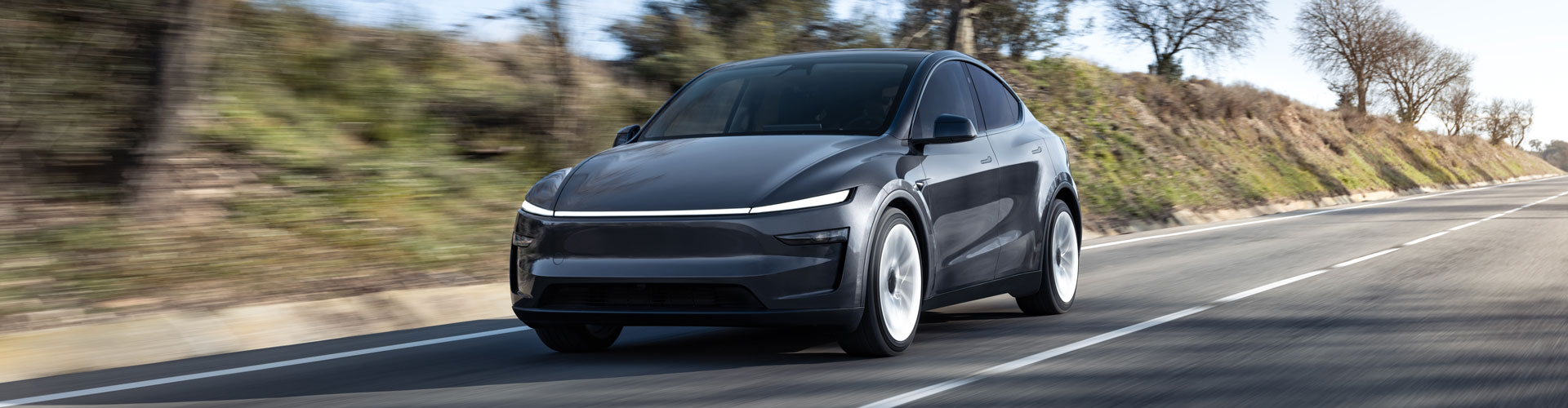
The Tesla Model Y has come closest to matching its claimed driving range in the latest round of Australia’s Real World Testing Program, a set of independent results aimed at cutting through showroom numbers and giving buyers a more realistic idea of what they will get on the road.
The 2025 Tesla Model Y (Juniper) real-world range came in at 450km in testing run by the Australian Automobile Association (AAA), just 16km short of its lab figure – a three per cent difference. On energy use, it recorded 148Wh/km on road versus 153Wh/km in the lab.
The new tranche covers four electric vehicles in total, and the overall pattern is familiar. All four delivered less driving range on the road than in laboratory testing, with gaps ranging from three to 31 per cent.
The 2025 Kia EV3 real-world range was 537km, 11 per cent below its lab result of 604km. The Smart #1 (2024) produced 367km, 13 per cent short of its 420km lab figure. The biggest discrepancy came from the MG4 (2023), which returned 281km in the real-world test compared to a 405km lab number, a 31 per cent difference.
NEDC or WLTP? The numbers differ
One wrinkle in this set of results is that the MG4’s lab figure comes from NEDC, the older test cycle that still underpins mandatory reporting under Australian Design Rules (ADR). By contrast, many newer EVs are marketed primarily with WLTP figures, which are generally seen as more representative than NEDC.
Many other brands primarily quote WLTP because they already have those results and may seek an exemption rather than paying to run an older-style test. That can make apples-to-apples comparisons harder without independent testing.
This is the second set of EV results issued by the AAA, with the first EV real-world tests divulged in August 2025. It is also the second time the Tesla Model Y has been tested. The first test was conducted on the Long Range variant, which returned eight per cent less than the lab numbers.
Across both tranches, the story is less about catching brands out and more about setting expectations. Laboratory figures may be a useful baseline if using the same testing procedures, but independent testing helps show how close different models get when the variables of real driving, speed changes, gradients and road conditions are put back into the mix.
— AAA Managing Director, Michael Bradley
Real-world tests tackle range anxiety
The AAA says these results are designed to tackle a key barrier to EV uptake: uncertainty around range and recharging. It cites polling showing 60 per cent of people likely to buy an EV say range and recharging are their biggest concerns or hesitations.
Testing is run on a 93km circuit in and around Geelong, using strict, repeatable protocols based on European regulations. The AAA says the approach aims to reduce human factors (such as driving style) and changing traffic flows, while still capturing conditions that are closer to what drivers experience day to day than a laboratory cycle.
For EVs, Real World Testing Program results are calculated by measuring both the energy used while driving and the energy required to recharge the battery from fully depleted, a method the AAA says helps capture the real ownership experience rather than relying only on a single test figure.
The program itself was created in the wake of the 2015 Volkswagen emissions scandal and is backed by $14 million in Commonwealth funding. A total of 131 models have been tested to date.
The new results also follow real-world testing numbers released in November that showed discrepancies between lab tests and real-world figures for popular makes like the Chery Tiggo 4 Pro, Ford Ranger and Toyota Camry Hybrid.
Chery’s Tiggo 4 Pro, one of the most affordable new cars on sale and a surprise hit in the small SUV class, recorded the biggest fuel-use gap in its batch, burning 8.8L/100km on road versus 7.3L/100km in the lab, a 21 per cent jump that could sting buyers counting every dollar at the bowser.
The Ford Ranger Raptor raised a different red flag, with on-road particle-number readings above incoming lab limits – a reminder that ultrafine emissions can look tidy in controlled testing yet tell a messier story in traffic.
Even the Toyota Camry Hybrid, long the safe pick for low running costs, drifted further from its lab claim, with its real-world fuel use about 21 per cent higher, up from eight per cent in 2023, a gap that can add up to hundreds of dollars over a typical ownership period.


