
2026 Toyota Yaris Cross review

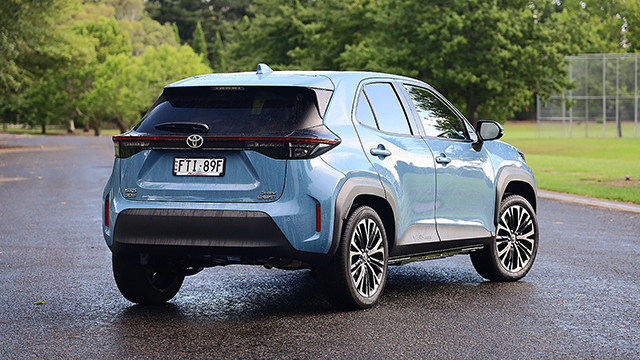
Toyota has a history in affordable, character-filled light cars, so there’s something almost sentimental about the Japanese giant continuing to play a role in the space in 2026.
While the Toyota Yaris Cross is technically a small SUV, and its $30k-plus entry price no longer subscribes to being affordable in many motorists’ eyes, it has been an important entry point for Toyota in Australia since its introduction five years ago.
The Yaris Cross is fun, cheerful and impressively efficient on road, though there are elements of its age and execution which some may find hard to overlook, including the price.
How much does the 2026 Toyota Yaris Cross cost?
The Toyota Yaris Cross range opens at $31,790 (plus on-road costs) in 2026, with the Urban Auto 2WD driven here sitting at the middle rung of the line-up at $36,930. An all-wheel drive version adds a $3060 premium.
Those prices align with like-minded rivals including the Mazda CX-3 (from $30,670), Hyundai Venue (from $23,750) and Volkswagen T-Cross (from $34,990), though cannot match the onslaught of affordable Chinese rivals including the Chery Tiggo 4 Hybrid ($23,990 drive away) and MG ZS (from $22,990 drive away).
Perhaps the bigger story here is how much Toyota has unapologetically ratcheted up prices since the Yaris Cross’ 2020 introduction. Back then you could get into one for $10,000 less, albeit without hybrid power.
What is the 2026 Toyota Yaris Cross like inside?
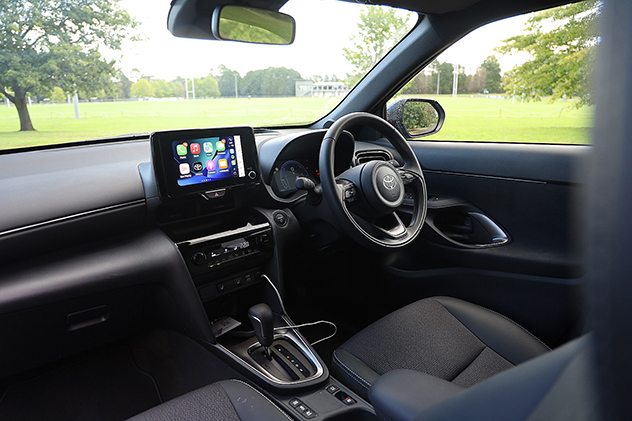
The Yaris Cross adheres to a pretty safe Toyota formula, with cloth seats, adequate hard-wired switchgear and basic furnishings and displays.
In many ways, this is in keeping with its charm. Smart and cheerful.
There are some softer materials at contact points, but otherwise it’s the usual Tupperware-style plastics throughout – a factor which bodes well for long-term wear but perhaps not short-term comfort.
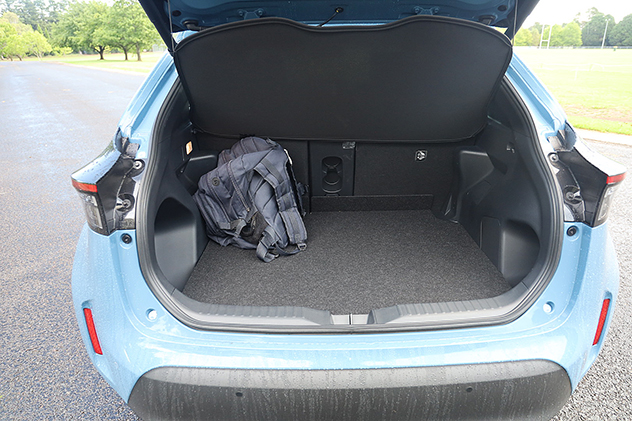
Elements of the cabin reveal even the Urban variant of the Yaris Cross has been built to a price, with thin carpets and a flimsy luggage cover – though this is largely par for the course at this end of the market.
The front seats offer decent comfort and adjustment for longer journeys, while outward vision is quite good despite the car’s narrow window line.
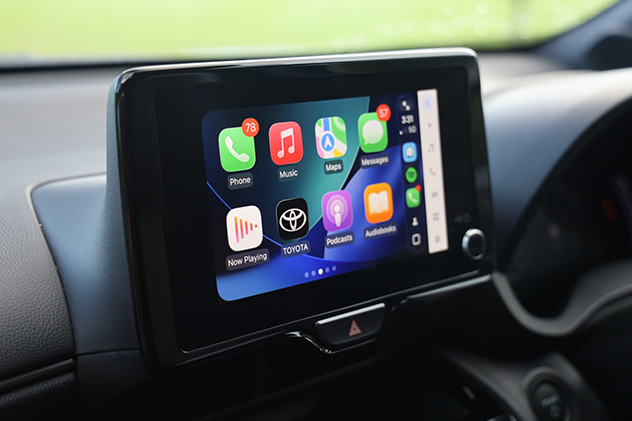
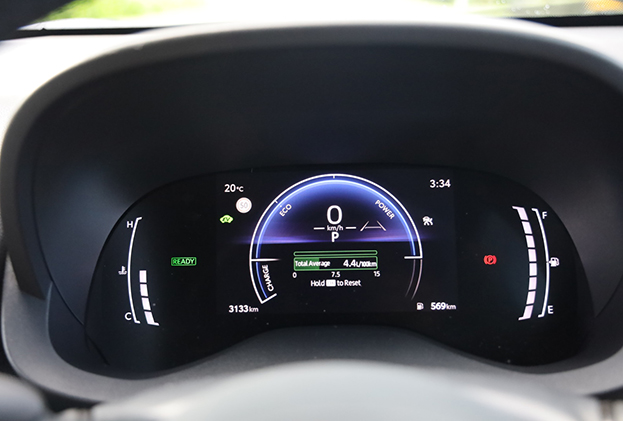
Infotainment is generally quite user-friendly; the eight-inch centre touchscreen display conveys key information clearly and concisely and marries harmoniously with smartphone mirroring, including Apple CarPlay. The matching digital instrument cluster is likewise legible and easy to toggle between different screens.
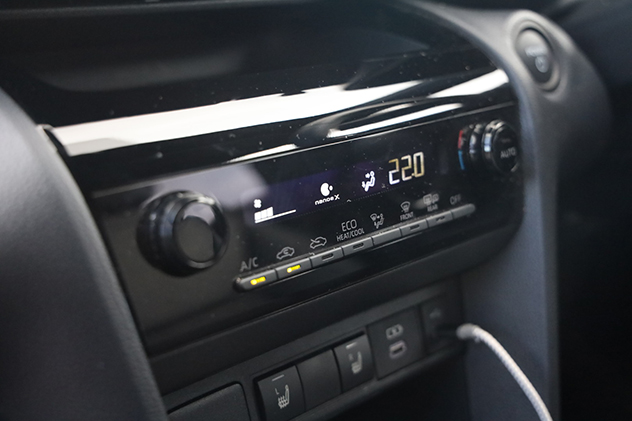
The fitment of hard-wired buttons for climate control functions is another boon, meaning you don’t need to delve through touchscreen menus for basic commands.
Incidental storage is okay, keeping in line with the car’s intended audience. There’s a small centre console which doubles as an arm rest, two centre cup holders and a couple of different open cubbies nestled within the dashboard centre fascia, plus smallish door pockets.
Front seat passengers get two USB-C ports, but the rear is less generous, with no air vents and no separate power outlets.
The Yaris Cross offers rear seat dimensions big enough for a couple of kids or adults on moderate journeys, with Isofix attachment points fitted to the outbound pews.
The 390-litre boot area will be more than functional for most user requirements: enough space for a couple of full-size suitcases, or at a pinch, a designer pram.
The boot is underlined by a space-saver spare tyre (other car makers take note) and is accessed via an electric tailgate. Springing for the all-wheel drive model ditches the spare tyre entirely and leaves you with a smaller boot area – something to consider.
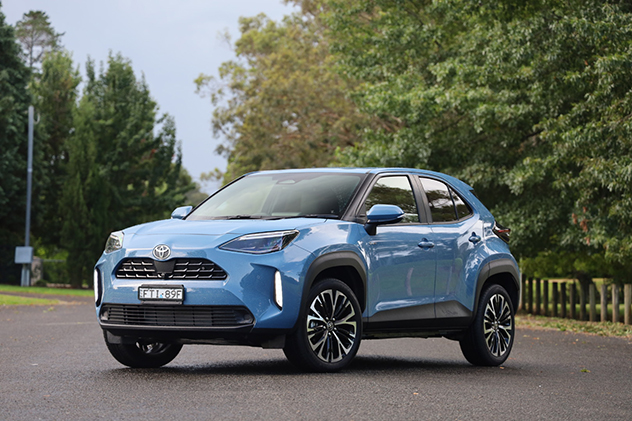
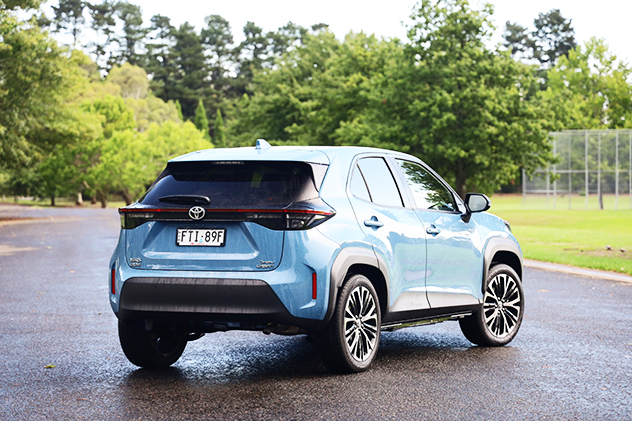
— Sam Charlwood
What equipment does the 2026 Toyota Yaris Cross come with?
Finding itself at the pointier end of the Yaris Cross model walk, the Urban variant comes with most of the desired features new car buyers are chasing, plus a couple of nice-to-have inclusions.
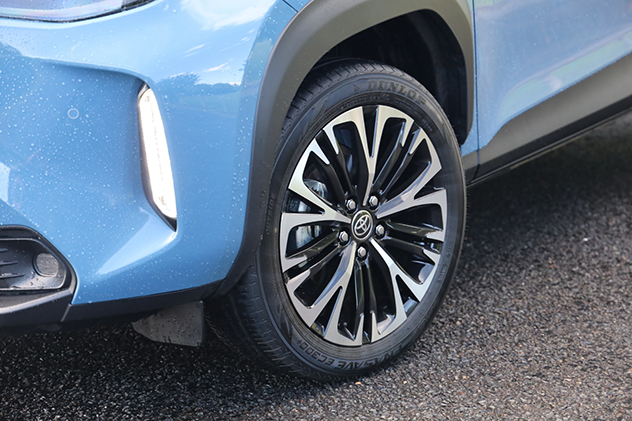
Standard fare includes 18-inch alloy wheels, automatic LED headlights, LED daytime running lights and LED tail-lights, keyless entry and start, an electric tailgate, climate control, Bluetooth, satellite navigation, tinted rear windows, a leather-trimmed steering wheel and heated front seats.
An eight-inch touchscreen display services the cabin, matched by a seven-inch digital instrument cluster and a head-up display. The screen conveys an overhead 360-degree camera in the Urban grade, which bolsters the car’s diminutive size in tighter parking situations. The Yaris Cross is also supported by Toyota’s Connected Services.
The baby Toyota comes armed with a five-year/unlimited kilometre warranty in Australia. Servicing intervals are set at every 12 months or 15,000km, with each visit capped at $255 annually.
Meanwhile, the hybrid battery is backed by a separate 10-year warranty from the point of purchase.
How safe is the 2026 Toyota Yaris Cross?
It’s very safe, fitted with eight airbags, active cruise control and the latest driver aids including autonomous emergency braking with pedestrian and cyclist detection, safe exit assistance, intersection assistance, and road sign assistance, among others.
Because the Yaris Cross isn’t the newest cab off the rank, its safety systems are nowhere near as intrusive as those in fresher rivals. That means far less beeping and bonging for things like glancing away from the road momentarily. It’s a win for driver sanity as much as anything else.
The vehicle’s age is reflected in its ANCAP rating, which is prescribed as five stars but against softer 2021 ANCAP protocols.
What powers the 2026 Toyota Yaris Cross?
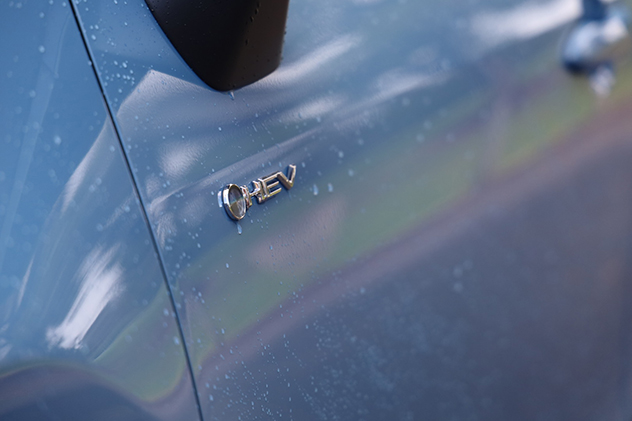
A 1.5-litre turbo-petrol three-cylinder engine teams with a front-mounted 59kW/141Nm electric motor powered by small lithium-ion battery.
All told, combined power is listed as 85kW, while torque from the petrol engine is listed as 120Nm (there’s no combined torque number). They’re certainly not figures to crow about, but against the Yaris Cross’ featherweight 1200kg kerb mass, they get the job done.
A CVT automatic transmission services all Yaris Cross grades.
What will interest prospective buyers most here is efficiency. The Yaris Cross claims a combined fuel efficiency figure of 3.8L/100km in a mix of conditions, and even with a tiny 36-litre fuel tank, that hypothetically means upwards of 850km between refills.
The Yaris Cross is based on Toyota’s GA-B platform, and as the name suggests, borrows its origins from the smaller Yaris hatch.
What is the 2026 Toyota Yaris Cross like to drive?
Pleasant and frugal.
The Yaris Cross endears itself despite an occasionally noisy driving experience. You learn to appreciate the thrum of the three-cylinder engine, which chortles away in concert with the electric motor to provide easy go-forward around town.
Passage between intersections and in back streets is a cinch, with its nimble footprint, light steering and ample body control teaming favourably with the electrified drivetrain to offer smooth, expedient progress. A 4.18-metre footprint (with a 2.56-metre wheelbase) lends the Yaris Cross an approachable set of dynamics and ease of use in tighter situations.
Conversely, it can occasionally be rollicked by bigger washouts in the road, but usually recovers well and doesn’t upset the cabin ambience too much. Smaller undulations are reflected through the cabin accordingly, while road noise is adequately suppressed, the caveat being rougher coarse-chip sections where it is more pronounced.
The engine verges on rowdy when really pushed, but otherwise gets up to signposted speed limits comfortably and works well with the CVT automatic. Highway speeds tend to pose more of a challenge – especially on inclines – but all in all the Yaris Cross manages itself commendably and offers decent stability on the open road.
Equally relevant is the real-world efficiency, especially in a climate of high fuel prices and long-term uncertainty over which method of propulsion is best.
We averaged 4.2L/100km in a mix of conditions over a 700km loan. Given there’s no recharging or requirement to use different drive modes, that’s an admirable figure indeed.
Open Road’s take on the 2026 Toyota Yaris Cross
The Toyota Yaris Cross in many ways borrows from the tried-and-tested Toyota formula, offering cheap and frugal motoring.
Against an armada of newer rivals, there are elements of the Yaris Cross which are revealing their age. That notwithstanding, the more time we spent with the Yaris Cross the more we grew to enjoy it. It’s just a shame its price tag has bloated so much since its Australian introduction. Despite this, its blend of efficiency, practicality and low running costs remains strong enough to have won the 2026 Best Value Hybrid Award.
What we liked
-
Chortling three-pot engine provides a surprisingly character-filled driving experience
-
Compliant and controlled ride; graceful handling given its high-riding stature
-
Safety systems are benign in their interventions, going against the grain of most rivals
What could be better?
-
The creeping price since the Yaris Cross’ Australian introduction
-
The rowdy three-cylinder engine won’t suit all tastes – try before you buy
-
The AWD version loses out on spare tyre, makes do with a smaller boot


