Top 10 Sydney gardens to visit this spring

Whether it’s a botanic garden (also devoted to scientific research) or a regular garden (purely for the love of flora and aesthetics), there’s no better place to spend a spring day in Sydney.
Given it’s a metropolis with four million inhabitants, Sydney boasts a remarkable number of public gardens, many of which are free to enter and provide picnic facilities.
September to November is the best time to appreciate these gardens in full spring bloom, although they’re a peaceful and often educational way to spend a morning at any time of year.
1. Sylvan Grove Native Garden, Picnic Point
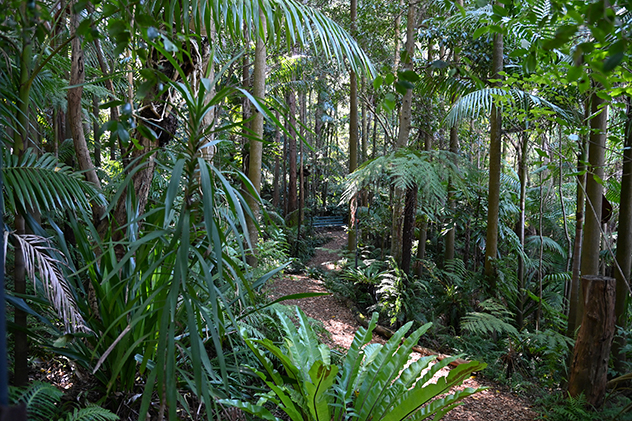
This tiny public garden literally shares a fence line with suburban backyards, yet packs in an extraordinary variety of plants with a focus on natives, particularly those found naturally in the Bankstown region.
A well-maintained mulch track squiggles through the bushy surrounds and it’s an easy walk with only mild grades. Should you wish to pause and appreciate the leafy serenity there are numerous seats along the way, as well as ample signage to please the true horticultural enthusiast. If you take the longer of two trails, it leads to a picturesque outlook over Yeramba Lagoon.
2. E.G. Waterhouse National Camellia Gardens, Caringbah South
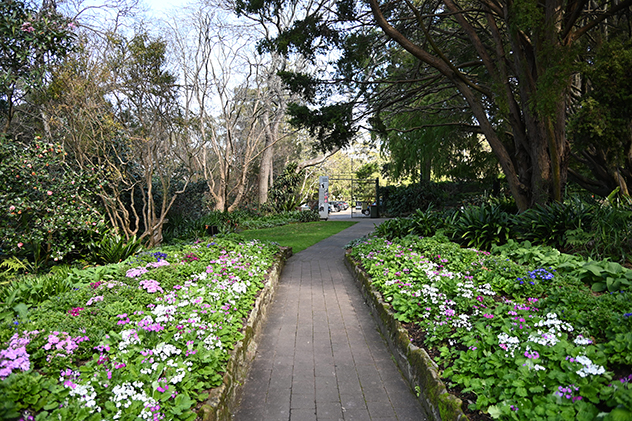
A polar opposite to Sylvan Grove in some ways, the National Camellia Gardens in the Sutherland Shire have been established in one form or another for well over a century, and there’s a Victorian grandeur to their sandstone-guttered pathways, duck ponds and manicured lawns.
Camellias feature prominently, of course, but there’s everything from native plants and ferns to a jasmine trellis and beds of seasonal blooms. History buffs will find the story of the gardens an added attraction, while the onsite café provides Devonshire teas and other lunchtime treats.
3. Australian Botanic Garden, Mount Annan
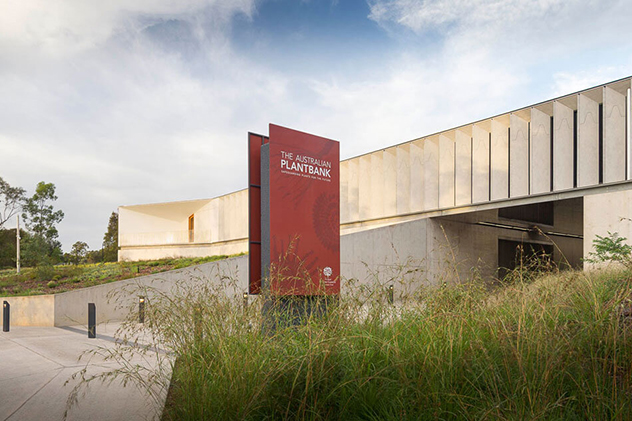
Located in Sydney’s south-west, the Australian Botanic Garden is a gigantic 416-hectare scientific hub packed full of flowering displays and native plants. The gardens and man-made lakes attract local wildlife, while the garden’s scale makes it ideal for longer walks – and there’s a café on site for a cold drink or a coffee afterwards.
The garden’s also home to the Australian PlantBank – a repository of seeds and tissue cultures that serve as an insurance policy against the extinction of native plants. The PlantBank is open to the public Monday to Friday and guided tours are available.
4. Auburn Botanic Gardens
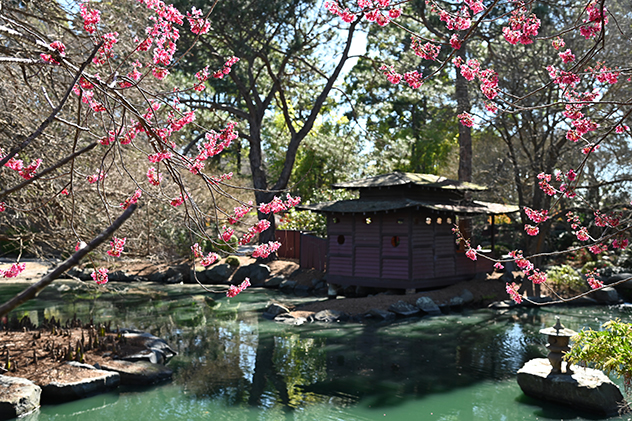
Something of a hidden gem (although popular with locals) the pint-sized Auburn Botanic Gardens are squeezed in amongst sports grounds and western Sydney’s multicultural suburbia. First opened in 1977, it has become known locally for its annual cherry blossom festival, which sees a long avenue of trees in the Japanese Garden come to life in clouds of pink blooms.
It’s no one-trick pony, though, with a remembrance walkway dedicated to those who served in the military, a reflection pool, and a small fauna reserve that’s home to native animals including wallabies, wombats and kangaroos.
5. Stony Range Regional Botanic Garden, Dee Why
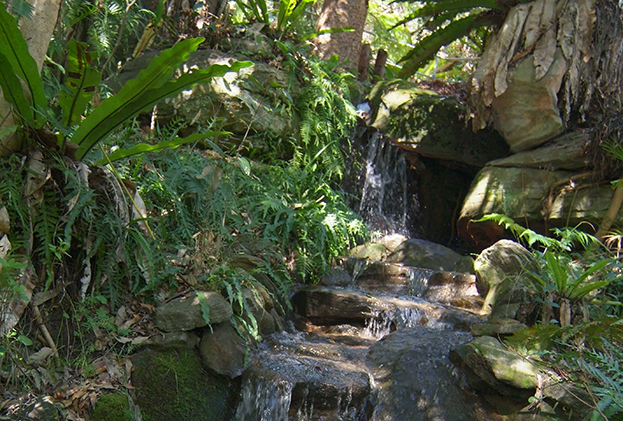
One of the smallest gardens listed here at just 3.3 hectares, Stony Range started out as a disused quarry overgrown with introduced species and noxious weeds. Thanks to a handful of locals and council support, it is now a native oasis showcasing different microclimates including rainforest and heath. Spring is the ideal time to visit for spectacular floral displays.
6. Chang Yai Luan Gardens, Doonside
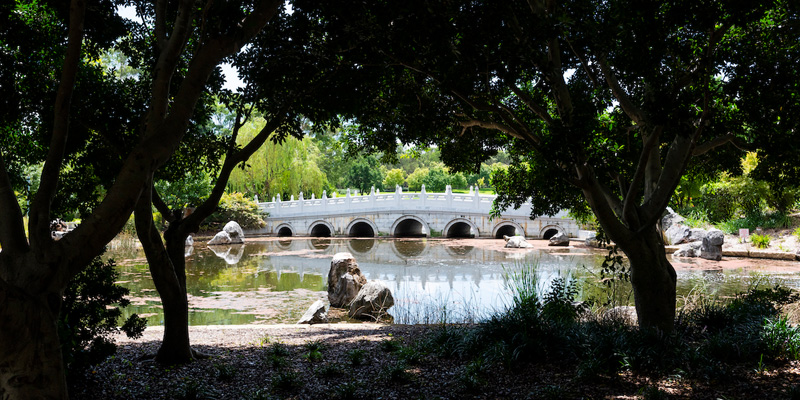
A co-operative project between Blacktown Council and its counterpart in Liaocheng, China, these gardens were first opened to the public in 2012 and were designed and constructed as a symbolic gesture of friendship between the two cities.
Occupying a large area of Nurragingy Reserve in the northern reaches of Western Sydney Parklands, the centrepiece is a waterfall that cascades down into a lake, while the archway over the entrance to the park and the reflection pool above the waterfall are impressive examples of intricate Chinese architecture.
It’s a calming place to take a walk or sit and enjoy a picnic lunch, while shutterbugs will be in their element capturing the gardens’ different aspects.
7. Wendy Whiteley’s Secret Garden, Lavender Bay
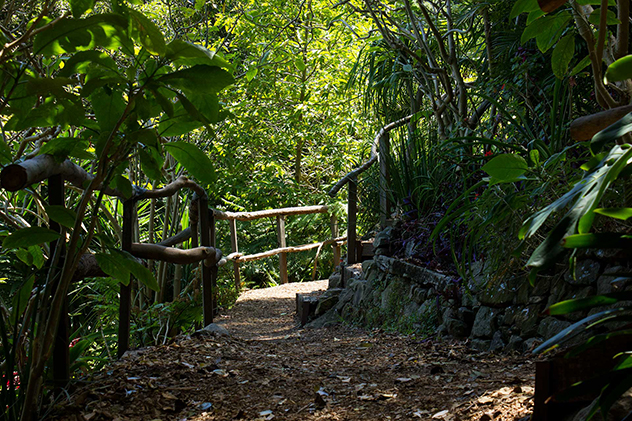
As the website says, Wendy Whiteley’s Secret Garden is perhaps the worst-kept secret in Sydney. The story behind it is as beautiful as it is heartbreaking.
The eponymous Wendy Whiteley created it as a way to work through the grief of losing her husband, the famous artist Brett Whiteley, in 1992. After his death, she began “obsessively attacking the piles of overgrown rubbish” on the valley of disused railway land at the foot of her house. Her secret garden was the eventual result.
Nestled in the Lavender Bay Parklands near Milsons Point, it combines beautifully manicured pathways and sculptures with a stunning backdrop of Sydney Harbour.
8. Wistaria Gardens, Westmead
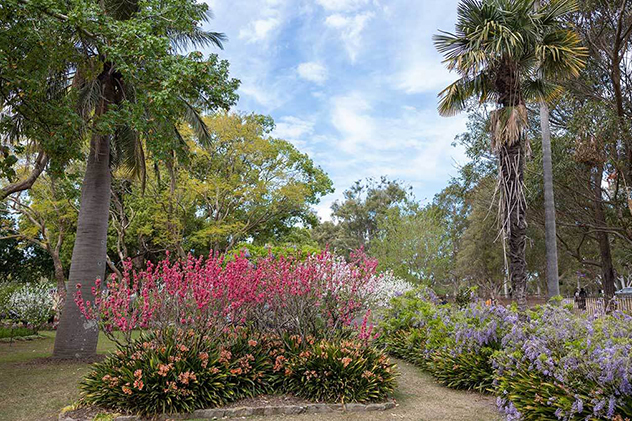
Now part of Western Sydney Parklands, Wistaria Gardens and the historic Glengariff House started life as a residence for the medical superintendent of the Parramatta Lunatic Asylum, Dr William Cotter Williamson. It was he who planted the park’s first wisteria cuttings, obtained during a trip to Japan in 1907.
Today, Wistaria Gardens still reflects that Japanese heritage with tori gates and other nods to Japanese architecture and art, plus Chinese and Japanese wistaria, English elm trees, and a wide selection of flowering plants. It sits on the banks of the Parramatta River, just down the road from Westmead Children’s Hospital, and is open to pedestrians 24/7.
9. Swain Gardens, Killara
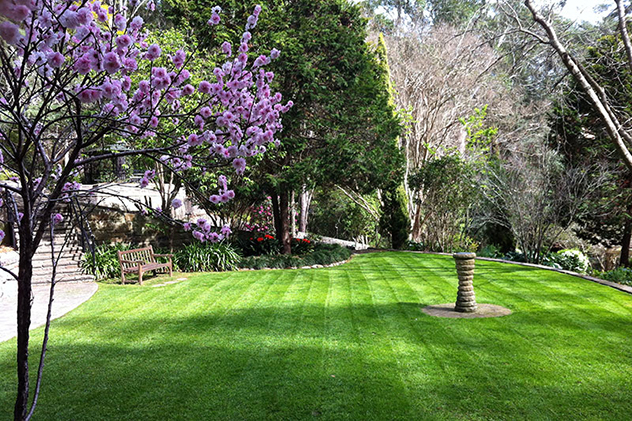
With the theme of ‘An English garden in a bushland setting’, Swain Gardens in northern Sydney offers an intimate tranquillity that makes it nearly unique. The kidney-shaped grounds encompass close-clipped lawns (popular as wedding venues), flowering plants, barbeque facilities, a sandstone bridge that spans a natural creek, a gazebo, and even private residences.
It started life as a passion project for wealthy bookseller Arthur Newling ‘Mick’ Swain, who learned the 3.4-hectare plot adjoining his property was about to be sold to developers and bought it himself instead. Entry to Swain Gardens is free (although facility hire and group bookings are available) and it’s open from sunrise to sunset each day.
10. Royal Botanic Garden, Sydney
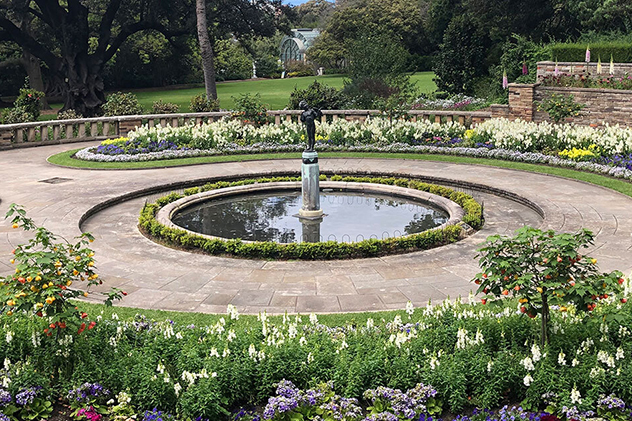
The original – it first welcomed visitors in 1816 – and many would say the best botanic garden in NSW, it’s as iconic a part of Sydney Harbour as the bridge and opera house. Open between 7am and sunset year-round, entry is free – although there are special ticketed events and tours if the landscaped grounds and informative signboards aren’t enough to satiate your appetite for all things horticultural and historical.