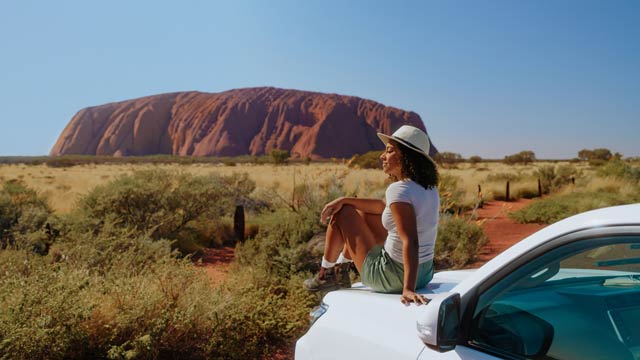
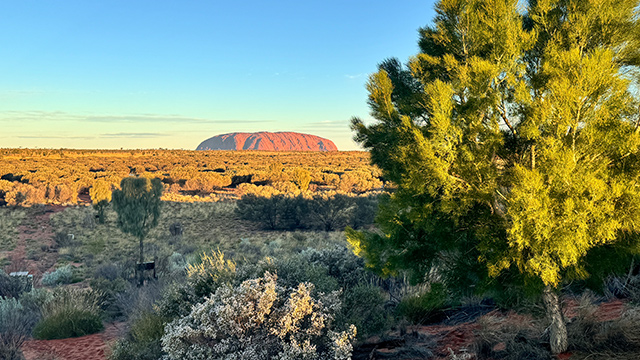
The ultimate Uluṟu road trip: why Ayers Rock Resort is where the journey begins
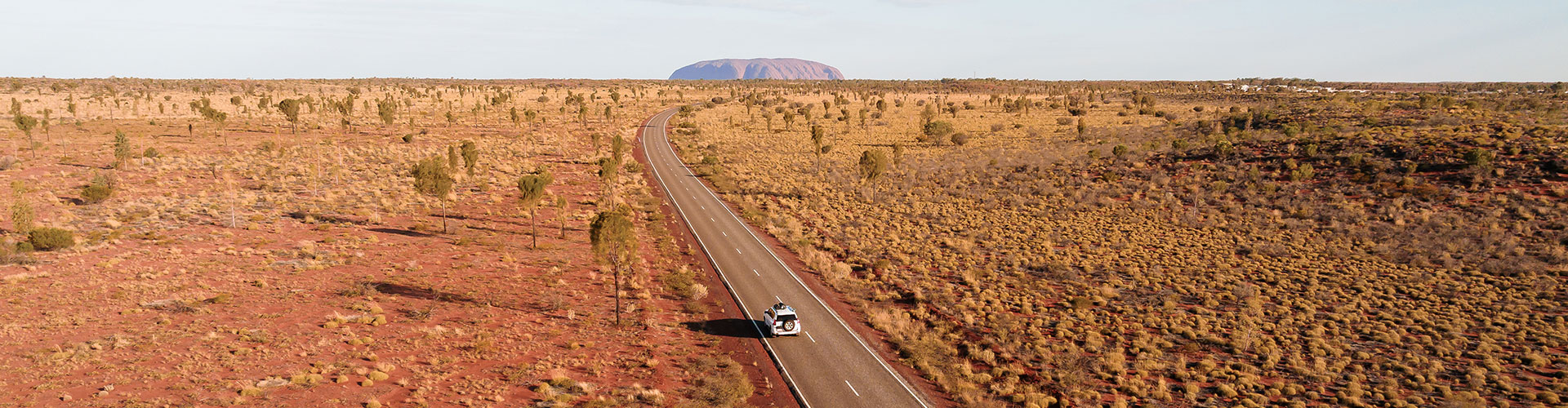
For road trippers who love the long view and the simple pleasures of an open highway, this is the year to go slower, look longer and let the Country do the talking.
Centre yourself in the spiritual heart of Australia
There is a hush that falls over the desert when the light softens. The wind drops, the spinifex stills, and a wide, quiet sky deepens into night. In 2026 the Northern Territory feels especially luminous. Field of Light at Uluru marks its tenth year, a milestone that turns attention to the beating heart of Australia and to the Red Centre Light Trail road-trip adventure that links Uluru, Kings Canyon and Parrtjima in Alice Springs.
The road as a reset
Driving the NT invites a different rhythm. The Stuart and Lasseter highways are sealed and straightforward, the roadhouses honest and welcoming, and the distances help you fall into the rhythm of life on the road. You notice the way the colour shifts from rust to rose as the day moves. You pull over for wedge-tailed eagles and a horizon that seems to rise to meet you.
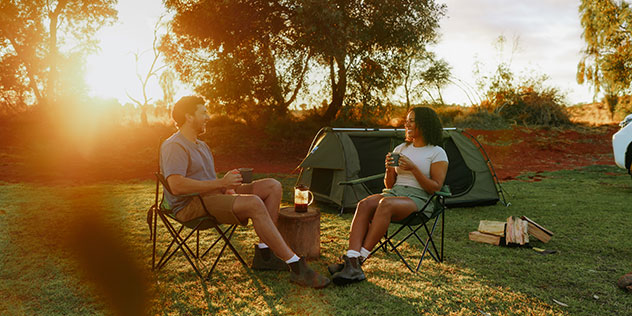
Some travellers will tow a van and call shady sites home for a few nights. Others will roll out a tent and fall asleep to the soundscapes of the outback plains. If time is tight, you can fly into Alice Springs or Ayers Rock Airport, pick up a hire car and trace a compact loop that still feels like a proper adventure. However you travel, the sense of freedom is the same. Space to think, room to breathe, and the quiet pleasure of letting the journey unfold before you.
The Red Centre Light Trail
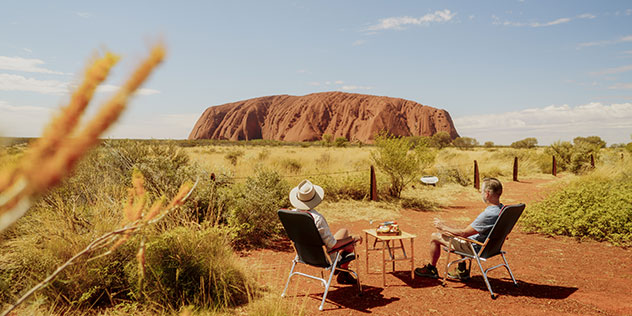
The Red Centre Light Trail offers the ultimate way to road trip Central Australia in 2026, threading together some of the region’s most moving nighttime experiences into one journey. It begins at Uluru, home to Field of Light, Wintjiri Wiru and the Sunrise Journeys experiences, each offering its own way of connecting with Country. From there the trail leads to Kings Canyon, where acclaimed artist Bruce Munro’s ‘Light Towers’ installation glows each evening, and then on to Alice Springs for Parrtjima, the annual Indigenous festival of light and art.
It’s a loop you can shape to your own pace, whether you’re travelling slow with a van or flying in for a five- or seven-day trip. Some sections of the Red Centre Way call for a 4WD, though you can still complete the loop entirely on sealed roads with a little backtracking. However you travel, you decide where to pause and where to let the desert night settle around you.
A decade of Field of Light, Uluru
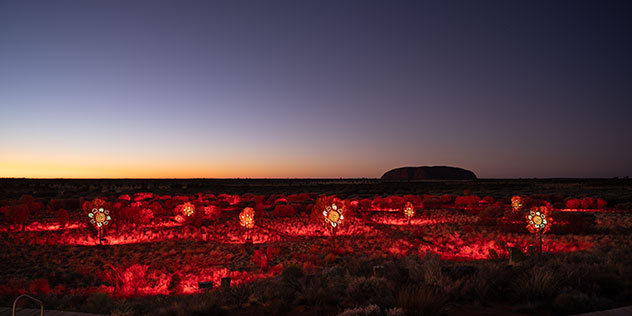
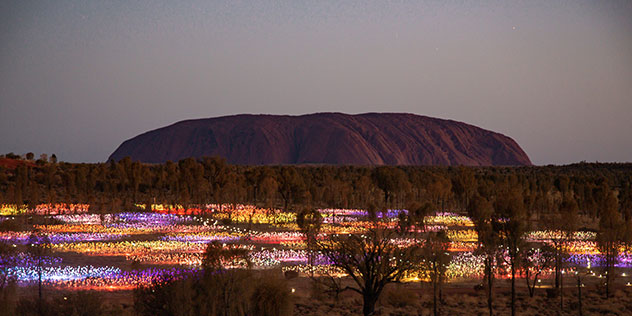
Uluru sits at the centre of it all, a constant presence that appears to change with every hour and angle. As evening draws close, Bruce Munro’s Field of Light wakes. 50 thousand solar-powered glass spheres begin to ebb and glow, like desert wildflowers bursting to life after rain. This is a place to tuck your phone away and let your eyes adjust. Book the Field of Light Dinner, then give yourself time. A meal under vast starry skies, a slow walk among shifting colour, a sense that the desert is breathing with you.
When it’s time to turn in for the night, Ayers Rock Resort offers accommodation that suits every kind of traveller – from a campground to self-contained apartments, and four hotels ranging from warm and welcoming to luxe.
Stories in the desert
The Wintjiri Wiru experience begins with sunset and the first stars. The sand is cooling underfoot as the Milky Way begins to glow overhead. Through drones, light and sound, an ancient Anangu creation story is shared with care and permission from Traditional Owners. Wintjiri Wiru is a cultural story handed down through generations and presented with Aṉangu guidance at every step. When the final moving scene dissolves, you’ll likely find yourself lingering in the quiet, allowing the experience to settle over you.
Just before first light, the Sunrise Journeys experience offers a counterpoint. Cool air, soft birdsong and a female-led story of connection to Country told through lasers and light set the scene for nature’s ultimate show, the dawn of a new day at Uluru.
Kings Canyon, by day and night
Just three and a half hours down the road (practically neighbours in desert terms), Kings Canyon is all sandstone drama by day. The Rim Walk traces domes and cliffs in a slow reveal of shape and shadow as the sun climbs.
When night settles, Bruce Munro’s Light Towers rise softly from the landscape, each one glowing in the cool air and responding to a soundscape of music and voices that move through the installation. And when it’s time to hit the hay, Kings Canyon offers powered and unpowered sites, clean amenities, hot showers, a shared kitchen and a bar close enough for a nightcap. It’s comfortable but not overdone.
Parrtjima, where the desert gathers
A five-hour journey brings you to Alice (as it’s affectionately known to locals), where you can take your pick of accommodation. Make sure you plan your trip to experience Parrtjima – a festival of light, art and deep cultural storytelling, and the only Aboriginal-led light festival of its kind. Running from 10 to 19 April 2026, Parrtjima transforms Arrernte Country into a living gallery of installations, music and nighttime wonder. Across ten evenings the desert becomes a meeting place, where largescale artworks come to life in vivid colour and life, sharing stories shaped by First Nations voices.
By day, use Alice Springs as a base to explore the West MacDonnell Ranges, where you’ll find some of Central Australia’s most spectacular country: cool waterholes like Ellery Creek Big Hole, Ormiston Gorge and Glen Helen, towering red cliffs at Simpsons Gap, the ancient colours of the Ochre Pits, and walking tracks that range from short sandy paths to sections of the 223 km Larapinta Trail.
Choose your way to travel
RV or caravan
Holiday parks and campgrounds welcome rigs of all sizes, with pools for hot afternoons and camp kitchens for post-drive conversations. Power when you want it, stars when you don’t. The freedom to stay an extra night when the sunset is too good to leave.
Camping
Pitching a tent keeps you close to the ground and the rhythms of the day. You will find well-serviced campgrounds like Ayers Rock Campground in Uluru, and quieter spots near ranges and creek beds along the Red Centre Way.
Practical notes for a smooth journey
The highways are sealed and well signed but taking the time to prepare is vital when travelling in the desert. Carry plenty of water, a hat that keeps the sun off, and layers for nights that cool quickly.
Check Park alerts and road reports before long stretches. Fuel up when you can rather than when you must. If you plan to explore beyond the main routes, let someone know your plan and timing. For peak periods, book key Ayers Rock Resort experiences and campsites early.
Journey lightly on Country
The Red Centre is a living cultural landscape. Stay on marked tracks, follow guidance at cultural sites, and choose souvenirs, tours and experiences that support local communities. Listen more than you speak. If you’re travelling with kids, make the act of putting phones away part of the ritual of arriving.
Why 2026
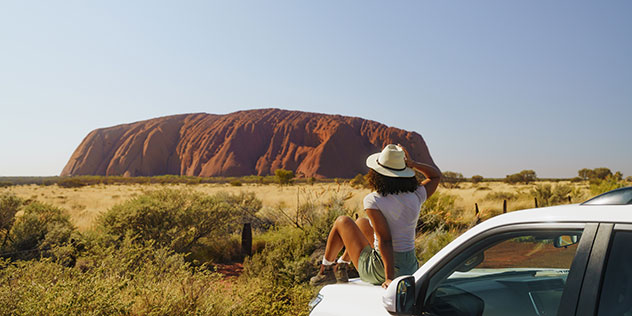
The ten-year anniversary of the Field of Light gives travellers a spectacular reason to hit the road in 2026 and experience the awe-inspiring red desert landscape. The Red Centre Light Trail isn’t just a road trip; it’s an experience that stays with you long after the drive is done. Isn’t it time you ticked the big drive off your bucket list?
Booking an adventure to Ayers Rock Resort is the perfect gateway to your Red Centre adventure. More than just a place to stay, it’s renowned for its deep connection with local Aṉangu culture and commitment to sustainable tourism. And if you book before March 24, you could save up to 35% on accommodation.