Celebrating the centenary of Ford Australia

This probably sounds impossibly quaint in 2025, but when I was seven or eight my grandfather built me a billycart. It was painted green, to match Dick Johnson’s ATCC-winning ‘Greens-Tuf’ Ford Falcon XE, and across the front in white lettering was KRIS FORD.
My family and I weren’t what you’d call ‘car people’, exactly, but the Bathurst 1000 race played in the background every October and the Ford versus Holden rivalry that defined Australian society from the 1960s through to the 2010s also defined us. You simply couldn’t escape it. We had both sides in one household – my grandfather was a Holden man and my mother preferred Fords.
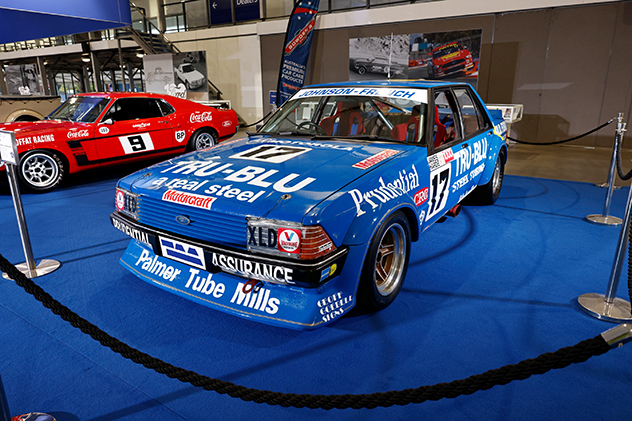
Dick Johnson's Tru-Blu Ford Falcon XD, predecessor to the Greens-Tuf Falcon XE.
My first car was a 1975 HJ Holden Kingswood (I liked the styling), but when someone turned right in front of that overheating rustbucket and totalled it, I switched allegiances and never looked back. My first Ford was a 1973 Fairlane ZG 302 V8, and over the years I owned a 1995 EF Ford Falcon Futura and a 2003 BA Ford Falcon Futura. (The Fairlane, with original Jewel Green paint, was one of those fabled “Why did I ever sell it?” cars).
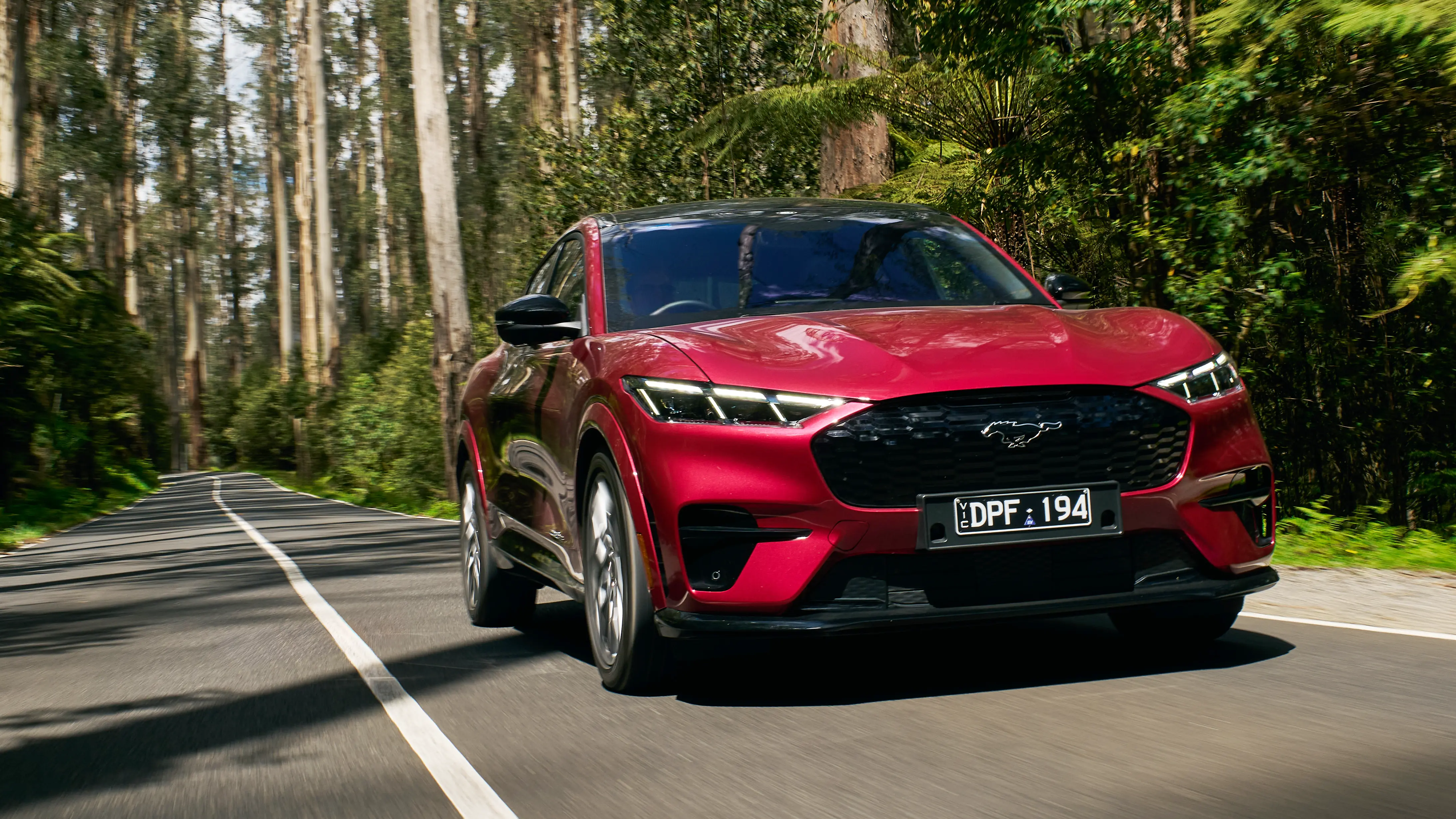
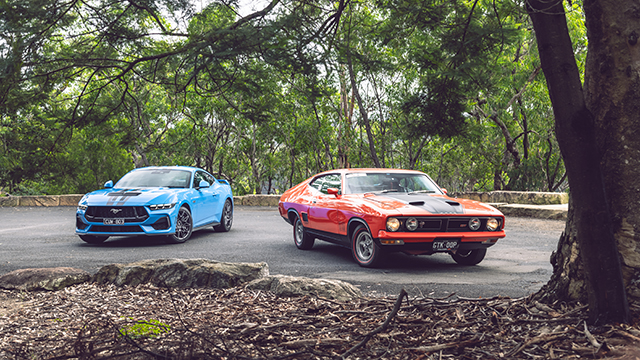
So, I’m excited to be driving a brand-new ‘Grabber Blue’ Ford Mustang GT to Dave Di Rado’s property in north-western Sydney. Dave has been president of the Falcon GT Owners Club of NSW for six years and has made caring for classic and important cars his life’s work through his business, Inncarnation.
Dave’s father, Giovanni Di Rado, was born in Abruzzi, Italy, and when he first emigrated to Australia he bought a Triumph Mayflower. This smallish ‘luxury’ car had a 1.3-litre engine that only put out 38bhp and it couldn’t get up the long gradient of Bulli Pass. Giovanni switched to a Holden, which at least could climb steep roads, but when it went in for a service and a mechanic rolled it (during a ‘spirited’ drive to get lunch), Giovanni bought his first Ford Falcon and the family obsession began.
“When I was born, I was brought home from hospital in a Walnut Glow XB hardtop, a 351 car with white trim,” Dave says (see photo with his mother, Antoinette, originally from Sardinia). “I’ve got all my baby photos on top of that car. I think if it weren’t for that car, there wouldn’t be many baby photos!”
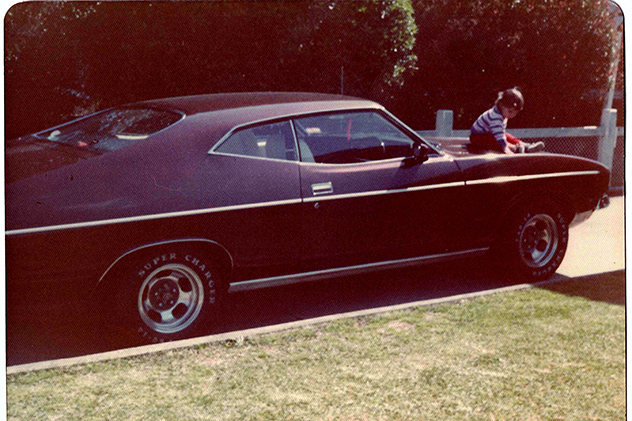
Dave Di Rado on the bonnet of his dad's Ford Falcon XB hardtop.
Dave now has around 30 cars under his stewardship, both at this property and in sheds in western Sydney and Lithgow. There are some stunning rarities and Ford royalty – my favourites are the 1978 XC Cobra (currently under restoration) and 2007 FPV BF Mk II GT Cobra R-spec – both limited editions with matching production numbers – #248.
When Dave was about five his father sold the Walnut Glow hardtop and bought a more family friendly car – a Red Pepper Falcon 500 sedan with 351ci engine. Like so many car enthusiasts, the Ford Dave remembered from his childhood was the one he wanted to own as a grownup, so he started the search for a Red Pepper XB GT with black trim.
“We could never find one,” Dave remembers. “Then years later, when my sister’s husband wanted to get another Red Pepper XB, this car came along. They only owned it for a couple of years – they didn’t really like it because it was manual and not really a good family car. So I just hoarded the number plates [GTK OOP – ‘GT coupe’] and waited for the day that I could get the car.” And get it he did. Dave names all his cars, and he called this one ‘Hellon’ – short for ‘Hell on Wheels’.
It’s not just the sleek muscle cars of the 1960s and 1970s that give Ford fans a nostalgia rush. Dave owns Lasers and Telstars as well, and when he drives them around people get emotional – usually because their grandmother owned one back in the 1980s.
Nor is it just sentimentality. While Ford Australia ceased production of the Falcon in October 2016, the brand has lived on in a way its old rival Holden didn’t. Many dealers and engineers are second and third-generation Ford employees who bleed blue. Ford continues to mean something to Australians. Why is that?
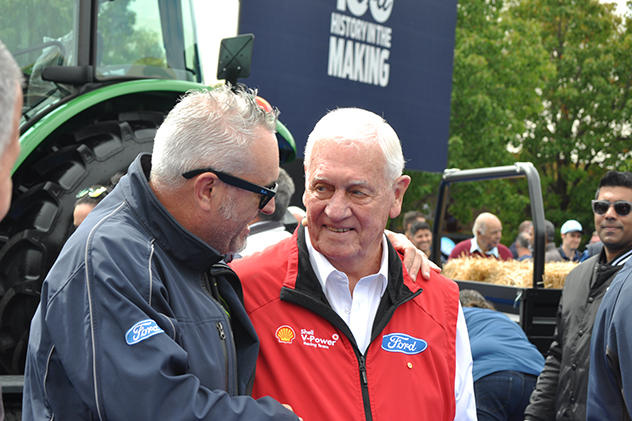
A big part of its enduring popularity must be laid at the feet of its favourite son and motor racing legend, Dick Johnson. His humorous, down-to-earth personality and underdog status in the early years at Bathurst delivered a connection with fans that rivalled even Peter Brock’s. He’s been a Ford ambassador for 50 years and remains a crowd favourite. He made an appearance at Ford Australia’s official centenary celebrations at Melbourne Showground on April 4 2025.
“You still drive better than I do,” said MC Shane Jacobson to the 79-year-old Ford legend.
“Well, I’ve still got a licence, even though you’ve gotta go through all the bullshit these days,” Johnson replied, to uproarious laughter from the audience of Ford dealers, media, and fans.
Ford Australia’s American parent also seemed to better understand its brand’s place in Australian culture than General Motors did. While Holden was busy telling lifelong fans they should accept a rebadged front wheel drive Buick as a Commodore and acting like the Camaro didn’t exist, Ford simply said, “Yeah, local Falcon production has ended – but look at this kick-arse Mustang we made for you.”
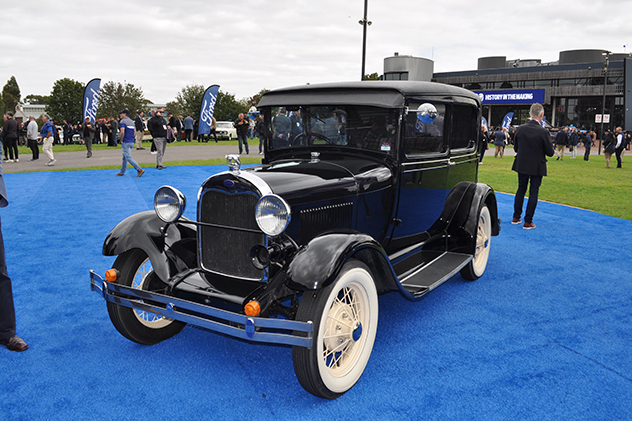
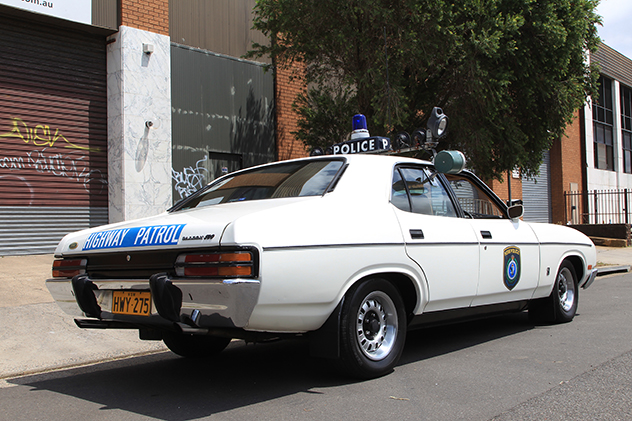
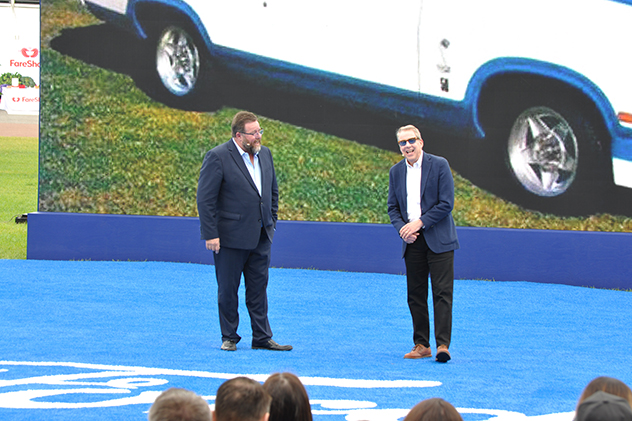
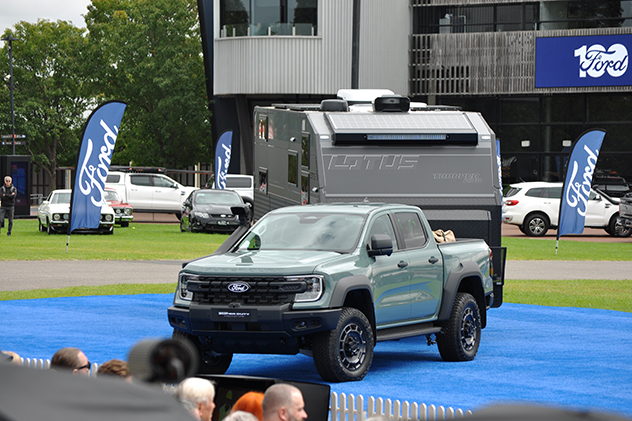
“Ford Australia has meant so much to our company over the years,” said Bill Ford, executive chairman of Ford, at the Melbourne centenary event. “Think about all the executives that have gone throughout the world that have come from Ford Australia, that have really left their mark on Ford and continue to do so to this day. I mean, you guys were the first to have what we now call a pickup truck with the ute, which was developed in the 1930s.”
That of course brings us to the Ford Ranger, which has been an epic success story for the Blue Oval in Australia. The Ranger nameplate had been around since 1983, used on a light pickup truck range in America and a series of utes co-produced with Mazda in Australia, but it was only when Ford Australia designed the first T6 platform Ranger in 2011 that the model really took off locally. Not only did it topple the seemingly unconquerable Toyota HiLux for the top spot on the sales charts, it also (along with the Mustang) helped Ford Australia negotiate the initial torrid years after Falcon production ended.
Anyway, back to Dave Di Rado. Once he has shown us around his remarkable Ford collection, we take a drive up into the Hawkesbury region’s winding roads – Dave in his 1974 XB GT Falcon hardtop, me in the 2025 Ford Mustang GT. They’re 50 years apart, yet the shared lineage is unmistakable. When the Mustang made its Australian debut in 2015, a large part of its popularity stemmed from its retro styling and lack of pretension. It was a throwback to the golden age of affordable muscle cars, of which its Mustang predecessors and the GT Falcons were a part.
Dave and I stop to compare notes at Hawkins Lookout in Wisemans Ferry and I mention that I spent most of my time listening to the Mustang’s engine (even though it has an enormous infotainment screen these days and I could play the Spotify track of my choice). Dave agrees. He has an old Alpine sound system in the Falcon, but mainly he drives around listening to its lumpy V8 soundtrack.
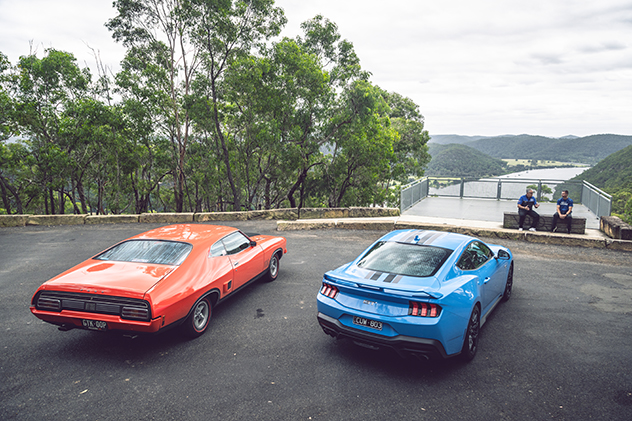
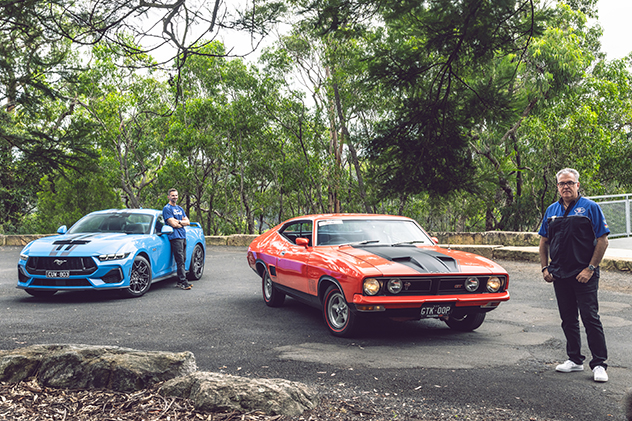
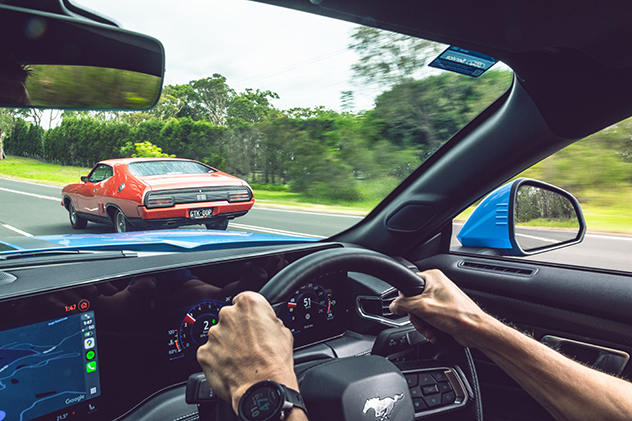
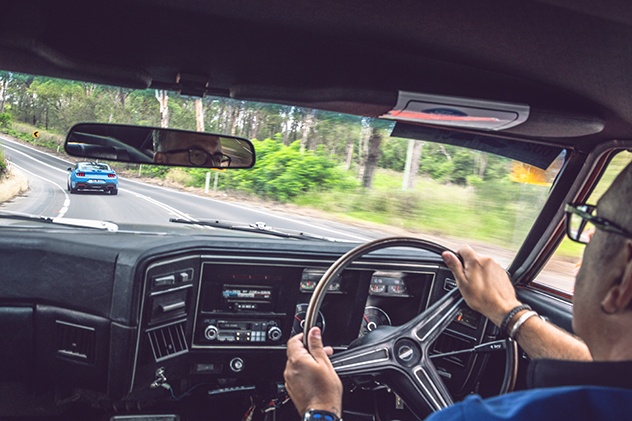
On the return journey I switch from the Mustang to the Falcon. The immediate notable difference is insulation. The Mustang, like all modern vehicles, cossets its driver from the outside world. In the Falcon, you have to put the windows down if it’s warm and with the wind noise and vibration it’s rather like sitting in a tin can on the back of a flatbed truck. Yet, there’s a connection to the road you don’t get in today’s cars, not even in something as visceral and musclebound as the Mustang. You have to drive the Falcon – it’s not going to do the work for you.
But in the end, they’re both Fords. Proper Fords built for the Australian market. That’s what matters.
“In this day and age, that fact that you can still get a Ford product in Australia is a really big deal,” Dave muses. “I know when we look at Mustangs, we associate that with an American vehicle, but there’s a lot of people I know who have always been into Fords in Australia that have old Mustangs as well. So it doesn’t feel like something Ford’s doing just to hang onto Australia. We’ve always had Mustangs. Whereas other brands – they’re gone. There is no equivalent to a Monaro anymore, is there?”
A (very) short history of Ford Australia
1925
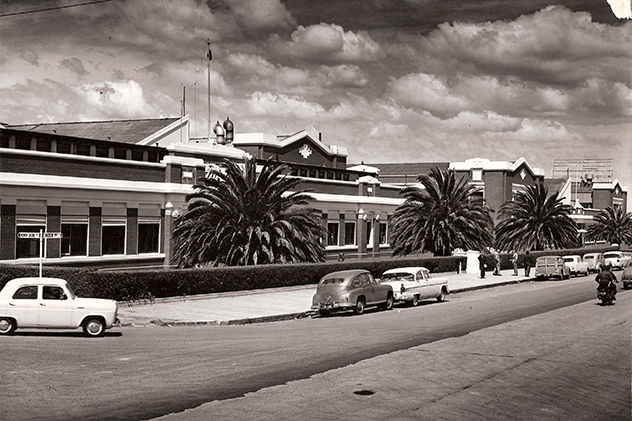
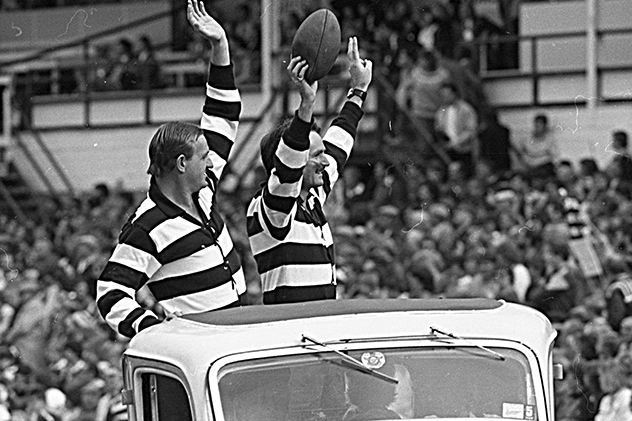
Ford opens its first Australian factory in Geelong, Victoria, and begins assembling Model Ts. Soon after, it sponsors the Geelong football team – a partnership that endures to this day.
1934
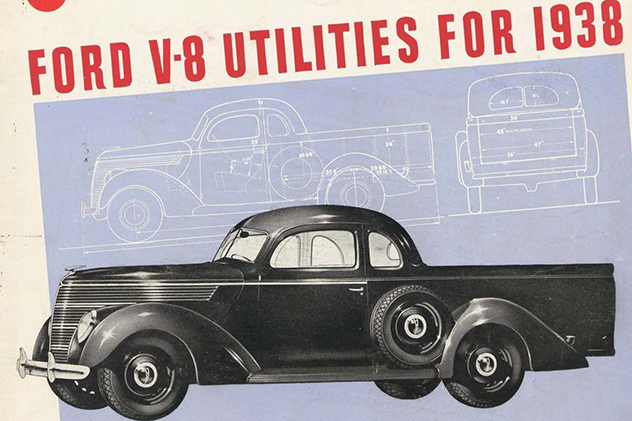
In response to consumer demand, Ford Australia introduces the first Ford Coupe Utility – a body shape that would become known locally as the ‘ute’ and became the basis for the pickup truck.
1939
As World War 2 commences, Ford Australia ceases car production and directs its resources toward producing military equipment for the war effort.
1958
After a visit to Detroit, the head of Ford Australia, Charlie Smith, decides the Falcon should the brand’s next locally built car rather than the British Zephyr Mark II.
1960
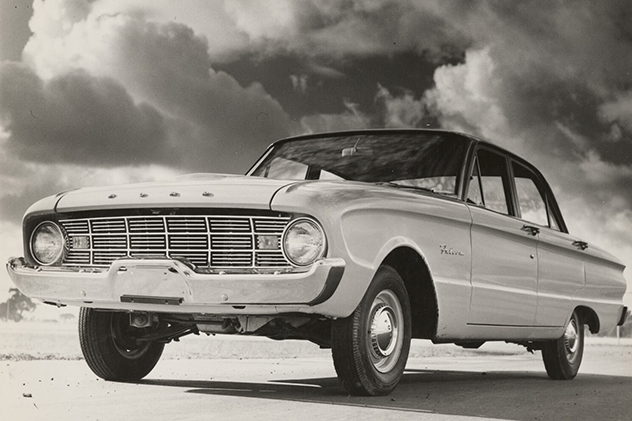
The first Ford Falcon XK rolls off the assembly line. Sales begin in September.
1966
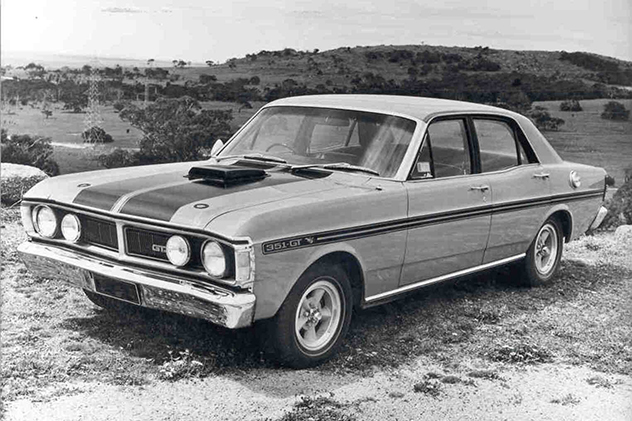
After early concerns about the Falcon’s suitability for Australian conditions, Ford releases the “Mustang bred” XR Falcon, which has a V8 option on all trims and the first Falcon GT hardtop variant.
1972
Falcon production ends in the US, allowing Australian designers much greater input into the local version. The sleeker and more modern XA is the result.
1981
Ford legend Dick Johnson wins his first Bathurst 1000 race in the Tru-Blu XD Falcon after a massive pile-up at the front of the field.
2004
The Australian-designed Ford Territory helps ignite the Aussie love affair with SUVs. At its peak, Ford sold nearly 2000 units per month.
2011
As its partnership with Mazda draws to a close, Ford unveils its brand-new Aussie-designed Ford Ranger ute – and changes the local car market forever.
2016
The final Ford Falcon rolls off the assembly line. The first Ford Mustangs go on sale in Australia and prove an immediate hit.
2025
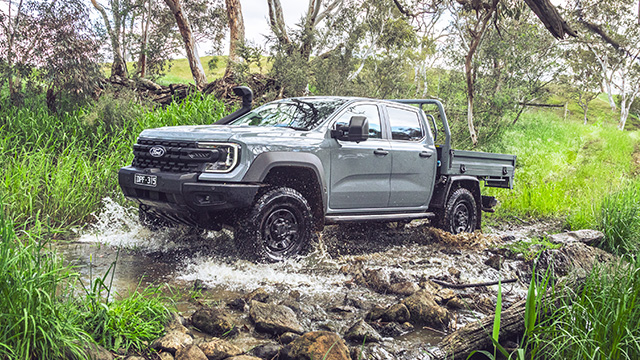
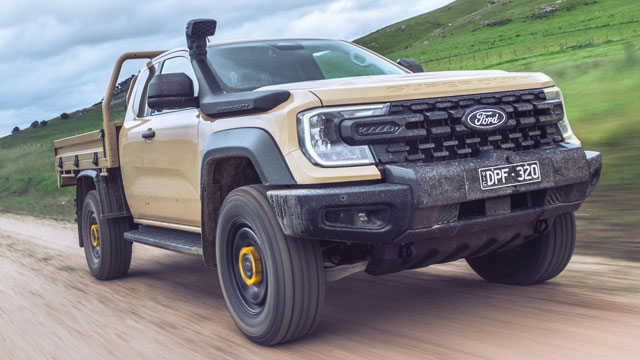
Ford celebrates 100 years in Australia with a gala event in the Melbourne Showgrounds and uses the opportunity to reveal its prototype Ford Ranger Super Duty.