Every new Australian road rule and fine taking effect from July 1 2026

The new financial year is almost upon us, and for Australians that means a host of new road rules, revised penalties and fine increases taking effect from July 1.
The FY26-27 period will usher in stronger motorcycle laws in some states together with an increase in fines (indexed to inflation).
Here, we dissect new laws being introduced across different states and territories, based on information available at the time of publishing.
New South Wales
Novice motorbike riders are set to face tougher requirements under changes to the Motorcycle Graduated Licensing Scheme in NSW from July 1.
Under the measures all Learner, P1, and P2 riders must wear approved protective gloves at all times. Additionally, Learner riders must wear an approved high-visibility vest or jacket.
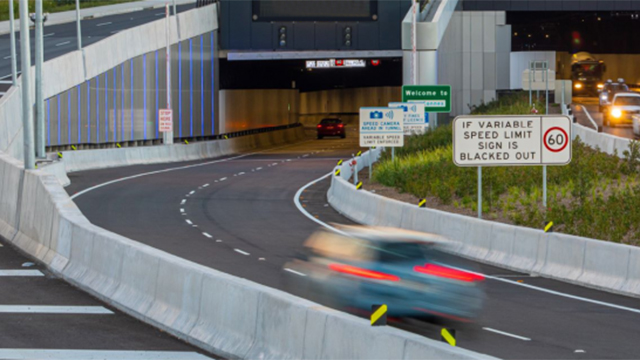
Separately, the government has confirmed drivers will pay no more than $50 per week to use Sydney’s toll roads, a reduction on the current $60 cap.
Between September 1 and August 31 in 2027, car owners will be charged $100 less on registration renewals and motorcycle owners will get $80 off. The discount will be automatic on all renewal notices.
Both measures were announced in the 2026-2027 NSW state budget, handed down by treasurer Daniel Mookhey on June 23.
Victoria
In Victoria, the state has overhauled how fines are enforced from July. Under the changes, infringements which aren’t paid by the first due date will face higher penalty fees.
Queensland
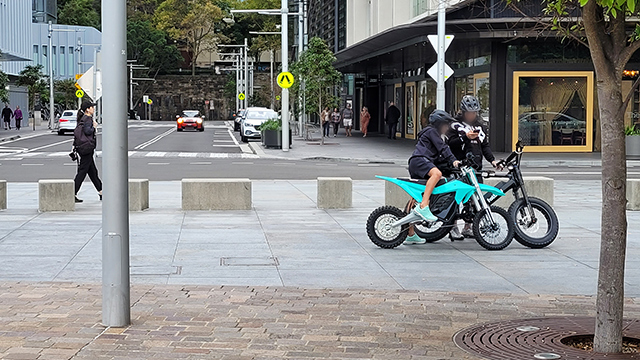
The sunshine state is introducing tougher e-bike and e-scooter laws from July 1, including the ability for police to seize and destroy illegal devices and enforce random breath tests for drink riding (a 0.05 blood alcohol limit applies).
In addition:
- A 25km/h speed limit will be applied to e-scooters and other personal mobility devices
- A 12km/h speed limit will apply to e-bikes, e-scooters and other personal mobility devices using footpaths and when passing pedestrians on shared paths.
- E-scooters, e-skateboards or e-unicycles can by ridden on roads, including on-road bike lanes, with a speed limit of up to 60km/h from July 1. Riders can only go to a maximum speed of 25km/h.
- Higher penalties will apply for speeding, failure to wear a helmet, careless riding, illegally carrying passengers and riding e-scooters, e-skateboards or e-unicycles on prohibited roads from July 1.
- Riders must be 16 with a learner’s permit from August 31. Some exemptions will apply, including medical conditions and disabilities and 12-17 year olds being allowed to ride under parental supervision.
- Parents will be fined for under-16s riding illegally.
Finally, Queenslanders will experience a 3.4 per cent increase in vehicle registration fees, plus a CPI increase for speeding offences.
South Australia
The South Australian government has confirmed the following CPI increases for speeding and drink driving offences.
Fines for exceeding the speed limit will increase:
- Under 10 km/h over limit: $215 (previously $208)
- 10–20 km/h over: $484 (previously $469)
- 20–30 km/h over: $998 (previously $995)
- 30–45 km/h over: $1,793 (previously $1,736)
- 45 km/h+ over: $2,018 (previously $1,954)
Drink drivers will also face increased penalties, with those caught with less than 0.08 grams of alcohol in 100 millilitres of blood facing fines of $904, up from $875.
Western Australia
The WA government is considering enforcing a host of new laws for L- and P-plate drivers, following an extensive consultation period with the community.
Under the reforms, the minimum learner period doubles from six to 12 months, the provisional period stretches from two years to three, and the minimum supervised driving hours jump from 50 to 80 – including a doubling of required night hours from five to 10.
Separately, there is a push to increase the minimum learner motorcycle age from 16 years to 18 years, as well as numerous other learner motorcycle rules.
Final implementation timelines for both car and bike laws will be confirmed in the coming months, the government said.
ACT and Tasmania
There are no noted changes to traffic laws or infringements in these states at the time of writing, other than fine increases indexed to inflation.