
The NRMA: our history of supporting businesses on the road

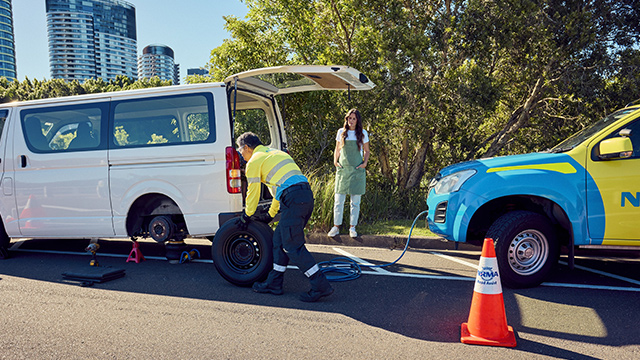
From our early advocacy for safer roads to today’s new electric patrol vehicles and fleet support programs, the NRMA has a history of supporting businesses that’s always been intertwined with our mission to keep Australians moving.
While most people know the NRMA as a roadside ally for everyday motorists, our impact on business mobility has been pivotal across every decade.
Take a look at the highlights of our journey:
Laying the foundations for commerce and connection
As cars began to outnumber horses and carriages in the 1920s, what was then known as the National Roads Association lobbied for road improvements, traffic laws, speed limits, road signs and everything necessary for the advancement and protection of motorists. This work ensured that delivery drivers and tradespeople could navigate more reliable and better-signposted routes.
By the 1930s, the NRA had become the NRMA. The introduction of 24-hour road service in 1933 was a game-changer for commercial vehicle operators who relied on timely assistance to minimise delays. You can read about the blue flags and brown leather caps that made these early patrols recognisable here.
Driving safety and reliability for working Australians
Throughout the 1940s and 50s, as the country recovered from WWII and productivity took off, the NRMA scaled up our services. During petrol rationing, our Patrol staff famously used bicycles to reach Members in the CBD, showing agility and resourcefulness in a time of national constraint. Businesses benefitted from these consistent support measures, keeping their vehicles and operations on the move.
In the decades that followed, we pushed for safety improvements such as practical driving education and speed zone enforcement which helped create safer conditions for the growing number of delivery and logistics operators.
Seatbelt campaigns and oil conservation messaging in the 1970s weren’t only for the public good; they also supported cost-saving and risk reduction for the managers of the nation’s growing corporate fleets.
Technology upgrades that powered small business
The 1980s saw the NRMA lead the way with advanced dispatch technology, rolling out Australia’s first computer-aided dispatch (CAD) system in 1985. This upgrade dramatically reduced wait times and introduced faster, more efficient roadside support, an essential service for time-sensitive businesses, from tradespeople to couriers.
In the 1990s, we remained ahead of the curve with emissions campaigns and the introduction of young driver education. Supporting a cleaner environment was a smart move; it anticipated the growing demands businesses would face in meeting environmental standards.
Going further for rural and regional Australia
From 2014, our support for regional businesses took on a new focus. We established a partnership between the NRMA and Outback Links, to provide on-the-ground support to farmers and help maintain vehicles that are critical to agricultural supply chains, and it’s still active to this day. By advocating for road upgrades through the ongoing Rate Your Road campaign, we’ve also contributed to safer, more efficient routes for freight operators and rural suppliers.
To add to this, the launch of our Indigenous Learner Driver Mentor Program and Reconciliation Action Plan acknowledged the need to support communities often excluded from economic mobility. These programs help individual drivers, but in doing so they contribute to the expansion of local workforces across NSW.
Business roadside and driver support in 2025 and beyond
Now, more than 100 years after its launch, the NRMA plays an integral role in business operations, whether this is by providing corporate fleet roadside assistance or helping with low risk driver training and other driver workshops to keep professional drivers safe on the road.
In 2025, we made headlines with the launch of our first fully electric patrol van. Far from a novelty, the Mercedes-Benz eVito was selected for its payload capacity and shift endurance; crucial criteria for mobile patrols tasked with helping both private and commercial drivers. Businesses across trades, transport and logistics are watching this development closely, recognising the van as proof that electric vehicles can handle frontline work.
More than membership: a partnership for progress
Whether through rapid, nationwide roadside assistance for businesses, advocacy for road funding or electrification of its fleet, the NRMA has consistently proven to be much more than a breakdown service. We’re a behind-the-scenes partner helping Australia’s business community adapt, survive and thrive on the road.From autonomous vehicles to smarter logistics, as the next wave of transport technology arrives, our legacy suggests we will continue to lead the way.
Start your NRMA story
Contact our team to understand the details of business membership or get the ball rolling by applying for roadside assistance support online today.


