Tips from an NRMA patrol: engine oil

Why is regular servicing so important?
Oil is the lifeblood of your engine. We’ve got blood in our bodies, and if our blood goes bad, our bodies don't function. And it's the same with an engine. If the engine oil is bad, or clogging up the oilways, your engine’s going to suffer. And the oil filter is like the kidneys, it’s filtering out any harmful particles. So think of your car’s engine as a body.
You advise against people with newer cars changing their own engine oil. Why is that?
Older cars used to have a proper cylinder cartridge-type filter, and now they seem to be a paper filament filter. You need a special tool, generally, to undo the casing and some of them are made of plastic and very fragile, and some of the sumps now on modern (especially European) cars are made of plastic. Lots can go wrong with plastic. You could possibly jack the vehicle up in the wrong spot. You could damage the casings.
Aside from regular servicing, what should owners consider when it comes to engine oil?
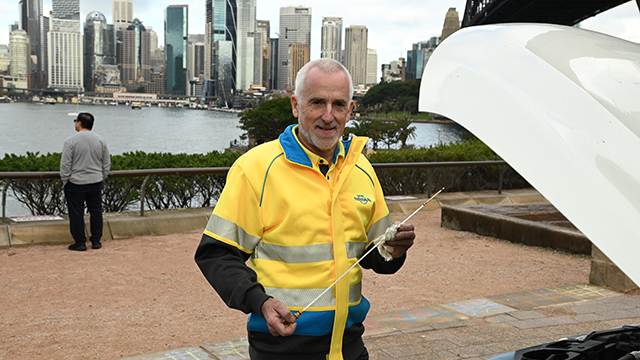
As an owner of a vehicle, you should check your oil level once a week. If your mileage is exceptionally high, you really need to keep an eye on it. An older engine will consume a bit of oil, just through wear and tear of the seals internally. And obviously, you can look out for leaks as well. If you have significant oil leak, that will show up on a rego check. Also, with an older car – especially a diesel – if you check the oil and it’s well over the maximum and it smells of fuel, don’t start the car. Get a tow. It could indicate you’ve got fuel going into the sump, and there's a risk of it basically exploding if you try to start it. If it's between minimum maximum on the dipstick, yeah, top it up. But don’t overfill it.

Some new cars have an electronic dipstick. How does that work?
This is where the Europeans have really come forward. On the Audis and BMWs there’s no mechanical dipstick on some of their models. You have to follow the vehicle manufacturer's recommendation of ‘run the engine, leave it ticking over, and then it will tell you on the media screen what the oil level is, and the exact amount to put in’. It might say put one litre in. But there, again, that’s why home servicing is not a good idea. You could start pouring it in, and it’s not showing on the system, and you just keep pouring until you've overfilled it. Start the engine then and you've ruined it. So again, it's worth going to a garage or a workshop to get your oil checked and maybe topped up, rather than DIY.
Have you ever attended a call out where someone has neglected their oil?
I've actually been out to people who have put water where the oil goes and, obviously, you get a bit of a catastrophic result. If you check your oil and on the dipstick the oil’s gone a whitey, creamy colour, do not run the engine – that’s an indication that oil and water are mixing. If you accidentally pour a different product into where the oil is supposed to go, get the car towed. Don’t even risk starting it.
RELATED: Make sure you have the NRMA roadside assistance coverage that's right for you.
Paul's tips for a safe oil change
1. Safety first
An oil change needs to be done on level ground with axle stands – don’t just rely on a jack. If you are a first-timer, I wouldn’t risk doing a service without some help and guidance.
2. Consider the environment
Make sure you can dispose of the oil following environmental policies. If you do have a spillage, it could end up contaminating a water source. Most recycling centres have oil disposal facilities.
3. Warm the oil
It’s worth getting the oil warm or hot by running the engine for a while. Make sure you switch the engine off and once it’s up on axle stands, drain the oil while it’s hot. But wear protective gloves so you don't burn yourself!
4. What's the catch?
You can make up your own oil catcher, but there are ones you can buy where the oil will go into a drum, and then you can seal the drum, take that to the recycling centre, and empty it out.
5. Replace the filter
There’s no point changing your oil if you’re not going to change your oil filter. They need to be done together. Use only the grade of oil the manufacturer recommends and replace it gradually, checking on the dipstick as you go until it’s at the correct level.
About Paul Thompson
How long have you been with the NRMA?
I used to work for the Automobile Association in England. I did 28 years there before I came to Australia. I've been in the country three years and with the NRMA for two and a half. I absolutely love my job. I enjoy every day, helping people out on the roadside.
Coffee or tea?
My favourite drink in the morning would be a cappuccino, but it’s gotta be extra hot. I can’t stand lukewarm coffee.
What’s the strangest call-out you’ve attended?
I've turned up at a job and the driver wanted me to change the wheel, and he didn't have the keys for the car. And I was trying to explain to him, “I need access to the car to get the spare wheel out.” And he said, “Oh, you need the keys then?” And I said, “Yes, I do need the keys.”
What’s your daily driver?
I drive a very reliable 2008 Toyota Corolla. It’s a manual, so it will never get stolen!