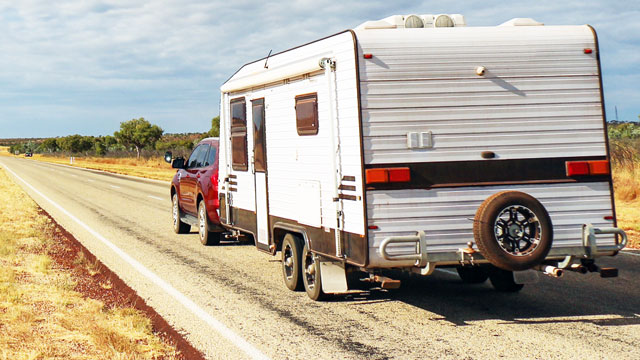
Tips to avoid overloading when towing

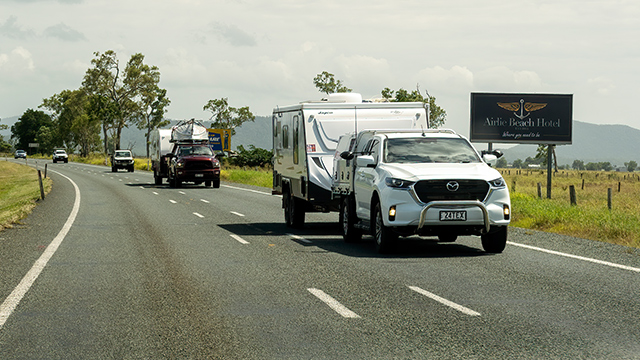
Summer is the season for many things in Australia: cricket, days at the beach and annual catch-ups with family and friends.
On the road, the hotter months usually go hand-in-hand with dusting off the boat or caravan for trips away, or even pulling out the box trailer for runs to the tip.
However, recent figures from the caravan industry reveal as many as seven out of every 10 caravans and camper trailers are illegally overweight – bringing towing weights back into focus.
RELATED: NRMA’s Guide to towing safely
Concerns around overweight trailers are certainly valid, since an overweight caravan, boat or trailer can contribute to diminished vehicle performance, impacted braking distances and stability, and potentially void the insurance of the person driving the overweight configuration.
An overloaded trailer or caravan can lead to big fines in Australia. Above all else, all of this can mean an increase in danger out on the road.
So common is the instance of overweight trailers and caravans, some members of the caravan industry have called for the introduction of a towing course.
How do I know if my trailer and vehicle are overweight?
The best rule of thumb here is to know your numbers and know your initialisms. Remember that manufacturer weights are law, and you should always take into consideration what the weight of something is before you go loading it.
A quick perusal of your vehicle’s owner’s manual, or sometimes the sticker in the driver’s door jamb, will reveal a vehicle’s:
- GVM, or Gross Vehicle Mass – the amount a car is allowed to legally weigh when combining its own weight with items on board. The GVM is generally calculated by adding vehicle weight and vehicle payload.
- GCM, or Gross Combination Mass. This refers to the maximum total weight allowed for your fully loaded tow vehicle plus a fully loaded trailer/caravan, as specified by the manufacturer. It's a crucial safety limit that ensures your engine, brakes, and chassis can handle the combined weight, preventing strain, wear, and potential accidents, and is found in your vehicle's manual.
That’s the basics. But those aren’t the only considerations.
You should also be aware of how much weight your vehicle can tow (braked and unbraked), the amount of payload the vehicle and trailer can carry, and the amount of weight permissible for the tow ball and axles of the tow vehicle.
With respect to maximum tow ball mass, this means the maximum weight that can be placed on the tow hitch. Many vehicles designate the downball weight as 10 per cent of the maximum braked towing capacity.
Meanwhile, axle weights refer to the maximum weights that can be applied to the front and rear axles of the tow vehicle. You may find that you comply on towing weight only for your rear axle to be overloaded.
What are the key considerations and weights for a trailer?
Again, get familiar with some initialisms here, many of which are conveyed on your caravan or trailer’s VIN plate (and the figures cited by police or authorities if you get pulled over).
The main one to get your head around is Aggregate Trailer Mass, or ATM. This refers to the maximum weight your caravan/trailer can be prior to being towed. It should include add-ons such as luggage, water, spare tyres and more.
That brings us to the tow ball download. This refers to the amount of weight the caravan/trailer exerts on the tow hitch of the vehicle. Importantly, this is a variable weight and can fluctuate with the placement of items (i.e. a jerry can) on the draw bar storage box) to ensure the ideal weight is in effect to mitigate trailer sway or, conversely, porpoising.
The Gross Trailer Mass is another important consideration. It is the mass of the trailer minus the tow ball download.
What’s the best way to weigh your tow vehicle and trailer?
The good news is that portable scales for this type of thing are becoming more prevalent, with many private companies offering the service for a fee, plus longstanding public weighbridge.
So too is manufacturer support, with the likes of Ford Australia outlining plans to introduce in-house scales at dealerships so that customers can weigh their tow vehicle and trailer/caravan to ensure the set-up is legal.
What other considerations should I make for safely towing a caravan or trailer?
Here’s our quick guide to ensure you are towing in a safe and sustainable manner.
- Know your vehicle’s towing limits: check all of the points above, and allow leeway for additional weights. Also be aware whether your trailer has integrated trailer brakes, or whether your vehicle requires an aftermarket brake controller.
- Weigh the trailer and cargo: Be confident of the relevant weights of your set-up, including permissible axle weights. Utilise public scales or private providers for peace of mind.
- Balance the load correctly: Aim to have between 8 and 12 per cent of your weight going through the tow hitch of your set-up. Any lower than that figure will contribute to unintended trailer sway; anything higher will lead to porpoising, rear sag and light, approximate steering on the tow vehicle.
- Check your tyre pressures and lubricant levels: Towing is a game of physics, and to ensure it is done safely, a fool-proof method is to ensure both the tow vehicle and the rig behind it are in optimum operating condition, with accurate fluid levels, tyre pressures and general lubrication. Also make sure you’re using the right tow ball size and that all trailer lights are fully operational.
- Be aware of sneaky add-ons: One of the big contributors to overweight tow vehicles is the fitment of aftermarket parts that are commonplace on utes and 4x4s. These include a bulbar, winch, roof racks, bigger wheels, fridges, canopies and shades – all of which will contribute to vehicle GVM and potentially push your set-up overweight.
- Drive to the conditions: It’s one thing to have your car and tow rig set-up for a big day’s driving. It’s another thing to drive to the conditions. Even with the latest towing technology, you should always be aware of braking distances, ascents/descents and the weather whenever towing, as all can contribute to road danger. Temperature, wind and rain can be particularly troublesome if you’re not vigilant.
- Be sure what your licence permits you to tow: In certain states, learner drivers are not permitted to tow, while P1 licence holders are restricted to certain weights. Always be aware of the laws, as well as the speed limits and relevant rules that apply to towing a caravan or trailer.