It’s a commonly held belief amongst NSW motorists that fuel prices in regional areas are higher than those in NSW’s urban centres. While this was once the case, since about 2020 fuel price patterns have shifted across the state and being close to a city does not necessarily mean a better price on fuel.
In 2021, for example, Sydney’s average regular unleaded petrol price of $150.1 came in higher than many regional locations like Batemans Bay ($149.0), Lismore ($146.9), Dubbo ($146.0) and Gunnedah ($135.0). So what causes differences between areas?
What determines fuel pricing in different areas of NSW?
Factors that set the price of fuel in Australia include geopolitical events, global supply and demand, federal government taxes, and local factors like the location and type of service stations and competition in the local area.
Regional versus metro fuel prices
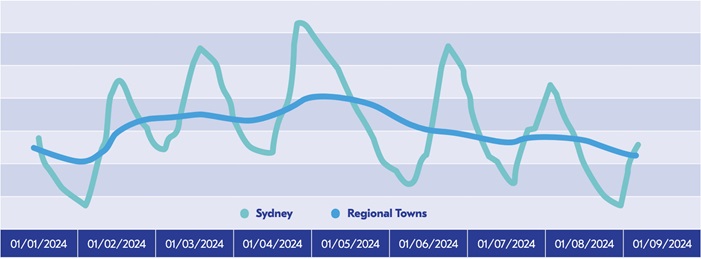
Petrol prices in regional NSW change more slowly than in metro areas – both up and down – because retailers in many regional areas tend to have lower stock turnover than in the city.
Regional fuel retailers may not sell their fuel stocks as quickly as city retailers, so when there is any change in the international benchmark and wholesale prices of fuel, it generally takes longer to affect country retail prices. This means that while prices in regional areas might fall slowly, they also tend to rise slowly.
Cities have price cycles
A petrol price cycle is a movement in retail price from a low to high point, to a subsequent low point. In these cycles, prices steadily go down for a period followed by a sharp increase.
Price cycles are the result of deliberate pricing policies of petrol retailers in metro areas and are not directly related to changes in wholesale costs. The duration of petrol price cycles in Sydney varies from cycle to cycle.
What has changed in recent years?
Until around 2020, unleaded fuel prices in regional NSW towns tended to be about five to seven cents a litre more expensive on average than in Sydney. But since the pandemic, more people have moved to regional areas. Closed international borders also saw Australians take more domestic holidays for a long period and road trips have remained popular, despite people returning to international travel as well.
This extra traffic outside metro areas areas created more demand for fuel regionally, and higher margins over time enabled some regional service stations to sell cheaper fuel.
This graph shows the daily average unleaded price movements in Sydney, Canberra and regional NSW fuel markets from January 2018 to March 2022.
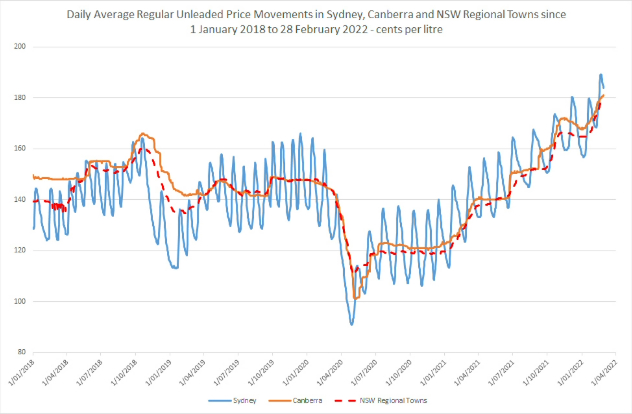
The graph shows how – despite the Sydney fuel cycle causing peaks and troughs week-to-week – Sydney prices were markedly lower than NSW regional towns until around mid-to-late-2019 and from 2021, prices in Sydney started to trend higher, with regional towns following suit.
This graph, from the NRMA's 'Making cents of fuel' report, shows the average daily price of regular unleaded petrol across 2024.
Are there any other factors at play?
Local competition is a key factor that can drive down prices in a given area. A service station with no local competition can obviously charge more than one that has to compete for your business.
The presence of independent retailers in an area will also usually drive down prices, as independents tend to have more flexible pricing models and tend to charge less. Independents have a much greater presence in metro areas (such as Sydney, the Central Coast, Newcastle and Wollongong). While there are independent operators in some regional towns, they are not as numerous as they are in cities, so towns without local independents tend to have higher prices.
How do I make sure to find the best price for fuel?
The best way to find the cheapest price in your area is to research locally before you buy. Use a service like the fuel finder in the My NRMA app to scan your options. Look for independents, as they tend to be cheaper, or take advantage of fuel discount schemes if you can't find an independent.