How do I plan for an EV road trip?
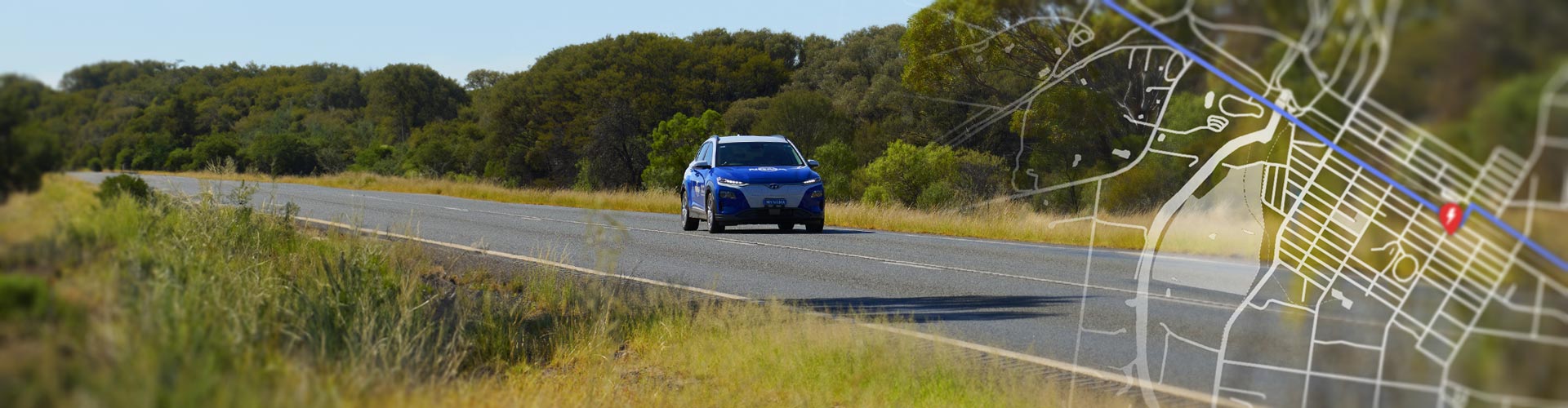
Planning on hitting the open road in an EV? Then you need an EV trip planner. Whether you’re new to EV travel or just need a refresher, there are a few essential things to consider when venturing beyond your home charging station in an electric vehicle.
Public EV charging infrastructure is growing, but there are still gaps – especially in regional areas of Australia. That’s why learning how to plan a road trip with an electric car is essential.
The NRMA is helping lead the way with its expanding EV charging network, part of a long-term plan to support Australia’s electric future. Before you unplug and go, here’s everything you need to know.
Planning your route
How to plan an EV road trip? First and foremost, you will need to plan your route. While the NRMA and government partners continue expanding charging infrastructure, chargers aren’t yet as common as fuel stations.
Use apps like A Better Route Planner (ABRP) and Plugshare to map out charging points, especially if you're wondering how to plan a trip with EV charging stations.
ABRP is a smartphone app that many EV owners use to work out the best places to charge along the way. Plugshare app helps locate chargers, has EV charger reviews and status updates and can also be used to find motels and hotels that offer free or cheap charging to EV owners.
Always have a Plan B or C. Charger outages can happen, and coverage is still patchy in some areas. To keep moving, plan your EV road trip so you can reach your next charger – or a backup option – with power to spare.
The My NRMA app lets you check live availability of NRMA chargers. You can also view the latest charger status on the NRMA charging page.
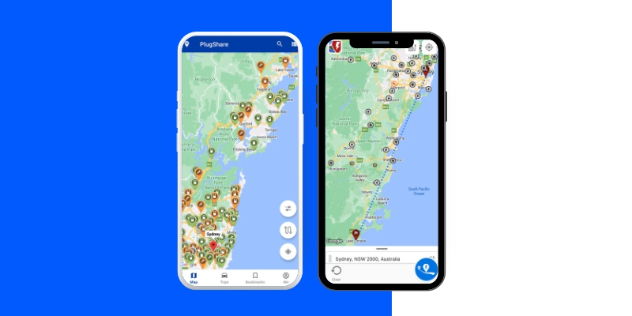
Apps can help find charging sites and status.
Before you start your EV road trip
Before heading out:
- Download charging apps for your planned networks
- Bookmark charger locations if you're heading into areas with patchy reception
- Bring EV charging cables and adapters suited to your route
- Check your EV’s max charge rate and real-world driving range
How to charge an electric car on a road trip isn’t always simple – you’ll need to be flexible, especially in remote areas.
Charging your EV when on the road
When you stop to charge:
- Check-in on Plugshare if you leave your vehicle – helpful for other drivers.
- Know your EV’s AC and DC max charge rate and understand how long it takes to charge an EV.
- Charging slows as the battery fills, so aim for 80-90% unless you need more range.
- Use DC fast chargers where possible to save time.
- Use EV charging etiquette and move your vehicle once your EV has stopped charging to make way for others.
- Remember, many EV networks now charge idle fees. The NRMA EV network's fee is $1 per minute after a 10-minute grace period.
|
Charger Type |
Typical Power |
Expected Range Added (Approx) |
Notes |
|
DC Fast Charger |
50 kW |
Around 50 km per 10 min / 75 km per 15 min |
"Slower” fast charging. Choose this if you have time to leave the vehicle for 30-60 minutes. |
|
Ultra‑Fast DC |
150–350 kW |
From 100 to 200+ km in 15 min |
Only achievable if the EV accepts high power; varies by model and SOC. Choose this if you are in a hurry. |
|
AC Destination |
7–22 kW |
About 40–100 km per hour |
Typical shopping/workplace/hotel chargers. Choose this if you can leave the vehicle for a few hours. Check in to let people know when you’ll be back! |
|
Home Outlet |
2–3 kW |
About 5–10 km per hour |
Slowest; useful overnight. |
Your essential electric vehicle road trip kit
A drive up and down the east coast of Australia, or even in the eastern regions, is a fairly straightforward affair, but it’s best to have some cables “just in case”.
You’re most likely to use a public DC fast-charger which has its own cable, but at times you may need a cable to use an AC destination chargers.
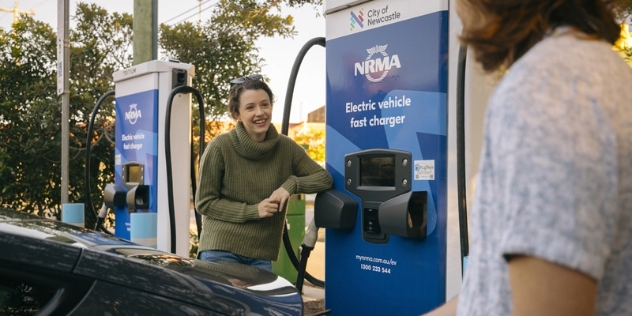
Public DC fast charging stations have cables.
Driving in remote areas may require a bit more planning, so check Plugshare to see if roadhouses or campgrounds require a three-phase, 20-amp or 32-amp adapter.
Quite simply, every power outlet is a potential charging point (just remember to seek permission if it’s not a public charging site!)

EV charging cables for road trips
To be ready for any stop, your electric vehicle road trip kit should include:
- A portable EVSE (charger cable)
- A Type 2 to Type 2 cable (CHAdeMo if you have an older Nissan Leaf or Mitsubishi Outlander)
- Adapters for 32A and 15A if you plan on going remote or to camp sites
- A heavy-duty 15A extension lead
Now, we know what you're thinking. That's a lot of leads, and they can take up a fair bit of room in the boot. But, as you’re driving an EV there’s a good chance you’ll have extra storage space under the bonnet - or the “frunk,” as some call it.
Extra EV road trip items
Other items that are important to include when you’re packing for any long-distance road trip in an EV are:
- An EV roadside assistance: Membership with the NRMA can give you access to towing to the nearest chargepoint, plus other benefits if required.
- A spare tyre: many vehicles don’t come with a spare tyre these days. If you’re travelling in remote areas a distance from towns, consider packing one in if you can fit it, or at least sourcing a run-flat. Failing that, some tyre goo, a portable DC air compressor and a pressure gauge.
- Phone cables: there’s nothing more inconvenient than turning up to a fast-charger with a dead smartphone that can’t help you initiate charging.
A final note
Using an EV trip planner and preparing your EV kit can make road trips seamless, even as infrastructure rolls out and becomes more ubiquitous. Remember:
- Plan your route
- Bring the right cables
- Use apps for charger availability
- Know your car’s range and charge rate
- Stay flexible with a Plan B
Check NRMA’s live charger status in the My NRMA app before you go and enjoy the open road. Happy electric travels!