ANCAP boss talks safety tech, ratings and warning chimes

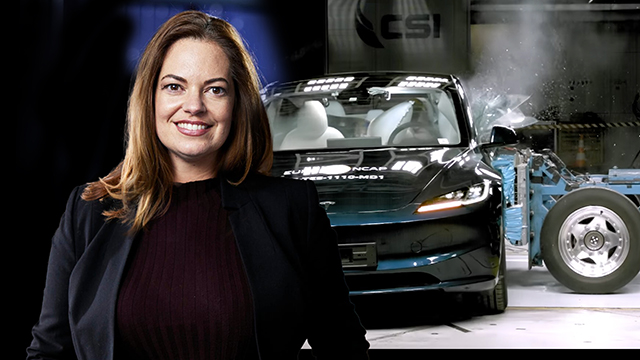
When Open Road meets with Carla Hoorweg she has just ticked over five years as CEO of the Australasian New Car Assessment Program, better known as ANCAP.
Before joining the organisation, Carla spent 20 years in finance – on the corporate side (product development and strategy) in government (advising on tax policy and other finance-related matters), and as part of an industry association. This equipped her with a unique skillset: knowing how to build a bridge between “what industry is trying to achieve and what government is trying to achieve”.
It’s fortunate Carla arrived forearmed with such experience. Her tenure at ANCAP has coincided with almost unprecedented change in the Australian motoring landscape, not least the rise of electric vehicles from technological curios to a common sight, and the huge influx of Chinese manufacturers into our market.
Have safety measures gone too far?
An evaluation of ANCAP’s history – from its first crash test results in 1993 to its latest rating announcements in 2026 – confirms its effects on car safety have been nothing short of extraordinary. But have things gone too far? If safety systems are so annoying that drivers are turning them off, or avoiding them altogether, isn’t that defeating the purpose?
“We don’t really dictate how you achieve a certain outcome,” Carla explains. “We’re looking for performance, and we set the parameters around performance. There’s a multitude of different ways that you can alert the driver. It can be a noise, be a chime. We don’t dictate that you have to have a chime – you can equally use a flashing light in many cases, or you can use that haptic steering wheel feedback. For whatever reason, some manufacturers have chosen to go down the path of noises. We certainly don’t prescribe that you have to have a noise. We don’t prescribe that you have to have really annoying noise, either.”
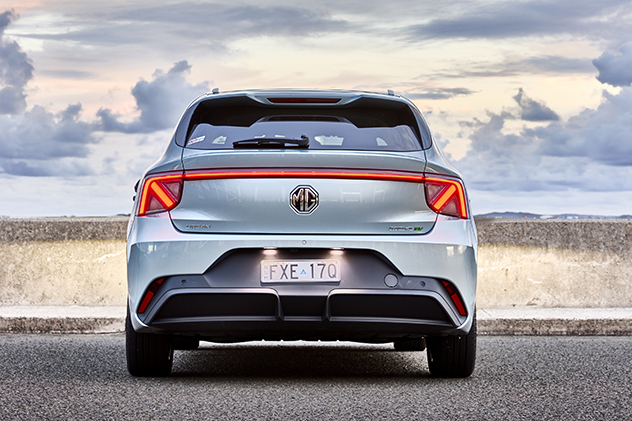
Brands such as MG and Hyundai have been criticised for excessively loud speed alerts.
ANCAP is much more than a group of cloistered boffins in a crash testing lab. Less intrusive and irritating safety alerts are in fact part of its updated crash-testing criteria and this was a direct response to on-the-road feedback from motoring journalists and the general public.
“We’d be crazy not to [listen to them],” Carla says. “This is something that we feed back to the manufacturers as well. It’s not just about what ANCAP said in the protocols, it’s, ‘Well, how have you chosen as a manufacturer to deliver on that and what’s the consumer experience like?’
“The safety systems that have been brought in have a demonstrable safety benefit. The intention of the system is what we’re concerned about. The delivery of the system and the rollout and implementation of the system is where we’ve seen a few instances where it’s become so annoying that people are turning it off. And we don’t want to see that because then you don’t get the safety benefit.”
Lane centring (as distinct from lane keeping) assistance will also fall under ANCAP’s microscope in 2026 as a technology where annoyance to the driver could hamper the intended safety benefit. “We’re expanding the protocols to cover that and look at it,” Carla says, “and then we can provide that feedback to the manufacturers and say, ‘Look, this isn’t great.’”
That said, she believes consumer education has a big role to play when it comes to interaction with car safety technology and understanding how it works.
“You know, people are complaining, ‘Oh, this car won’t let me cross the centre line to go past a cyclist.’ [But] if you put your indicator on, for example, it will. The car’s not a mind reader, there’s certain baseline things that have been built into how the systems work that might require a bit of education. And I think there’s a really strong role for the dealerships there. You know, instead of turning the systems off, get people in the car, show them how to use it. When you pick up your car, you should be getting a tutorial – not just on the entertainment system and how to set up your phone and connect it in.”
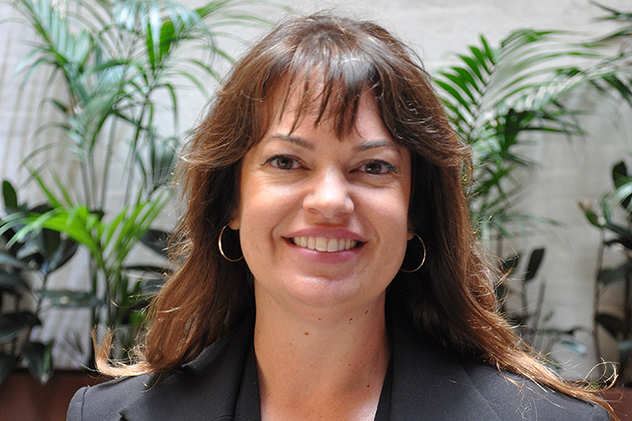
Light trucks will be a major focus for ANCAP in coming months, says CEO Carla Hoorweg.
What’s on the safety horizon?
For 2026 ANCAP reports the testing criteria is now organised into four distinct pillars: Safe Driving, Crash Avoidance, Crash Protection and Post Crash. Not only does this make it easier for consumers to compare cars at a glance and ensure ratings remain more evergreen, it reflects the expanding role active technology plays in car safety.
One such technology on the horizon, Carla says, is automatic crash notification, where the car can detect that it’s been in a crash and then notify emergency services, either through a call centre or directly via triple zero. Many European cars already have this function and not only has it saved lives, simply speaking to emergency services can give the person involved in the crash important emotional support.
“We haven’t got the direct functionality happening in our market yet because there’s a bit of policy work to do with emergency services,” Carla says. “But there are already third-party providers that triage calls and a lot of manufacturers already have this technology on board.”
Another major focus for ANCAP in the coming year will be light trucks around three to eight tonnes (think rental trucks and Coles/Woolies delivery vehicles), which can often be driven without a special licence, yet are woefully under-equipped when it comes to safety.
“There’s a bit of work in that segment to do in terms of uplifting the safety,” Carla explains. “There were four vehicles that we looked at [in 2025] and want to see some improvement there. It was pretty old technology.”
Ensuring the future of ANCAP
And what is it about ANCAP that keeps it relevant, even when car safety has come so far? Why do consumers and manufacturers alike continue to seek out that five-star rating?
“It’s a really unique system where you’re influencing manufacturers to bring in safer vehicles, but it’s not regulatory at all,” Carla explains. “It’s completely voluntary. No one has to do it, but it’s got such a good reputation with the public and fleet managers who want to buy five-star cars because that’s the right thing to do from a WHS perspective. That influence then drives manufacturers to do better.
“Because ANCAP’s completely independent of the manufacturers, we can say, ‘This is what we want to see. This is what the community expects.’ And you don’t have the industry regulating itself.”