Understanding electric vehicle fires: A comprehensive guide
How often do EV batteries catch fire?
Electric vehicle fires due to EV batteries are far less common than internal combustion engine (ICE) vehicle fires.
A report from EV FireSafe (a body funded by the Australian Department of Defence to research EV battery fires) positively identified 772 high-voltage battery fires worldwide as of October 2025.
With an estimated 78 million plug-in electric vehicles on the road globally, this figure represents just one in 100,000 of them suffering a fire.
How many EV fires have there been in Australia?
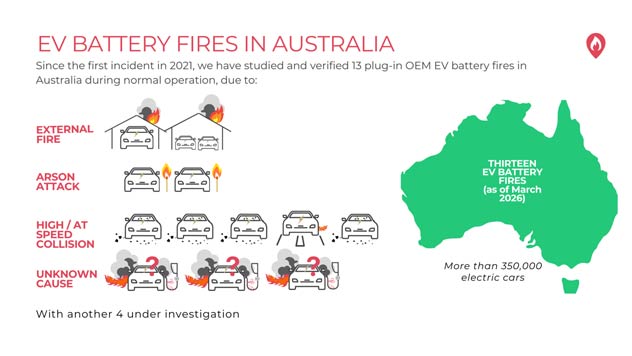
As of March 2026, there have been 13 EV battery fires in Australia since 2021, according to the latest data provided to Open Road by EV FireSafe. With approximately 473,000 plug-in electric vehicles (including battery electric and plug-in hybrids) on the road in Australia, that means three in 100,000 have caught fire. This is compared with almost 11,582 vehicle fires in total since the start of the 2021/2022 financial year according to Fire and Rescue NSW (FRNSW).
The latest data shows that of these 13 fires, 3 were caused by external fires, two by arson attack, four as a result of high -speed collision and three were of unknown cause. Three were charging at the time but the cause of the fire was unrelated to charging. EV FireSafe says four more are currently under investigation.
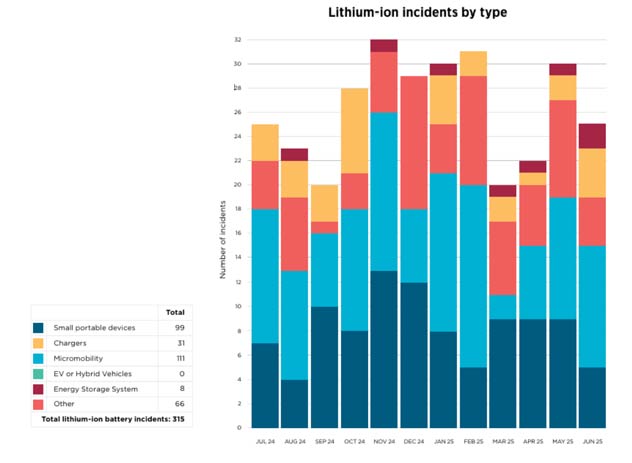
Note, this figure does not include personal mobility devices such as e-bikes and laptops. Fire and Rescue NSW (FRNSW) said in its 2024/2025 annual report that just none of the 315 lithium-ion battery fires it attended in that period involved electric vehicles.
Instead, the three top culprits of lithium-ion battery fires FRNSW was called to in the 2024/2025 financial year were e-mobility devices like e-bikes and e-scooters (111), small portable devices like laptops (99) and battery chargers (31).
A study conducted by Western Sydney University in July 2023 titled Fire Incidents, Trends, and Risk Mitigation Framework of Electrical Vehicle Cars in Australia discovered that if EV uptake in Australia follows the projected trend of reaching 1.7 million by 2030, there will likely be 9 to 10 EV fire incidents in Australia in that year.
How EV battery fire risks differ
To reduce fire and other safety risks, all vehicles that are sold in Australia must adhere to strict ADR regulations, which include rules for vehicles with electric powertrains (Australian Design Rule 109/00). The same regulations do not apply to other devices powered by lithium-ion batteries.
Protective measures in electric vehicles include the use of a cooling shroud filled with coolant liquid to prevent external damage or short circuit. Batteries are also installed in a way that avoids widespread damage, employing thick metal casings to reduce chances of damage and locating batteries centrally in vehicles away from likely impact zones to minimise risk of damage.
114 out of 123 EVs sold in Australia and tested by ANCAP have five-star ratings, and vehicle and battery manufacturers are continuously working to enhance the safety of EV batteries.
For example, the cost-effective lithium-iron-phosphate (LFP) battery technology used by carmakers such as Tesla, BYD, MG, GWM, Volvo, Ford, and Volkswagen, offer broader temperature tolerance than cobalt-based chemistries, thereby reducing the risk of fires.
What causes EV batteries to catch fire?
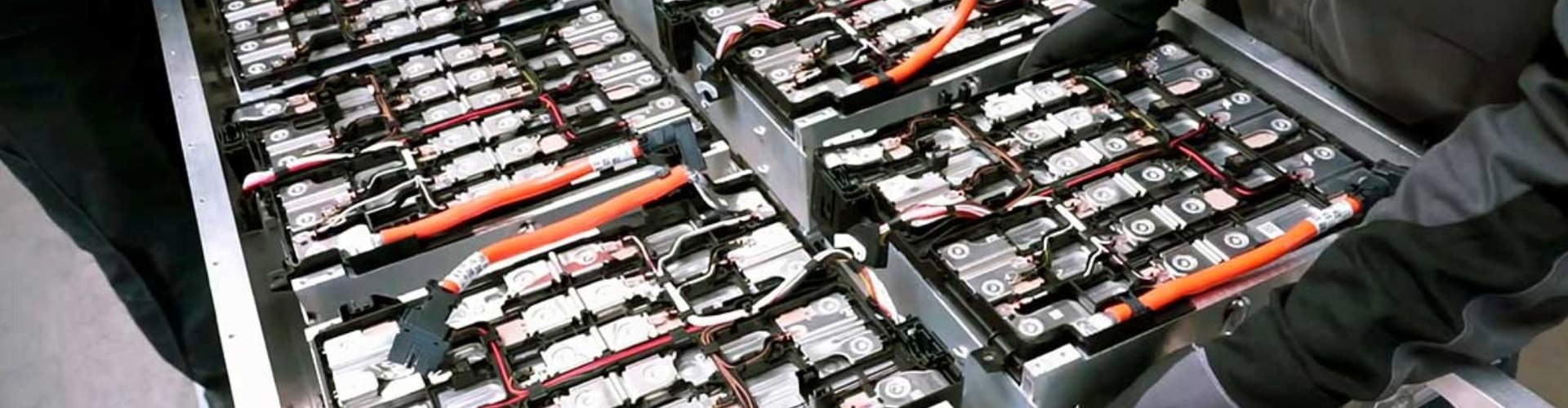
Lithium-ion battery fires start with thermal runaway. This is a self-sustaining chemical reaction within the battery that can spark a fire.
This happens if there is damage to the battery, and the ensuing chemical reaction causes a cell to become overheated. It can't cool down, causing a chain reaction that heats up neighbouring cells. The state of charge (SoC) plays a prominent role; a battery below 50% SoC is less liable to experience thermal runaway.
According to the EV battery fire incidents analysed by EV FireSafe, the leading causes globally of thermal runaway leading to EV battery fires are collisions and road debris impact (22.5% as of April 2024), defects in manufacturing (9.7%), submersion in water (5.6%), and arson or external fires (6.9%).
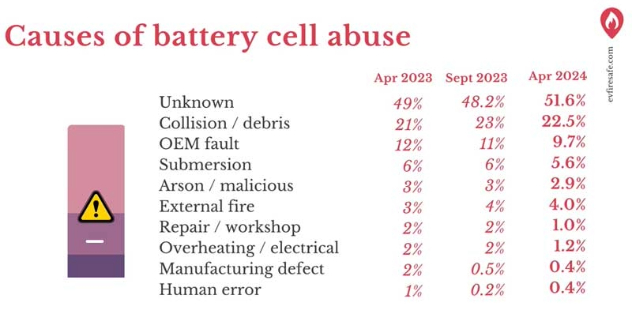
The cause of half of the EV battery fires identified by EV FireSafe in its data are as yet unknown. According to EV FireSafe’s co-founder Emma Sutcliffe, many of these precede manufacturing defect recalls.
Next generation battery chemistries promise to be less likely to succumb to thermal runaway. Sodium-ion batteries are less reactive because they do away with the need for lithium, and long-awaited solid-state batteries promise further safety improvements.
What are the risk factors for EV battery fires?
While exceedingly rare, electric vehicle battery fires do pose particular safety risks.
Electric vehicle fires are very different to internal combustion engine vehicle fires. They often display unique behaviours such as large clouds of dark and light vapour, popping noises, and jet-like directional flames at temperatures up to 1000 degrees Celsius. Recognising these signs can help to establish an early emergency response.
Additionally, high-voltage (HV) cables connect to the lithium-ion battery and the electric motor (as well as other systems) put EVs at risk of short circuit if cables are damaged or defective.
This is why there are strict regulations to address the risk factors of EV batteries and the high-voltage cables that connect them to a car's powertrain. The lithium-ion batteries in EVs are designed to provide high amounts of energy and can pose a fire risk if damaged or improperly managed - even if they have been removed from the vehicle.
For example, a September 2023 incident at Sydney airport saw a MG ZS EV battery catch fire and set light to four other vehicles after being disconnected from the vehicle.
What are the risks for first responders?
While EV battery fires are rare, first responders are at the forefront of risks when dealing with EV battery fires. Unlike conventional internal combustion engine fires, EV battery fires present unique hazards that require specialised training and equipment. The complex nature of lithium-ion batteries means they can reignite hours or even days after the initial incident, creating prolonged risks for both responders and the public.
In addition to the immediate dangers posed by the fires themselves, there is also the challenge of safely extricating victims from crashed EVs. Although EV fires in crash incidents are less likely as mentioned above, the high voltage systems within these vehicles can remain live even after a crash, posing electrocution risks to both the occupants and rescuers. Without proper training, first responders might inadvertently worsen the situation.
Recognising these challenges, the NSW government has launched a free EV crash course aimed at equipping emergency responders with the necessary skills and knowledge to handle EV-related incidents safely.
The course covers various critical areas, including understanding EV technology, identifying and mitigating risks associated with battery fires, and safe extrication techniques. It also emphasises the importance of coordination between different emergency services to ensure a comprehensive and effective response.
Despite these efforts, there is still a call for further action. In its position statement regarding the new National Building Standards, NSW Fire + Rescue has recommended implementing restrictions on EV parking and charging in large buildings to mitigate the risks associated with battery fires, grouping EVs under a "special hazards" provision. Such measures could include designated parking areas with enhanced fire suppression systems or stricter building codes to ensure adequate ventilation and fire containment.
However, Australian Building Codes Board chief executive officer Gary Rake has reportedly said that the "special hazards" provision should not apply to cars to this AAP article, and that charging at home - whether it be a house or an apartment - is safe.
How do you stop an EV battery fire?
If you suspect your EV battery is damaged or has caught fire, it is crucial to call emergency services immediately and follow their instructions. Stand well away from the vehicle as vapours emitted by the battery can be lethal.
Water remains the most effective method for suppressing EV fires, requiring large volumes sustained over an extended period. However, emergency responders are also exploring other encapsulating agents. Even after an EV fire has been suppressed, there's a risk of secondary ignition due to stranded energy in unburnt cells.
Once an EV fire is extinguished, the focus shifts to the safe removal of the vehicle. This involves cleaning up battery cells and debris, and monitoring for signs of thermal runaway. The vehicle is generally considered safe to tow once the traction battery has remained at an ambient temperature for 15-30 minutes.
Reducing risks of EV battery fires
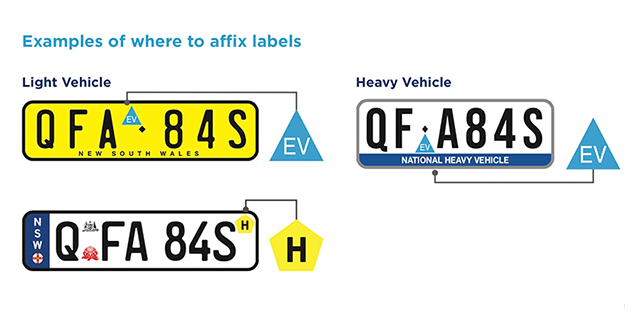
- For electric vehicle (EV) owners, safety starts with proper identification. A blue triangle "EV" sticker or badge on the number plate alerts emergency responders to the presence of a high-voltage battery. EV triangles are required for all EVs manufactured after 1 January 2019.
- Installation of charging equipment must adhere to AS/NZS 3000 Electrical Installations "Wiring Rules," ensuring that the charging unit and cable are electrically compliant.
- Fire and Rescue NSW recommends installing a smoke or heat alarm in garages where EVs are regularly parked or charged.
- When charging, use extension leads and power sockets specifically designed for EVs and exercise caution in wet weather or during electrical storms.
- Use only the chargers supplied with the device or certified third-party chargers compatible with the battery specifications. Ensure these chargers bear the Regulatory Compliance Mark.
In the event of an incident, engage the parking brake, switch off the vehicle, evacuate all passengers, and call emergency services, specifying that the involved vehicle is an EV.
Sources:
- EV FireSafe
- Electric Vehicle Council
- Vfacts car sales
- Hassan, Md Kamrul, et al. “Fire Incidents, Trends, and Risk Mitigation Framework of Electrical Vehicle Cars in Australia.” Fire, vol. 6, no. 8, Aug. 2023, p. 325. Crossref, https://doi.org/10.3390/fire6080325.
- Electric vehicles - Fire and Rescue NSW
- *58 million EVs sold up to end of 2024 (IEA) plus 20 million sold in 2025 (Benchmark Mineral Intelligence)
This article was updated on May 16, 2024 with new data about the frequency of EV battery fires from EV FireSafe and NSW Fire + Rescue.
This article was updated on May 23, 2024 correcting the number of incidents attended by NSW Fire + Rescue.
This article was updated on September 20, 2024 to update EV FireSafe data from April 2024 to June 2024.
This article was updated on March 3, 2026 to add up-to-date data on EV battery, lithium-ion battery and vehicle fires in Australia.