Inside Australia’s e-bike law overhaul – the new laws, issues and potential fixes

Key points
- In 2025, e-bikes and e-scooters claimed more than 15 Australian lives and contributed to hundreds of injuries.
- The NRMA has backed an extension of NSW police powers to confiscate non-compliant e-vehicles.
- E-mobility advocacy group calls for ID plates and community education on safe use.
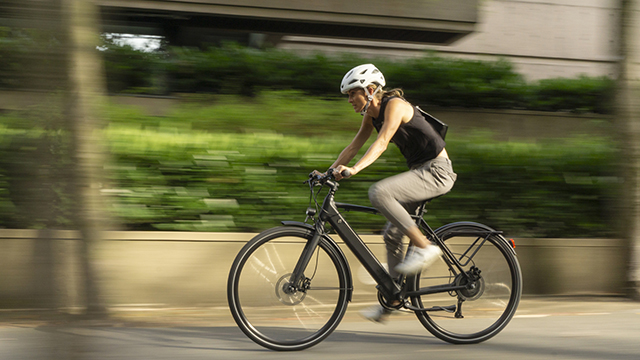
Walk along any popular beach location or footpath in Australia and you’re sure to see people of all ages taking advantage of a micro-mobility option sweeping the nation: the e-bike (electric bicycle).
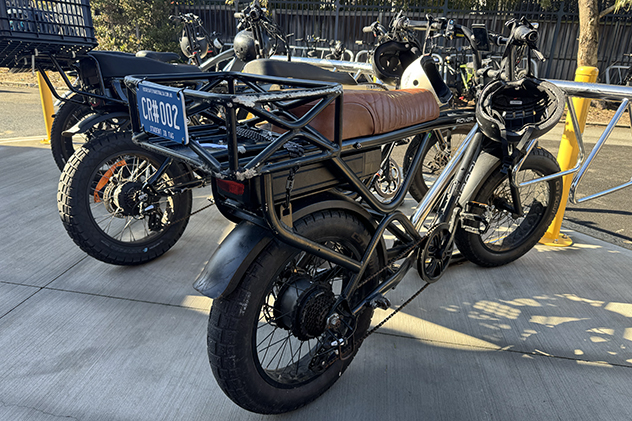
Australian e-bike sales are tipped to exceed $1.3 billion in 2026, with a projected take-up of between 250,000 and 300,000 units. In many instances, these electrified machines of varying shapes, sizes and styles have allowed the immobile to move again, addressed ‘last-mile’ mobility issues, reduced tailpipe emissions, and encouraged more people into recreational cycling.
However, for all the benefits, the e-bike isn’t without issue. In 2025, e-bikes and e-scooters claimed more than 15 Australian lives and contributed to hundreds of hospital admissions, according to state-by-state data. The devices have also drawn the ire of the community, with concerns about anti-social riding and pedestrian safety.
The NRMA is supportive of introducing a light-touch identification and registration scheme.
— Open Road
The NRMA has supported increased enforcement for some time, and recently backed a NSW government announcement extending police powers to confiscate non-compliant or modified devices. The NRMA is also supportive of introducing a light-touch identification and registration scheme, such as that proposed by the NSW opposition. Various forms of identification and registration schemes already exist in overseas jurisdictions.
The solution for e-bikes in Australia
NSW has taken the first steps by announcing tougher confiscation rules and enforcement powers for NSW police – similar to laws in place in Western Australia.
In February, the NSW government committed to extended police powers and the ability to inspect an e-bike’s output compliance with the EN 15194 standard. This includes dynamometers (dynos) to test the wattage of e-bikes, meaning non-compliant or modified bikes could be confiscated and crushed.
The government has been criticised for only purchasing three dyno units, though the announcement was the first of several mooted over the succeeding months.
The next step, according to NRMA head of media Peter Khoury, is implementing light-touch identification and registration, which would include e-scooters should they become legal in NSW in the future.
“We need to improve rider behaviour and device traceability, and there’s also a liability and insurance gap that needs to be addressed,” he explained.
Identification plates have been a key work pillar of advocacy group E-Bike Safety Australia. The Sutherland Shire-based company’s founders, Matthew Rog and Ben Horwood (pictured below), have developed educational programs that include individual identification plates for students who commute to school on e-bikes.
“Identification on bikes is the most important thing because we’re looking at accountability and deterrence from bad behaviour,” Rog told Open Road.
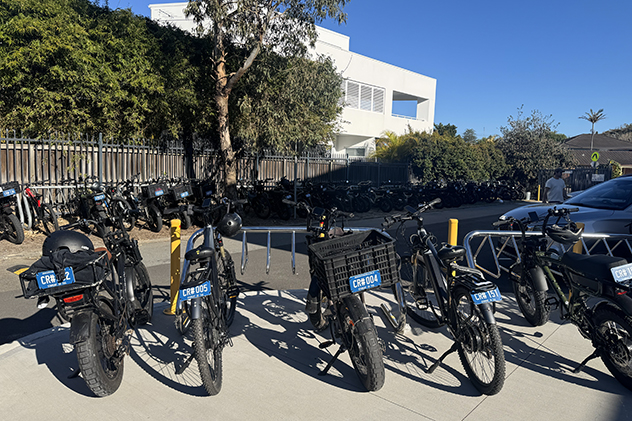
“We live near Cronulla. We went to the high school and said, ‘If you want to educate the kids, you need a program and you need identification on bikes.’ There are now 375 ID plates at Cronulla High School – we have seven schools involved in our program in total – and complaints have dropped anecdotally from about 40 per week to two for that school alone. If a member of the community sees bad behaviour, they can write down the offending plate, call the relevant school and know there will be repercussions.”
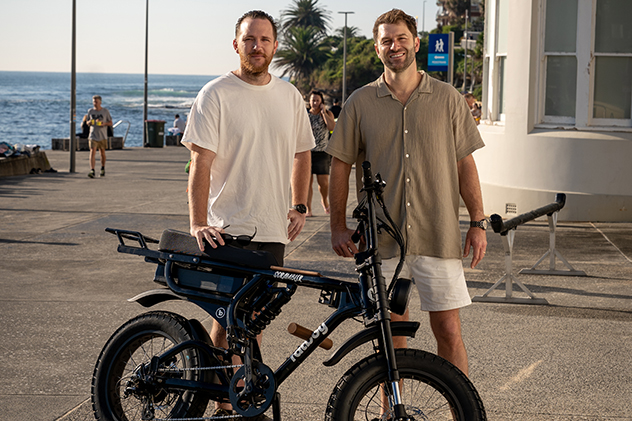
Rog argued a low-cost registration scheme for anyone under the age of 18, or adults without a car or motorcycle licence, would address many current issues around e-bike and e-scooter use.
On top of greater police powers and aforementioned registration policies, Khoury called for laws to be extended to council park rangers in a bid to curb illegal e-bike activity.
““This can’t be a problem for the police to have to deal with alone. This needs to be an all-of-community approach,” he explained.
Elsewhere, the NSW government has confirmed it is now exploring insurance requirements for e-bike users in the state, including a compulsory CTP-style of insurance similar to registered motor vehicles.
“The NSW government is exploring options for e-micromobility insurance, including potential settings, considering the need for people injured by devices to be effectively supported, affordability, existing insurance settings and viability of those arrangements. NSW Treasury is the lead agency for this work,” a statement to Open Road said.
“There are more than a million e-bikes and e-scooters in NSW which is why we are building a safety-focused set of rules to protect riders and pedestrians. The NSW Government has tasked Treasury with exploring insurance options. The public will be invited to comment on those this year.”
Another solution being explored by the Minns government is to introduce a minimum age limit for e-bike riders. Currently there are no age restrictions on e-bike or bicycle use – meaning anyone can ride one. The new proposal, meanwhile, “will recommend a legal minimum age between 12 and 16 for riding an e-bike in NSW.” The government plans to consult road safety and child development experts, as well as youth groups and parents, before making a ruling on any age-limit restrictions. The review will also focus on whether it should be legal for e-bike riders to carry passengers or not.
E-bike rentals will also soon be subject to stringent guidelines. In a statement, the NSW Department of Transport explained that approved operators of shared e-bike services will need to hold comprehensive public liability insurance under a forthcoming Bill that was passed in November last year.
While parts of the cycling industry have called for a minimum sales standard for e-bike retailers, the Australian Competition and Consumer Commission wouldn’t be drawn on the issue. Authorities also said the e-bike crackdown centred on changing rider behaviour instead of retailers.
“The ACCC and state and territory Australian Consumer Law (ACL) regulators are responsible for enforcing mandatory product safety standards made under the ACL. Such standards do not currently apply to the sale of e-bikes, and we are not aware of any such standards currently being developed,” an ACCC spokesperson said.
While the latest legislation changes are just the first steps in improving e-bike safety, authorities agree that more needs to be done, especially around education.
With this in mind NRMA launched new E-bike safety modules for schools at the beginning of the 2026 academic year covering legislation, fire safety and rider etiquette.
“It will take time, but we will get to that point,” said E-Bike Safety Australia director Matthew Rog.
Along with its aforementioned policy positions, the NRMA supports the growth of e-bikes where underpinned by strong safety standards, including EN 15194 compliance, a total power limit of 250 watts, a 25 km/h speed limit, robust battery safety rules, visible enforcement, and protections for riders and pedestrians.