How safe is your car? What ANCAP safety ratings mean

At a Glance
- New tests aim to better match real world driving to ensure driver assistance systems are intuitive and reliable in everyday conditions.
- From 2026, ANCAP ratings will move to four 'Stages of Safety'. Detailed performance for each stage will display alongside overall star rating.
- Post-crash priority: Increased focus on 'golden hour' response to protect occupants and first responders.
We don’t really dictate how manufacturers achieve a certain outcome. We’re looking for performance, and we set the parameters around performance.
— Carla Hoorweg, ANCAP CEO
Australians often rely on ANCAP car safety ratings as a shortcut to one question: “How safe is my car?” Which is fair enough – stars are easy to compare in a showroom, or when you are trawling listings at home.
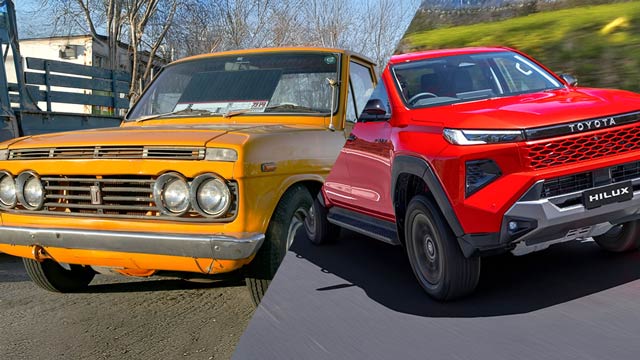
The problem is, test results have an expiry date and the rulebook keeps changing. The NRMA has previously noted that a vehicle that obtained a five-star badge years ago may not repeat that result under newer criteria.
This reality drives ANCAP’s latest update: a fresh set of protocols for 2026-2028 that reframes how safety is measured and where points are earned.
What is changing in the ANCAP safety rating from 2026?
From 2026, ANCAP reorganises its scoring around 'Stages of Safety' – before, during, and after a car crash. It also leans harder on real world behaviour, with more on-road assessment of driver assistance tech, and extra focus on post-crash support, such as eCall. ANCAP also flags EV-specific checks around high voltage battery management and fire risk after a serious crash.
What are the four ‘Stages of Safety' in ANCAP car safety ratings?
ANCAP will score vehicles across four stages: Safe Driving, Crash Avoidance, Crash Protection, and Post Crash. Each stage is marked out of 100 points and shown as a percentage to offer consumers deeper insight into the vehicle's strengths and weaknesses.
A minimum threshold applies across each stage. If a car fails the minimum requirement for Crash Avoidance, for example, it cannot receive five stars, regardless of how well it protects passengers during an impact.
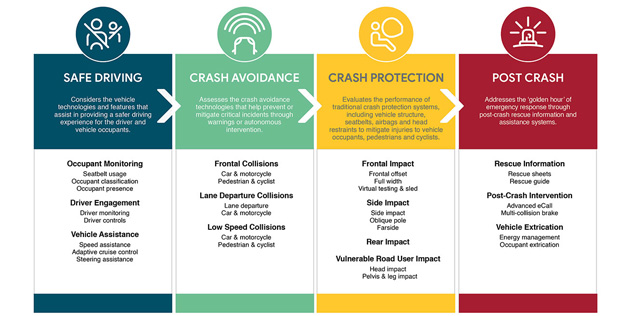
ANCAP, Stages of Safety
Why is ANCAP changing how it scores driver assistance tech?
ANCAP says drivers have been vocal about intrusive systems – the sort that beep, tug, or step in too abruptly. From 2026, it plans to reward smoother, more intuitive operation, alongside technical performance.
“We don’t really dictate how manufacturers achieve a certain outcome,” explains ANCAP CEO, Carla Hoorweg.
“We’re looking for performance, and we set the parameters around performance. There’s a multitude of different ways that you can alert the driver. You don’t have to have a chime – you can equally use a flashing light in many cases, or you can use haptic steering wheel feedback. For whatever reason, some manufacturers have chosen to go down the path of noises. We certainly don’t prescribe that you have to have a noise. We don’t prescribe that you have to have really annoying noise, either.”
The fact sheet also makes a simple point: if the car knows you are attentive, it should stop nagging. This is aimed at keeping safety tech switched on, instead of drivers turning it off.
What new crash tests and dummy changes are coming from 2026?
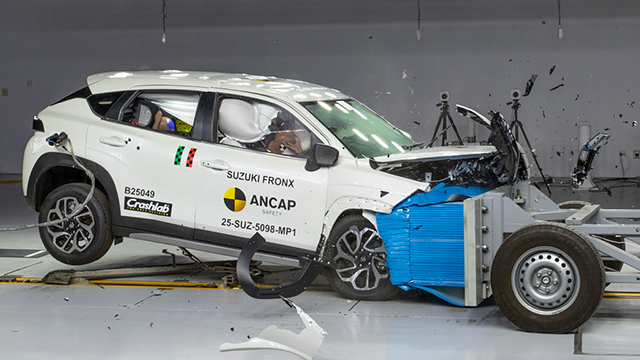
Crash Protection still carries the most weight, but testing broadens. ANCAP is introducing a new deformable barrier in the full width frontal test and adds a THOR (test device for human occupant restraint) adult male dummy in the front passenger position.
There is also a greater focus on smaller occupants, with new whiplash assessments, and rollover requirements around curtain airbag coverage and inflation time. A 'red' rating for any vital body region will now cap a vehicle at four stars.
Will touchscreens affect an ANCAP rating from 2026?
Yes, in a very targeted way. From 2026, ANCAP wants key controls to be easy to use without diving through menus. Carmakers will be asked to fit physical buttons for essentials like the horn, indicators, hazard lights, wipers and headlights, or permanently dedicate a fixed portion of the central screen to those functions. The goal is fewer eyes off the road, and less fiddling at the wrong time.
Why are electric door handles now part of the ANCAP safety rating?
Flush, electrically operated door handles look neat, but they need to work after a crash. ANCAP says handles powered by the 12-volt system should be in an extended, ready to open position immediately after a crash, and stay operable from inside, or offer a manual override. It is about getting occupants out quickly and letting first responders get in without delays.
How will ANCAP treat EV battery fire risk after a crash?
ANCAP will now assess energy management in and after a crash for hybrids and EVs. It includes checking if a disturbed high-voltage battery avoids propagating into fire within set time periods of 20 minutes, 40 minutes and 90 minutes. It also looks at how fire risk is communicated to the driver post-crash, and whether a battery fire during charging can trigger a warning on the dash or via a phone app.
What is eCall, and why is ANCAP focusing on the 'golden hour'?
Post Crash scoring puts more weight on emergency response support. ANCAP says it will emphasise emergency call availability and performance, pointing to the ‘golden hour', the window where fast help can change outcomes.
Emergency call functionality can automatically share details such as GPS location, crash type, severity, and even seat occupancy and seatbelt use. ANCAP says more than 40 per cent of new vehicles sold in Australia in 2024 had technology capable of connecting to emergency services after a crash.
Many European cars already have this function and not only has it saved lives, simply speaking to emergency services can give the person involved in the crash important emotional support.
“We haven’t got the direct functionality happening in our market yet because there’s a bit of policy work to do with emergency services,” Carla Hoorweg says. “But there are already third-party providers that triage calls and a lot of manufacturers already have this technology on board.”

Carla Hoorweg, ANCAP CEO
How does all this build on the 2023 criteria update?
The 2023 update tightened thresholds and pushed harder on active safety, including systems that help avoid crashes in the first place. As earlier NRMA explainers noted, older five-star ratings don’t compare neatly to today’s tougher tests, which require higher scores across all categories – including strict minimums for adult and child protection. The 2026 approach continues that trajectory and tries to make the story easier to follow.
Why do some brands say ANCAP is confusing, and what should buyers do?
BYD has described ANCAP ratings as confusing, arguing that evolving protocols make year-to-year comparisons difficult. This critique resonates because many shoppers still view star ratings as timeless. The safest approach is to check the specific protocol year, review category percentages, and compare vehicles tested under similar criteria. Ultimately, you should evaluate a car’s safety against today’s rigorous standards, not those of a previous decade.