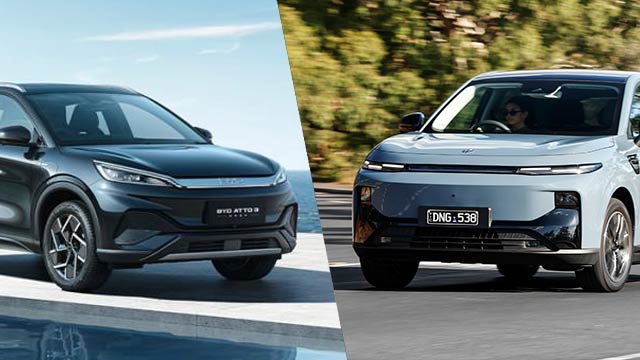
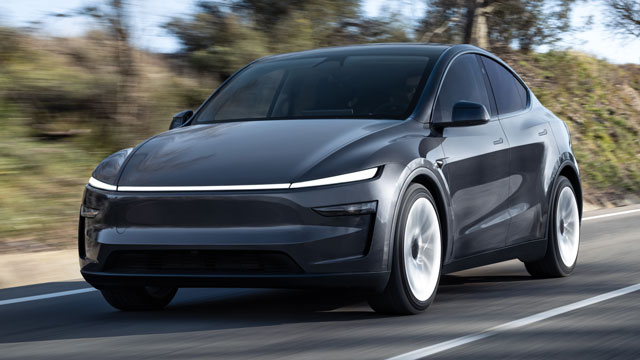
Tesla Model Y v Skoda Enyaq v Nissan Ariya – electric SUV comparison

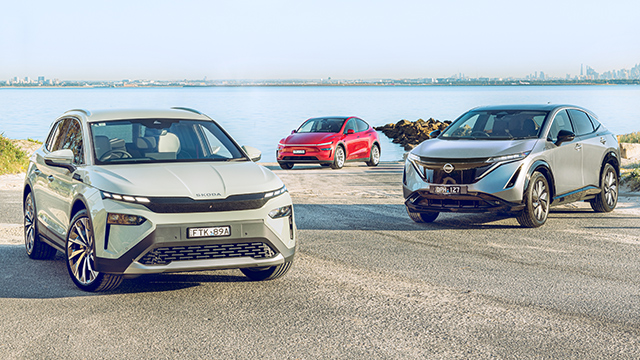
One nameplate has typically sprung to mind for Australian shoppers of the humble electric mid-size SUV in recent years: the Tesla Model Y.
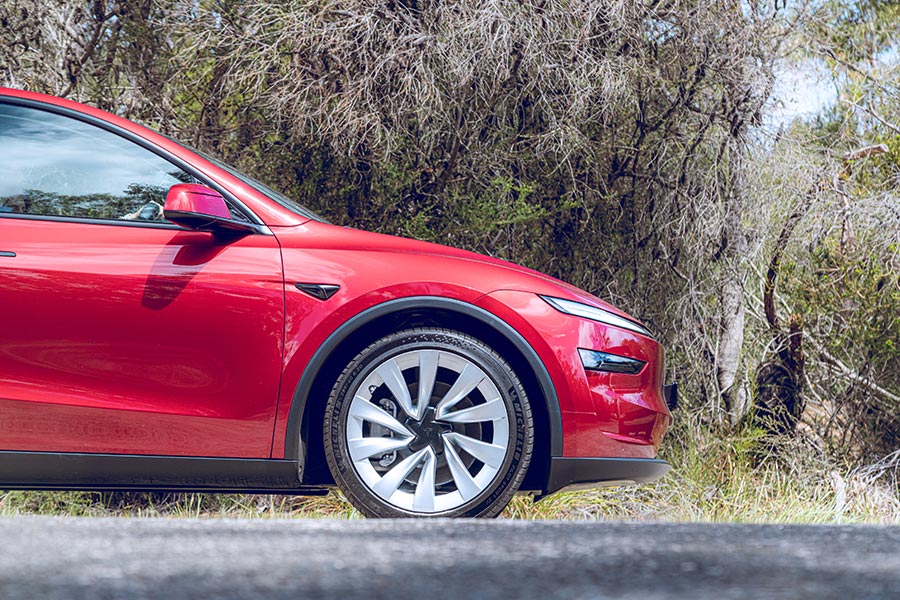
There’s good reason. As the top-selling electric vehicle (EV) here and the subject of a recent refresh, the Model Y has the kind of enduring appeal that would make a gossip-page socialite green with envy. However, in 2026 it’s clear the Model Y doesn’t have things all its own way anymore.
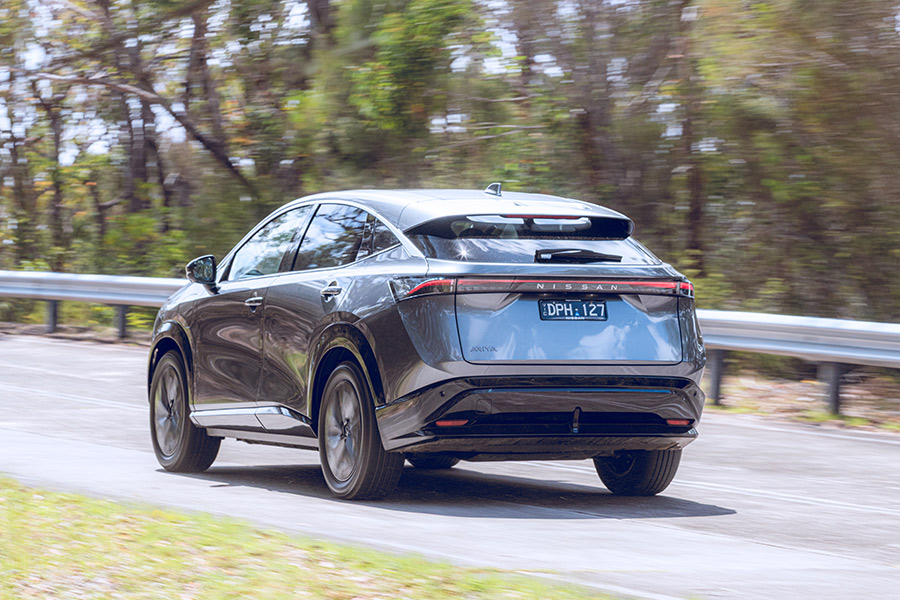
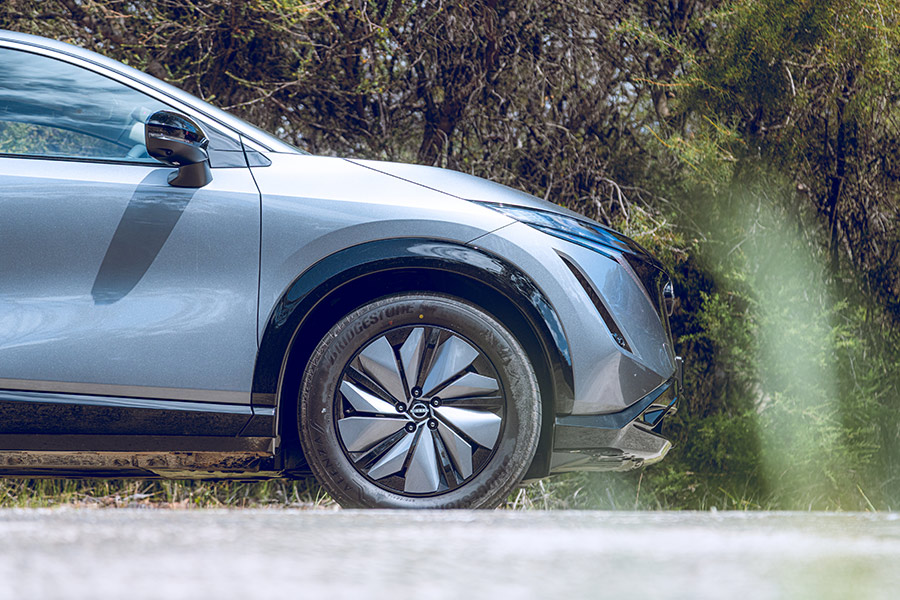
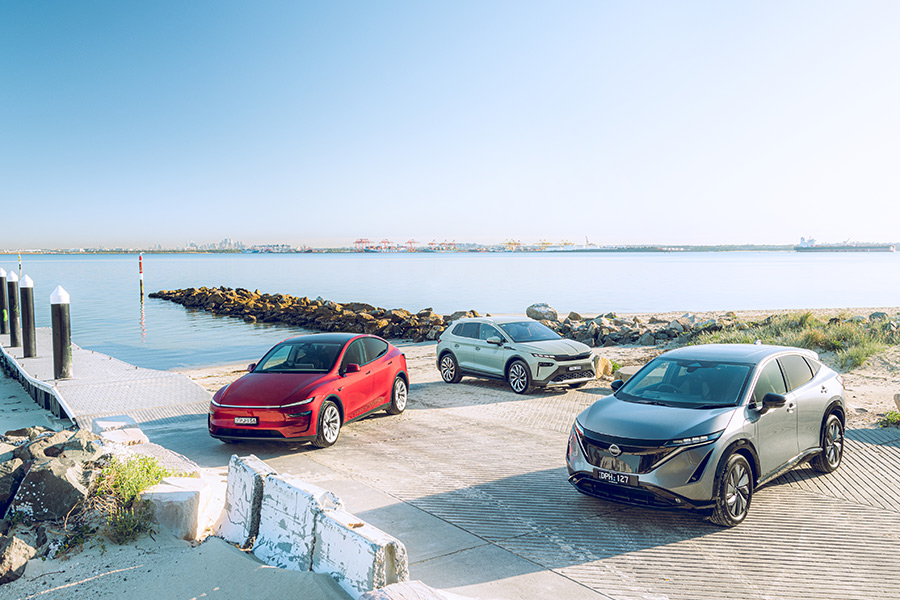
In recent months there have been numerous new players introduced to the ballooning electric SUV segment; some from meteoric new brands you’ve probably never heard of. Legacy carmakers are coming in hot, too. Nissan is well represented with the long-awaited Ariya, a smart, if conservative, SUV landing three years after its global debut.
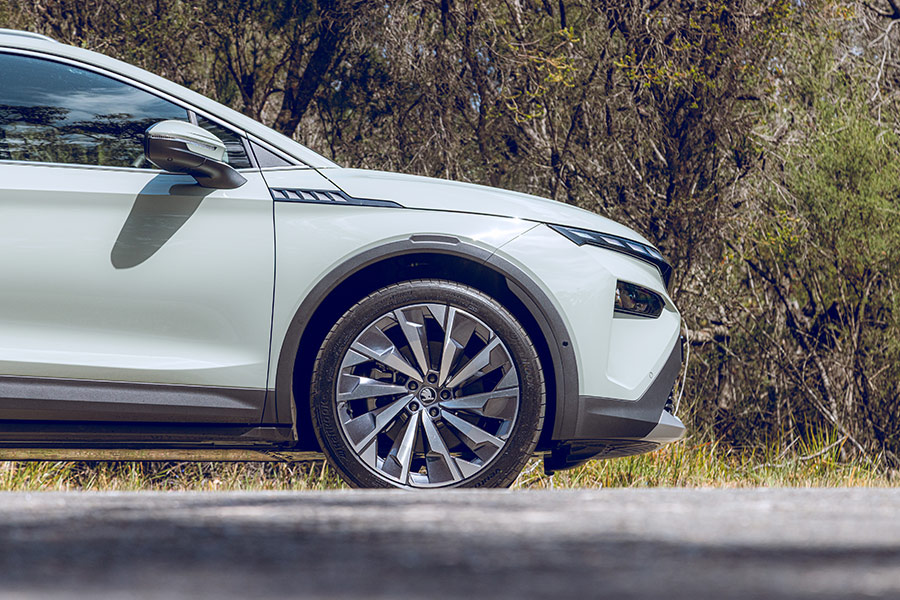
Then there’s the Skoda Elroq electric SUV, a discerning option that bodes strongly as a left-field, Euro candidate.
In this test we tackle some urban duties and country kays to see which of these three mid-size electric options is strongest, pore over their luxe interiors and do the maths on real-world efficiency. Let the battle begin.
Pricing and specs
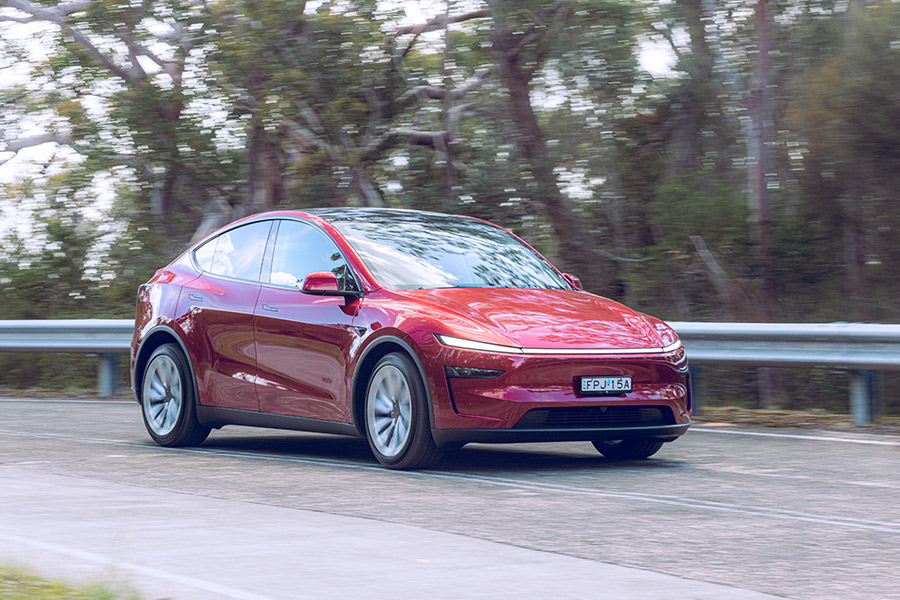
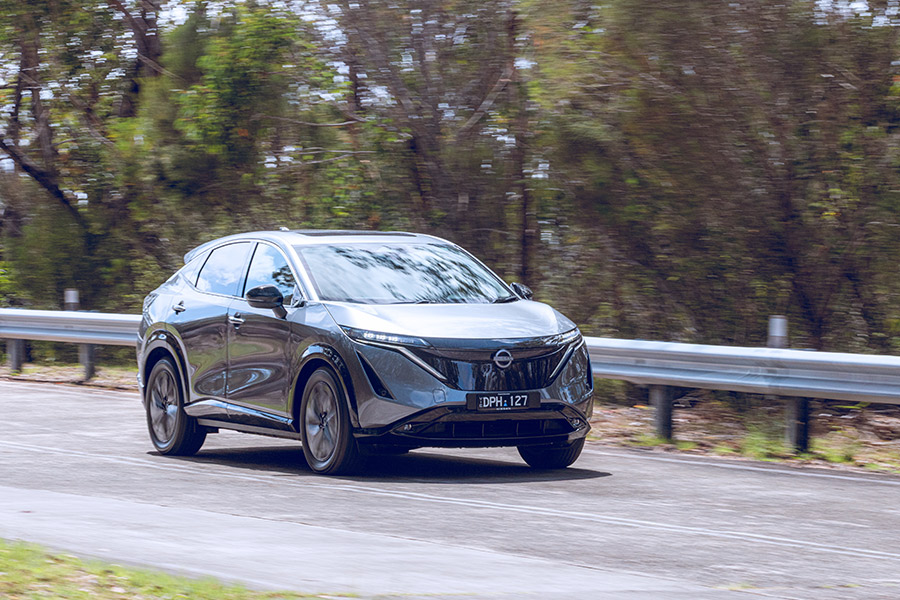
Looking at our three candidates on paper reveals an immediate advantage for the Tesla Model Y, featured in base rear-drive form at $58,900 plus on-road costs. The Model Y undercuts the similarly specced Nissan Ariya Advance+ ($63,840) and Skoda Elroq 130 Years Edition ($64,990). Both are offered in cheaper grades, but as a like-for-like comparison, these higher-spec versions were deemed more appropriate: two wheel-drive featuring larger batteries and loaded with luxury kit and safety.
All three vehicles share heated seats front and rear, a heated steering wheel, LED headlights and tail-lights, alloy wheels of varying size, leather or synthetic-leather trim (textured cloth for the Skoda), dual-zone climate control, ambient interior lighting, a powered tailgate, keyless entry and start, a wireless phone charger, and four USB-C ports. Annoyingly, all three candidates forego a traditional spare wheel, instead opting for a tyre inflation kit.
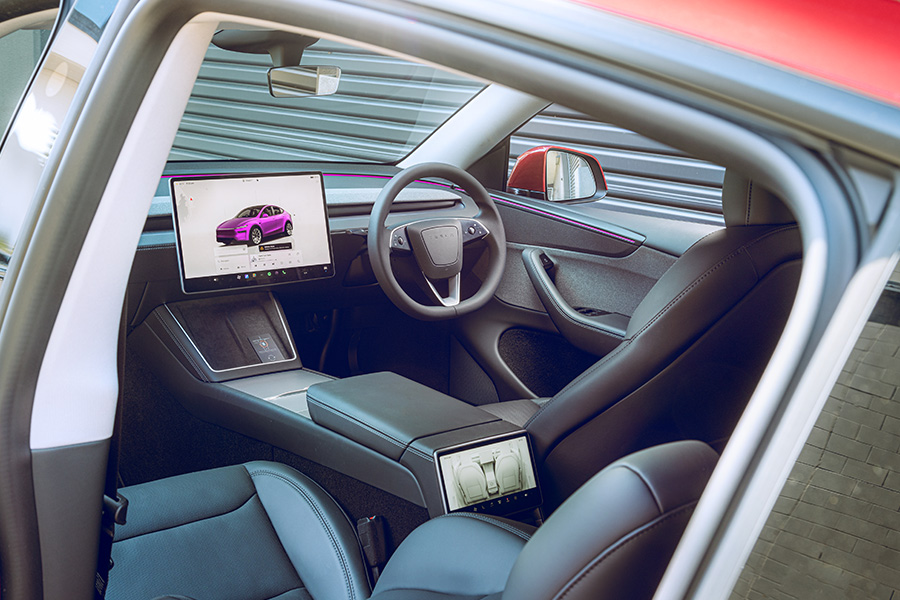
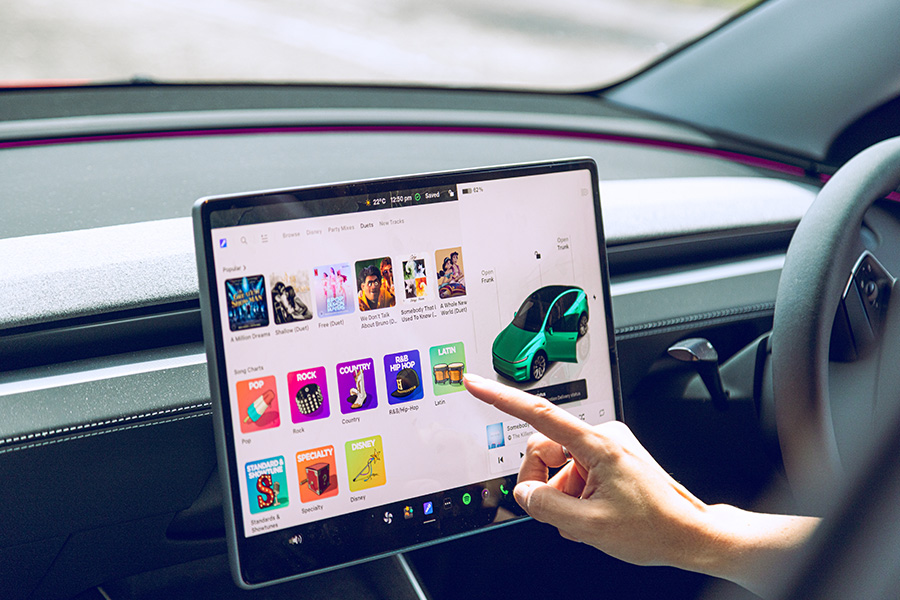
The Skoda misses out on a sunroof, though it and the Nissan gain standard fitment of a head-up display and digital instrument cluster. The Model Y is distinguished from both with ventilated front seats, power-folding and reclining rear seats, an additional wireless phone charger and a rear entertainment screen conveying YouTube, games and much more.
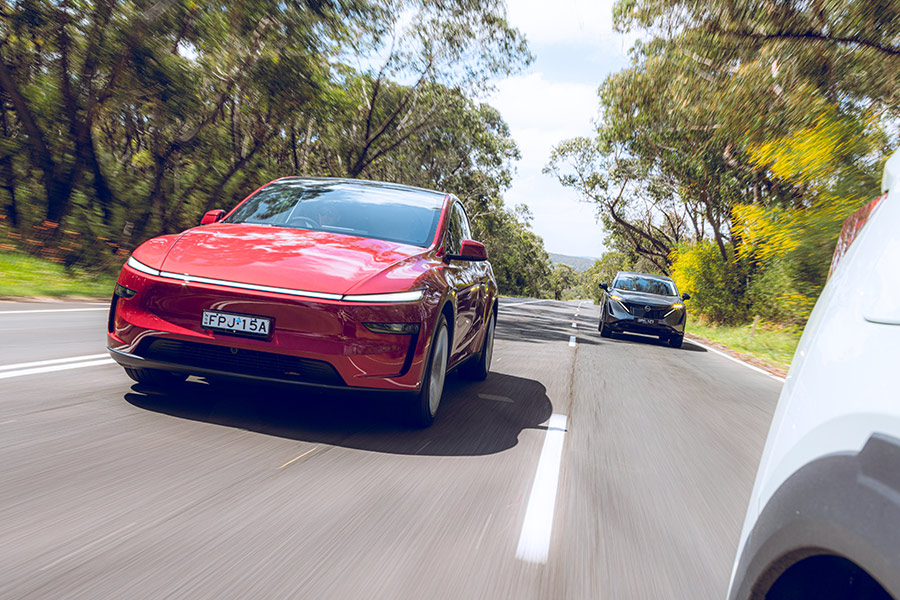
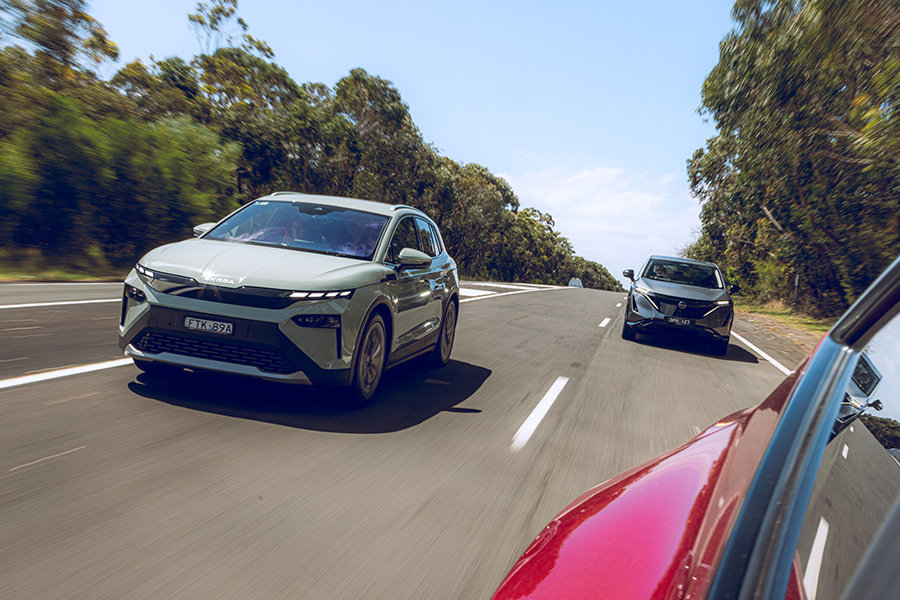
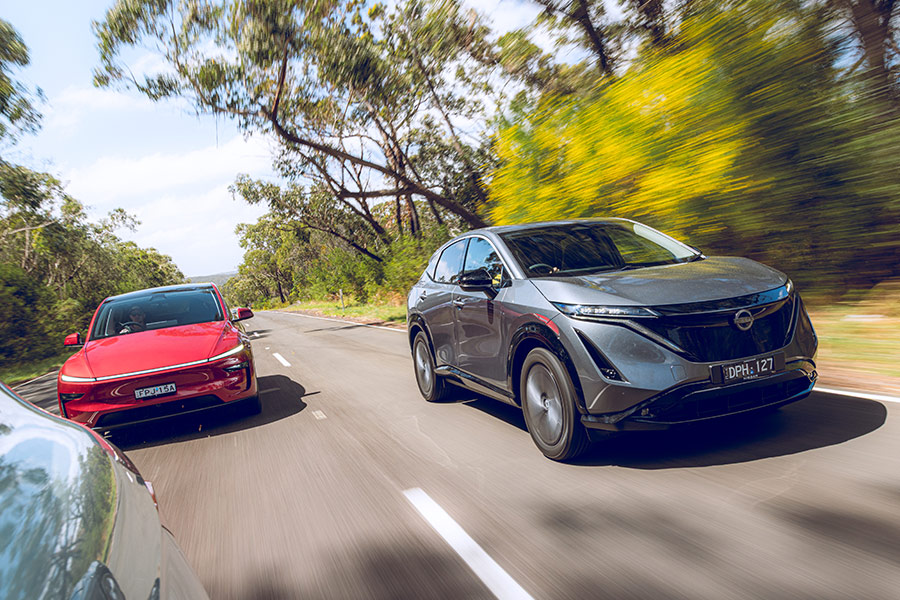
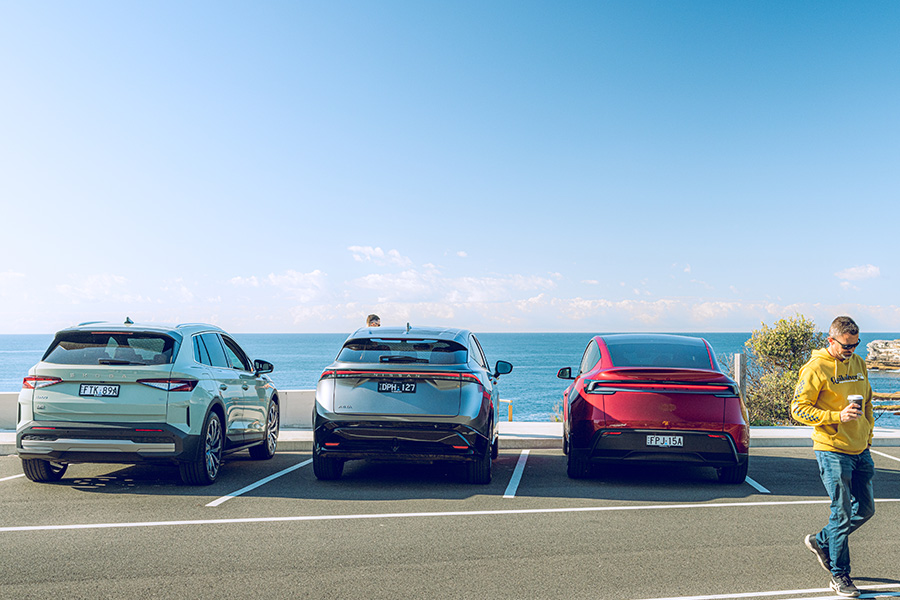
Safety is well sorted across the board, with a full suite of airbags, and the latest driver acronyms and initialisms to match – some more annoying than others with their interventions.
The Tesla has a monopoly on connected services in this test, giving the ability to remotely control key functions of the car, set the temperature, and track security status via a live camera. At the time of writing, the Skoda and the Nissan offer zilch by comparison.
The Tesla doesn’t have Apple CarPlay or Android Auto, though its native software suite includes Spotify and a host of other apps, together with interesting tech features such as Dog Mode (for hot days).
Backed by a sub-par four-year/80,000km warranty in Australia, the Tesla pales against the longer warranties of its rivals: seven years/unlimited kilometres for the Skoda and a 10-year/300,000km provision for the Nissan, provided you service through their dealer networks. The Nissan will cost $1495 to service over the five years/100,000km of ownership (based on 12-month/20,000km intervals), the Skoda’s pricing is set at $1900 over the first eight years based on mammoth 24-month/30,000km intervals, while Tesla doesn’t offer a transparent fixed priced servicing guide in Australia. The batteries of all three vehicles are backed by a separate eight-year/160,000km warranty.
Cabin comfort and space
Inside, our three competitors tread a vastly different path.
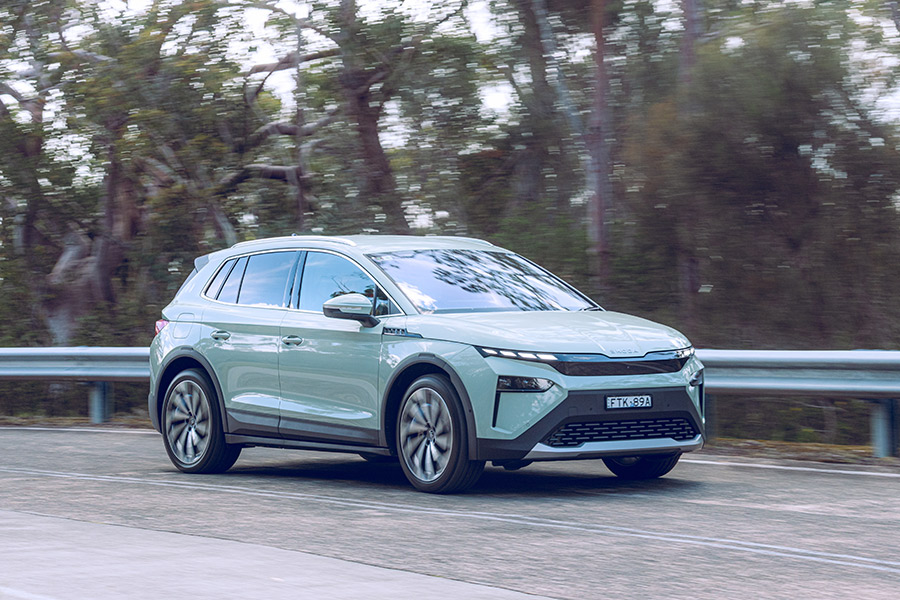
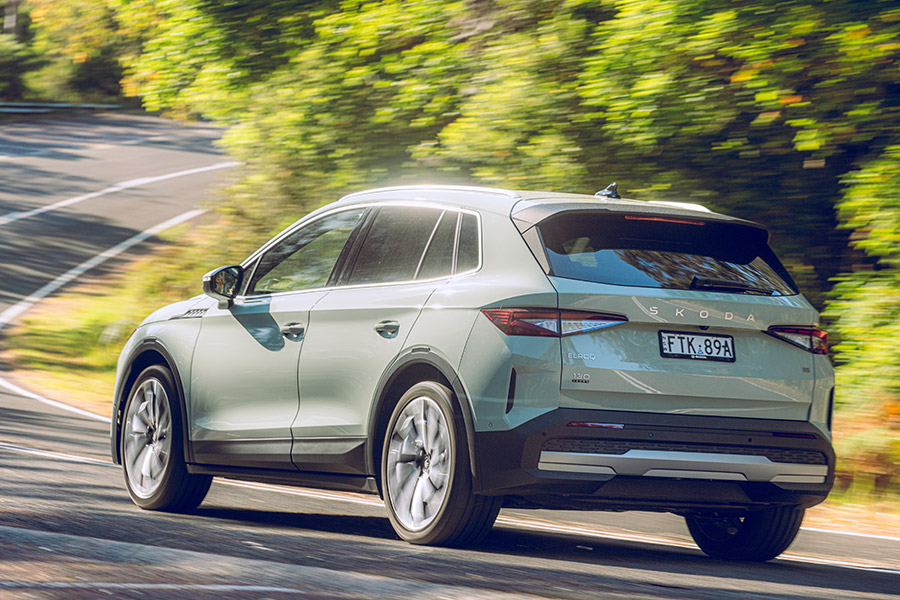
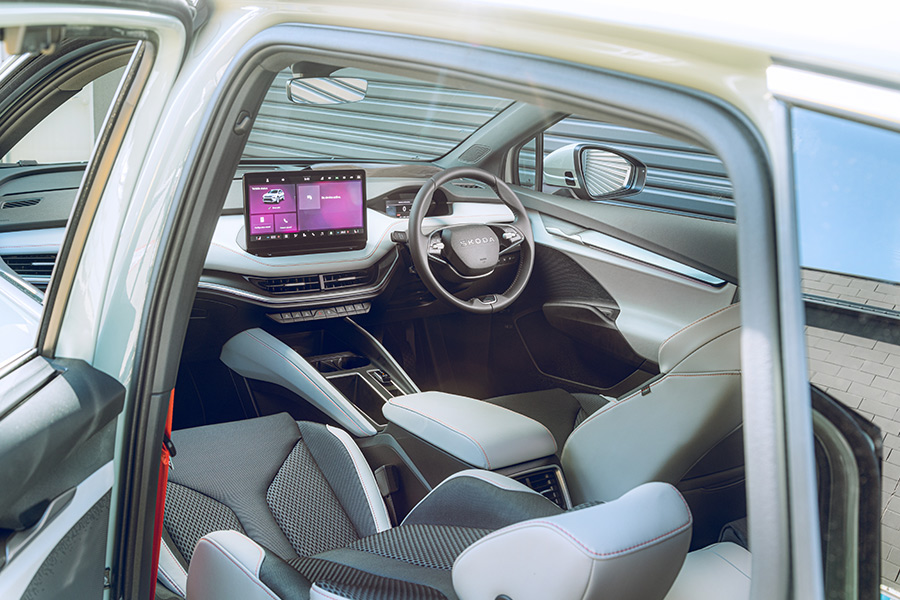
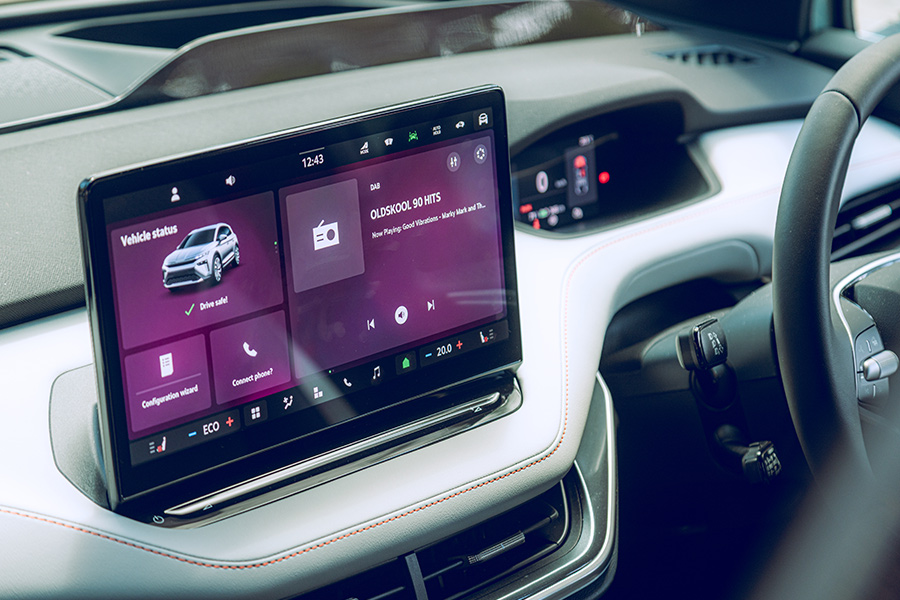
The Czech-built Skoda’s design is a highlight, with textured cloth seats and surface treatments, and a carefully considered spectrum of colours across its five-seat layout. Less redeeming is the tiny instrument cluster hidden behind its broad steering wheel and the lack of hard-wired buttons around its centre touchscreen – most functions require at least one interaction with the screen itself.
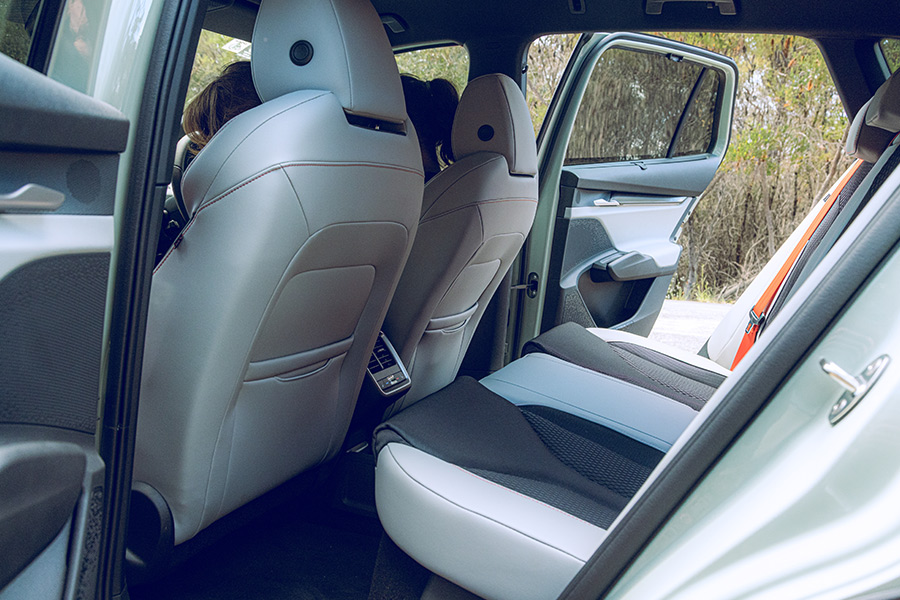
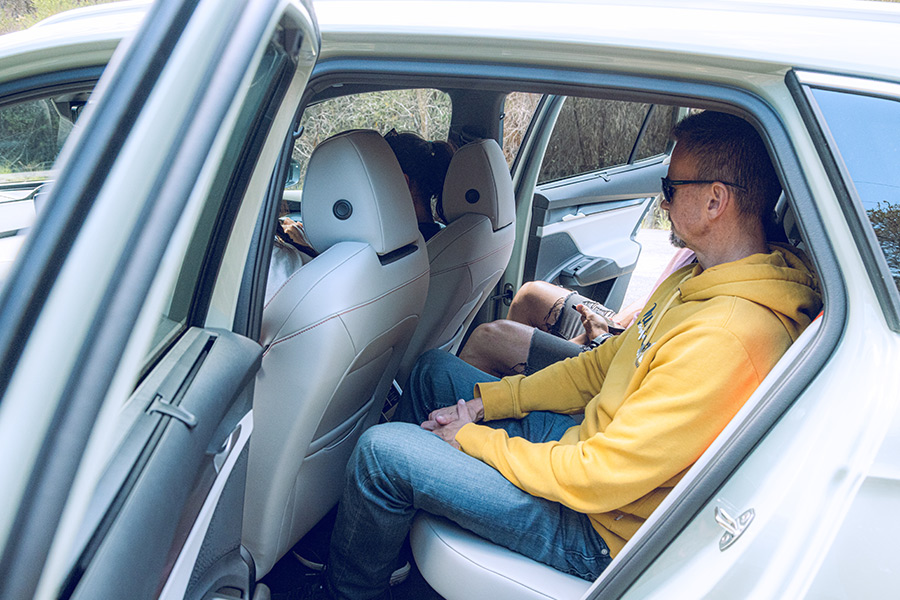
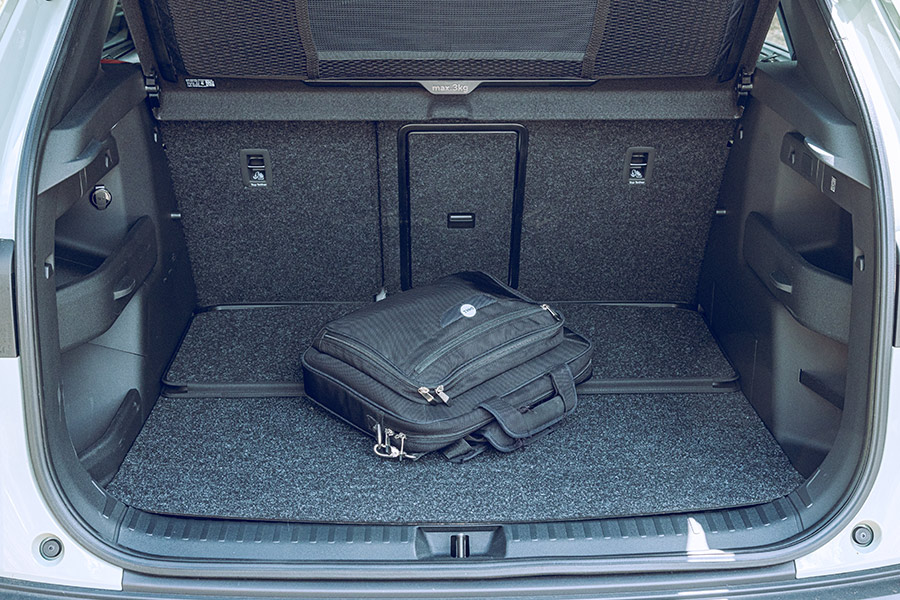
The Skoda’s rear-seat area and boot are the smallest of our three on account of its shorter 4488mm exterior length, which is 100mm less than the Nissan and 300mm less than the Tesla. There’s adequate space for a couple of adults (thanks to a wheelbase that is only 10mm shorter than the Nissan’s), plus bottle-friendly door pockets. The Skoda’s rear-seat area is adorned in harder surface treatments. Just like its rivals, however, the space offers separate rear air vents, rear-seat heating on the outboard pews, and two separate USB-C ports. And the boot can swallow a couple of full-size suitcases at a pinch.
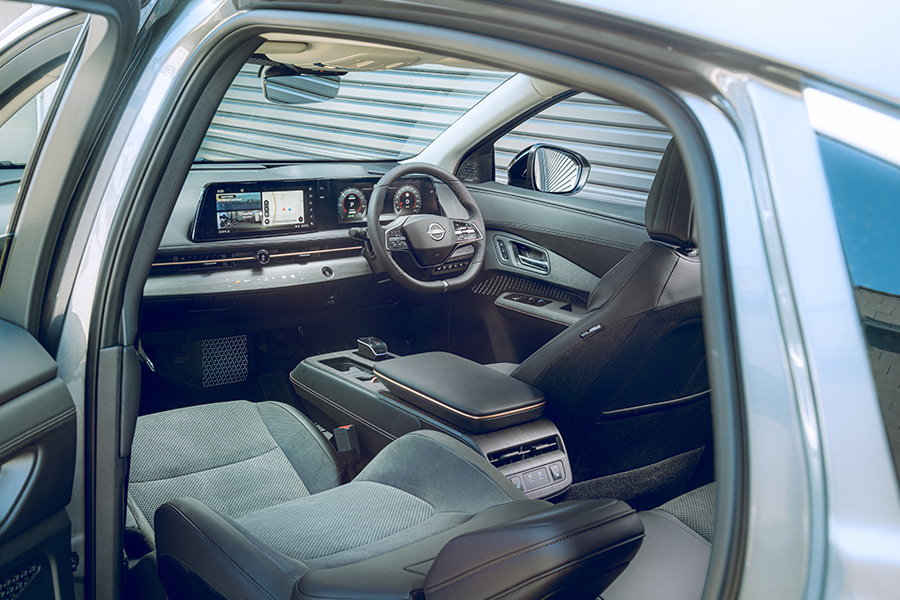
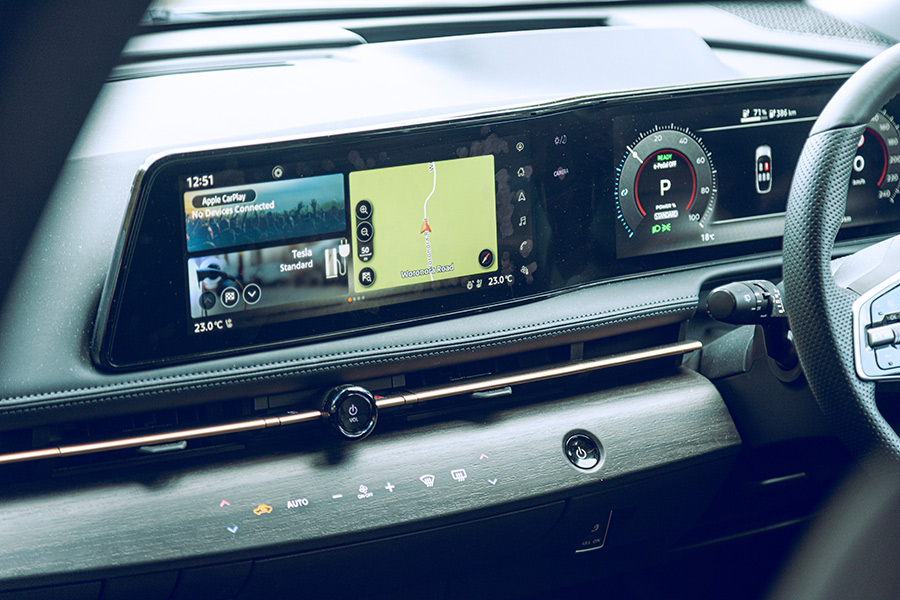
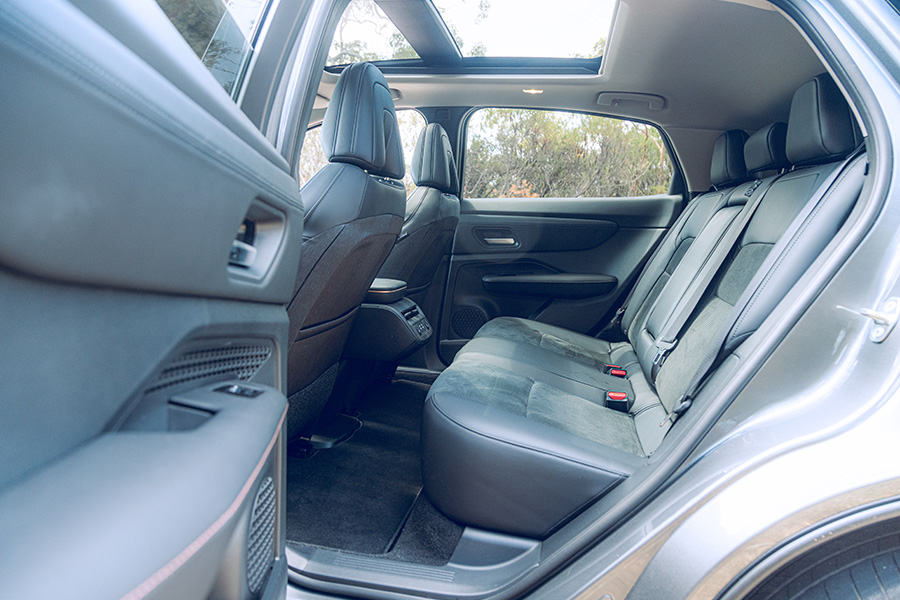
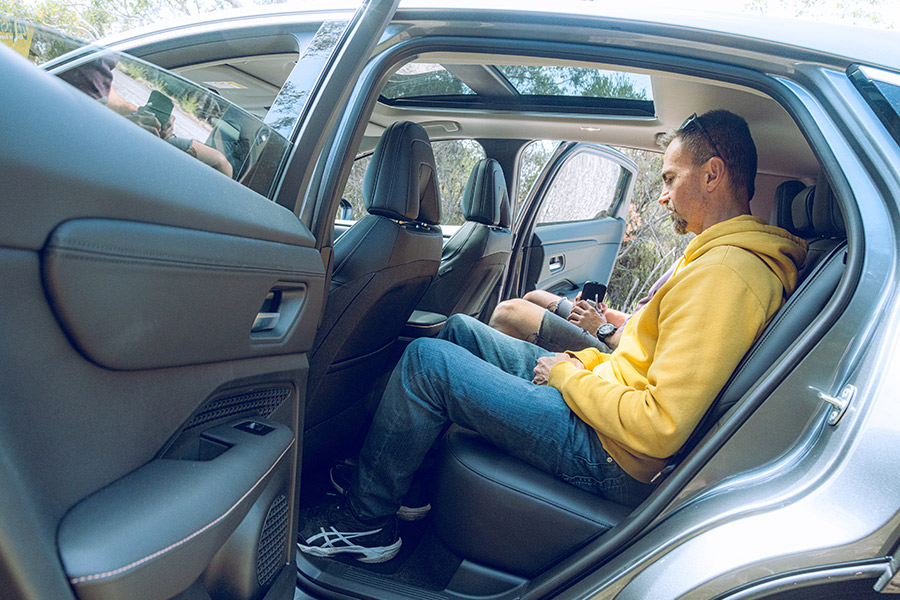
Over to the Nissan, you’re treated with a design and layout that feels a little misaligned in places. The huge, sliding centre console allows occupants to customise the layout as they please, while the flat floor and open front cockpit give an airy feel. The Nissan’s rear seat seems oddly proportioned in this company and offers the most visible clue there’s an electric architecture underpinning it, with a raised floor and raised seats that compromise head room and foot room. Leg room is generous, while shoulder room is middle of the road.
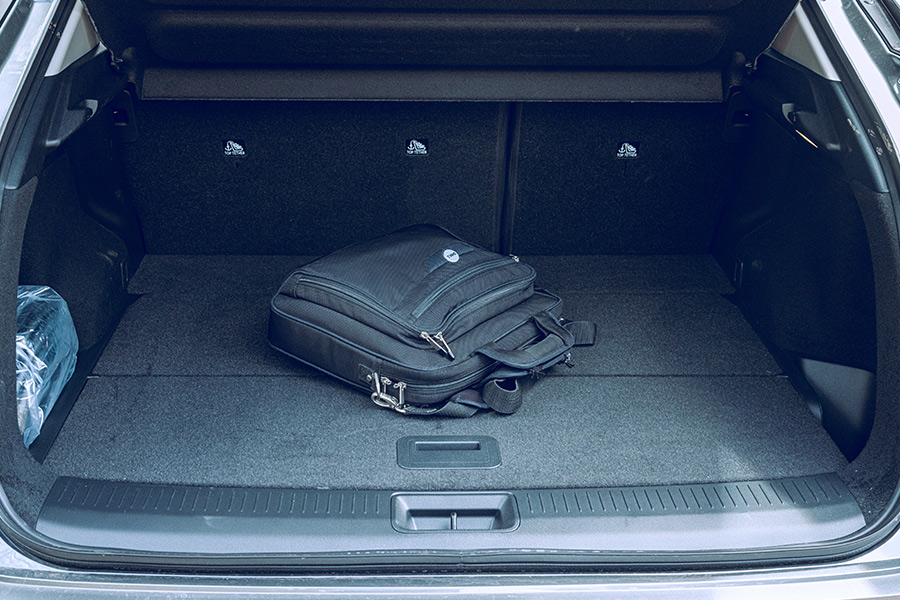
The Nissan wins back points with its boot space, which has the widest dimensions among these three, complete with a floating shelf that offers space underneath to hide charging cables.
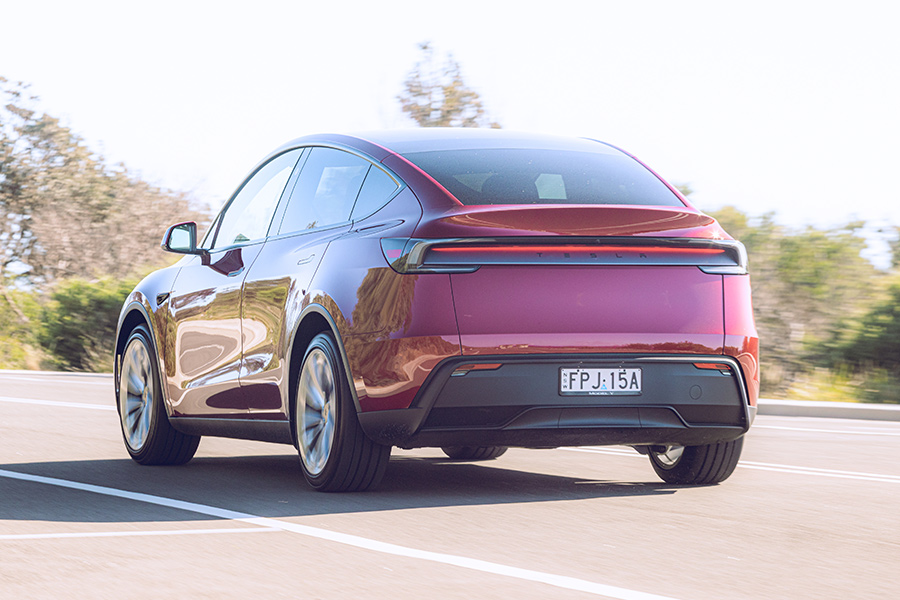
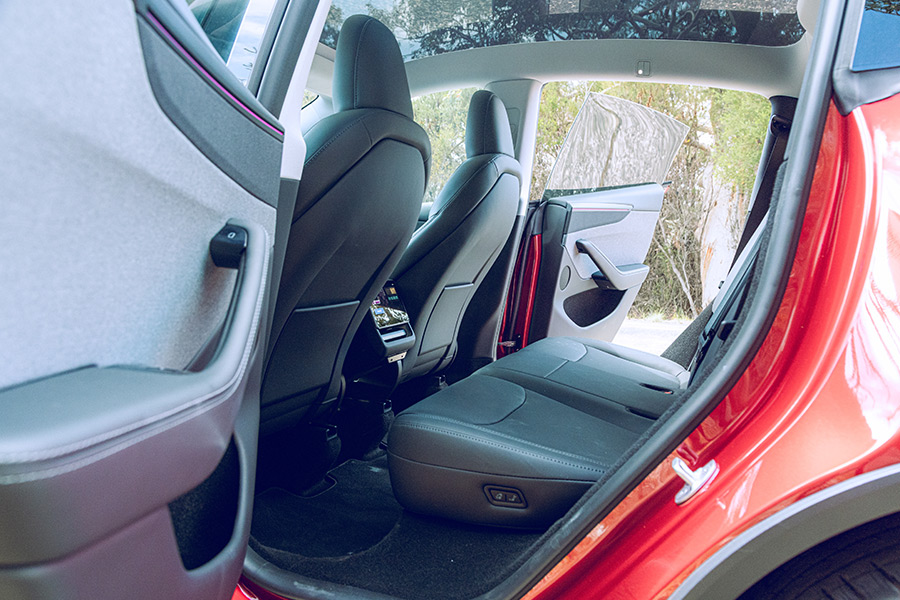
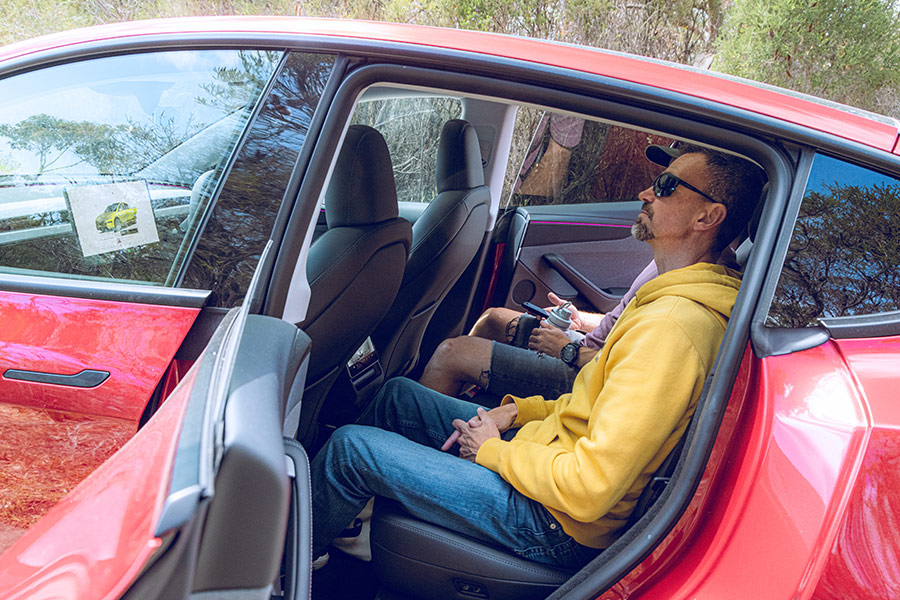
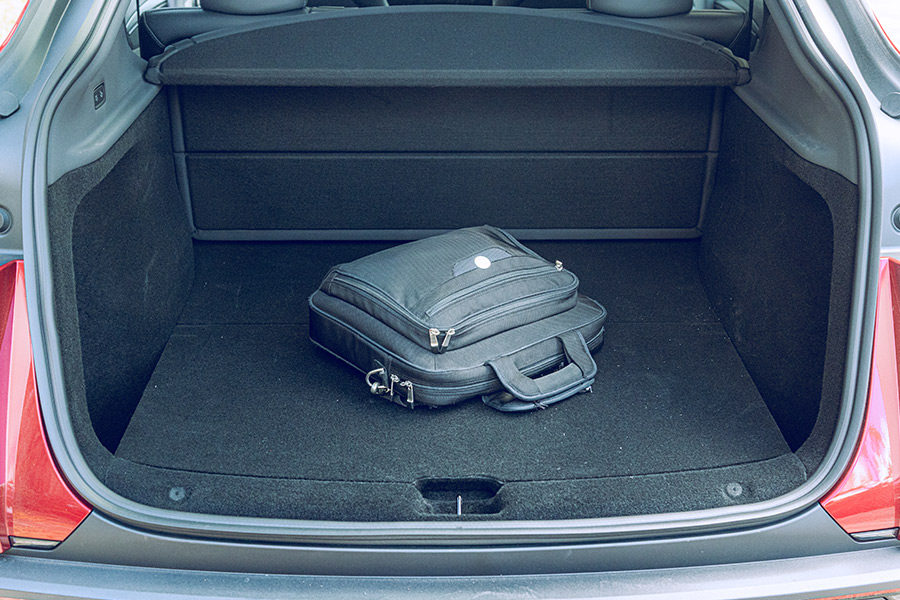
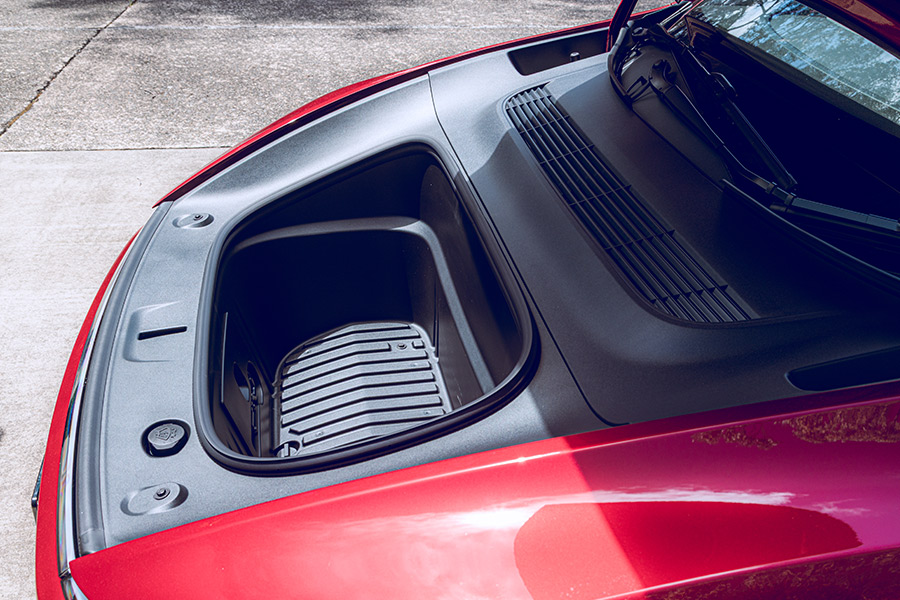
If family friendliness is top of mind, the Tesla takes the cake. Larger exterior proportions in this comparison liberate extra dimensions across the first and second rows, together with comfortably the biggest boot that can fit three full-size suitcases or a designer pram. You can stow or raise the rear seats from the boot via the touch of a button, cargo space is accessed via a lower load lip, and there’s a huge underfloor compartment. The rear-seat space mirrors the front, with padded chairs and soft-touch materials ensuring strong amenity over longer journeys.
While the Tesla is clever in its outside-the-box approach to design, the glass roof is an exception. Even on an 18°C day, the residual heat coming from the big pane above is hard to escape.
Driving
Settling into the Ariya’s perched driver’s seat, it’s clear Nissan has its sights set squarely on comfort. The padded materials foreshadow a softer, quieter cabin experience than both the Tesla and Skoda.
The Nissan’s softer focus isn’t infallible, though; it moves around on its springs and lacks control over rugged road undulations, especially riding on thicker-walled 19-inch Bridgestone tyres. The steering lacks the feeling and feedback of its rivals, with an immediacy off centre and an artificial weighting that doesn’t exactly leave you inspired.
With a 0-100km/h sprint time of 8.1 seconds, the front-drive 178kW/300Nm Nissan is upwards of 1.5 seconds slower than the Skoda and Tesla.
The Skoda Elroq’s smaller footprint and Euro origins feel distinguished in this comparison. It has the most meaningful steering weighting and precision of our three candidates, sits noticeably flatter through corners, and offers a taut rear-drive bias. Driving almost like a traditional combustion car, those considered controls are married with a smooth, linear 210kW/545Nm drivetrain that feels progressive both in piling on speed and under regenerative braking.
The slight downside of the Skoda’s competent handling mix is some tremoring over small amplitude bumps at all speeds – a symptom of 21-inch wheels – while road noise insulation could be better.
That leaves the Tesla. Though much improved on-road for 2025, the Model Y feels like a neat middle ground between the Nissan and Skoda in terms of its ride and handling mix, together with a seamless 225kW/450Nm drivetrain.
Enclosed in a quiet cabin environment, the drive experience is serene, with the Tesla’s larger footprint enabling decent poise over bumps. On B-grade roads the Tesla will still fidget over sharper bumps, while its regenerative brakes don’t feel as metered in their intervention as the Skoda’s, and the brake pedal is more wooden in its feedback.
The Tesla’s optionally fitted $10,100 full self-driving functionality navigates roads, intersections and merging autonomously with aplomb – all on the proviso the driver be ready to take the reins.
All three candidates offer enough range to get upwards of 450km between charges in real-world driving, based on our test route made up of country roads, built-up traffic, and a stint at highway speeds.
Charging and range
The Nissan’s 87kWh battery headlines the bunch for capacity, but it is the Skoda’s 77kWh battery that promises the best claimed range of our three, at 529km on the WLTP cycle (versus 504km for the Nissan). The Tesla’s smaller 60kWh battery offers a still-practical 466km claimed.
The Tesla and Skoda share 175kW DC fast-charging capability, plus 11kW AC home charging capacity. The Nissan pales with a maximum 130kW DC charge rate and standard 7.4kWh AC charge rate – meaning slower recharging times on both counts.
None of our candidates offer vehicle to load (V2L) or vehicle to grid (V2G) capability at the time of writing.
The verdict
The winner of this comparison really depends on what you’re seeking from your mid-size electric SUV. If it’s universally compelling design and competent driving dynamics, it’s hard to go past the Skoda Elroq, an SUV which makes excellent use of its smaller footprint and feels more akin to a traditional combustion car, with enjoyable design and feedback on-road.
Given the family-orientated brief of mid-size SUVs, however, it’s the Tesla Model Y that takes out this comparison test. It offers the largest interior dimensions, cheapest purchase price at this trim level and evergreen technology that still distinguishes it from established and fledgling EV brands – proof that Tesla isn’t resting on its laurels.
|
Manufacturer |
Skoda |
Nissan |
Tesla |
|
Model |
Elroq 130 Edition |
Ariya Advance+ |
Model Y |
|
Battery |
77kWh |
87kWh |
60kWh |
|
Power |
210kW |
178kW |
225kW |
|
Torque |
545Nm |
300Nm |
450Nm |
|
WLTP Range (km) |
529km |
504km |
466km |
|
Economy |
16.6kWh/100km |
19.1kWh/100km |
14.6kWh/100km |
|
ANCAP |
Not tested |
5 stars |
5 stars |
|
Price |
$64,990 (plus ORC) |
$63,840 (plus ORC) |
$58,900 (plus ORC |