2026 Denza B8 review

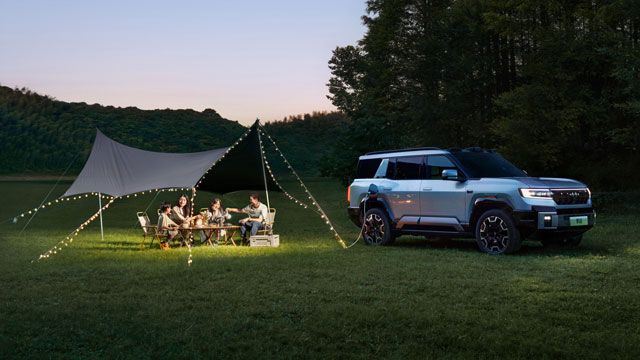
A quick peek behind the curtain. Usually, a vehicle is launched to the public at the same time, or even just after, the media test drives. As to why, that’s a question best left to the motoring gods (or perhaps a company’s marketing department). Much like death, taxes and ever-worsening traffic, it just is what it is.
But that hasn’t been the case with Denza, which actually launched in December last year, with orders opening around the same time. And that gives us the rare opportunity to get an idea of who is actually buying the car before we get to experience it for ourselves. And in the case of the Denza B8, the answer is, apparently, everyone.
Really. While the obvious rival to this big, three-row, ladder-frame behemoth are models like the LandCruiser 300 Series, Denza’s dealers have been seeing all sorts of wild and wonderful metal being traded in, and even customers already in the queue elsewhere happy to burn their deposits to jump into a B8 sooner.
“I believe we have the luxury, the technology, the off-road capability to compete with any SUV,” says Denza Australia COO, Mark Harland. “And we’ve priced it so we can (attract) people that are looking at the very ultra-luxury premium price points, but also people that are looking to stretch their budget a little bit.
“When I look at the cars that are being traded in early… it’s everything from Range Rovers to LandCruisers, Audis and BMWs — we’re seeing quite a range. If I could have imagined a perfect start, this is it.”
Which begs the question, what do these early buyers know that we don’t? Let’s find out, shall we?
How much does the 2026 Denza B8 cost?
There are only two options in the Denza B8 family, with a single trim level shared across a six- or seven-seat configuration. The entry point is the conveniently named B8 S7, which is $91,000 before on-road costs. And then there’s the S6, which swaps the middle bench for two lux-feeling captain’s chairs to transform the B8 into comfy six-seat transport. It lists at $97,990.
That stacks up very strongly against the competition. If you’re shopping at the Toyota end of the spectrum, the LC300 starts at around $99k but climbs to almost $150k. If your tastes run more to Lexus, an LX starts at more like $165k, and in Range Rover world, the cheapest Sport is perilously close to nudging $150k.
What is the 2026 Denza B8 like inside?
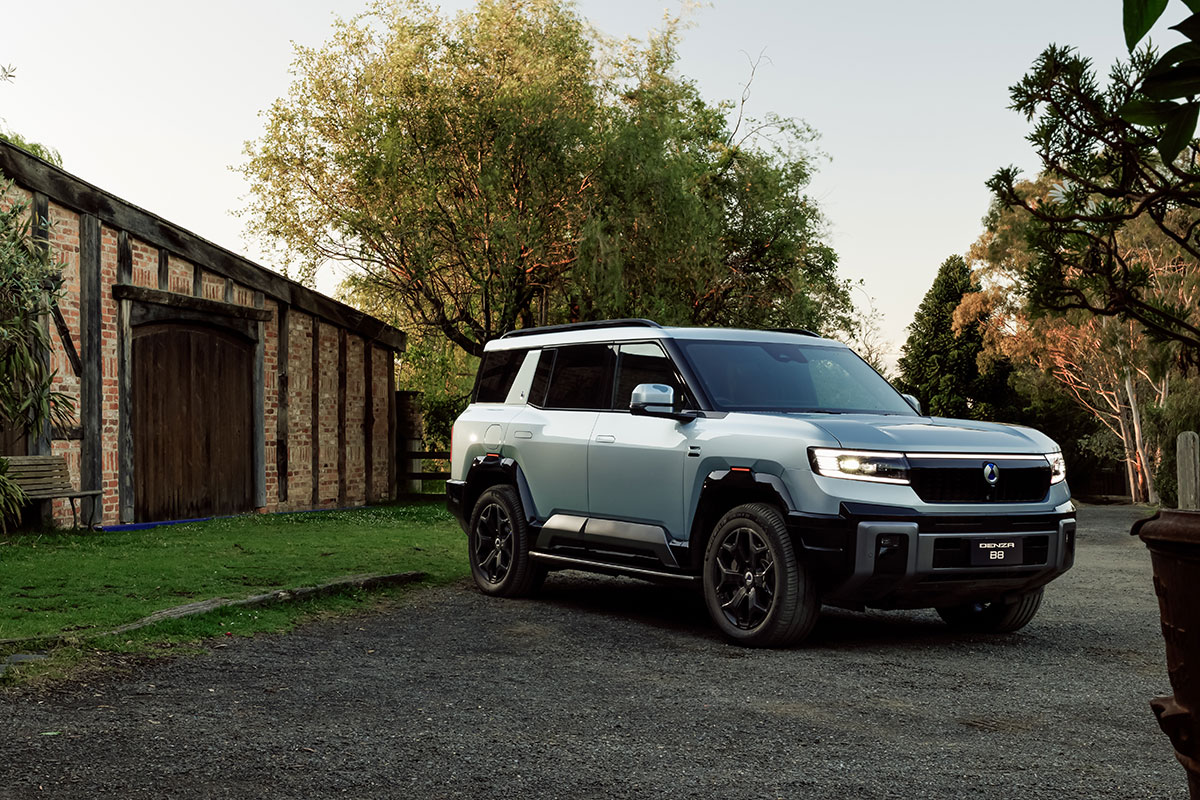
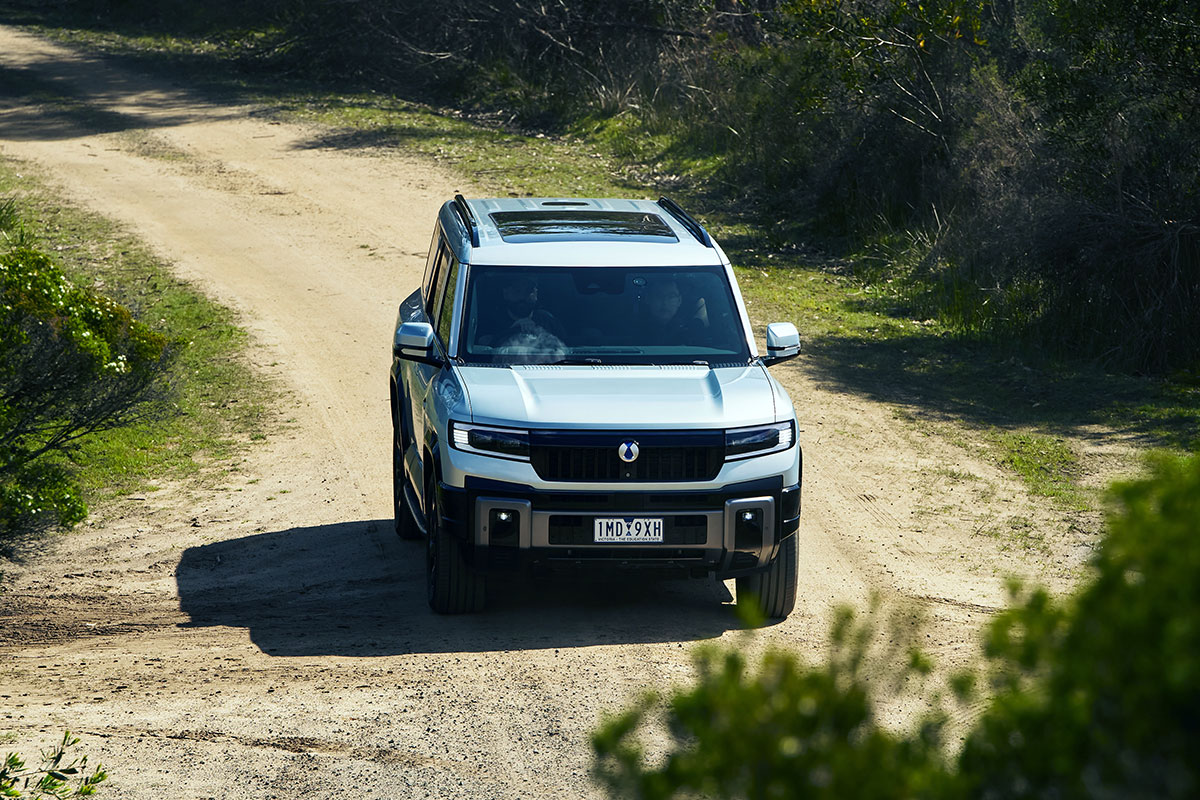
Big, obviously. The B8 stretches almost 5.2m in length, over 1.9m in width and over 1.9m in height, which is a lot of real estate.sha Predictably then, seating space is generous, even in the third row.
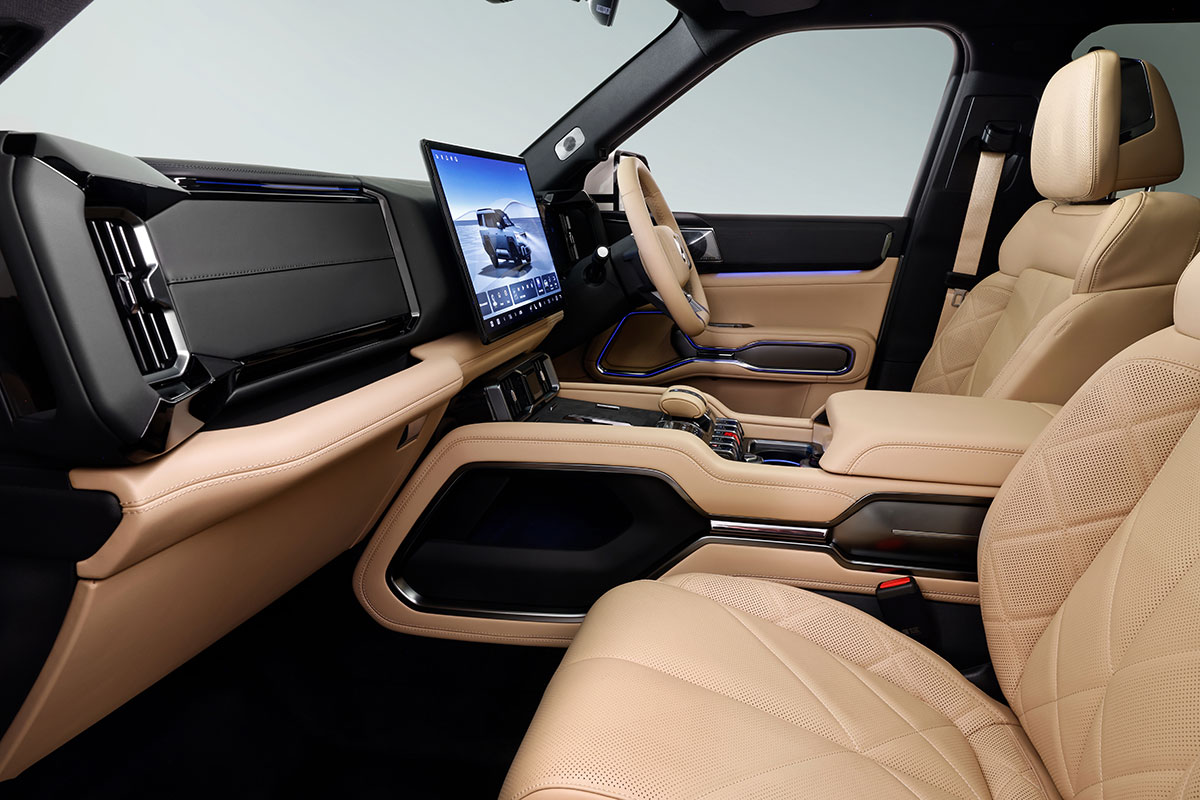
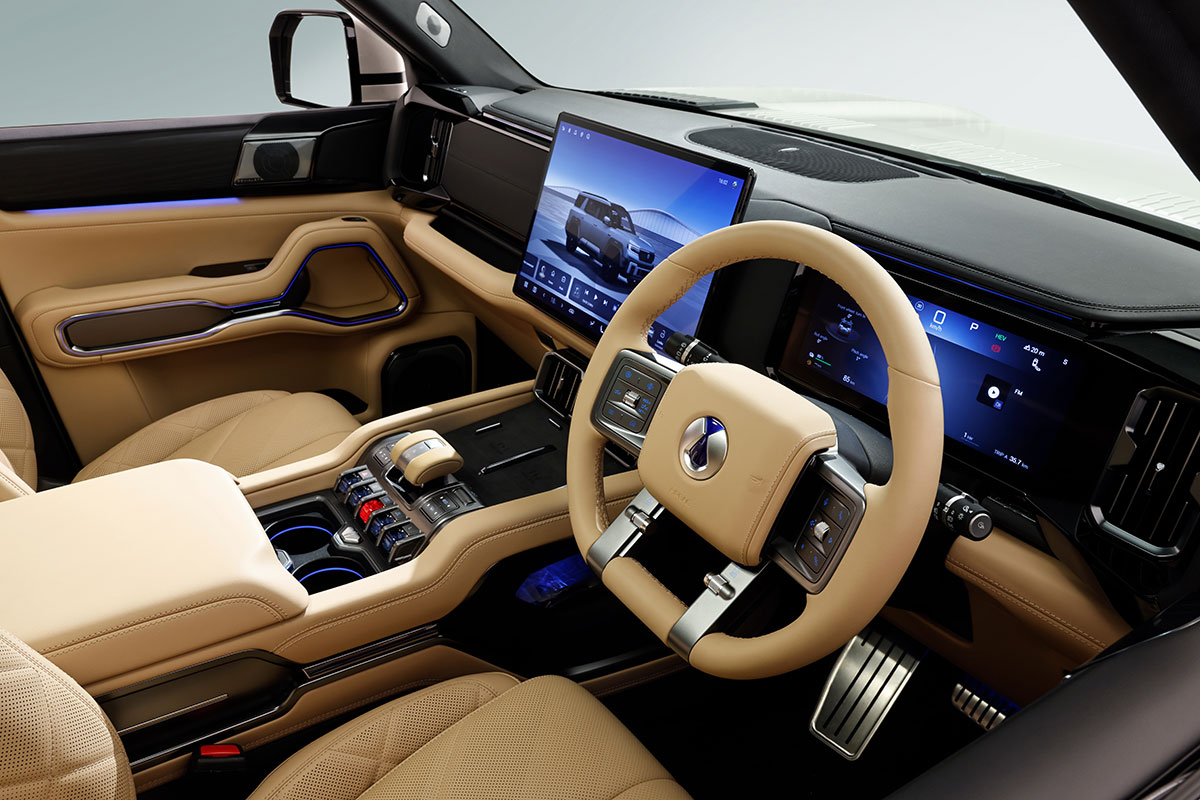
Starting at the front, the wide leather-wrapped seats are comfy over long distances, and the dash is dominated by the two sizable screens, one for infotainment and one for the driver.
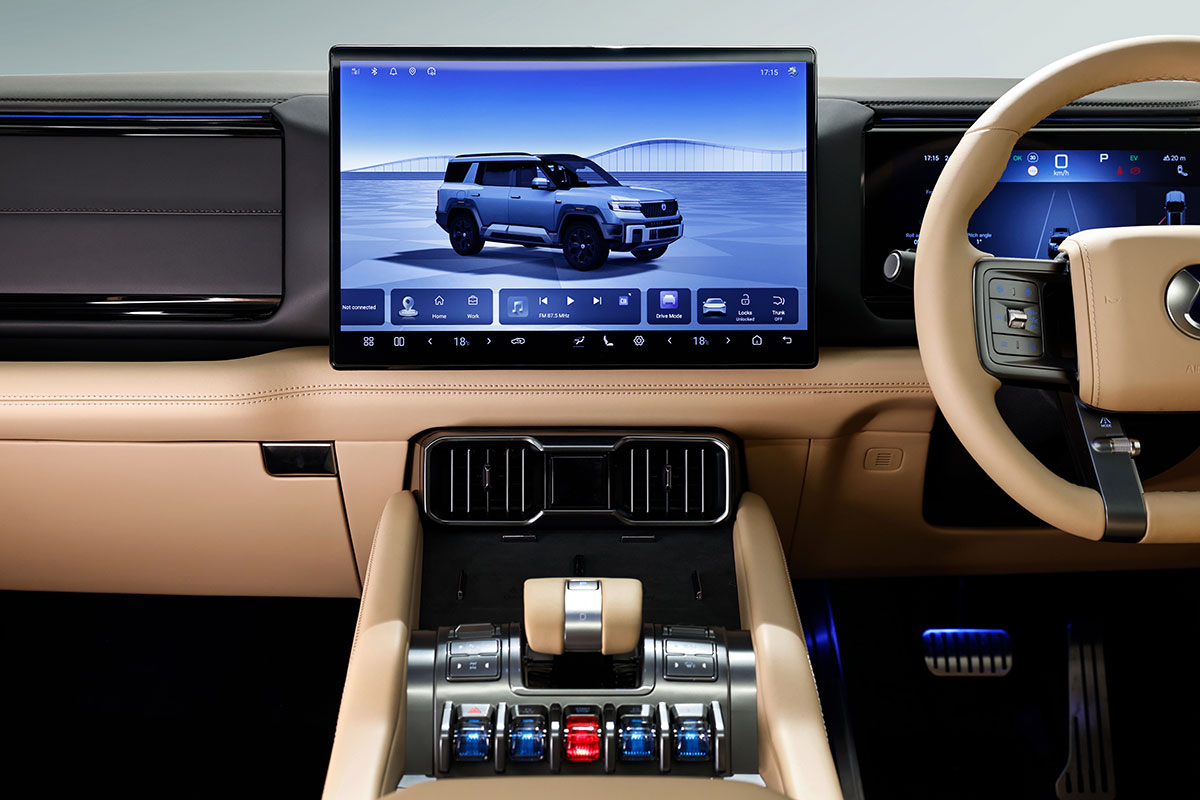
Like the smaller B5, the B8’s cabin is adorned with physical buttons, including an eye-catching row of plasticky-looking switches below the gear selector that handle things like swapping between hybrid and EV modes, and — via the ruby-red centre switch — starting the actual car. Hitting that one sees the thick leather-wrapped drive selector rise from its mounting like Atlantis emerging from the sea. Unnecessary, definitely. But still kind of cool.
You can happily control most functions without needing to dig through many of the screen menus, including turning on or off your climate control, activating your diff locks (one in the 7S, front and rear in the 6S) or controlling the stereo’s volume.
Separating the front seats is a hidden fridge (also accessible from the backseat) that can be cold enough to keep ice frozen, or hot enough to keep your traveller pies steaming.
Of the two trims offered, the captain’s-chair setup makes the best use of the backseat, offering a walk-through passageway to the third row, but also largely replicating the two chairs up front for your passengers. Either way, though, space is ample. I’m 175cm, and had no problem sitting behind my own driving position, with plenty of leg and headroom. You get your own access to that fridge, but also your own temperature controls, too.
Even third-row passengers get a fair bit of room to move. I could sit without my knees touching the chair in front, which suggests kids would have no issues. There’s also some clever touches at work, like the USB-C ports integrated into the wall speakers, so they don’t take up any extra room. In the middle row, they’re integrated into the seats themselves.
At the boot, there’s 147 litres with the third row in place, but more than 900 litres with it stowed. And there’s a full-size spare mounted on the outside of the side-hinged boot door.
— Andrew Chesterton
What equipment does the 2026 Denza B8 come with?
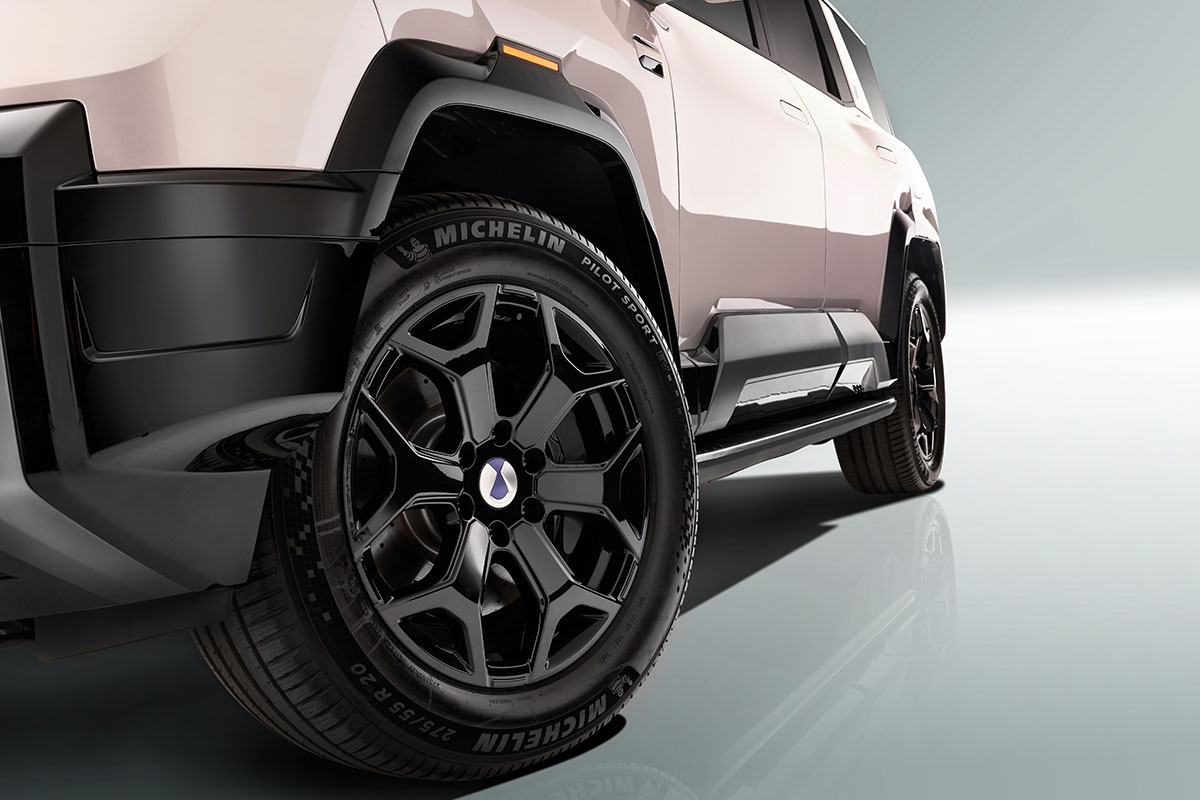
Both B8 models are properly luxuriously equipped. They ride on big 20-inch alloy wheels wrapped in Michelin tyres, there is LED lighting at the front and the rear, and a big sunroof.
Inside, there’s the 17.3-inch central screen and 12.3-inch driver display. Apple CarPlay and Android Auto are both available, along with an 18-speaker stereo. There’s also tri-zone climate control, dual 50w charging pads, and a V2L connection.
Finally, the seats. In both trims, they are heated, cooled and offer a massage function up front, while the middle row is heated and cooled in the 7S, while the massage function carries over in the six-seat version. Both trims offer leather, but only the 6S is Nappa.
How safe is the 2026 Denza B8?
The Denza B8 wears a five-star ANCAP safety rating, tested in 2025. ANCAP breaks its scores down into four key sections, and the B8 rated 86 per cent in Adult Occupant Protection, 95 per cent in Child Occupant Protection, 75 per cent in Vulnerable Road User Protection, and 78 per cent for its Safety Assist systems.
There are a total 13 airbags, and all active safety systems are present and accounted for, though we found ourselves switching off the driver monitor and the speed warning every time we got into the vehicle owing to their annoyingly overzealous nature.
What powers the 2026 Denza B8?
The B8 uses the broader BYD group’s DMO platform and powertrain, made famous by the Shark 6 in Australia but, Denza insists, actually developed for the B5 and B8.
In the big B8, that means a 2.0-litre turbo-petrol engine paired with twin electric motors for a total 425kW and 760Nm. Enough, Denza says, for a scarcely believable run to 100km/h of 4.8 seconds.
Also on board is a 91-litre fuel tank and a 36.8kWh Blade battery. Denza claims 3.9L/100km on the combined cycle, but PHEV fuel use claims are a dark art and impossible to replicate. We were mostly just north of 10 litres after a lot of long-distance driving. There’s also a pure EV range of 100km, meaning your daily commute can be fuel-free.
What is the 2026 Denza B8 like to drive?
I know you can’t judge a book by its cover, but if you were standing in a Denza bookshop and the big B8 was looming over you from one of the shelves, I’d say you're fairly free to judge away. In short, the B8 drives almost exactly as you might expect a big, luxury-focused 4WD to drive — soft, cosseting, quiet and without much in the way of dynamic prowess.
Comfort is the order of the day here, with the active hydraulic suspension working away to smooth out lumps and bumps. Weirdly, it’s actually less comfortable on the road than the smaller B5, despite having a more complex suspension system. Part of that is surely the sheer weight on board — some 3.3 tonnes kerb — but whatever the reason, the B8 can feel crashier over the bigger bumps.
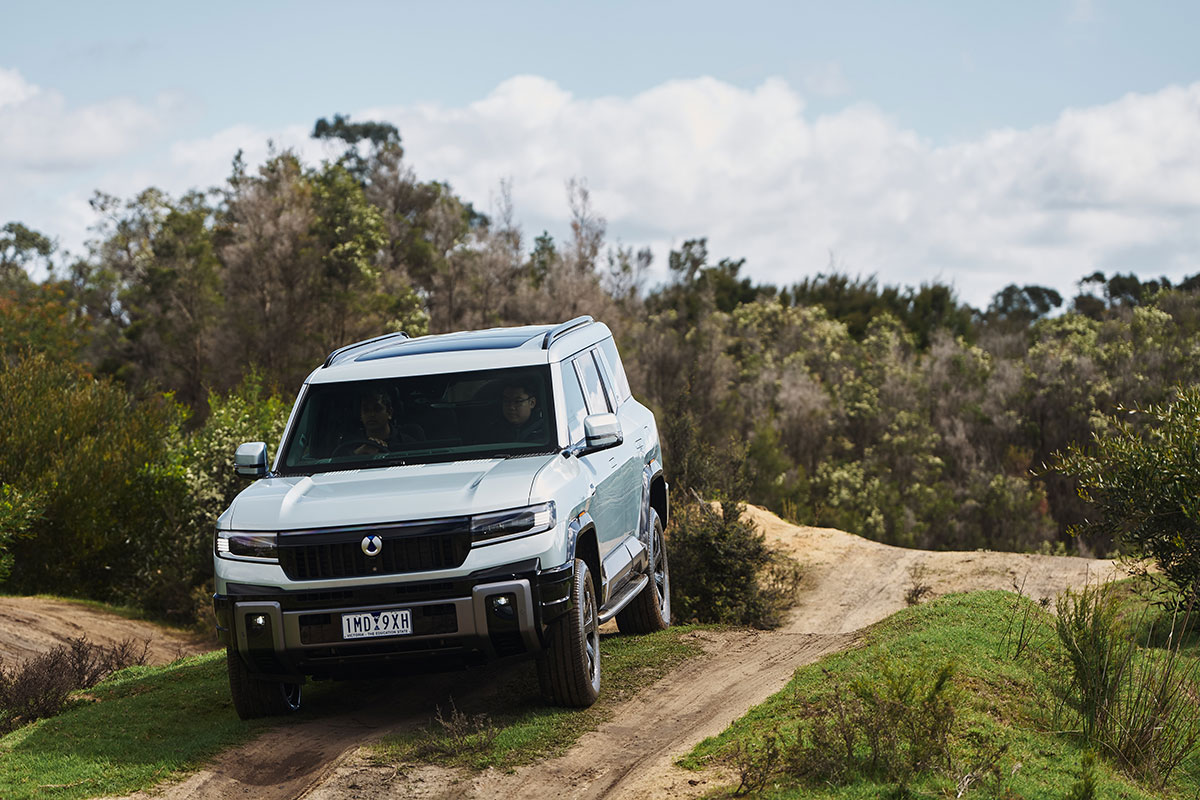
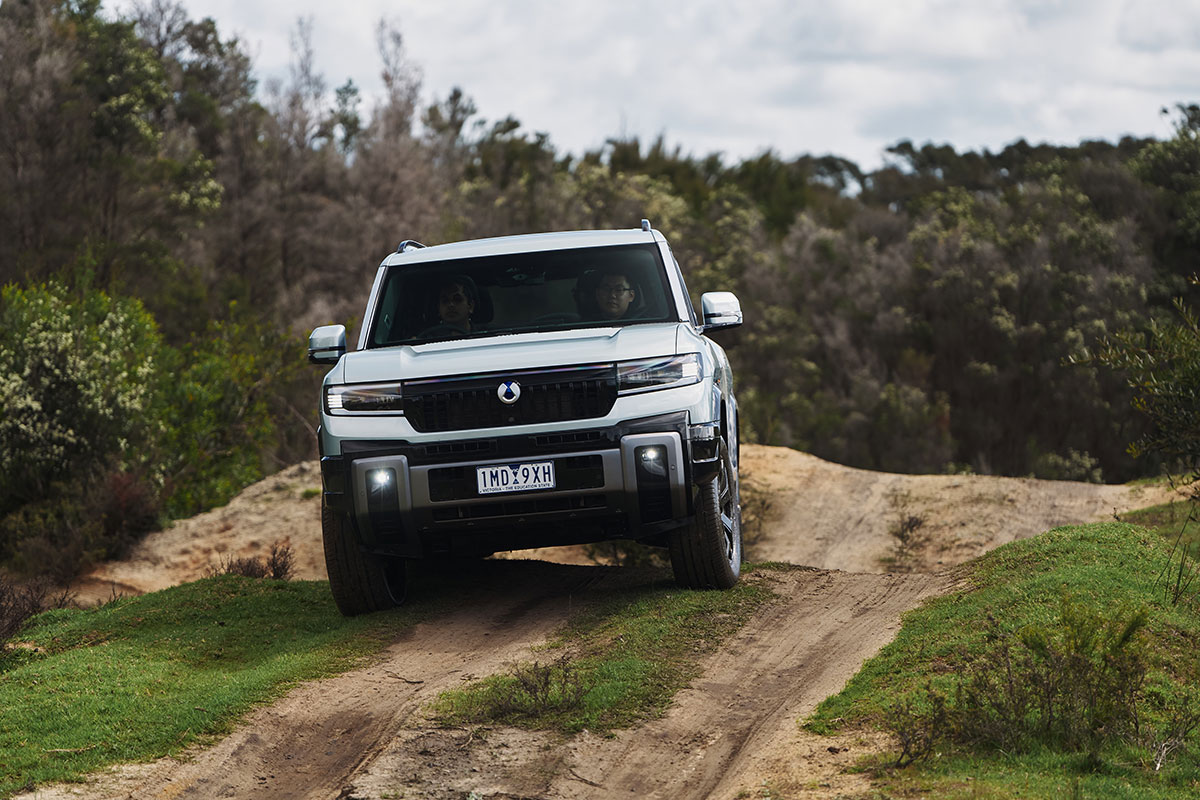
Conversely, it's the smoother of the two off-road. I suspect the complex suspension is better at ironing out the short, jagged rocky stuff. It’s entirely capable off-road, though, and like its B5 sibling, it too has conquered the infamous Beer O’Clock Hill, which is a fair old test of a metal’s mettle.
A comfortable, feature-soaked long-distance hauler then, and with plenty of grunt on board to handle its 3.5-tonne towing limit.
Open Road’s take on the 2026 Denza B8
Honestly, it feels a bit like the future compared to some of the more old-school 4WD SUVs on the market, and Denza’s ability to squeeze that much stuff into such a comparatively small price tag will definitely see cross-shoppers absolutely considering a B8.
But part of Toyota’s broad appeal is the size of its service network and availability of parts, which Denza can’t match yet, though its plan to authorise BYD dealers in remote areas as Denza service centres will help.