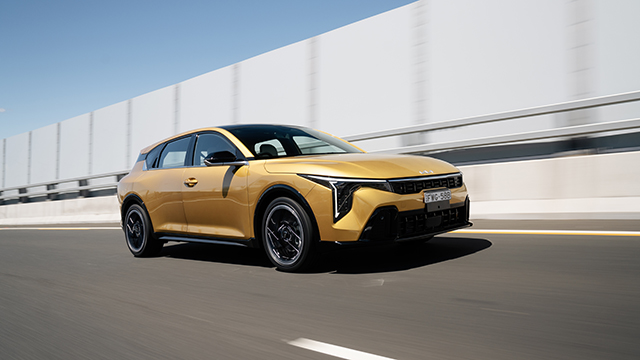
2026 Kia EV4 review
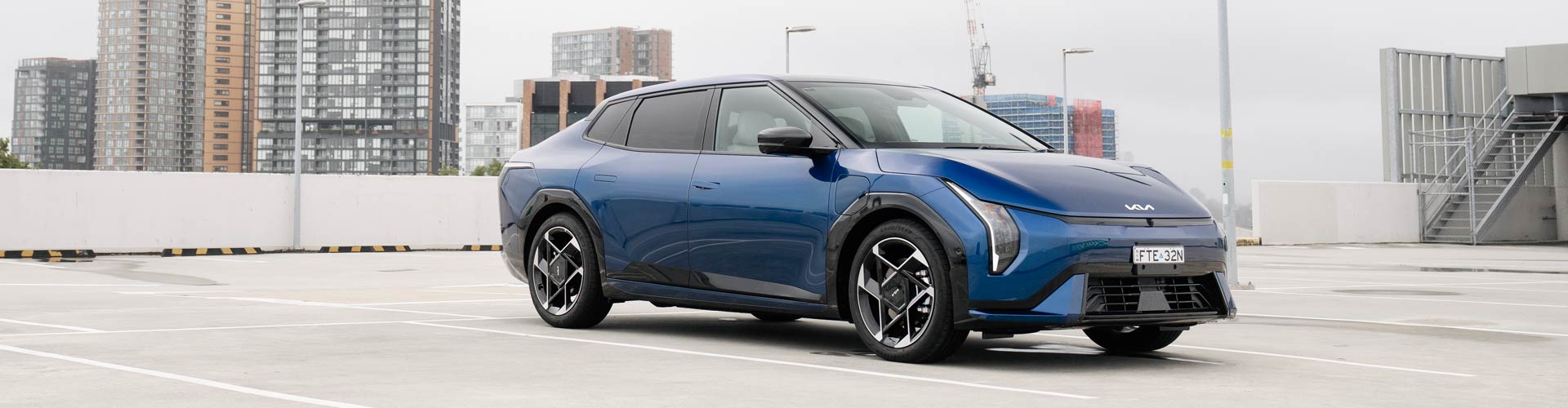
Things we like
- Local chassis tune is well-judged
- Strong value + standard equipment levels
- Cabin is roomy, comfortable and well-appointed
Not so much…
- Rear headroom is tight
- Value equation starts to dip in the flagship GT-Line
- Slower DC charging than other Kias
In a new-car market dominated by SUVs and dual-cab utes, you might think the humble family sedan isn’t long for this world. But is that actually true? A recent trend suggests the once popular sedan (remember the halcyon days of the 80s-early 2000s?) could be making a quiet comeback.
A flurry of new electric sedans have hit the market recently, with the Mazda 6e, BYD Seal and Polestar 4 all joining a segment once dominated by the Tesla Model 3. And now Kia has joined the fray with its all-new Kia EV4.
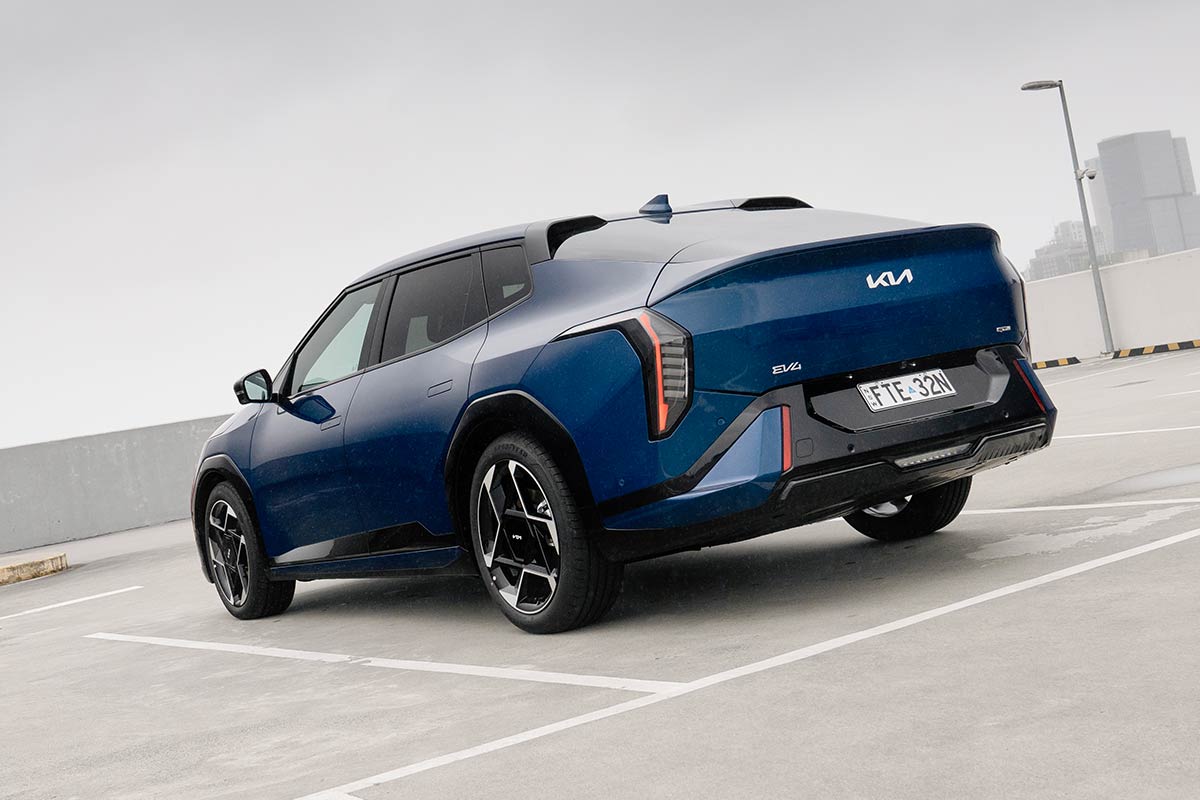
This is Kia’s first tilt at creating an electric car that isn’t an SUV and impressively it might be its most convincing offering yet. A starting price below $50,000, excellent driving dynamics and a roomy, well-equipped cabin make it a compelling contender in this burgeoning segment.
How much does the Kia EV4 cost?
First thing to note: the Kia EV4 undercuts the popular Tesla Model 3 on price. The EV4 range kicks off with the entry-level Air trim grade, which at $49,990 before on roads is a sizeable saving over the Tesla Model 3 RWD ($54,990 plus ORC). It’s also well below the EV4’s other rivals, the aforementioned Mazda 6e (expected to start below $55,000) and the Polestar 4 Long Range Single Motor ($78,500). Only the BYD Seal is cheaper thanks to its ultra-competitive $46,990 starting sticker.
The EV4 goes toe-to-toe with its rivals for range and performance, too. The entry level EV4 Air draws power from a 58.3kWh battery and offers 456km of WLTP driving range. Stepping up to the mid-spec EV4 Earth ($59,190) adds a larger 81.4kWh battery and 612km of WLTP driving range. That’s the longest range of any electric Kia currently on sale.
The range-topping EV4 GT-Line costs $64,690 and shares the same battery and driving range as the mid-spec Earth but adds a smattering of desirable equipment to justify its price premium.
An important EV4 distinction is that unlike all of its sedan rivals, it is front-wheel-drive only, with a single e-motor on the front axle producing 150kW/283Nm in all versions. The EV4 also rides on a 400V electrical architecture rather than the 800V system found in most of Kia’s other EVs. That means it can’t match the ultra-fast DC charging rates of some of its stablemates.
— Alex Inwood
What is the 2026 Kia EV4 like inside?
Roomy and full of tech are the first things that leap to mind when you slip inside the EV4.
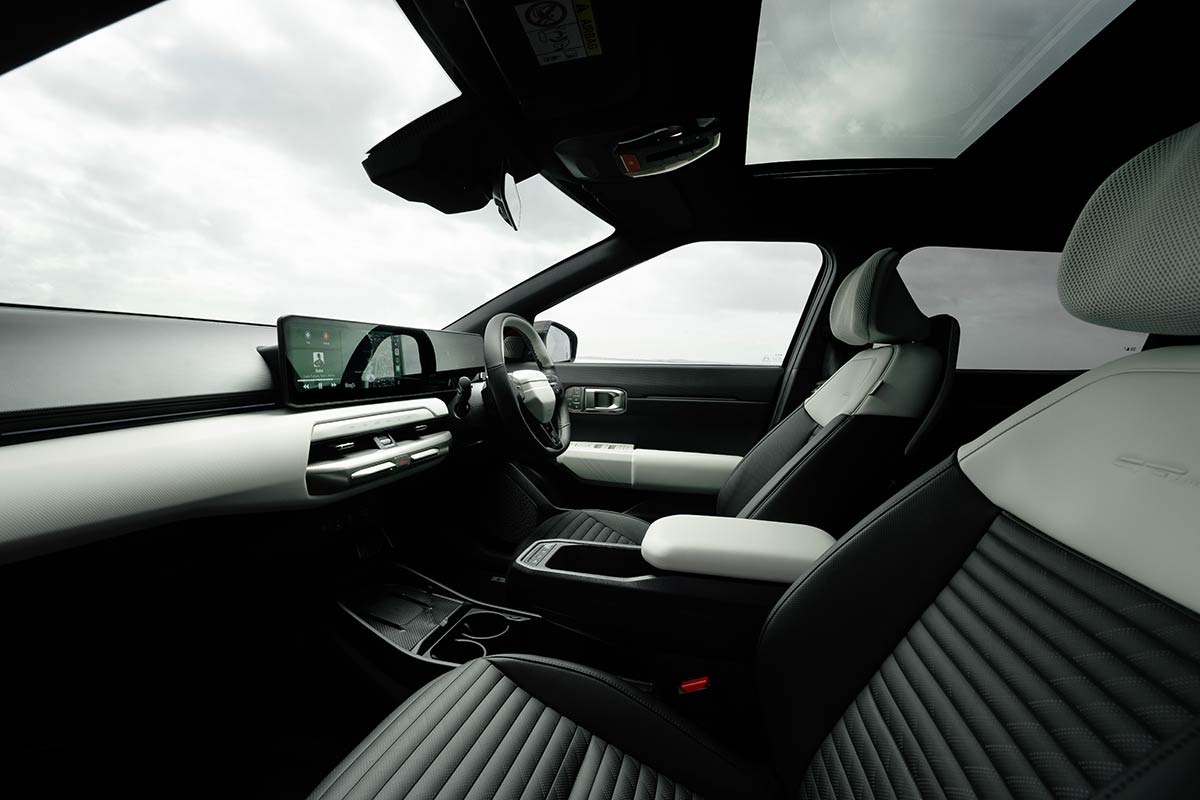
We drove the mid-spec Earth and flagship GT-Line at the local launch and found both trim levels to offer impressive levels of space, storage and equipment. The interior design is modern and clean, with plenty of horizontal lines to enhance the sense of space.
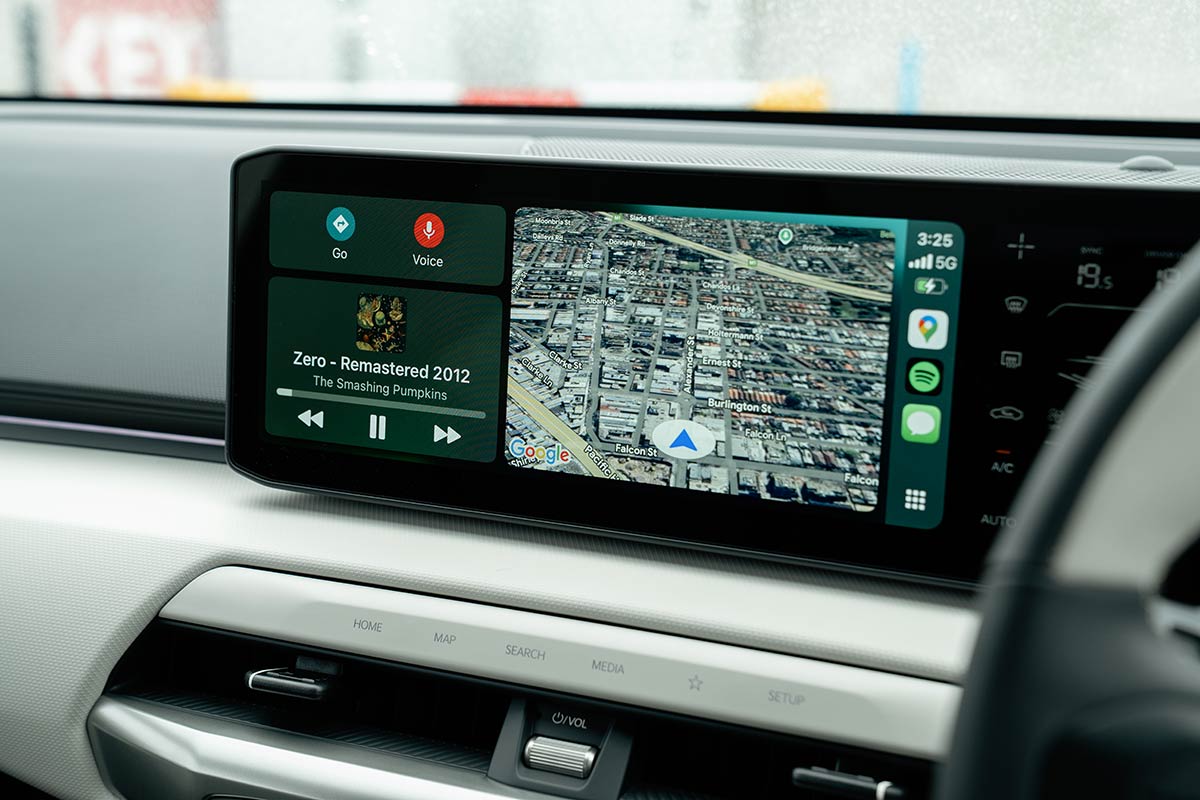
All EV4 variants score an impressive tech offering, with a widescreen digital display adorning the dash that combines two 12.3-inch screens on either side of a central 5-inch climate control display.
Usability and functionality are strong, with the feature-rich infotainment system offering a logical menu structure and Kia’s design team has retained a useful strip of physical buttons (and a volume knob!) below the screen.
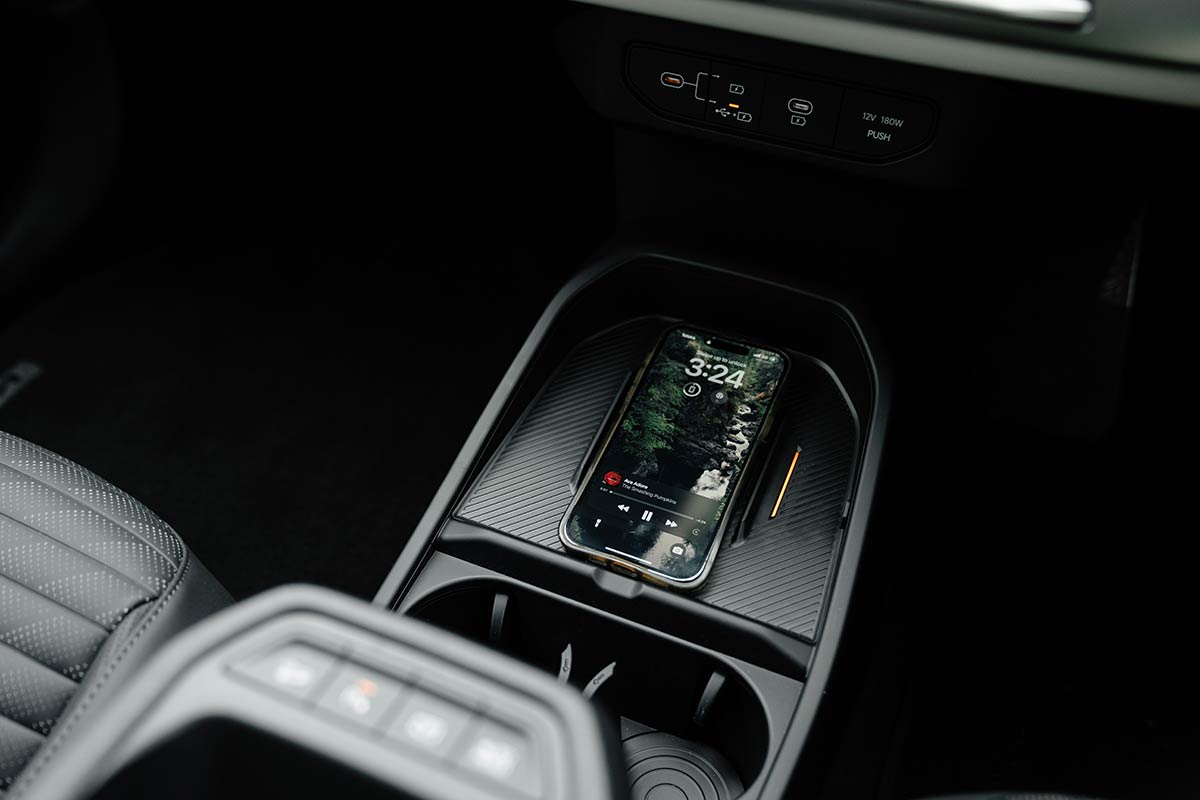
Front storage is generous thanks to a double-decker central storage shelf that features a wireless charging pad (GT-Line only) and retractable cup holders. The door pockets are slim but will still swallow a regular water bottle.
Front seat comfort is excellent. Earth and GT-Line grades get more luxurious trim and mesh-like headrests which are surprisingly soft and comfortable.
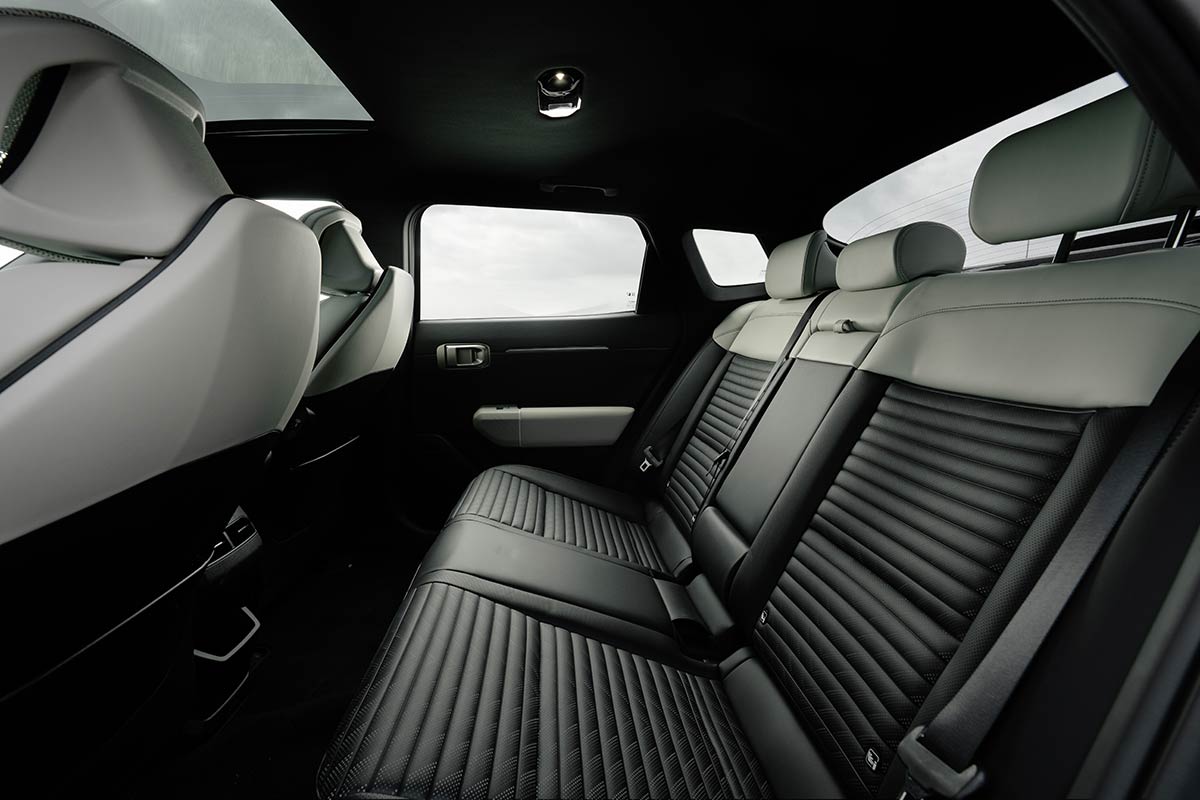
Space in both rows is also impressive. The EV4 rolls on a generous 2820mm wheelbase which is more like a limousine than traditional compact sedan. Rear passengers will find they have ample legroom and a low window line ensures decent vision out. Kids and parents will also appreciate the standard rear air vents, USB-C power outlets and the fold-down centre armrest.
Another bonus is how Kia designs the back side of the front seats. They include a notch at the top which is perfect for hanging a jacket.
Two potential negatives include the rear backrest angle, which is quite reclined, and the EV4’s sloping roofline means taller passengers might be tight on rear headroom. I’m over six foot and my head brushed the ceiling.
Boot space is an SUV-rivaling 490L but only the GT-Line scores an electric boot lid. While the EV4’s sedan shape means the boot opening is narrow, the room inside is generous. As with most EVs, there’s no spare tyre meaning you have to make do with a repair kit.
What equipment does the 2026 Kia EV4 come with?
The EV4 includes a long list of standard inclusions, although many of the more desirable options are reserved for the upper-spec (and more expensive) variants. Every model scores the widescreen digital dash, wireless AppleCarPlay/Android Auto, sat-nav, dual-zone climate control, auto LED headlights with auto high-beam, raining-sensing wipers and push-button start.
All models also score Kia’s Connected Services which enables over-the-air software updates and functions like intelligent voice assistant and the ability to control functions remotely via Kia’s smartphone app.
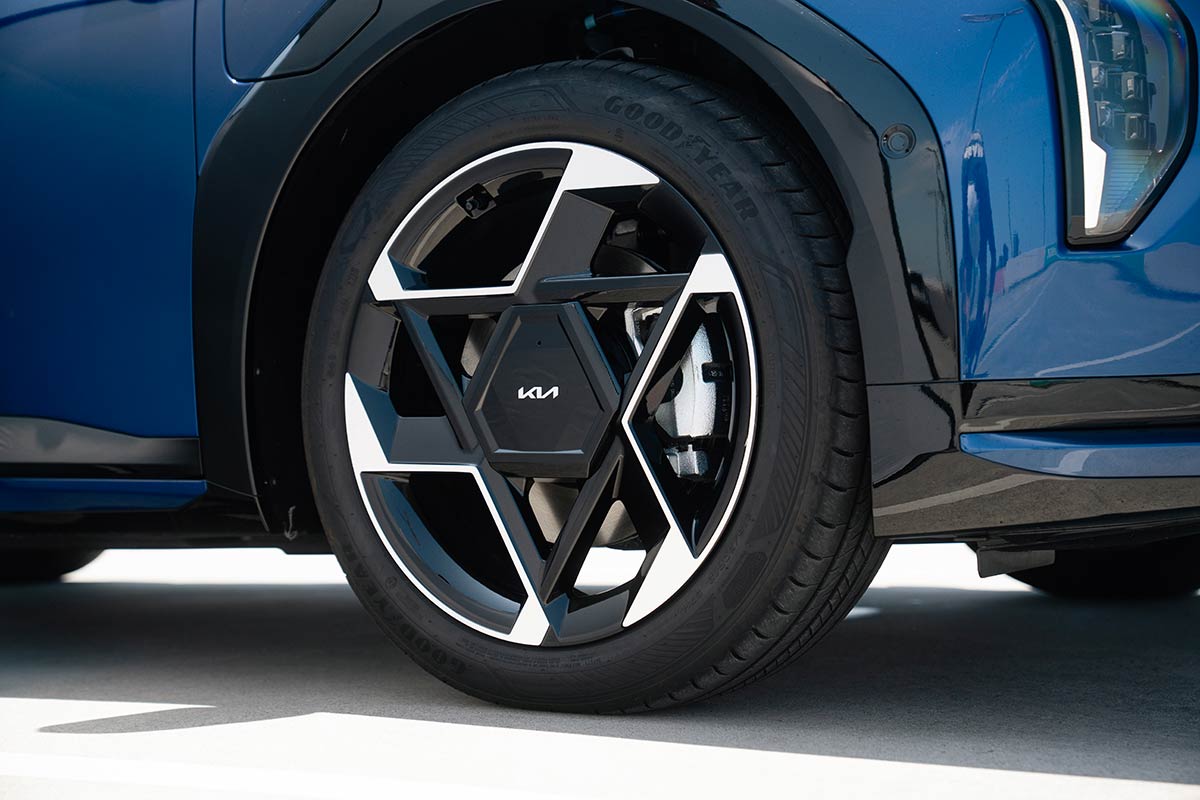
Key equipment distinguishers for the entry-level Air model grade include 17-inch alloys, cloth seats and a 6-speaker audio system. The mid-spec Earth adds larger 19-inch alloys, cloth/leatherette seats, heated front seats and a 10-way power adjustable driver’s seat
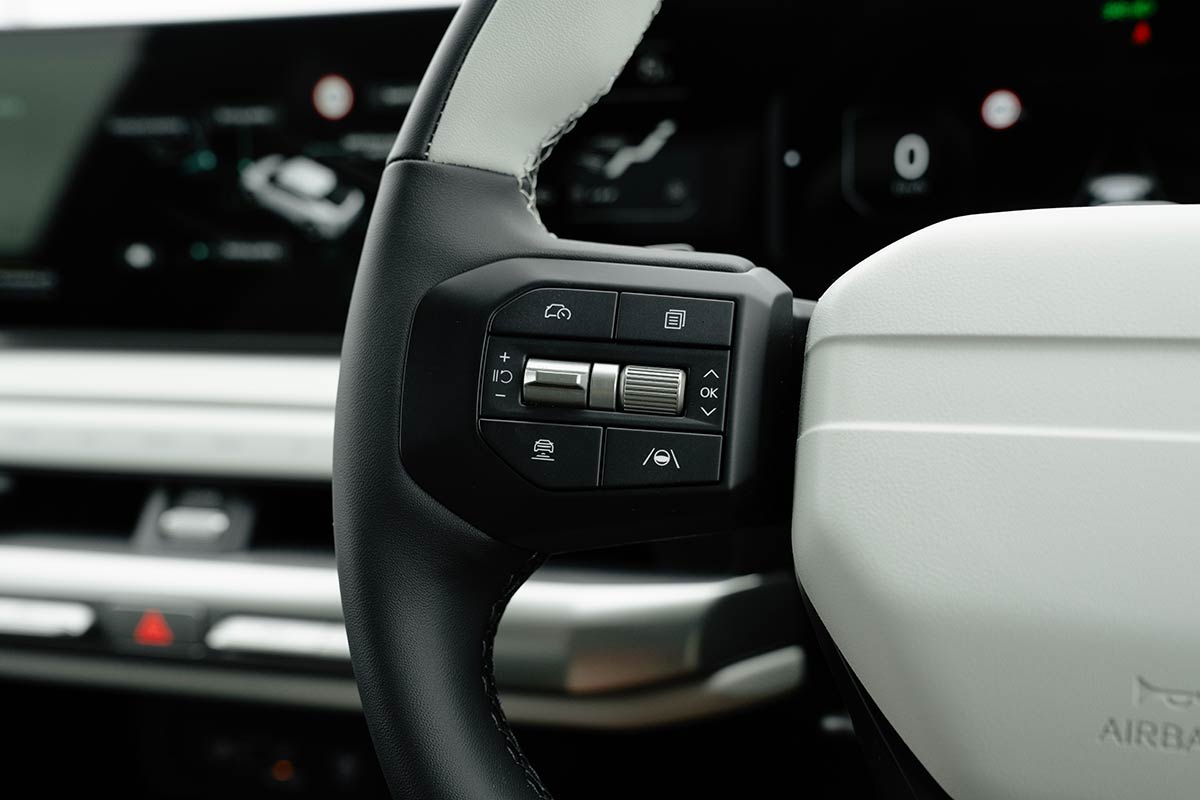
The flagship GT-Line brings a host of additional goodies like an intelligent front light system, powered boot-lid, sunroof, rear privacy glass, full leatherette upholstery, heated three-spoke steering wheel, a wireless phone charger, 8-speaker Harman Kardon sound system, head-up display and gloss black exterior trim.
GT-Line models also score ‘premium relaxation’ front seats. These are heated and cooled and include ‘relax mode’ which reclines the seats for a pre-set amount of time so you can rest or even have a nap while recharging. Nice.
Servicing intervals are every 12 months or 15,000km and Kia offers three competitively priced pre-paid servicing plans: 3 years ($688), 5 years ($1308) 7 years ($1929).
Like every other Kia, the EV4 carries a seven-year/unlimited km vehicle warranty. The high-voltage components (battery and electric motor) carry their own seven-year/150,000km warranty.
How safe is the 2026 Kia EV4?
Kia is yet to confirm an ANCAP star rating for the EV4, however it has been crash tested by Euro NCAP where it scored the maximum five stars. All models feature seven air bags and include the following safety systems: AEB with vehicle/pedestrian/cyclist detection, adaptive cruise control, blind-spot detection, lane-keep assist, speed-limit assist, rear-cross traffic alert, reversing camera, lane centering and front and rear parking sensors.
The top-spec GT-Line adds a surround view camera and a blind spot camera which shows a live feed of the side of the car on the digital dash when the indicator is on.
What powers the 2026 Kia EV4?
Like the Kia EV3 SUV, the EV4 sedan is based on the brand’s 400-volt E-GMP architecture.
Every version in the line-up is front-wheel drive and features a single electric motor with 150kW/282Nm. A key distinction between models is the battery. The entry-level Air model grade uses a 58.3kWh nickel manganese cobalt (NMC) unit that offers 456km of WLTP driving range, while the more expensive Earth and GT-Line variants pack a larger 81.4kWh NMC battery and 612km of driving range.
Kia says the EV4 can receive a 10-80 per cent charge in 29-31 minutes via a 350kW DC fast-charger. On a 50kW DC charger those recharging times blow out to 55-79 minutes. As previously mentioned, the EV4’s 400v architecture means its max DC charging rate is 128kW, so even on a 350kW DC charger, you won’t match Kia’s claimed fastest recharging times. AC charging is capped at 11kW, with a 10-100 per cent charge taking between 5h20m and 7hr15m.
What is the 2024 Kia EV4 like to drive?
Like most of Kia’s other models, the EV4 has benefitted from local chassis tuning to better suit Australia’s varied mix of roads and surfaces. Ask Kia’s local chassis guru, Graeme Gambold, what he changed and the response is empathic: “We changed everything. It has a bespoke setting to every other country in the world. The springs, bars, and damper calibration are all different and we even have our own steering maps.”
The result is a ride and handling balance that is well judged for Aussie conditions. All models use the same passive suspension set-up, meaning the only dynamic difference is the tyre size (Air models roll on 17in alloys; Earth and GT-Line score larger 19s).
We drove the EV4 across a mix of urban and country roads and found the ride quality to offer an excellent compromise between comfort and control. The handling is predictable and road noise is nicely suppressed, even on coarse-chip country roads. Really unruly surfaces can upset the EV4’s composure but in most driving conditions it’s a convincing family sedan to drive.
The steering is accurate and while some might find it a sniff light in Normal Mode you can increase the weight by flicking it into Sport.
Just like the Mazda 6e we drove recently, we’d say performance is adequate rather than scorching. Kia claims a 0-100km/h time of between 7.4 and 7.8 seconds, which sounds average on paper but feels sprightlier behind the wheel thanks to the electric motor’s instant response.
Driving efficiency is another strength. Our time with the car returned just over 14kWh/100km in mixed driving conditions. We’d wager even less is possible in regular city driving with a more considered right foot.
Open Road’s take on the 2026 Kia EV4
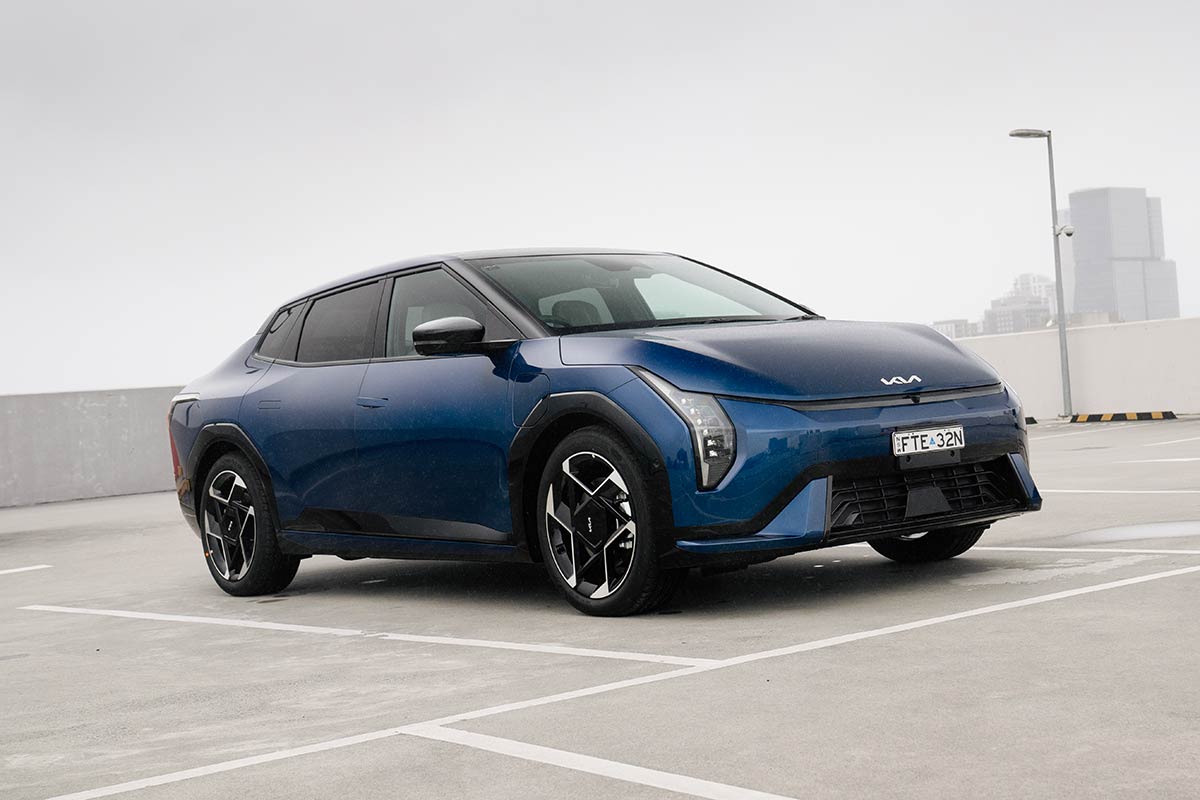
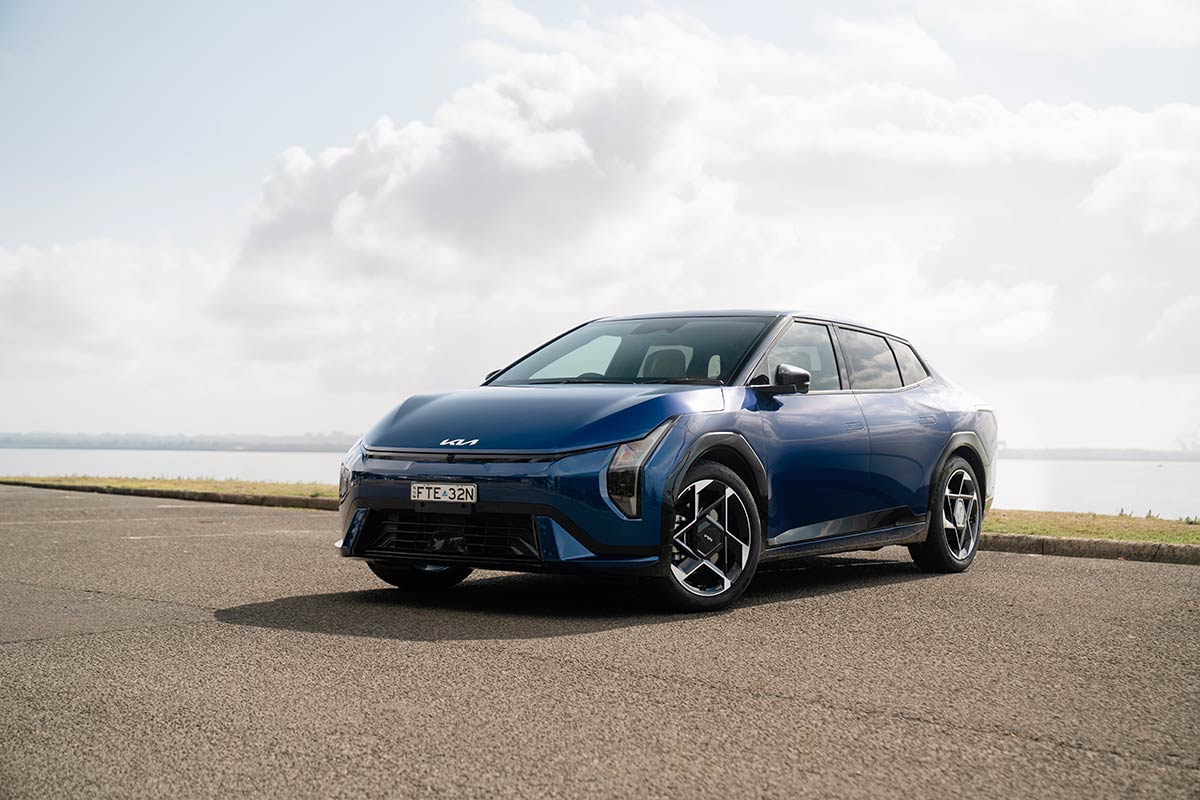
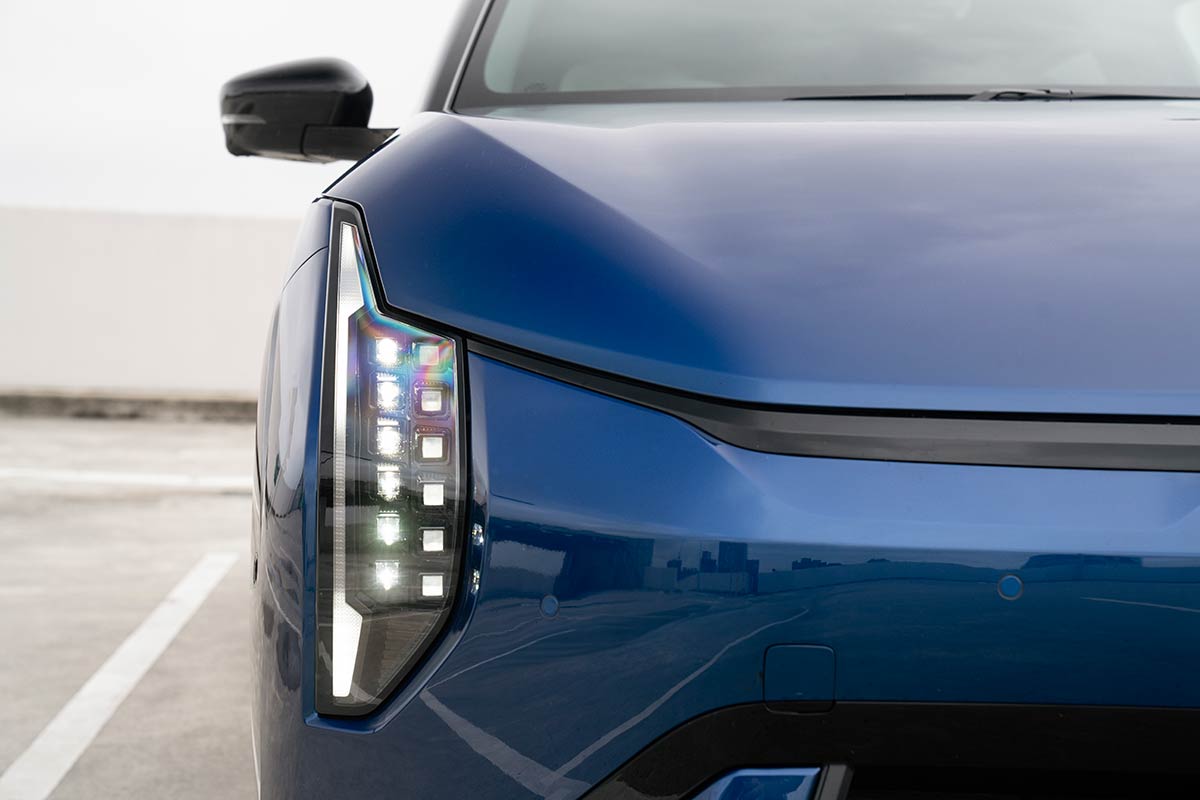
If you can get on board with the EV4’s striking but unquestionably polarising looks, then it’s a convincing addition to the flourishing EV sedan market. It’s a shame Kia has restricted some of the more desirable features and the long driving range to the more expensive versions but the EV4’s well-sorted dynamics and roomy cabin mean it holds its own against rivals like the BYD Seal and Tesla Model 3.
As for whether sedans are making a comeback? Kia says it expects to sell around 70 units of the EV4 per month, so we’re not talking world-changing volumes here. But the growing number of convincing contenders shows sedans mightn’t be about to wander off this mortal coil just yet.