2026 Leapmotor B10 review

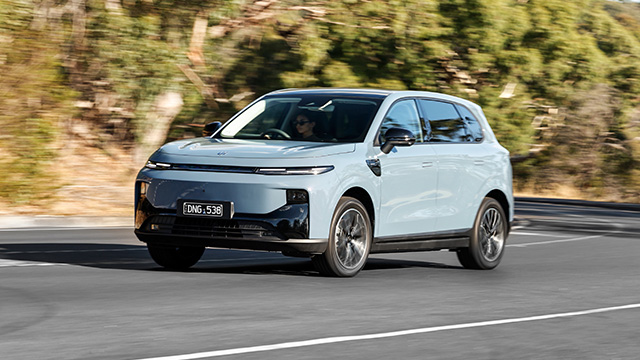
It seems as though there’s a new electric car out of China every other week, but few lay claim to the kind of engineering pedigree that the new all-electric 2026 Leapmotor B10 small SUV can.
Despite hailing from China, Leapmotor is in a strategic partnership with Stellantis – the corporation behind the likes of Alfa Romeo, Peugeot, Fiat, Jeep and even Maserati – affording it access to the European giant’s in-house tuning and development resources. Resultant is the brand’s claim that the 2026 Leapmotor B10 is the "most European of the Chinese SUVs".
Packing large battery options, sharp pricing and strong driving dynamics, does the B10 do enough to stand out in an increasingly saturated small electric SUV market?
How much does the 2026 Leapmotor B10 cost?
The 2026 Leapmotor B10 is offered in two trims with sharp introductory pricing available until March 31.
Buyers who get in before then can pick up an entry-level Style from just $38,990 drive-away and top-spec Design from $41,990 drive-away. Until recently, this pricing marked the 2026 Leapmotor B10 as Australia’s cheapest electric SUV, however the BYD Atto 2 (at $31,990 before on-road costs) has since undercut it.
Also in the ballpark are the Chery E5 ($38,990 drive-away), the Geely EX5 ($40,990 before on-roads) and BYD Atto 3 ($39,990 before on-roads).
The B10 is covered by a six-year/150,000km vehicle warranty, with its high-voltage battery covered for eight years/160,000km. A capped-price servicing package averages maintenance to $370 per year over eight years, and new B10s come with complimentary mode 2 and 3 charging cables.
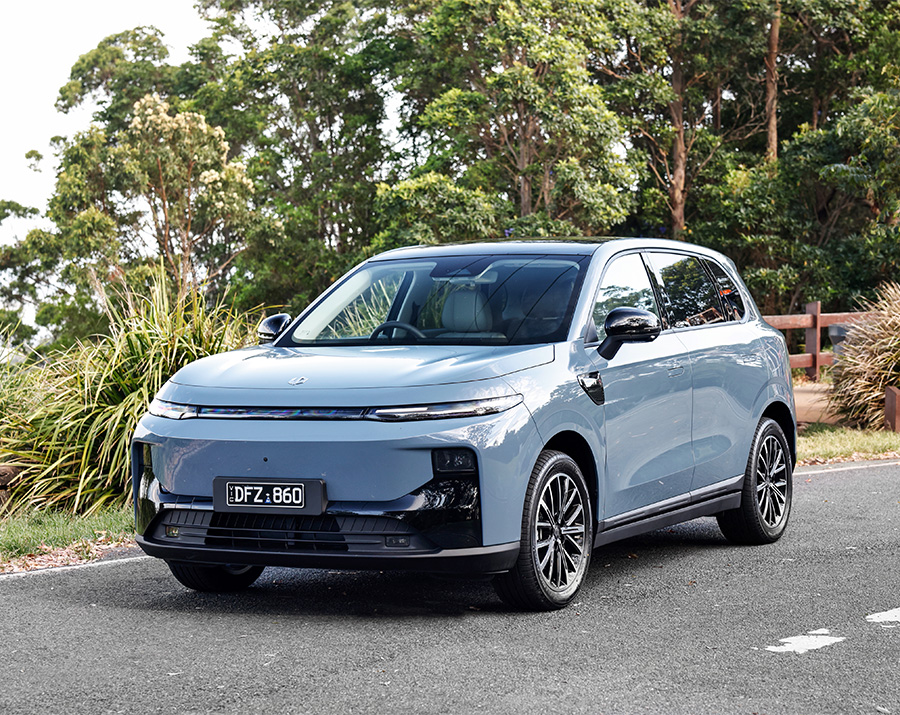
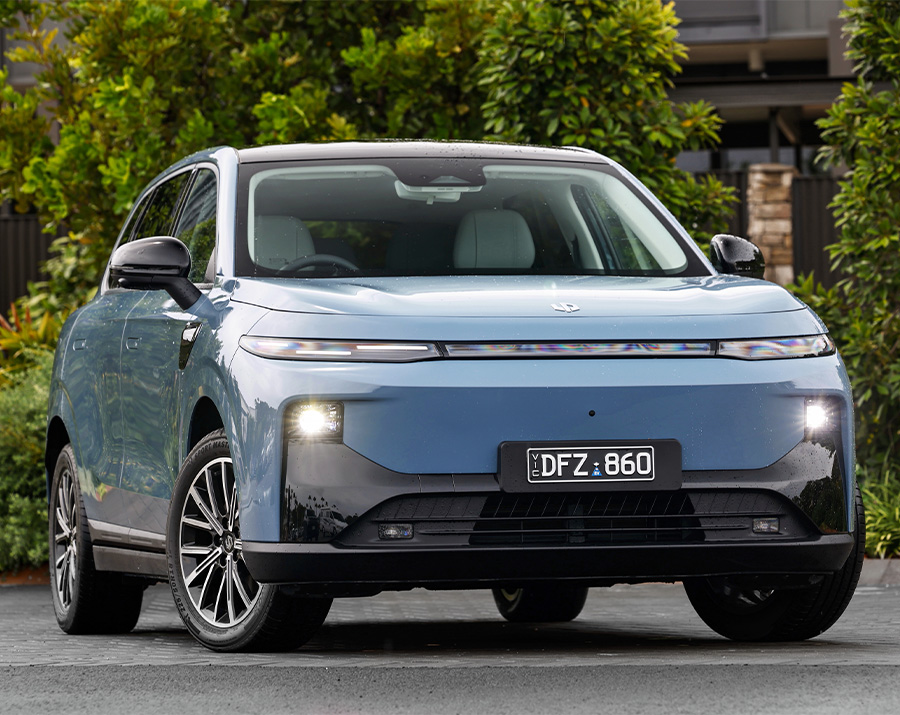
Premium paint adds $990 to the bill, with only Light White and (for a limited time) the model’s hero colour Starry Night Blue avoiding the extra cost.
— Liam Murphy
What is the 2026 Leapmotor B10 like inside?
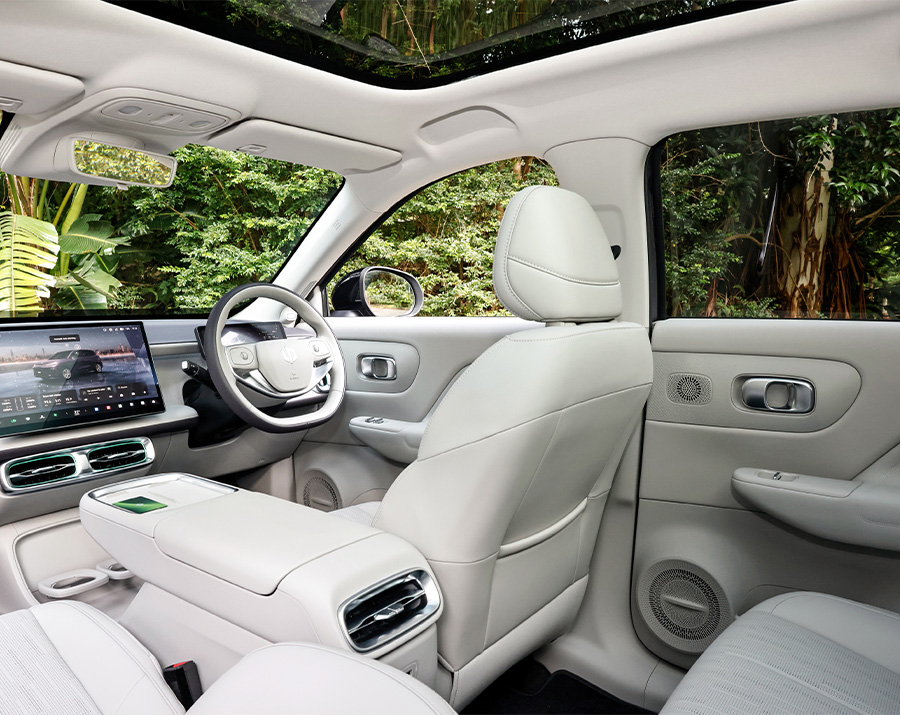
The 2026 Leapmotor B10's interior is a strange clash of design principles and often presents as exactly what it is: a company that has been building cars for 10 years leaning on the experience of a corporation that’s been doing it a lot longer.
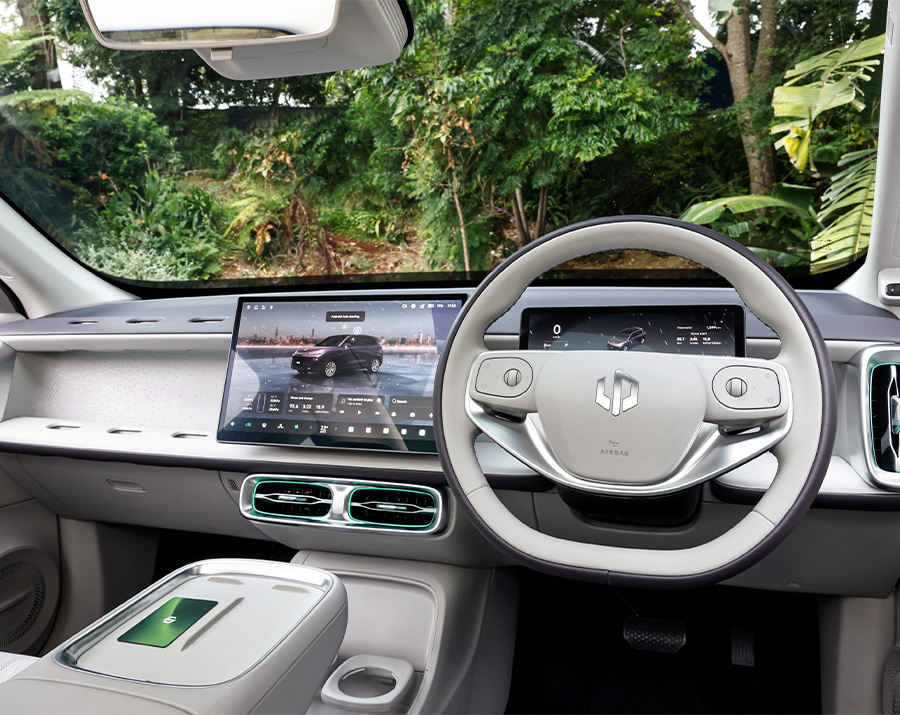
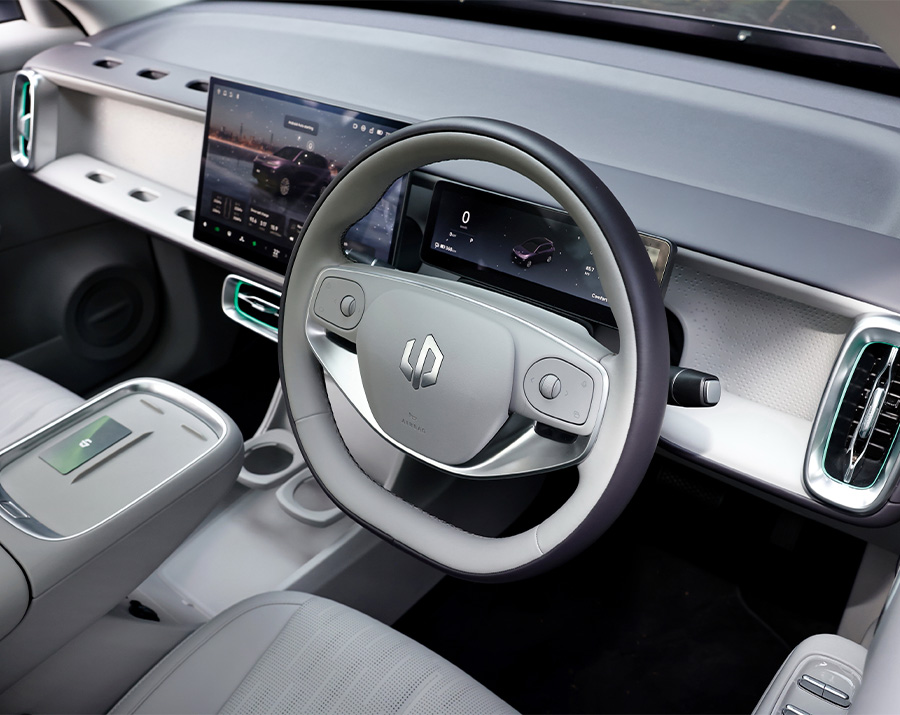
Seat comfort and overall cabin layout are acceptable, although the B10’s ergonomics aren't without some faux pas and oversights. Steering wheel height adjustment, for example, is limited to unnecessarily high positions, and we were constantly reminded of this during our time in the driver’s seat.
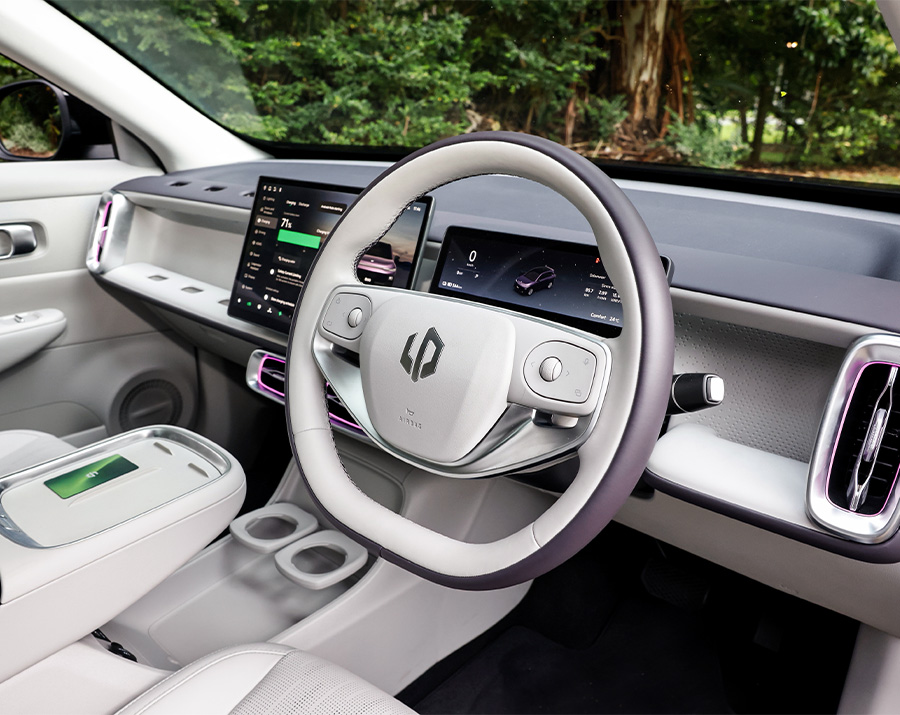
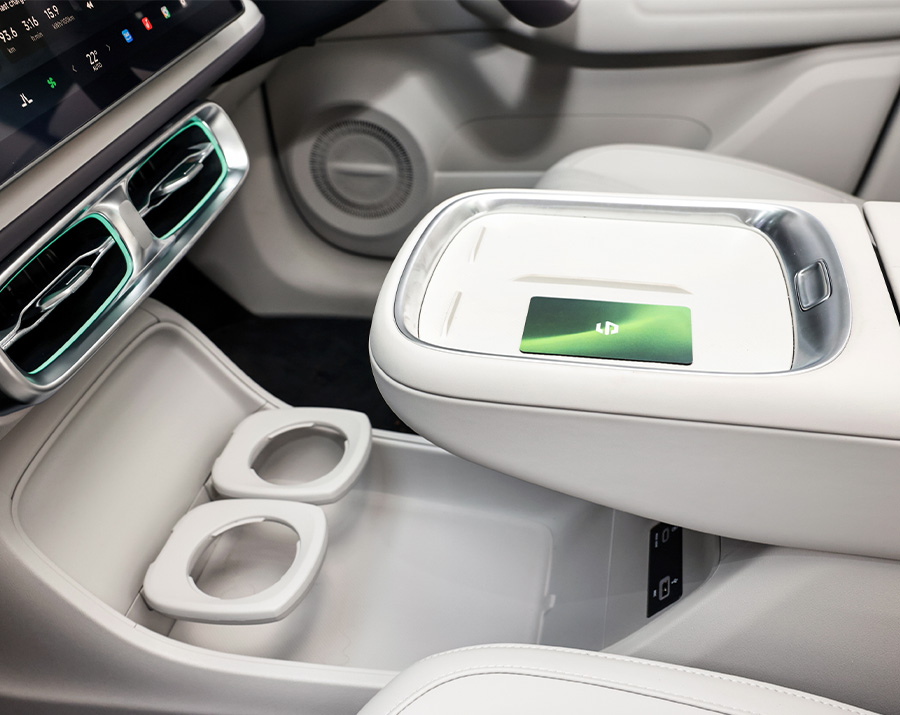
Elsewhere, it’s the same story. Space up front is well utilised (with 22 storage locations in total) largely thanks to a floating centre console design and clever, flappable cupholders. However, the wireless phone charger that sits atop that centre console isn't ventilated and puts phones in direct sunlight. Not ideal.
Those clever cupholders are a bit too tight, as well, and don’t ratchet into place, meaning they snag on and catch certain cup or water bottle types. It’s all well intentioned, but some frustrations emerge, and it seems as if for every pro there is a commensurate con.
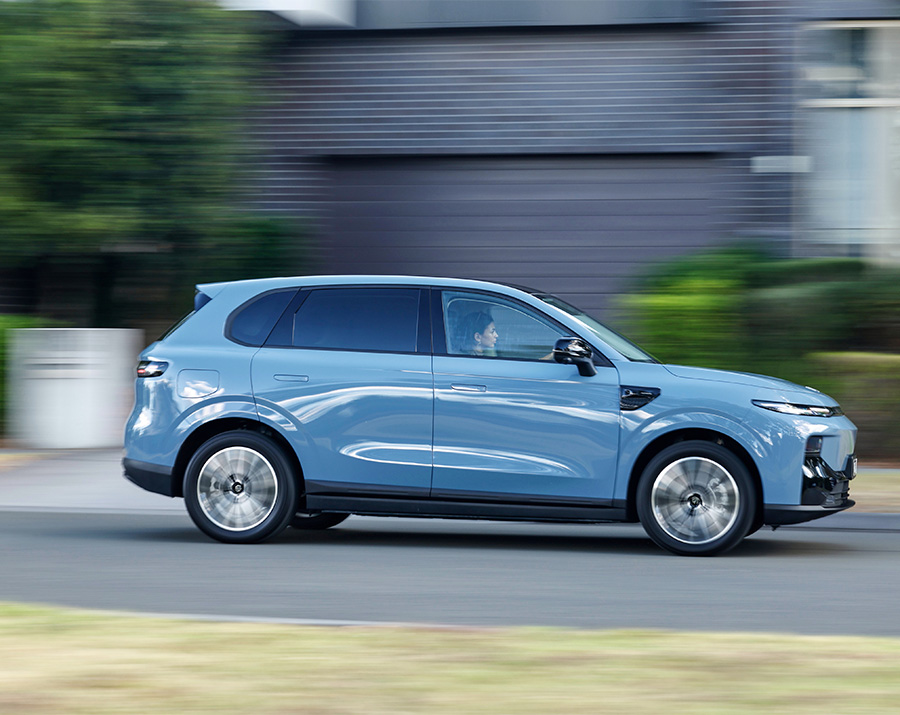
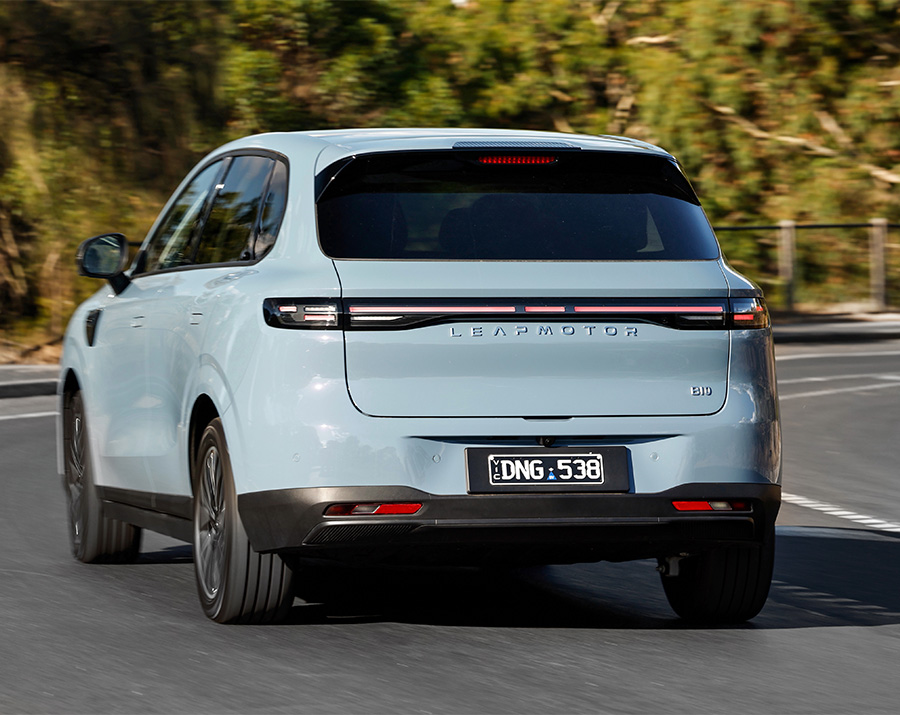
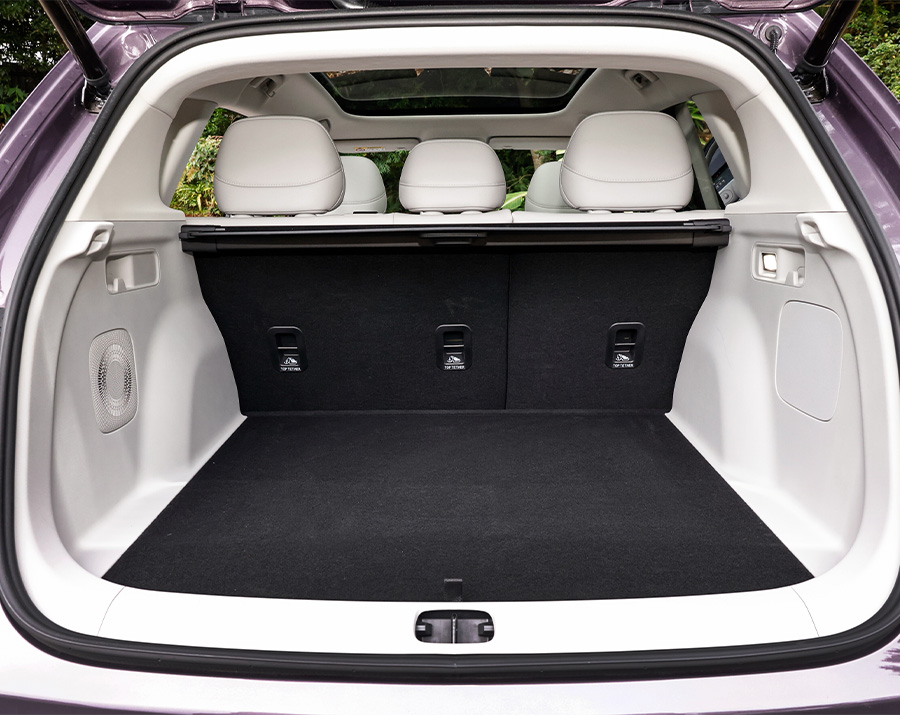
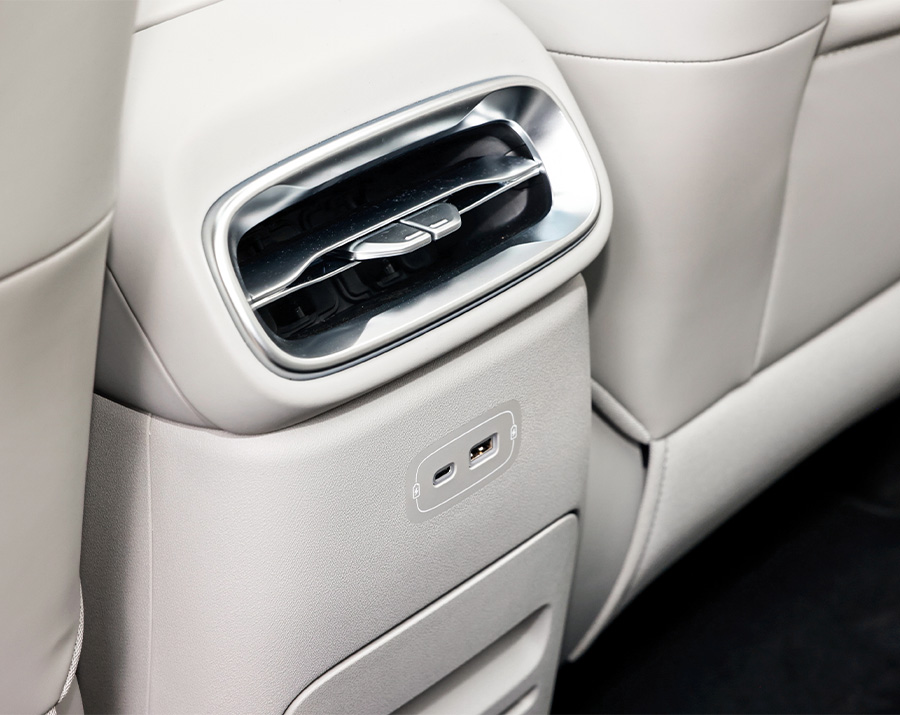
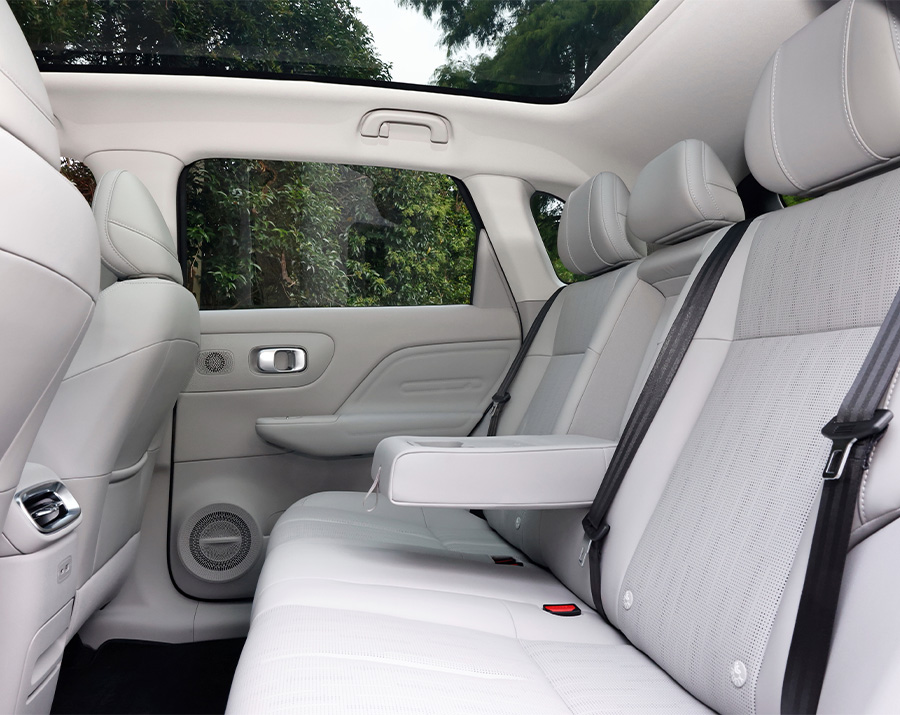
Rear seat comfort and overall cargo space are beyond question though, with the B10 providing 490 litres with the back row upright and a whopping 1475 of them with the seats down. Visibility is good in all directions, with a low-slung rear doorline meaning there aren’t any glaring blind spots.
What equipment does the 2026 Leapmotor B10 come with?
A two-variant line-up keeps the 2026 Leapmotor B10’s equipment list quite simple.
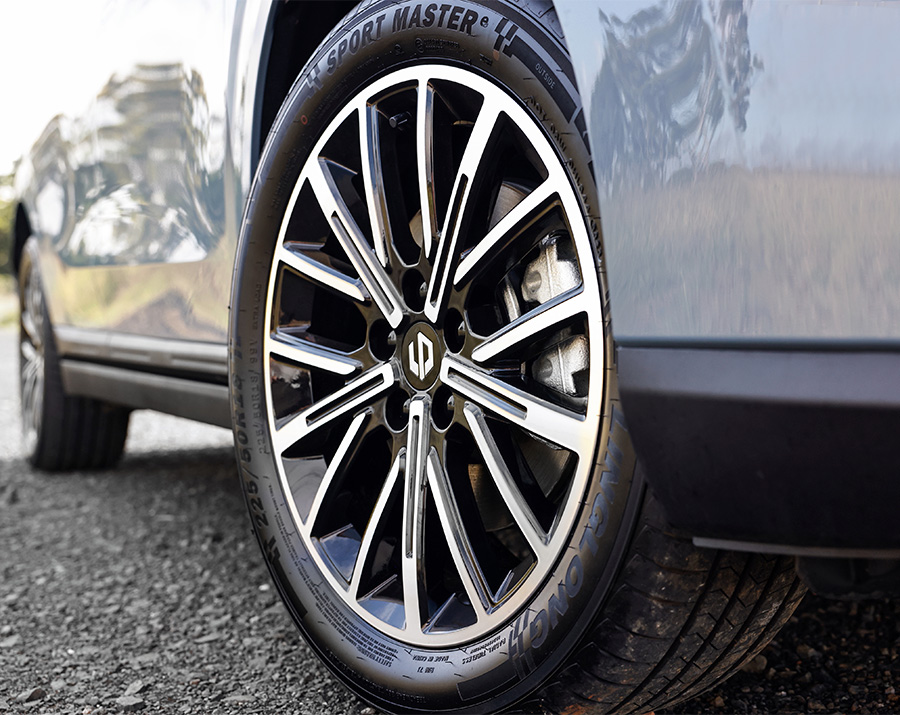
In base Style trim, the B10 picks up 18-inch alloys, auto climate control, a panoramic sunroof with shade, that wireless phone charger mentioned earlier, an NFC key (able to be operated via a card of a phone app), LED head and tail lights, a 360-degree camera that doubles as an inbuilt dashcam, over-the-air (OTA) updates, satellite navigation and a six-speaker sound system.
Moving to Design grade swaps cloth upholstery for synthetic leather (and adds the option of two colour palettes), as well as heating, ventilation and (six-way) electric adjustment up front. Auto-folding mirrors, a powered tailgate, rear centre armrest, heated steering wheel, rain-sensing wipers, rear privacy glass, and a 12-speaker sound system round out the list.
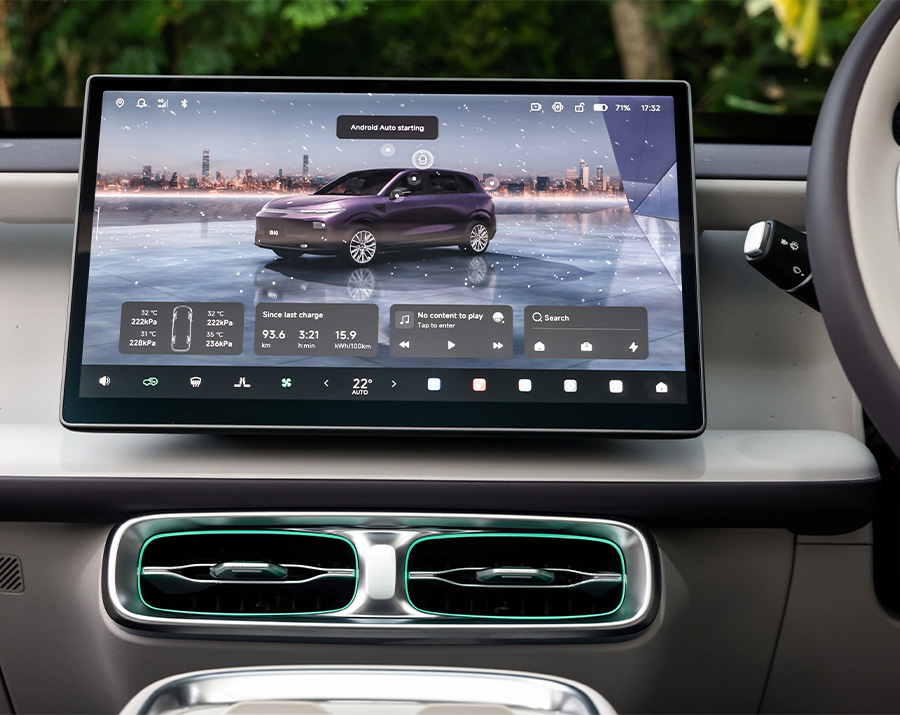
As standard the driver gets an 8.8-inch display, while a 14.6-inch central touchscreen sits in the middle of the dash, and can run Android Auto and Apple CarPlay in addition to a suite of standard software. Menus therein are not the worst we’ve ever used, but do come with a few quirks that occupants will need to wrap their heads around. Regardless, the screen provides high definition with very little to no lag.
How safe is the 2026 Leapmotor B10?
The 2026 Leapmotor B10 was awarded a five-star ANCAP safety rating in early 2026.
As standard, the model scores adaptive cruise control (with stop-go), lane centring control, front collision warning with autonomous emergency brake, bling spot and hands-off detection, driver attention and drowsiness monitoring, door opening warning and lane keeping assistance.
These are in addition to rear collision warning, rear cross-traffic alert and brake, intelligent speed assistance, rear parking sensors, a 360-degree camera, seven airbags and a tyre pressure monitoring system. All this adds up to the B10 offering full level 2 autonomy.
What powers the 2026 Leapmotor B10?
A duo of battery options is available for the 2026 Leapmotor B10. Style grade scores a 56kWh battery pack with a claimed driving range of 361km on the WLTP cycle, while the top-spec Design comes fitted with a 67kWh unit providing a claimed 434km WLTP. Both variants produce 160kW/240Nm and power is sent to the rear wheels via a single electric motor, making the B10 stand out from rivals that are almost exclusively front-wheel-driven.
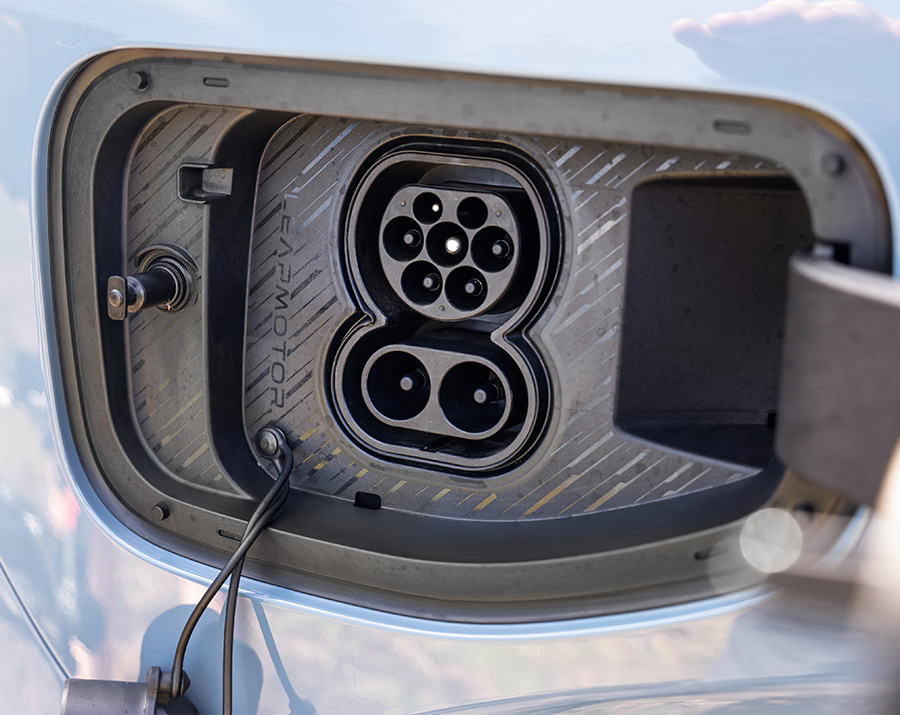
The AC charge rate remains consistent across both as well, rated at 11kW, although the Design’s maximum 168kW DC charge bests the 140kW achievable in the Style. Regardless of variant, 3.3kW of vehicle-to-load (V2L) capability comes standard.
What is the 2026 Leapmotor B10 like to drive?
Claiming electric vehicles all drive the same is a common criticism. The 2026 Leapmotor B10, however, goes a long way to proving this wrong.
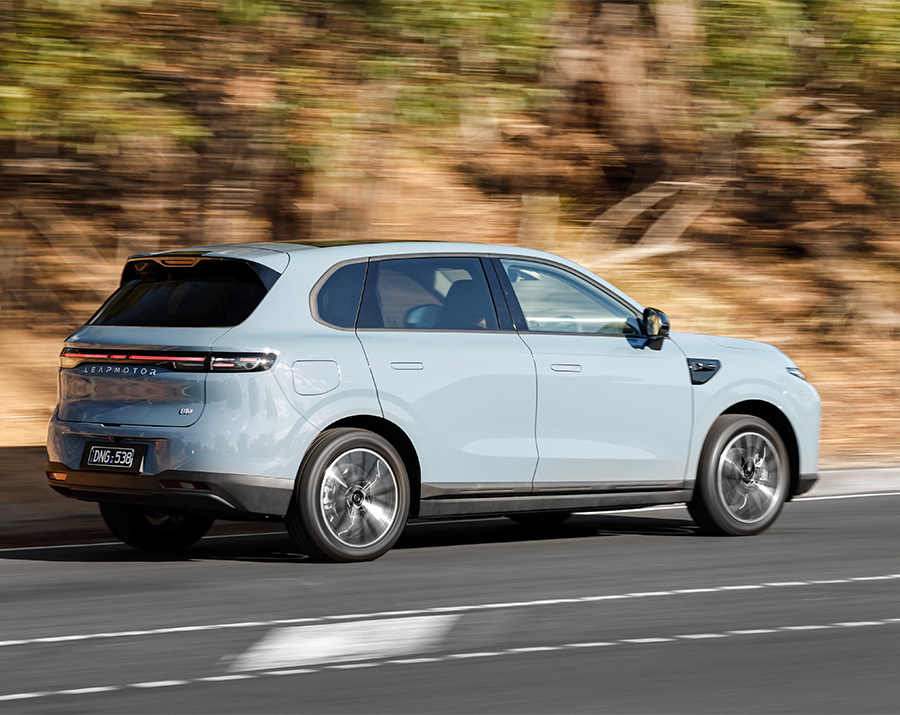
Thanks to some masterful tuning by the Stellantis Chassis Master Team, the B10 rides and drives exceptionally well for its price point. Road imperfections are dealt with in a composed and forgiving way without a ‘floaty’ and vague ride as a result.
Thanks to the battery and electric motor’s rearward placement, the B10 also achieves a perfect 50:50 weight distribution, meaning it remained poised and balanced in all scenarios we were able to put it in.
What lets down the B10’s polished ride and handling most is its tyres. Even in flagship Design grade it is fitted with cheap economy tyres that rob it of engagement and they scream for dear life even when not much is being asked of them. We’d like to see a premium tyre fitted to the premium grade – or at least the option to do so.
Similarly, steering is a tad vague and not very communicative, albeit well-weighted in the hand.
Listed outputs of 160kW and 240Nm feel understated, and the B10 accelerates from all speeds with a sense of effortlessness without being rapid. Thanks to its rear-drive layout, it is also not scrambling for grip at low speeds, which is often a trait of electric vehicles.
Driver aids can be a bit punitive and, like many Chinese cars of its ilk, the B10’s lane-keeping functions get tripped up on deteriorated country roads. However, as with its native interface, it is far from the worst we’ve experienced in the segment and the B10 proved a comfortable cruiser for long stints during testing.
Electrical consumption measured at 14.7kWh/100km during our time behind the wheel, meaning the B10 should land bang-on its claim for driving range (at least in Design grade).
Open Road’s take on the 2026 Leapmotor B10
The 2026 Leapmotor B10 doesn’t try to win on a spec sheet alone. While it’s missing some tech inclusions compared to rivals – especially in its bare-bones base trim – we think it makes up a large chunk of this deficiency with solid driving dynamics and impressive build quality.
While most entrants in the budget end of the electric SUV segment (especially those from China) are trying to impress with standard kit, the B10 goes in a slightly different direction and provides a properly engaging and refined drive.
A comparatively large battery in its segment, as well as V2L, should have the Leapmotor B10 added to the shortlist for many buyers. Our steer? Don’t discount it for what it lacks; get behind the wheel and see what it truly offers.
Pros: Truly refined ride and handling; large battery in top trim; lives up to driving range claim
Cons: Some poor cabin design choices; standard tyres are a letdown; lacks kit compared to rivals