2026 Polestar 3 review

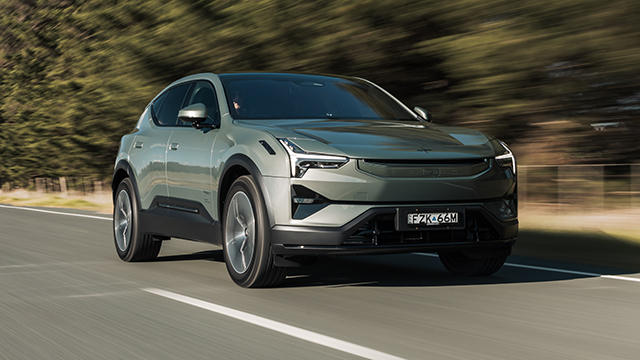
A new electrical architecture allows for faster charging and more efficient batteries, while new motors liberate more power, chassis revisions sharpen handling, and new processors unlock new technology, all at a more competitive price. It’s a flex of Swedish muscle aimed at intimidating the Germans, so is this the luxury electric SUV you should be buying?
How much does the 2026 Polestar 3 cost?
Pricing for the 2026 Polestar 3 is roughly equivalent to that of its predecessor. The $116,700 Rear Motor (-$1720) and $131,100 Dual Motor (-$1620) are slightly cheaper, while the $146,700 Performance (+$2280) is slightly more expensive. All prices are exclusive of on-road costs.
However, the value equation is much stronger when you consider the previously optional $9000 Plus Pack is now standard on all variants. This includes a 25-speaker Bowers and Wilkins sound system with headrest speakers, head-up display, power-adjustable steering column, infrared windscreen, acoustic rear window, advanced air cleaner, soft-close doors and foldable boot floor with bag holders.
There are still plenty of options to choose from, but we’ll deal with those in a moment. A five-year/unlimited kilometre warranty is offered with battery coverage of eight years/160,000km, while Polestar also includes five years complimentary servicing, app connectivity and roadside assistance. Service intervals are every two years or 30,000km.
Its primary competitors are probably the BMW iX or Mercedes-Benz EQE, though perhaps its strongest rival is its Volvo EX90 sibling. Then again, spread the net wider and you could conceivably cross-shop everything from the Audi Q6 to the Cadillac Vistiq, Hyundai Ioniq 9, Kia EV9 and Porsche Macan.
What is the 2026 Polestar 3 like inside?
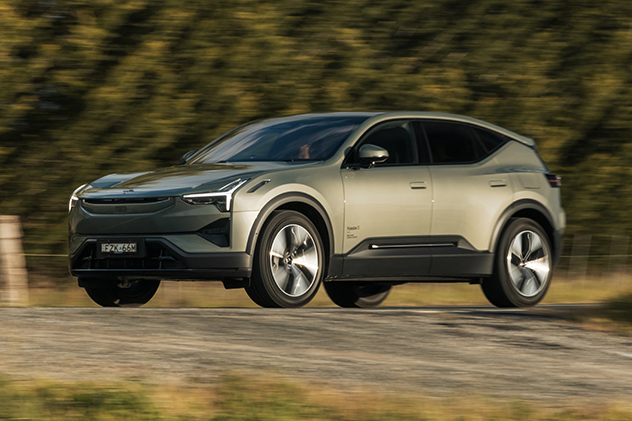
At 4900mm long, 1968mm wide and around 1600mm tall (variants differ slightly), with a 2985mm wheelbase, the Polestar 3 is similar in size to the BMW X5, but offers truly cavernous occupant space.
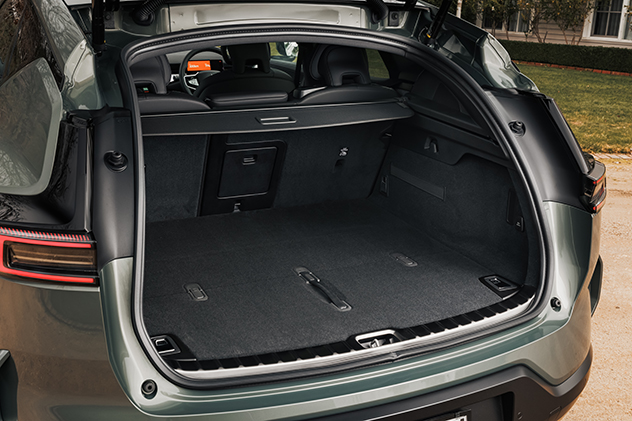
It takes full advantage of its flat-floor EV platform with lots of storage up front, but the rear is akin to a stretch limousine – no kids kicking the back of the front seats here. Even with the sloping roofline and panoramic glass roof, head room is equally ample and the sizeable boot is augmented by a 90-litre underfloor area and another 23.8-litre frunk under the bonnet. There are rivals with more luggage space, but it’s difficult to imagine feeling shortchanged unless you’re planning on a three-week driving holiday,
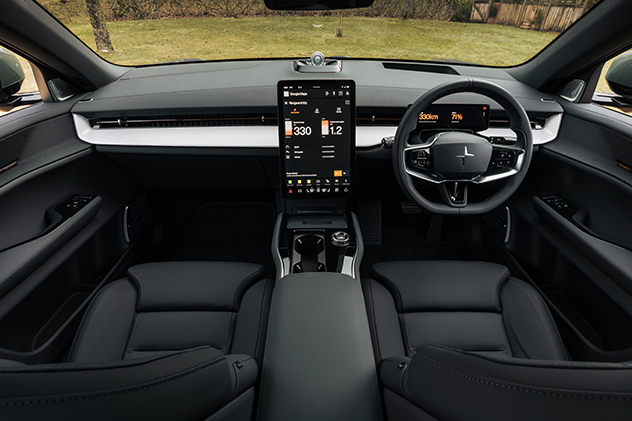
One of Polestar’s strengths is its commitment to design, and the combination of Scandinavian minimalism with a selection of quality materials will win plenty over.
Some ergonomic details frustrate, though. Steering wheel and wing mirror adjustment in the touchscreen is an example of this, although you can save individual driver profiles, which means it can all be changed at the touch of a button.
Another example? There are only two electric window switches, with a haptic button used to toggle between operating the front and rear windows. Why?
In general, though there is just too much reliance on the central touchscreen for basic functions and too many button presses required to adjust them. It’s a common complaint in modern cars, but less excusable in a high-end luxury car, which is supposed to cosset and soothe. To a degree, substance has been sacrificed at the altar of style.
— Scott Newman
What equipment does the 2026 Polestar 3 come with?
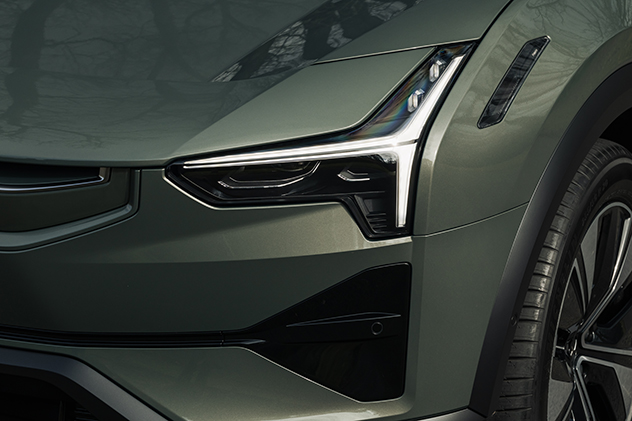
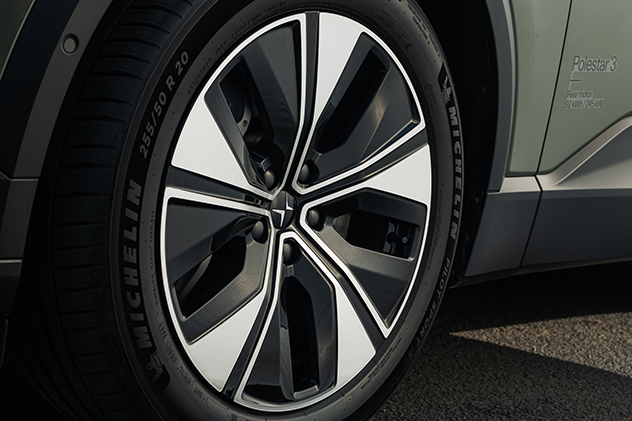
Standard kit includes 20-inch wheels (22s for the Performance), active LED headlights, a powered tailgate, 10-way power-adjustable front seats with heating, charcoal MicroTech upholstery, triple-zone climate control, wireless phone charging and a pair of USB-C ports front and rear. This is in addition to the Plus pack detailed above.
A 14.5-inch portrait touchscreen handles infotainment duty with a new Nvidia processor increasing processing power from 30 to 254 trillion operations a second. Impressively, Polestar will offer this as an upgrade to all existing 3 owners at no charge.
It uses Google Built-In and supports wireless Apple CarPlay and Android Auto, while a 12-month complimentary subscription to Polestar Connected Service Plus allows access to third-party Google apps like Maps, Gemini, Waze and Spotify.
There are still plenty of options, starting with paint. Silver is the only standard colour, with grey, black and blue an extra $2000 and grey-green (Krypton) and white (Snow) $3200. Adding 21-inch wheels is $1900 and Sport 22s (Dual Motor only) are $3800, while the Performance’s active air suspension (Dual Motor only) is $3200.
The $1200 Climate Pack includes a heated steering wheel, heated rear seats and heated wiper blades, 1.3-megapixel HD LED headlights are $3000, the electrochromic glass roof is $2800, rear privacy glass is $700 and an electric towbar is $2900.
Upholstery options include the MicroTech in Nebula (green) for $900 or animal-certified wool for $1200, while adding the Bridge of Weir Nappa leather brings with it ventilated front seats, five-mode massage and black ash wood trim, with the choice of Charcoal ($6500) or Dune and Zinc ($7200) colours.
How safe is the 2026 Polestar 3?
The Polestar 3 holds a five-star ANCAP rating from 2025, with outstanding adult (90 per cent) and child (94 per cent) protection scores, while vulnerable road user protection and safety assistance were rated at 79 per cent.In the real world its driver assistance systems are relatively unobtrusive, the lane-keeping assistance occasionally proving over-eager, but the driver monitoring generally only admonishes you if you take your eyes off the road for an extended period – which, admittedly, the central screen tends to encourage – rather than just momentary glances.
What powers the 2026 Polestar 3?
The biggest upgrade with the 2026 Polestar 3 is the switch from 400 to 800-volt electrical architecture. This has allowed the maximum DC charging speed to be increased from 250kW to 350kW, cutting the 10-80 per cent charge time from 30 to 22 minutes on an ultra-fast charger.
CATL has supplied the latest generation batteries, which are lighter and more efficient, squeezing more range from smaller capacities. The 92kWh Rear Motor offers 604km, while the all-wheel drive variants score a larger 106kWh pack for claims of 635km (Dual Motor) and 593km (Performance).
Speaking of performance, new Volvo-designed motors have led to large improvements on all variants. Even the 245kW/480Nm Rear Motor can hit 100km/h in 6.5 seconds, a huge 1.3 seconds quicker than its predecessor.
Adding a front motor lifts the Dual Motor to 400kW/740Nm for a 4.7 second sprint (-0.3 seconds), while the Performance now offers a staggering 500kW/870Nm for a scorching 3.9-second 0-100km/h claim (-0.8 seconds).
Despite large power increases of up to 120kW in the case of the Performance, torque figures have actually dropped, but this is a conscious decision by Polestar to provide the acceleration characteristics it desired.
The 3 now has a more rear-biased power split, and it’s the front motor, not the rear, that disconnects to improve efficiency when not required.
What is the 2026 Polestar 3 like to drive?
Polestar positions itself as a performance-orientated, driver-focused brand, so despite the 3 essentially being a family SUV, it has to deliver from behind the wheel if it’s to fulfill its promise.
By and large, it does. All variants have near-perfect weight distribution, double wishbone front suspension and multi-link rear, giant brakes (400mm front discs with four-piston Brembo calipers) and specially developed Michelin Pilot Sport 4 EV tyres, while MY27 updates include new anti-roll bars and revised software for the steering.
Even the rear motor provides insistent acceleration, excellent road holding and a beautifully judged ride. It is not a magic carpet and nor is it intended to be, but it supports the Polestar 3’s substantial weight without unsettling the occupants.
Step up to the Performance and the ride quality penalty is surprisingly small given the wheels grow from 20 to 22 inches in diameter. It uses three-mode active air suspension and, while it can be quite reactive to bumps in its firmest setting, it’s more than adequately comfortable in its default state.
Unleashing all 500kW/870Nm pins the occupants into their seats until triple figures arrive and overtaking is accomplished in a flash. Ultimately, however, the Performance 3 is too big and heavy to be truly dynamic.
Its ability to go, stop and corner is impressive, but the steering is lifeless and slightly vague off-centre and even with the stability control in Sport there’s a lot of torque control going on. This is undoubtedly prudent given the potential of 500kW and 2600kg to go wrong and potentially of little relevance given how few will be driven in such a manner, but then it is called a Performance.
The rear-wheel drive is the sweeter steer, partly because it’s not a car that invites you to push it to its limits or overwhelms you with theme park acceleration.
Open Road’s take on the Polestar 3
The choicest Polestar 3 might be the one we haven’t tried yet. The regular Dual Motor wasn’t available on the launch, but it seems safe to assume its driving characteristics would largely mirror those of the Rear Motor while adding the accelerative punch high-end EV buyers are likely to desire.
From there you could add the Climate Pack, your choice of colours, and the fanciest Nappa leather, and still come in under the cost of a basic Performance.
Regardless, the 3 now offers a much more compelling argument for purchase thanks to greater performance and more equipment at no extra cost. The reliance on the touchscreen frustrates, but probably not enough to take the shine off the exterior and interior design and the comprehensive space on offer.
What we liked
- Refined and polished driving experience
- Huge interior space and improved value proposition
- Masses of driving range
What could be better?
- Too much reliance on centre screen for basic functions
- Performance is impressive but one-dimensional
- Price can still quickly swell with options