
2026 Subaru Outback Wilderness Apex review

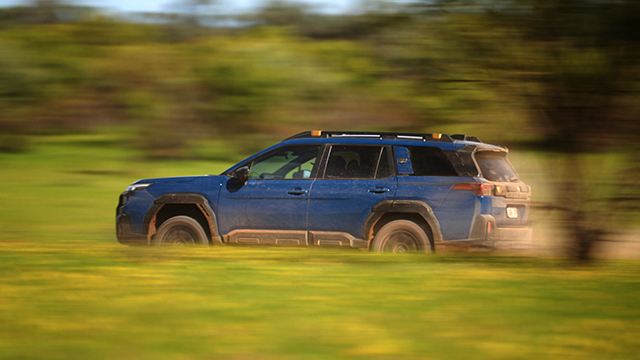
One of the great things about rallying is that fans can get outrageously close to the action.
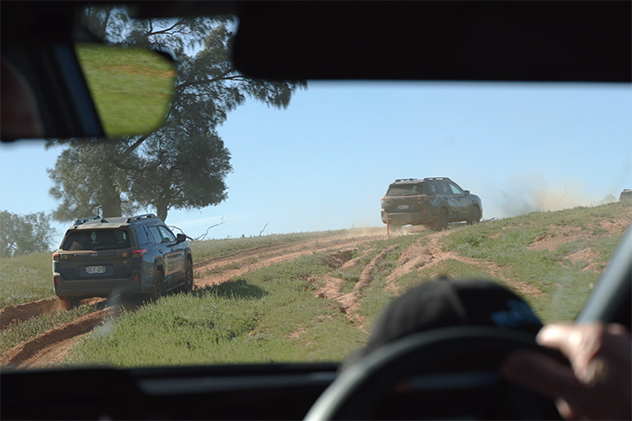
But there’s close, and there’s the situation we currently find ourselves in, which is sitting directly behind an angry-looking – and no doubt hideously expensive – rally machine as it prepares to tear off onto a competitive rally stage.
Making our scene even weirder is that our car isn’t a purpose-built rally car. It’s a stock-standard Subaru Outback, albeit the new adventure-focused Wilderness Apex variant. And in a few moments, once the car in front sprays us with red dirt and hoons into the distance, we’re going to tackle the same competitive rally stage as part of the 2026 Sunraysia Rally Safari.
Can a regular family SUV cope with such extreme speeds and terrain? Let’s find out.
How much does the 2026 Subaru Outback Wilderness Apex cost?
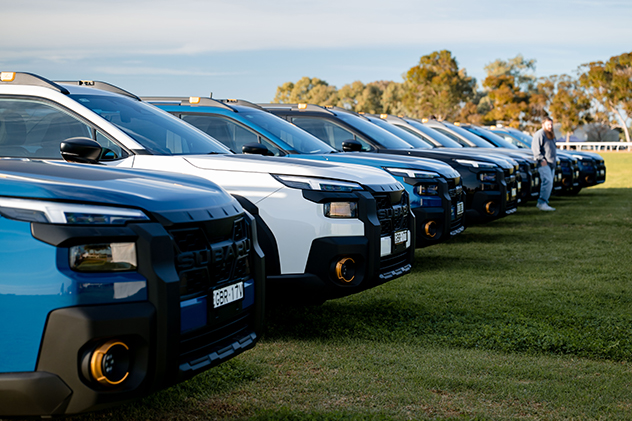
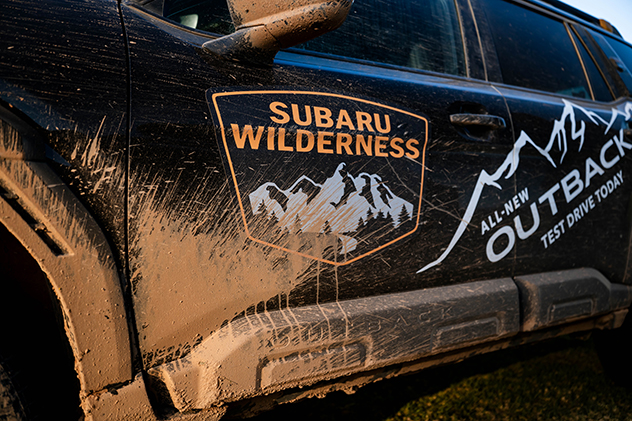
The reason for our rally sojourn, where a fleet of Outbacks will follow competition cars on actual rally stages, is to better explore the credentials of Subaru’s new Wilderness sub-brand. First launched in America in 2021, Wilderness is to off-roading what STi is to motorsport-derived performance, and there are two trim levels to choose from.
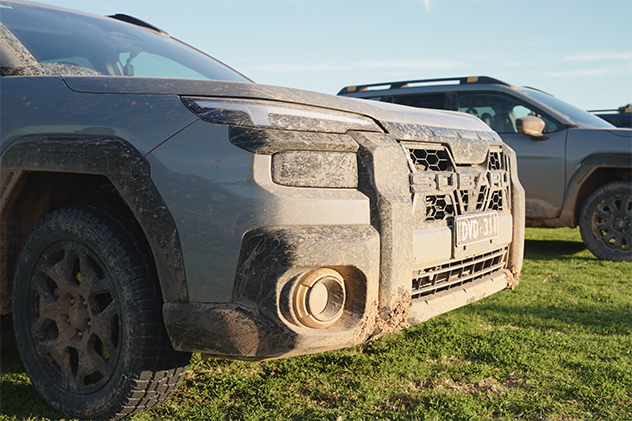
The ‘regular’ Outback Wilderness retails for $59,690, but the car we’re testing is the flagship Wilderness Apex, which retails for $62,690. That’s a chunky $13,700 more than the entry-level Outback (read our review of the wider range here), but both versions of the Wilderness score a host of mechanical and equipment upgrades to justify the premium. Headline changes include a higher ride height (up to 240mm from 220mm), revised suspension with electronically controlled dampers, and the move to a more powerful 2.4-litre turbo engine, which is closely related to the unit in the Impreza WRX.
While it’s technically classified as a ‘large SUV’, the Outback Wilderness doesn’t have many genuine rivals. Perhaps the closest is the Hyundai Santa Fe XRT Pro. Like the Wilderness, the XRT Pro is Hyundai’s new off-road focused sub-brand, and the Santa Fe bundles in a host of upgrades to justify its $79,990 price tag. That makes the Hyundai substantially more expensive. It’s also much larger and offers seven seats as standard, whereas the smaller Outback is a five-seater only.
What is the 2026 Subaru Outback Wilderness Apex like inside?
One of the biggest departures for this seventh-generation Outback is that it’s no longer a high-riding wagon. Instead, its form factor is more like a traditional SUV and while that might disappoint some diehard Subie fans, the result is an interior that offers generous levels of space and comfort. We covered the Outback’s interior extensively in our launch review so we won’t cover old ground, but key strengths include supportive front seats, plenty of useful storage cubbies in both rows (the front cup holders are especially cavernous), excellent outward visibility, and a roomy 530-litre boot.
The tech suite is also one of Subaru’s best to date and combines a large 12.1-inch central infotainment screen with a 12.3-inch digital instrument cluster. Both are impressively responsive and easy to use, while the centre screen boasts extra-large icons to aid legibility. Even better, physical buttons operate the climate control.
Wilderness models also bring a host of unique cosmetic touches, including embossed synthetic seats with yellow stitching and yellow plastic highlights on the steering wheel.
What equipment does the 2026 Subaru Outback Wilderness Apex come with?
Additional equipment is all that differentiates the two Wilderness trim levels, with the Apex scoring some extra goodies like a front-view monitor and a panoramic 360-degree surround-view camera. You also gain a 12-speaker Harman Kardon sound system and a sunroof to help justify the Apex’s $3000 premium over the regular Wilderness.
Strangely, though, both Wilderness models miss out on some desirable equipment fitted to the less expensive Outback Touring model grade. Seat ventilation, electric seat adjustment for the front passenger and auto seat/mirror adjustment are all missing on the Wilderness, with Subaru citing the Wilderness’s more rugged positioning as the reason behind the omissions. The Wilderness also forgoes the Touring model’s Nappa leather upholstery for a harder-wearing synthetic leather.
One key piece of equipment fitted to all Outback variants is a full-size spare alloy and tyre. Other brands take note!
How safe is the 2026 Subaru Outback Wilderness Apex?
Neither ANCAP nor Euro NCAP has crash tested the new seventh-generation Subaru Outback, meaning it currently doesn’t carry an official star rating. All variants of the new car do score a comprehensive safety suite, however, including nine airbags, reversing camera, and numerous advanced driver assistance systems. Subaru’s Eyesight system, which bundles together its own long list of active systems, is also standard on all models.
We turned most of the systems off during our time in the rally but on the transit legs we did note they can be overly sensitive, with chimes and messages of ‘Keep Eyes on Road!’ frequently popping up.
What powers the 2026 Subaru Outback Wilderness Apex?
The switch to Subaru’s more powerful 2.4-litre turbo engine is one of the key reasons to buy a Wilderness over a regular Outback. While it might be slightly smaller in capacity than the atmo 2.5-litre that powers the rest of the range, the addition of a turbocharger amps up power and torque considerably. Outputs jump from 137kW/254Nm in the regular car to 194kW/382Nm, with the torque increase being especially notable. Where the regular Outback makes its modest 254Nm peak at 3700rpm, the Wilderness hits its full 382Nm from 2000-3600rpm. And happily, both engines can run on 91 RON.
The trade-off, though, is additional thirst. Where the atmo engine has a combined economy claim of 8.1L/100km, the turbo engine drinks 9.7L/100km. That’s almost 20 per cent more.
Every Outback uses a continuously variable transmission (CVT) and is all-wheel drive.
What is the 2026 Subaru Outback Wilderness Apex like to drive?
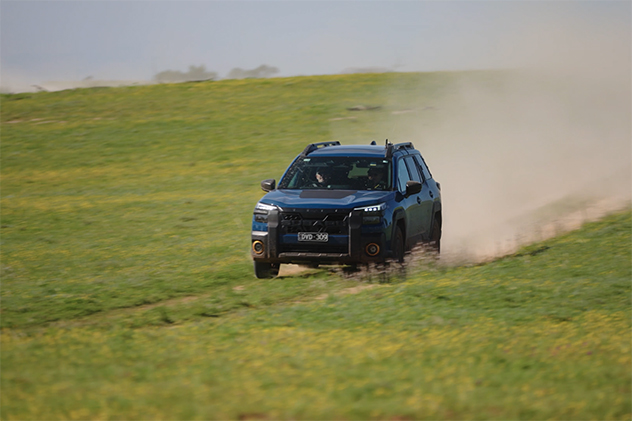
Throwing a totally standard family SUV onto a competitive rally stage full of ruts, washouts, cattle grids and soft sand might sound overly ambitious, but Subaru did make one concession to the conditions – every car was fitted with Pirelli Scorpion all-terrain tyres. These tyres are an official Outback accessory (for the pricey sum of $4287 for four, or $5274 for five, which includes wheels and rubber), but given the Wilderness’s adventure focus, we’d have thought they should be offered as a no-cost option (NCO).
With them fitted, the way the Outback performs on the rally course is nothing short of remarkable. Not only are the stages full of holes and hazards, but the surface has been torn up by the competition cars ahead of us. It’s gnarly enough that we wince as we drop into ruts and compressions, but the Outback copes with the punishment incredibly well.
Regular versions of the Outback have a comfortable ride, but the Wilderness’s electronically controlled dampers add an extra layer of polish, composure and compliance. Kudos, too, to Subaru’s cabin seals and air filters. Even after a full day of dirt driving and swallowing dust from the car in front, the cabin remains mostly dust free.
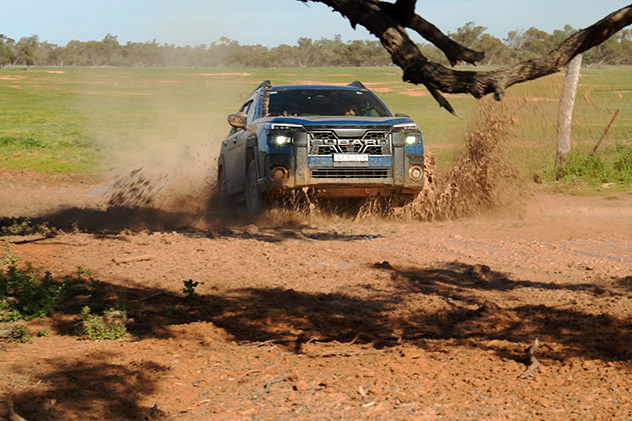
There’s no faulting the Wilderness’s accurate steering, confidence-inspiring all-wheel drive, or punchy turbo engine either. The chassis has an inherent balance, which can be fun to exploit on loose surfaces. And notably, the all-terrain tyres are impressively quiet on the highway, despite their chunkier tread pattern.
If there’s a weakness, at least from a driver enjoyment point of view, it’s the CVT transmission. While it’s a faithful and smooth companion in day-to-day driving, and it does offer a manual mode with eight ‘gears’, it’s not as quick-witted or as engaging as a torque converter auto.
Does the Wilderness feel like a proper rally car? Of course not. But is it impressively capable and fun on some properly challenging roads? You bet.
Open Road’s take on the 2026 Subaru Outback Wilderness Apex
If Subaru’s objective was to demonstrate the Wilderness’s off-road capability, then mission accomplished. Over the last 30 years and six generations, the Outback has proven it has the nous and capability to live up to its name. And this new, more SUV-focused seventh-gen car is no different. If anything, the new Wilderness grades improve the breed even further. They also feel well positioned, with their punchier turbo engines, higher ride height and more sophisticated suspension justifying their price premiums. Only a few equipment oddities (like no seat ventilation or electric passenger adjustment and offering the excellent all-terrain tyres as a NCO) could be improved come facelift time.
What we liked
- Turbo engine’s extra punch and performance
- Impressive suspension control and compliance
- Wilderness brings genuine off-road improvements
What could be better?
- Pricey all-terrain tyres should be a no-cost option
- Over-zealous active safety systems
- Wilderness misses out on equipment available on cheaper models


