2026 Toyota Hilux BEV review
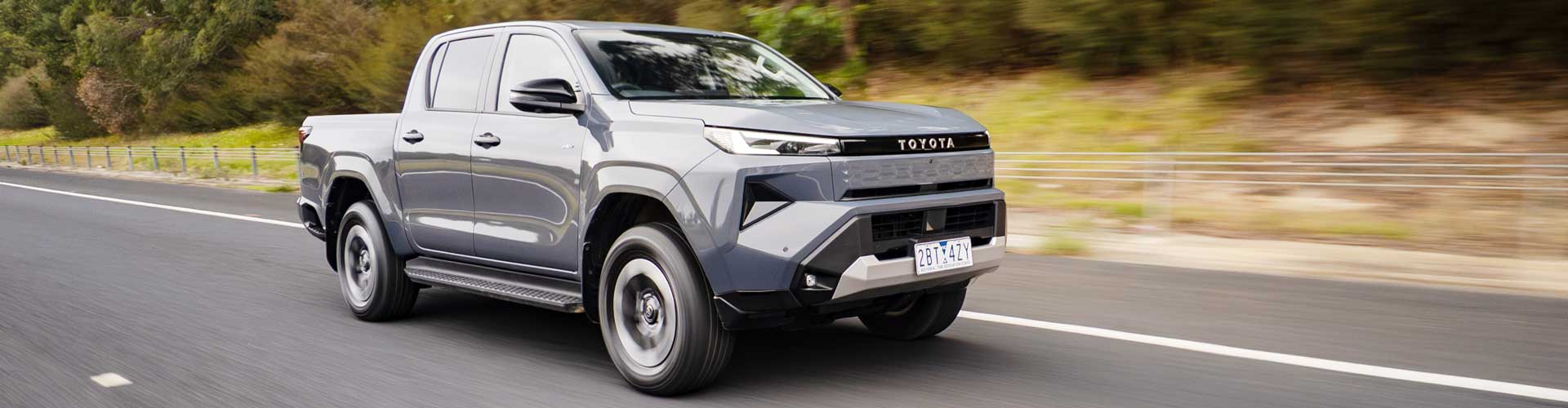
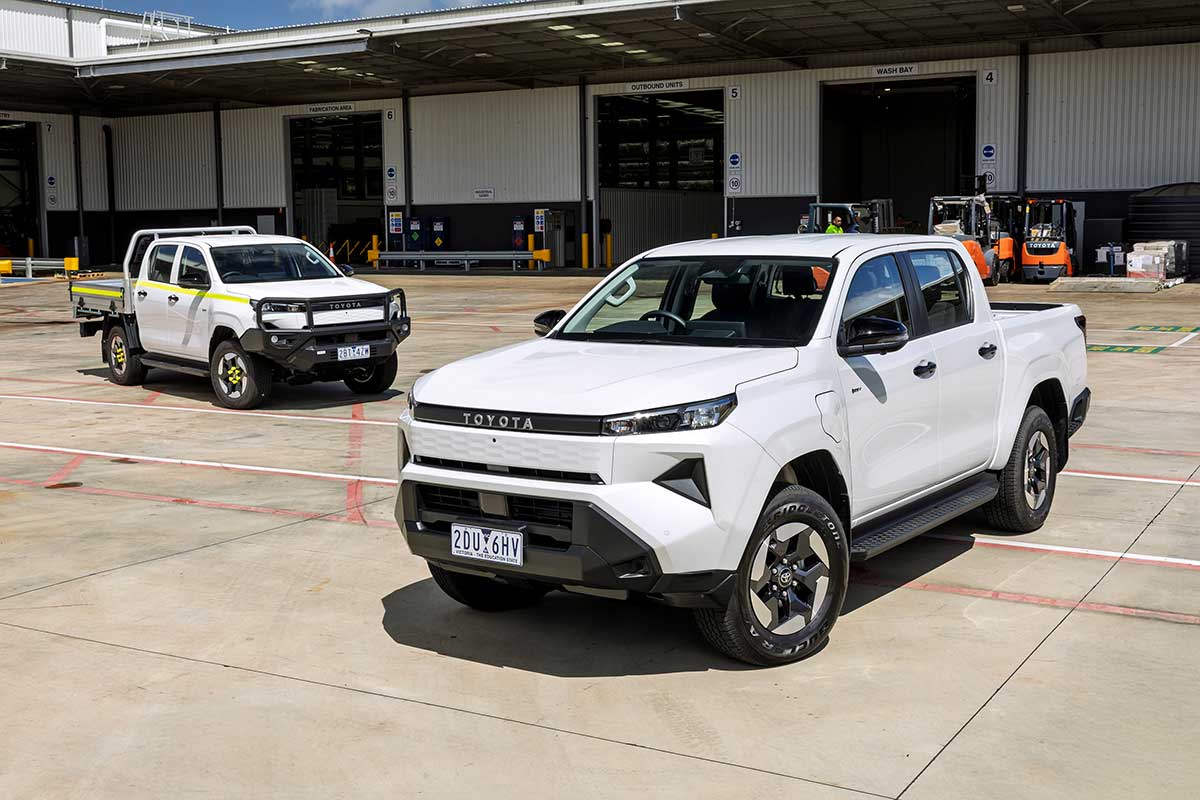
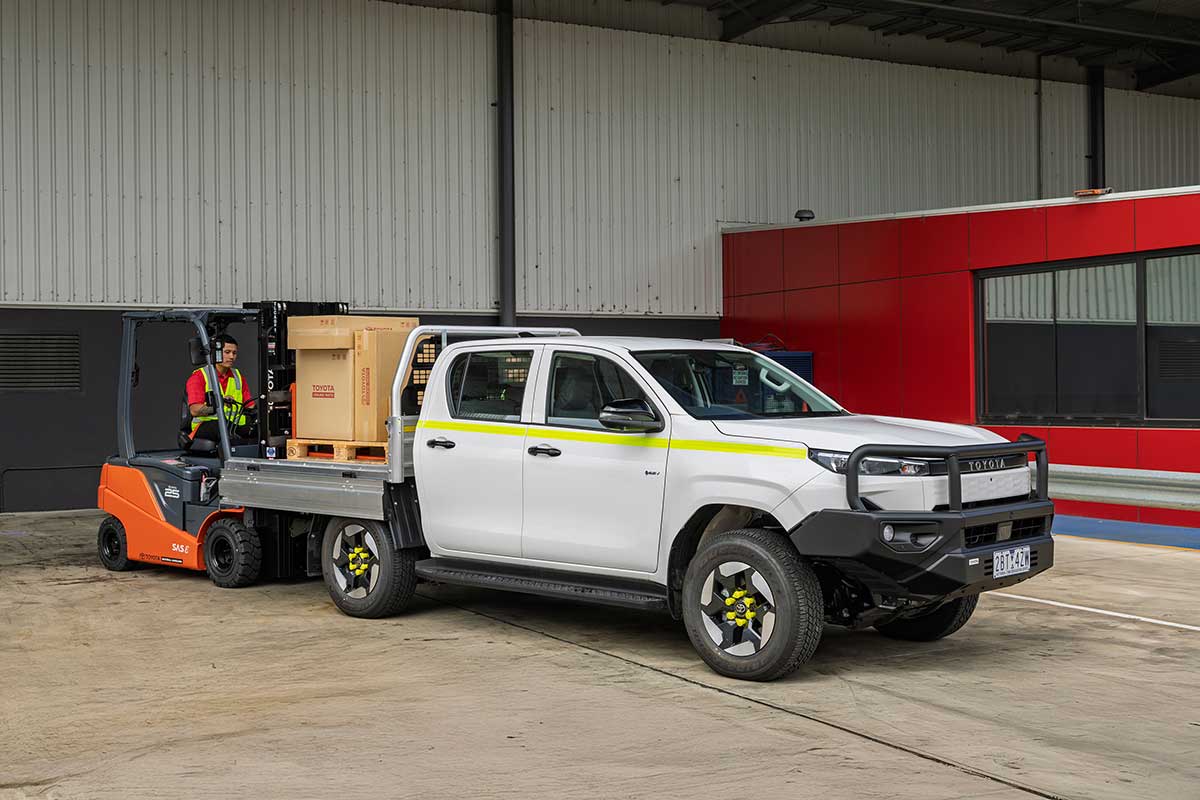
Toyota is aiming to appeal to fleet and business buyers with its new HiLux BEV, which comes in cab-chassis and pick-up body styles and two different grades.
The price is high, but the EV driving range isn’t; nor are the payload and the towing capacity. So is it actually going to succeed?
How much does the 2026 Toyota HiLux BEV cost?
The brand hasn’t positioned the Toyota HiLux BEV as a bargain, that’s for sure.
The model range kicks off with the double-cab SR cab-chassis, from $74,990 plus on-roads, or you can have that base model as a pick-up, from $76,490 plus on-roads.
The more richly appointed SR5 costs $82,990 plus on-roads.
It is expensive compared to budget options like the newly added Farizon V3E cab-chassis (from $48,990 plus on-roads), and even the KGM Musso EV makes a much stronger argument (from $60,000 drive-away).
If you don’t think fully electric is right, then the BYD Shark 6 plug-in hybrid could be a far smarter choice (from $52,990 plus on-roads), and Ford has also sharpened the pencil on the Ford Ranger PHEV, now from $60,000 drive-away.
Toyota offers a five-year/unlimited kilometre warranty for the vehicle, while the battery has an eight-year/160,000km warranty. Servicing is very needy for an EV, with intervals set at six months/10,000km, though it costs just $220 per service for the first 10 services or 100,000km of ownership. Buyers must pay extra for roadside assistance, and connected services are only free for the first 12 months.
— Matt Campbell
What is the 2026 Toyota HiLux BEV like inside?
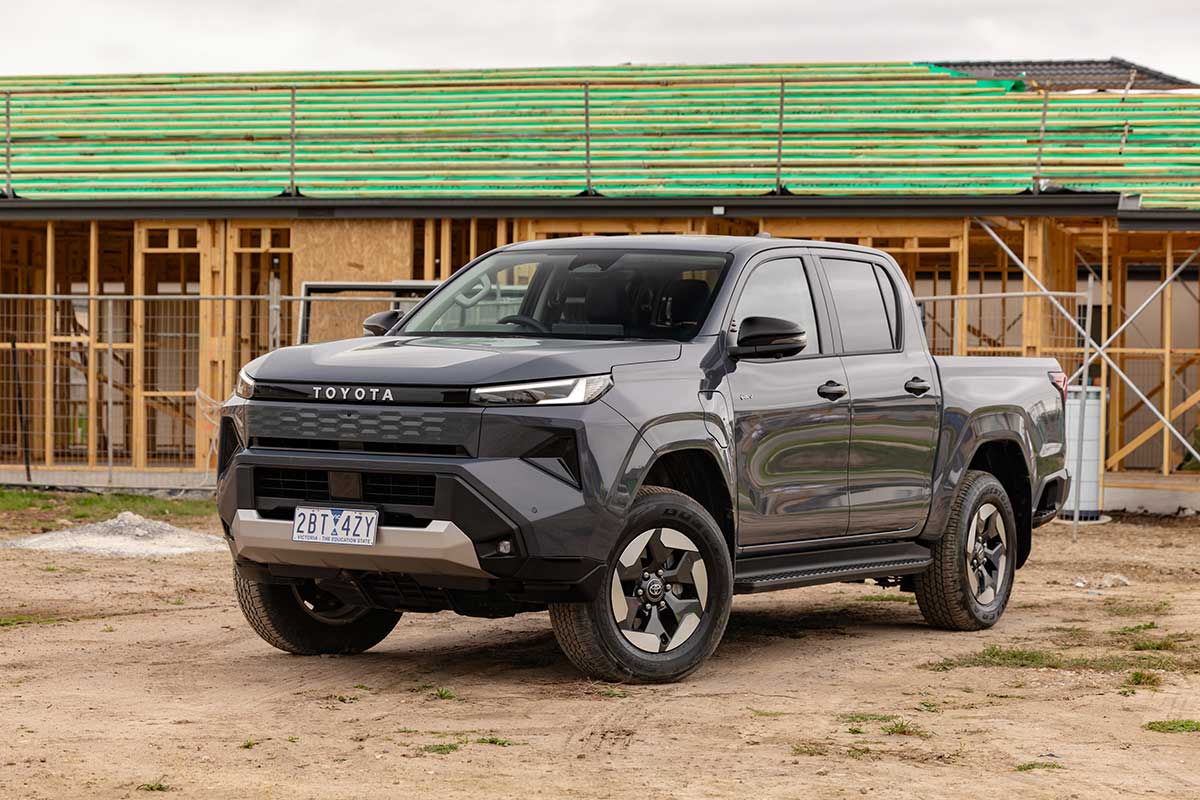
It’s almost identical to the existing HiLux models, although there are a few small differences.
New software inclusions allow you to monitor your battery range, set charging times and organise battery preconditioning for quicker recharging response, and the driver info screen has a display so you can see a diagram of the powertrain management, and your remaining range, too.
The cabin space is identical to diesel models, except that the rear seat doesn’t allow both sides of the 60:40 split fold base to be raised, as the larger portion covers the 1500-watt inverter for the vehicle-to-load socket between the front seats.
What equipment does the 2026 Toyota HiLux BEV come with?
The work-spec SR model definitely looks and feels it, with LED headlights but halogen daytime running lights. It also has side steps, proximity entry and push-button start.
Inside there are twin 12.3-inch displays – one for the driver instruments, and the other for media and controls, including wireless Apple CarPlay and Android Auto, satellite navigation, DAB+ digital radio, and a four-speaker stereo. It has connected services, too.
Cloth trim, rubber floors with all-weather mats, a plastic steering wheel are cost-cut inclusions, but it has four USB-C ports, dual-zone climate control, and a 1500-watt inverter in the centre console to run appliances.
The SR5 adds better LED headlights with auto levelling, LED fog lights, LED tail-lights and LED daytime running lights, as well as rear privacy glass, and heated power-folding exterior mirrors.
Inside, the SR5 introduces leather-accented upholstery, power-adjustable driver’s seat, heated front seats, a heated steering wheel, a better eight-speaker stereo, a wireless phone charger, auto-dimming rear view mirror and niceties like carpet and a soft padded instrument panel.
How safe is the 2026 Toyota HiLux BEV?
It carries the same ANCAP five-star rating based on 2025 testing as the diesel models, and is equally equipped.
All versions have autonomous emergency braking with pedestrian and cyclist detection, adaptive cruise control, lane trace assistance (lane centring steering assistance), traffic sign recognition, blind-spot monitoring and rear cross-traffic alert with braking, not to mention a surround-view camera, front and rear parking sensors, and eight airbags – dual front, front side, driver’s knee, front centre, and full length curtain.
What powers the 2026 Toyota HiLux BEV?
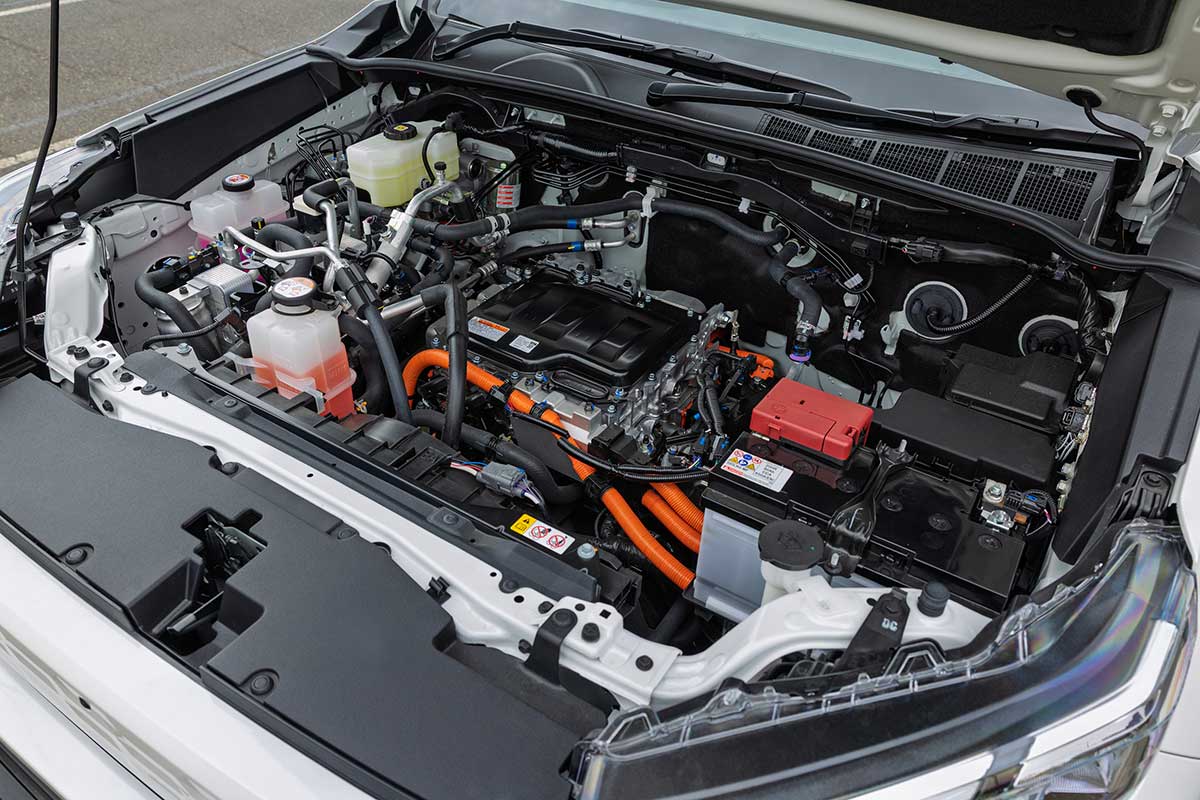
Both variants have the same dual-motor EV powertrain, but there are significant differences in EV range between the pick-up and cab-chassis.
Trayback utes are nowhere near as aerodynamically efficient, and the cab-chassis has a meagre EV range of 245km on the very lenient NEDC cycle. The NEDC rating for the pick-up is 315km, but Toyota has confirmed a more realistic likely range of 245km for it, based on the WLTP calculation.
Either way, they’re not long-range heroes, with a 59.2kWh NMC battery pack fitted. That type of battery chemistry is known to be affected more by repeatedly recharging to 100 percent, too.
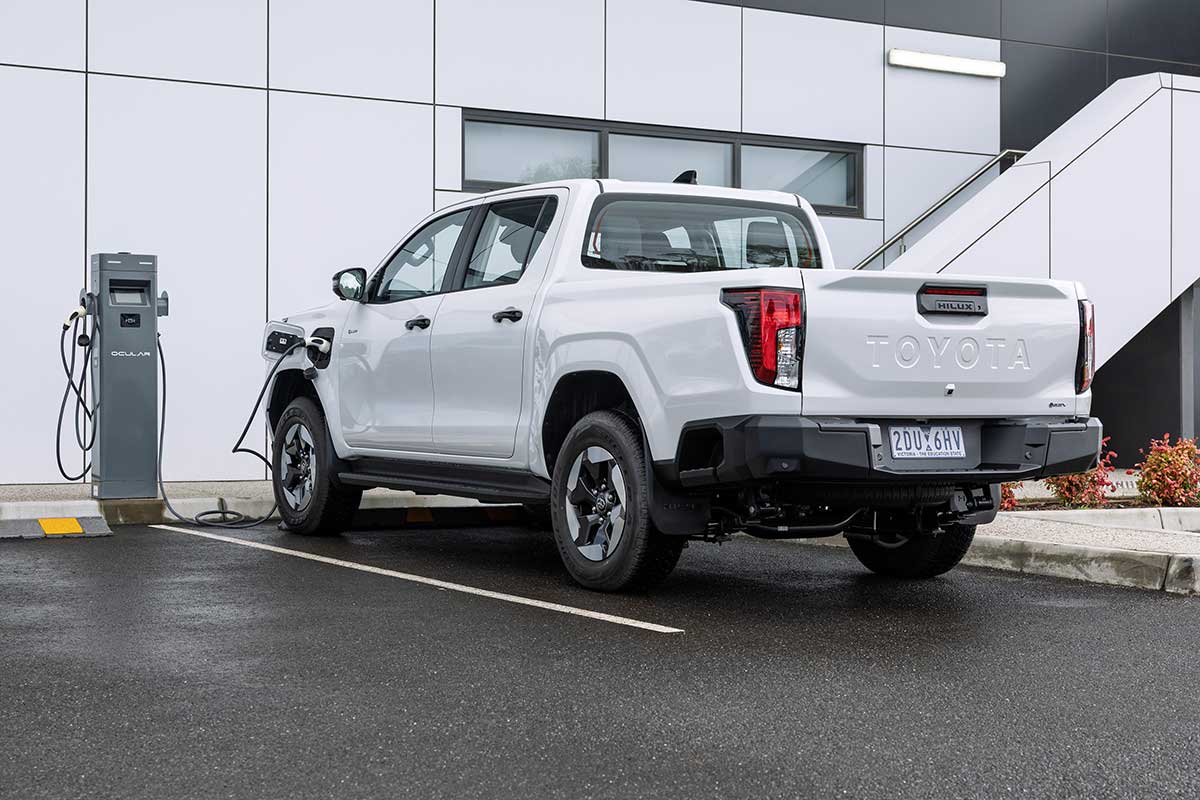
On that, AC charging is capped at 10kW, meaning a 10-100 per cent charge time of about 6.5 hours. The DC charging rate is decent at 150kW, leading to an approximate half-hour 10-80 per cent top-up.
You’ll see the claimed energy efficiency numbers in the table, but on this test I was underwhelmed with the displayed consumption, which averaged 25.4kWh per 100km.
What is the 2026 Toyota HiLux BEV like to drive?
The powertrain is a massive change for this ute.
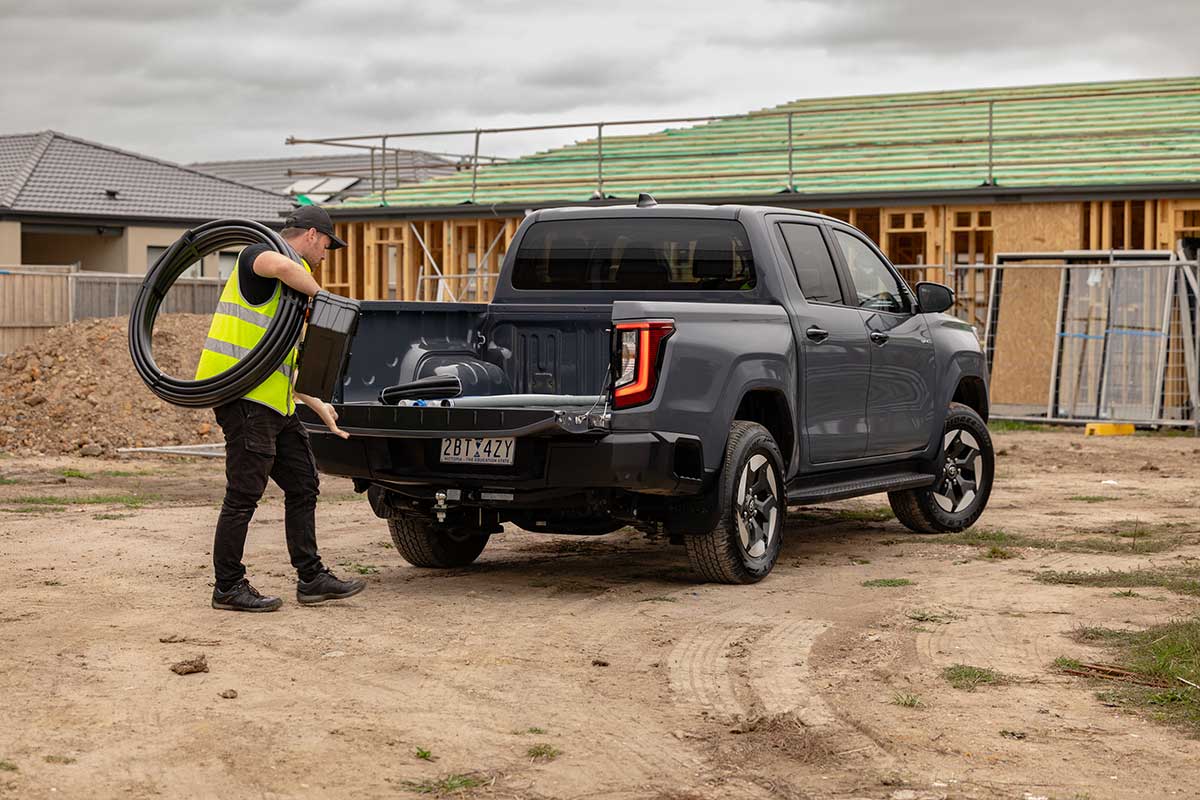
Not having to deal with the gruff 2.8-litre diesel and decisive six-speed automatic transmission is a relief for urban duties, because it’s just a matter of ‘put your foot down and go’ in the BEV (which still offers a diesel-like 144kW/474Nm output). It can carry a 725kg+ payload and braked towing capacity is 2000kg.
The powertrain smoothness is noticeable at urban pace and on the highway. It’s just more relaxing from that perspective – there’s no dilly-dally whether you’re taking off from a standstill or trying to make a snappy overtaking move.
With dual-motor all-wheel drive, you have surefooted progress at your disposal at speed, too, and there are multiple different on- and off-road driving modes as well.
The regenerative braking system leaves a little to be desired, offering inaccurate pedal feel and response, especially in off-road situations.
And while the steering is predictable and the safety tech well mannered, the biggest frustration with the drive experience is the ride.
Usually, we car reviewers describe the level of comfort offered by the suspension, but for this ute, it’s the level of discomfort that stands out.
It is punishingly hard-riding, pushing occupants around in their seats at most speeds. There is no way to really settle in for a road trip here; it is just so sharp and uncomfortable that it becomes tiring to drive (or be a passenger in) very quickly.
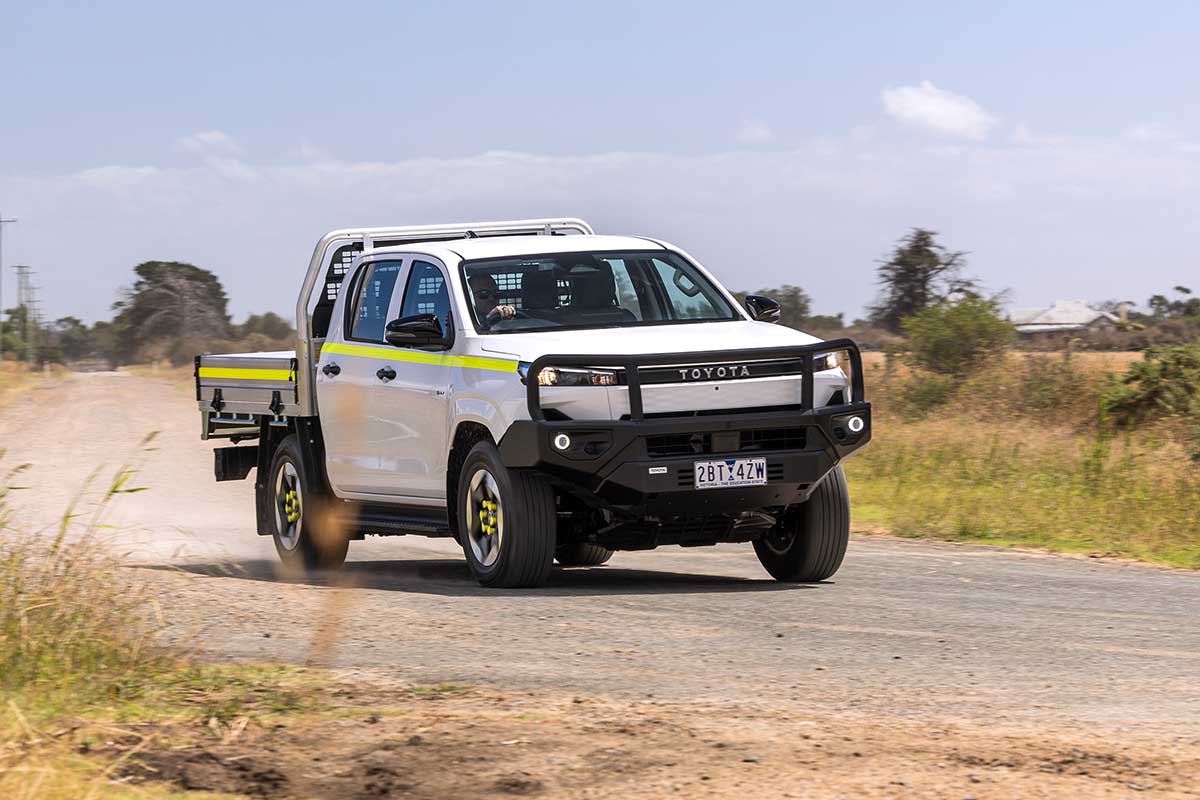
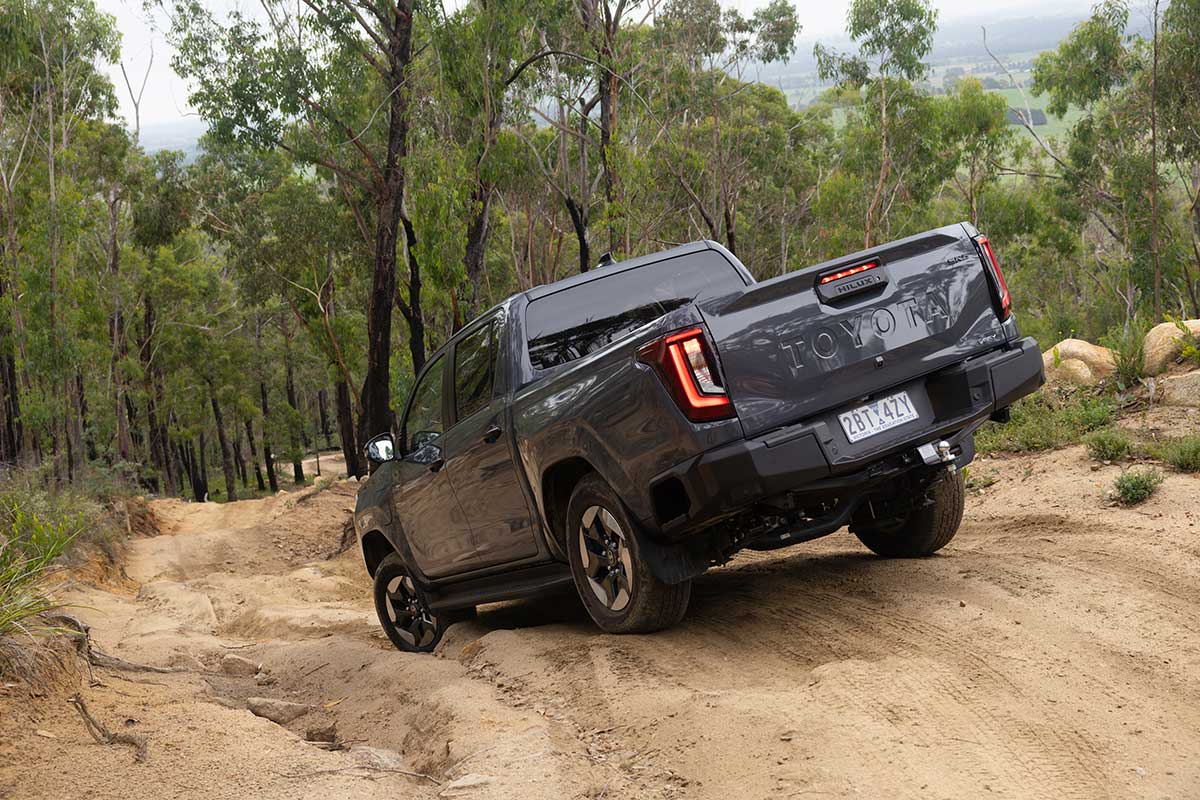
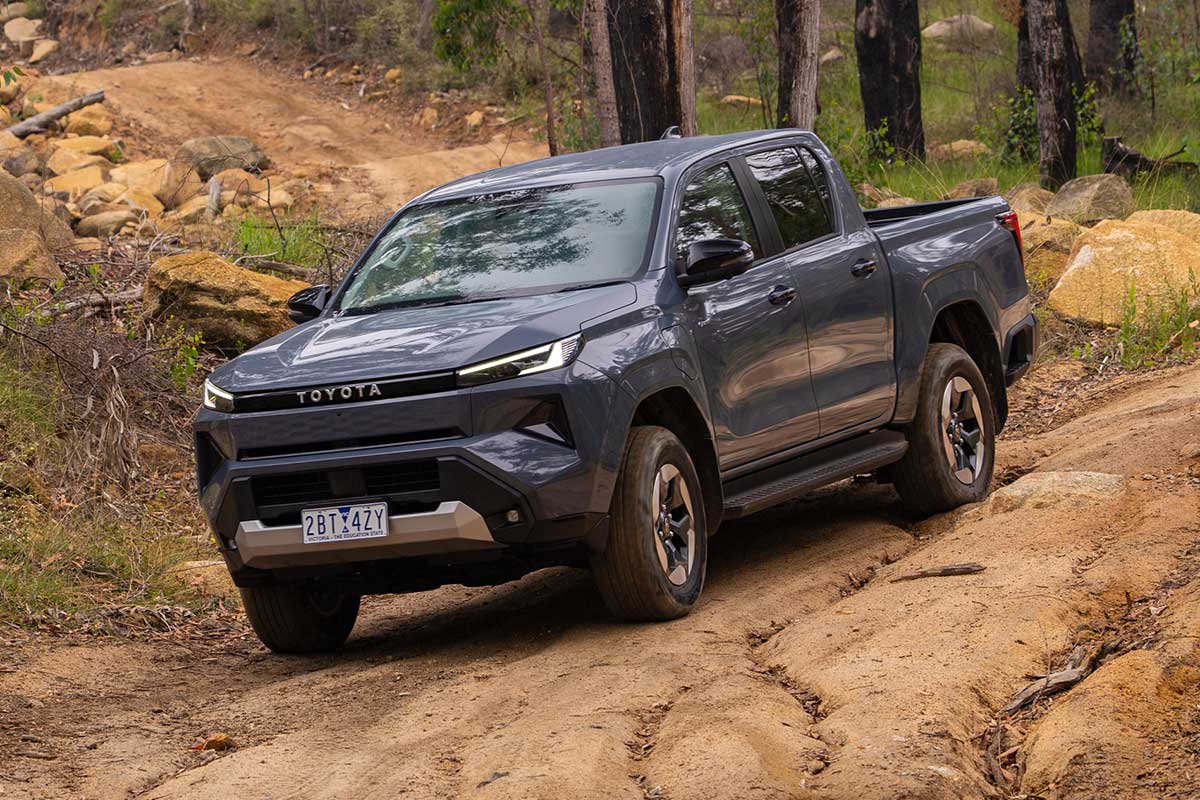
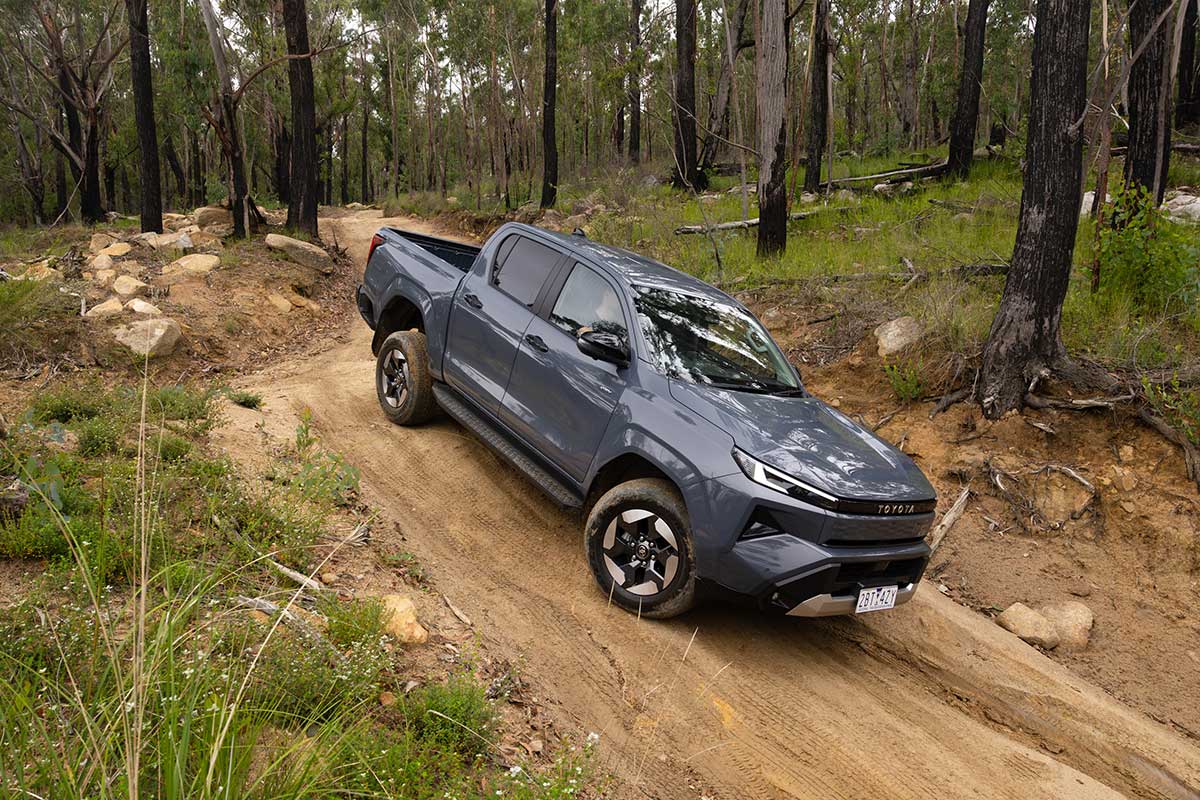
Off-road, that is even more noticeable, with lumps and bumps in the trail being transferred inside the cockpit. There’s also less ground clearance than other HiLux models, but you can still hit the unsealed stuff with a level of confidence that, perhaps, some rivals mightn’t match.
Open Road’s take on the 2026 Toyota HiLux BEV
For some business buyers this will make terrific sense. If you operate a low-mileage, back-to-base fleet, or you’re an electrician who just services their local area, it might be a strong candidate for that.
But in reality, this feels like an old platform that has been fitted with newer tech that simply doesn’t make a convincing enough argument for the price that’s being asked.
What we liked
- It’s far smoother than the diesel
- Good instant torque on offer
- Familiar design and known brand backing
What could be better?
- The suspension is punishing
- There are better electrified options for less
- Just isn’t competitive enough