
ADVERTISEMENT
2026 Toyota RAV4 fuel consumption test
Just how fuel efficient is the new Toyota RAV4? The NRMA has undertaken a fuel efficiency test on the hybrid model to reveal an uncanny Toyota resemblance.

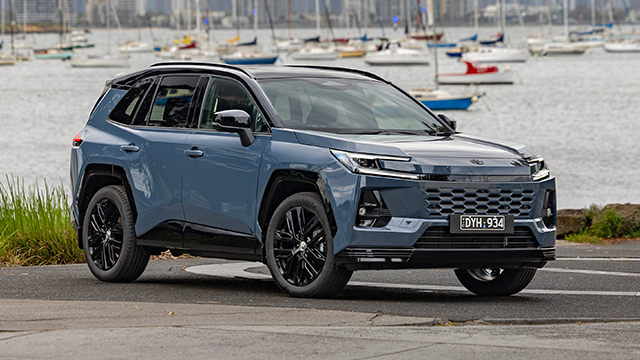
The new Toyota RAV4 has touched down in Australia, and just like its predecessor, it is quickly occupying the driveways of Aussie homes on the promise of impressive claimed fuel consumption.
The sixth-generation is a hybrid-only affair in Australia, arriving first in a regular series-hybrid guise that doesn’t require recharging, and then extending its bandwidth with the arrival of a plug-in hybrid version later in the year.
Both versions promise impressive fuel consumption figures, but how efficient is the 2026 Toyota RAV4 in reality? In this real-world test, held over 774km in mixed driving conditions, we give you our definitive answer.
The better equipped Cruiser 2WD model driven here costs $56,990 plus on-roads, effectively occupying one of the loftier rungs of the regular hybrid line-up.
While standard hybrid models are now in dealerships, PHEV variants aren’t arriving until later in 2026.
In terms of spec, you can read the odds and ends of each variant in our full RAV4 review.
The RAV4 Cruiser driven here offers dual-zone climate control, integrated navigation, a space saver spare tyre, keyless entry and start, leather-look trim, five USB-C ports, heated front seats and a powered tailgate.
All RAV4 variants feature a 12.3-inch digital driver’s display and Toyota’s latest infotainment system, which supports over-the-air updates and integrated connected services, allowing owners to lock and unlock the car remotely or even close the windows via the myToyota Connect app.
The Toyota RAV4 gets eight airbags and an array of driver assistance tech, including auto braking, blind spot warning, lane keep assist, exit assist and front and rear cross traffic alert.
However, for much of 2026 the new RAV4 will do without an ANCAP safety rating.
The sixth-generation is a hybrid-only affair in Australia, arriving first in a regular series-hybrid guise that doesn’t require recharging, and then extending its bandwidth with the arrival of a plug-in hybrid version later in the year.
Both versions promise impressive fuel consumption figures, but how efficient is the 2026 Toyota RAV4 in reality? In this real-world test, held over 774km in mixed driving conditions, we give you our definitive answer.
How much does the Toyota RAV4 cost?
Getting some nuts and bolts out of the way first, the RAV4 range opens at $45,990 plus on-road costs for the GX.The better equipped Cruiser 2WD model driven here costs $56,990 plus on-roads, effectively occupying one of the loftier rungs of the regular hybrid line-up.
While standard hybrid models are now in dealerships, PHEV variants aren’t arriving until later in 2026.
In terms of spec, you can read the odds and ends of each variant in our full RAV4 review.
The RAV4 Cruiser driven here offers dual-zone climate control, integrated navigation, a space saver spare tyre, keyless entry and start, leather-look trim, five USB-C ports, heated front seats and a powered tailgate.
All RAV4 variants feature a 12.3-inch digital driver’s display and Toyota’s latest infotainment system, which supports over-the-air updates and integrated connected services, allowing owners to lock and unlock the car remotely or even close the windows via the myToyota Connect app.
The Toyota RAV4 gets eight airbags and an array of driver assistance tech, including auto braking, blind spot warning, lane keep assist, exit assist and front and rear cross traffic alert.
However, for much of 2026 the new RAV4 will do without an ANCAP safety rating.
.jpg)
2026 Toyota RAV4 GXL
.jpg)
2026 Toyota RAV4 GXL
.jpg)
2026 Toyota RAV4 GXL
.jpg)
2026 Toyota RAV4 GXL
.jpg)
2026 Toyota RAV4 GXL
.jpg)
2026 Toyota RAV4 GXL
.jpg)
2026 Toyota RAV4 GXL
.jpg)
2026 Toyota RAV4 GXL
.jpg)
2026 Toyota RAV4 EDGE
.jpg)
2026 Toyota RAV4 EDGE
.jpg)
2026 Toyota RAV4 EDGE
.jpg)
2026 Toyota RAV4 EDGE
.jpg)
2026 Toyota RAV4 EDGE
.jpg)
2026 Toyota RAV4 EDGE
.jpg)
2026 Toyota RAV4 EDGE
.jpg)
2026 Toyota RAV4 EDGE
.jpg)
2026 Toyota RAV4 XSE
.jpg)
2026 Toyota RAV4 XSE
.jpg)
2026 Toyota RAV4 XSE
.jpg)
2026 Toyota RAV4 XSE
.jpg)
2026 Toyota RAV4 XSE
.jpg)
2026 Toyota RAV4 Cruiser
.jpg)
2026 Toyota RAV4 Cruiser
.jpg)
2026 Toyota RAV4 Cruiser
.jpg)
.jpg)
2026 Toyota RAV4 Cruiser
.jpg)
2026 Toyota RAV4 Cruiser
.jpg)
2026 Toyota RAV4 Cruiser
.jpg)
2026 Toyota RAV4 Cruiser
.jpg)
2026 Toyota RAV4 Cruiser
.jpg)
2026 Toyota RAV4 Cruiser
.jpg)
2026 Toyota RAV4 Cruiser
.jpg)
2026 Toyota RAV4 Cruiser
.jpg)
2026 Toyota RAV4 Cruiser
.jpg)
2026 Toyota RAV4 Cruiser
.jpg)
2026 Toyota RAV4 Cruiser
.jpg)
2026 Toyota RAV4 Cruiser
1/37
What’s the RAV4 like inside?
The new Toyota RAV4 is almost identical to the model it replaces in size, which is no surprise given it shares much of the same underpinnings. That means interior space is essentially unchanged.There’s adequate head- and legroom front and rear, and a decent if slightly Spartan use of materials throughout the cabin. Comfy leather-appointed chairs and soft contact points ensure cosseting passage during daily duties.
The new bevy of screens is happily introduced with some handy physical buttons, switchgear and a proper volume dial, which is great for daily amenity.
Storage is another strong point throughout, while the 60/40 split-folding rear seat gives you flexibility from the 705-litre boot.
What’s under the bonnet of the 2026 Toyota RAV4?
The basic drivetrain formula is of the 2026 Toyota RAV4 is effectively carryover: a 2.5-litre four-cylinder petrol engine paired with one or more electric motors.That said, the RAV4 picks up some handy changes along the way, including a new front motor and an updated lithium-ion battery replacing the previous nickel-metal hydride unit. That battery has a capacity of 1.1kWh.
For the front-drive Cruiser we’re spending time in, the 2.5-litre engine makes 105kW and 221Nm while the electric motor that drives the car (there’s a separate one for regenerative braking) produces 100kW and 208Nm.
Elsewhere in the range, all-wheel drive variants add a 40kW/121Nm electric motor to the rear axle. As before, there’s no mechanical link between the engine and rear wheels in those all-wheel drive variants, with the addition of another electric motor to drive the rear wheels independently.
The caveat with the latest RAV4 is that tougher emissions have pulled back official combined outputs. Whereas the previous model boasted up to 163kW depending on variant, this one is rated at 143kW across both the front-wheel drive and all-wheel drive guises. That said torque is carryover irrespective of model, at 221Nm.
Front-drive models are claimed to hit 100km/h in 8.0 seconds while all-wheel drive variants lower that to 7.7 seconds.
How fuel efficient is the Toyota RAV4 in theory?
Now to the all-important fuel efficiency.On paper, Toyota claims a combined average of 4.5L/100km for front-wheel drive models and 4.6L/100km for all-wheel drives – slight theoretical improvements on the models they replace. Those figures are based on the WLTP cycle, which uses a combination of urban and highway driving to arrive at its final lab-tested numbers.
The other thing worth noting here is the RAV4 now requires more expensive 95 RON premium unleaded fuel.
Later in 2026 a plug-in hybrid joins the range, using a new sixth-generation hybrid system with a 22.7kWh battery, which should translate to something like 100km of electric-only driving.
Power climbs as high as 227kW in all-wheel drive form, with the flagship GR Sport PHEV AWD covering 0–100km/h in 5.8 seconds. No fuel consumption figure for that model is available at the time of writing.
2026 Toyota RAV4 GXL
2026 Toyota RAV4 GXL
2026 Toyota RAV4 GXL
2026 Toyota RAV4 GXL
2026 Toyota RAV4 GXL
2026 Toyota RAV4 GXL
2026 Toyota RAV4 GXL
2026 Toyota RAV4 GXL
2026 Toyota RAV4 EDGE
2026 Toyota RAV4 EDGE
2026 Toyota RAV4 EDGE
2026 Toyota RAV4 EDGE
2026 Toyota RAV4 EDGE
2026 Toyota RAV4 EDGE
2026 Toyota RAV4 EDGE
2026 Toyota RAV4 EDGE
2026 Toyota RAV4 XSE
2026 Toyota RAV4 XSE
2026 Toyota RAV4 XSE
2026 Toyota RAV4 XSE
2026 Toyota RAV4 XSE
2026 Toyota RAV4 Cruiser
2026 Toyota RAV4 Cruiser
2026 Toyota RAV4 Cruiser
2026 Toyota RAV4 Cruiser
2026 Toyota RAV4 Cruiser
2026 Toyota RAV4 Cruiser
2026 Toyota RAV4 Cruiser
2026 Toyota RAV4 Cruiser
2026 Toyota RAV4 Cruiser
2026 Toyota RAV4 Cruiser
2026 Toyota RAV4 Cruiser
2026 Toyota RAV4 Cruiser
2026 Toyota RAV4 Cruiser
2026 Toyota RAV4 Cruiser
2026 Toyota RAV4 Cruiser
37/37
How fuel efficient is the Toyota RAV4 in reality?
Our fuel efficiency test of the new Toyota RAV4 takes place in mid-autumn out of Sydney.We set out to conduct the test in an ordinary everyday manner; that is, not making any exceptions or inclusions that would improve or decrease efficiency. We just wanted to live with the RAV4 for a week and see what figure we arrive at.
That means a child seat in the back, driving with one, two, three or four people in the car at any time, carrying around golf clubs, kids bags, shopping – you name it.
We also take the liberty in ensuring tyre pressures are as per the manufacturer recommendation on the placard on the driver’s door sill.
In total, our test takes in 774km. It starts out by ensuring the car is completely full of 95 RON fuel (three clicks at the top of the tank at the bowser), restarting the odometer and then mapping our trip.
Driving across the week included the urban school run, some country driving, the weekly run to the shops, kids sport and a return highway dash to Sydney.
All told we reckon our adventure comprises 30 per cent highway driving, 30 per cent country roads and 40 per cent urban duties.
Given the RAV4 claims to use less fuel in urban driving (as little as 4.2L/100km claimed) and more in highway driving (up to 4.7L/100km claimed), it’s clear the findings of our test could be easily skewed with different driving environments in the mix. This was just a usual weekly run.
Which brings us to the answer. Upon completion of our week-long adventure, we top the RAV4 up with fuel – ensuring three clicks at the top of the tank – to record 42.05 litres of fuel used.
Over the course of 774km, that equals 5.43L/100km. The trip computer on the vehicle reads similarly, rounding down to 5.4L/100km.
What’s fascinating is that earlier efficiency tests of the previous RAV4 model have revealed an identical readout of 5.4L/100km with the rounding up or down taken into account.
2026 Toyota RAV4 GXL
2026 Toyota RAV4 GXL
2026 Toyota RAV4 GXL
2026 Toyota RAV4 GXL
2026 Toyota RAV4 GXL
2026 Toyota RAV4 GXL
2026 Toyota RAV4 GXL
2026 Toyota RAV4 GXL
2026 Toyota RAV4 EDGE
2026 Toyota RAV4 EDGE
2026 Toyota RAV4 EDGE
2026 Toyota RAV4 EDGE
2026 Toyota RAV4 EDGE
2026 Toyota RAV4 EDGE
2026 Toyota RAV4 EDGE
2026 Toyota RAV4 EDGE
2026 Toyota RAV4 XSE
2026 Toyota RAV4 XSE
2026 Toyota RAV4 XSE
2026 Toyota RAV4 XSE
2026 Toyota RAV4 XSE
2026 Toyota RAV4 Cruiser
2026 Toyota RAV4 Cruiser
2026 Toyota RAV4 Cruiser
2026 Toyota RAV4 Cruiser
2026 Toyota RAV4 Cruiser
2026 Toyota RAV4 Cruiser
2026 Toyota RAV4 Cruiser
2026 Toyota RAV4 Cruiser
2026 Toyota RAV4 Cruiser
2026 Toyota RAV4 Cruiser
2026 Toyota RAV4 Cruiser
2026 Toyota RAV4 Cruiser
2026 Toyota RAV4 Cruiser
2026 Toyota RAV4 Cruiser
2026 Toyota RAV4 Cruiser
15/37
What is the 2026 Toyota RAV4 like to drive?
Once again, it would be prudent to read our thorough RAV4 launch review for the comprehensive verdict, but in short the sixth-generation car drives very much like the one before it.The transition from a standing start is smooth and seamless, with the electric motor picking up the slack before the petrol engine steps in.
There’s ample response from low in the rev range, making light work of getting up to speed and in and out of intersections.
And just as before, the RAV4’s vocals can become quite prominent when asking more from the engine and six-speed CVT combination – which ultimately reverts to an uninspiring drone when really pressed.
The new RAV4 feels slightly more connected to the road underneath without offering any wholesale improvements. If anything, we found the car’s ‘enhanced’ safety suite more tedious to live with than the predecessor, bolstering the argument that if you own a current RAV4, you may be best stick with it. This is especially the case when you consider the real-world fuel efficiency is virtually unchanged.
2026 Toyota RAV4 GXL
2026 Toyota RAV4 GXL
2026 Toyota RAV4 GXL
2026 Toyota RAV4 GXL
2026 Toyota RAV4 GXL
2026 Toyota RAV4 GXL
2026 Toyota RAV4 GXL
2026 Toyota RAV4 GXL
2026 Toyota RAV4 EDGE
2026 Toyota RAV4 EDGE
2026 Toyota RAV4 EDGE
2026 Toyota RAV4 EDGE
2026 Toyota RAV4 EDGE
2026 Toyota RAV4 EDGE
2026 Toyota RAV4 EDGE
2026 Toyota RAV4 EDGE
2026 Toyota RAV4 XSE
2026 Toyota RAV4 XSE
2026 Toyota RAV4 XSE
2026 Toyota RAV4 XSE
2026 Toyota RAV4 XSE
2026 Toyota RAV4 Cruiser
2026 Toyota RAV4 Cruiser
2026 Toyota RAV4 Cruiser
2026 Toyota RAV4 Cruiser
2026 Toyota RAV4 Cruiser
2026 Toyota RAV4 Cruiser
2026 Toyota RAV4 Cruiser
2026 Toyota RAV4 Cruiser
2026 Toyota RAV4 Cruiser
2026 Toyota RAV4 Cruiser
2026 Toyota RAV4 Cruiser
2026 Toyota RAV4 Cruiser
2026 Toyota RAV4 Cruiser
2026 Toyota RAV4 Cruiser
2026 Toyota RAV4 Cruiser
19/37
Share this article


