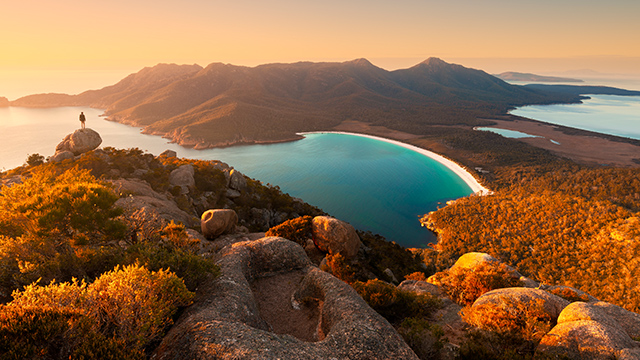
Cool places to visit in summer: Australia’s best ‘coolcations’ when the mercury goes feral

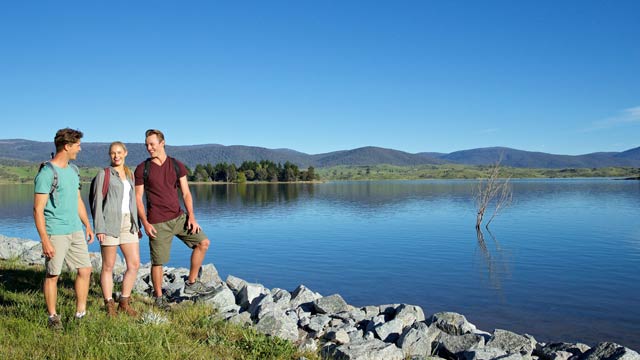
At a glance
- Go high, ski towns in summer deliver cool nights and big day walks
- Go south, Tasmania and southern coasts bring sea breezes and calmer temps
- Go shaded, highlands and rainforests keep afternoons bearable
As large swathes of Australia deal with extreme heat this summer (we see you, Mildura!), high temps can turn a normal summer road trip into a test of patience, sanity and air conditioning.
It's no surprise, then, that “coolcations” are having a moment. When normal holiday spots start to feel like a hotplate, the smart move is to head for destinations that can help to beat the heat: alpine regions, highland gems, and southern climes.
By deliberately choosing cool places to visit, you and the family can still go for a walk at midday, sleep properly at night, and do the fun stuff without timing everything around the heat. Here are some great places to visit if lower temps are your goal.
What is a coolcation?
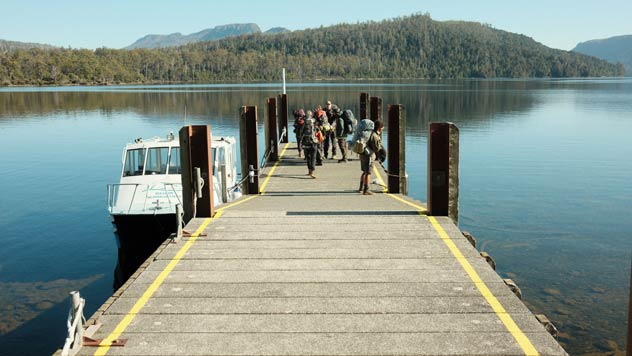
Lake St Clair Ferry Service, Overland Track, Tasmania. Credit: Blake Lisk
Australia is famous for red dirt, big skies and long straight roads but sometimes they come with a side order of heat that is not for everyone. This is where the ‘coolcation’ earns its keep. A coolcation is travel planned around comfort in hot weather, choosing altitude, southern latitude, or shade so you can be outside during the day and sleep well at night.
Where are the coolest places to go in Australia in summer?
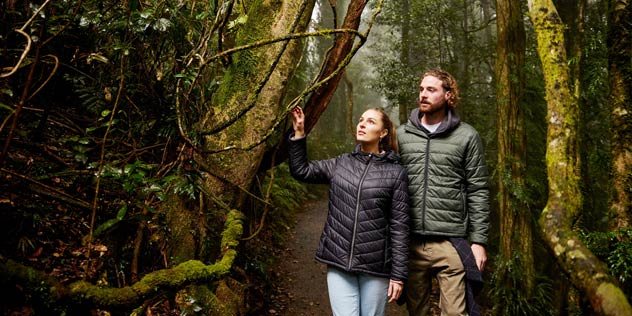
Couple walking along the Crystal Shower Falls walk, Dorrigo National Park. Credit: Destination NSW
Ski towns in their green season, southern coasts, and highland rainforests are all prime locations for a coolcation. These areas usually have cooler nights, lower humidity, and milder daytime conditions.
If you want to escape the heat, here are some general rules to follow:
- Get high on altitude by visiting ski towns, alpine villages, high plains, and lakes in summer. Think crisp nights, early starts, and ideal conditions for bike rides or walks.
- Get down to the Australian mainland's southern coastline, or to Tasmania and its perennially cool favourites, where sea breezes and a cooler latitude can take the edge off. It’s not a guarantee, weather is weather, but Bicheno is often a safer bet than Bourke if you want to escape the heat.
- Stay shady in temperate rainforests, gorges, and tablelands that sit above the worst of the heat, or stay cooler thanks to canopy cover and flowing water. You still need to respect local conditions, including fire risks and track closures, but the feel is different and generally cooler.
Every category has trade-offs. Alpine areas can quickly flip from mild to stormy. Coastal spots can still cop heatwaves. Rainforests tend to be a touch humid. The goal is to pick the kind of “cool” you can live with.
Ski towns in summer: the obvious winners
Ski towns in summer are the touring equivalent of ‘taking the scenic route’ because the highway is gridlocked. You’re in familiar territory, the accommodation is set up for visitors, and there’s a decent menu of things to do without heat being the main character.
Snowy Mountains, NSW
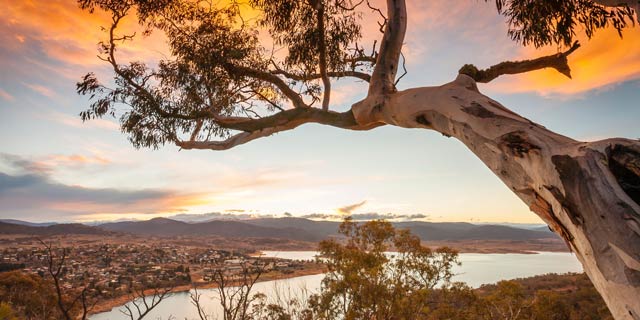
Sun setting over Lake Jindabyne in the Snowy Mountains. Credit: Destination NSW
Jindabyne works as a hub for day trips to Thredbo and Perisher, or a classic alpine walk from Charlotte’s Pass to the top of Kosciusko. It has shops, food, easy access to Lake Jindabyne, and plenty of short walks and rides to suit most skill and fitness levels. It’s perfect for families who want options, couples who want a simple base, and active travellers who want to move without melting. If you want the straightforward bookable stay, NRMA Jindabyne Holiday Park is the clean pick.
Victorian Alps
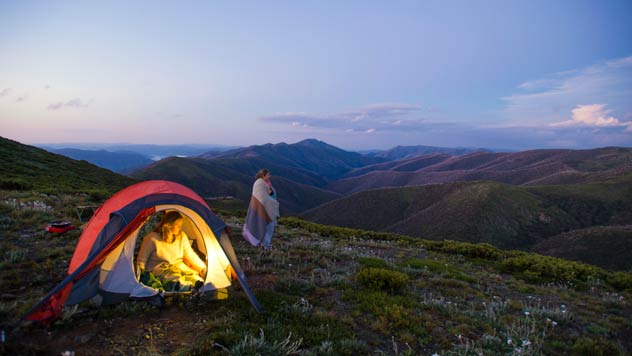
Camping at Falls to Hotham Trek. Credit: Visit Victoria
Bright is one of those towns that makes summer easy, whether you're chasing morning coffee, a swim, a ride, or a proper meal at the end of the day. Mount Buffalo adds cooler lookouts and short walks, and Buller’s village gives you the alpine feel without the winter crowds. It’s a good fit for people who like to do a bit, then stop.
If you like the sense of space you get up high, Falls Creek in summer is the calmer version of the same map. High plains walks, incredible views, and the option to stitch together small towns in the valleys if you want a driving day all await. It suits walkers, cyclists, and anyone who wants a holiday that doesn’t feel rushed.
One note for all alpine areas is that conditions matter. Thunderstorms, wind, and fire danger can change plans fast. The smart move is to keep your day flexible and bring layers, even in summer.
Off-the-beaten-track: four cooler and quieter spots

A standing stone sign welcoming visitors to Glen Innes. Credit: Destination NSW
New England High Country, NSW
Cooler nights are a feature up here. Heading out of Coffs Harbour, Waterfall Way is a hidden travel gem that you can break the day into short drives and time outside, checking out waterfalls, gorges and lookouts, before heading to Armidale or Glen Innes for some high-country hospitality.
Barrington Tops, NSW
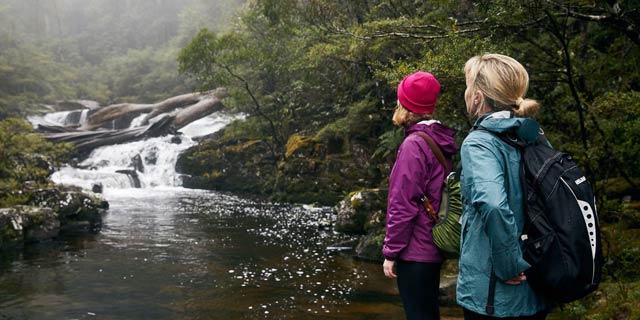
Hiking the Gloucester Tops circuit in Barrington Tops National Park. Credit: Destination Barrington Coast
Barrington Tops is the antidote to the sticky kind of summer. Rainforest walks, misty mornings, and plenty of shade are trademarks of this spot. It’s close enough to the coast to be accessible, but it feels like you’ve changed climate zones. Tracks and access can vary, so it’s worth treating plans as flexible and checking NSW National Parks before heading into the forest.
Central Highlands, Tasmania
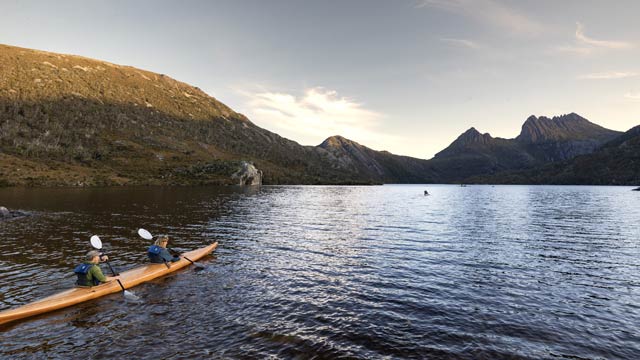
Kayaking on Dove Lake, Tasmania. Credit: Sean Scott Photography
Tasmania has a hard-won coolcation reputation, but it still pays to pack for variety. The Central Highlands is about cold lakes, big skies, and evenings that can feel like jumper weather. It’s slow travel territory, with plenty of short walks, scenic drives and long lunch opportunities.
Albany, WA
Albany is a solid summer circuit-breaker if you want “go south” without leaving the mainland. It’s coastal, it’s breezy, and it has that granite-and-ocean landscape that feels like it’s been rinsed clean by wind. You can spend a day on sheltered beaches, then pivot to clifftop lookouts when the sun is too sharp. As always in summer, check local conditions, including fire risk and any park alerts, before you commit to longer drives or hikes.
Coastal cool, the easy-button stays and natural air-conditioning
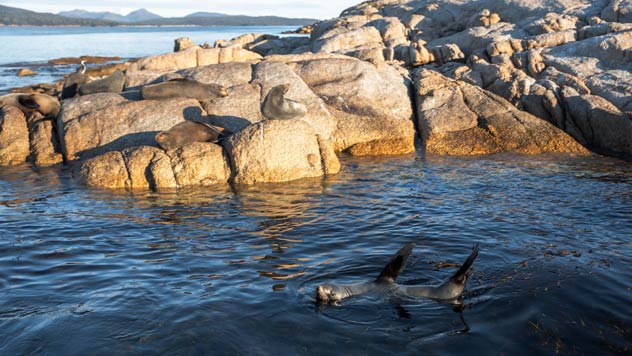
Seals along the Freycinet Walking Tour. Credit: Tourism Australia
If alpine driving isn’t your thing, coastal cool is the other reliable destination to escape the heat. You’re leaning on sea breezes and water access, the natural air-conditioning effect, and choosing destinations where the daily rhythm is easy.
Like its highland lakes, Tasmania’s coast is a natural fit. Coles Bay and the Freycinet region can still get warm, but the overall profile is often gentler than the mainland interior, and the water is a dependable reset button. There are plenty of great places to stay if you’re keen to relax and unwind, too, like the luxurious Freycinet Lodge.
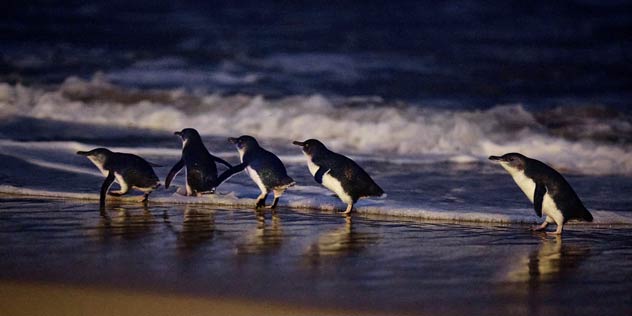
Penguins at Phillip Island Penguin Parade. Credit: Visit Victoria
Good to remember: NRMA Parks and Resorts make the “book it and go” approach easy on the mainland too, particularly if you’re travelling with kids. Some of our recommendations are:
- NRMA Phillip Island Beachfront Holiday Park, Victoria
Phillip Island is set up for summer without the same heat penalty you get inland or higher up the coast. Coastal breezes, beaches close by, plentiful wildlife, and plenty to do without driving long distances are all reasons to visit
- NRMA Victor Harbor Beachfront Holiday Park, South Australia
Victor Harbor gives you waterfront access and a town you can actually walk to. River meets ocean, sea air, and an easy daily rhythm help define this region when you want to keep the plan simple.
- NRMA Ocean Beach Holiday Resort, NSW
This one suits the early-swim crowd. Beach and bush, shade, and that low-stakes summer feeling are all there as you get in the water before breakfast, then take the rest of the day as it comes.
Coastal travel has its own summer reality checks. High UV, crowded beaches on peak days, and heatwaves that can still push down from the north. The advantage is you have more ways to cool down quickly.
How to plan a coolcation without overthinking it
A coolcation doesn’t need a spreadsheet. It needs a simple plan, a few sensible checks, and the willingness to swap one hero hike for two shorter ones if the day turns swampy.
- Prioritise altitude and southern latitude
Pick mountains, tablelands, or southern coasts first, then choose the exact town based on what you want to do. - Check fire danger and heat alerts before you drive
Conditions change quickly. Plan your big drives for the morning, and don’t commit to remote tracks if warnings are rising. - Book places with shade and water access
A pool, a lake, a safe beach, even a shaded creek, it changes how a hot day feels. So does accommodation with decent airflow. - Pack layers
Cool nights are the whole point. Even in summer, alpine and Tasmanian evenings can turn quickly. - Take your time
Frequent stops, lots of water, avoid pushing through peak heat, and keep your buffer. You’ll arrive less wrung out, which is sort of the goal.