Smart #5 confirmed as #1 falls below $50,000
At a glance
- Smart #5 officially confirmed for Australia
- Overseas models offer up to 590km of WLTP range
- Smart #1 and #3 prices reduced by $5000
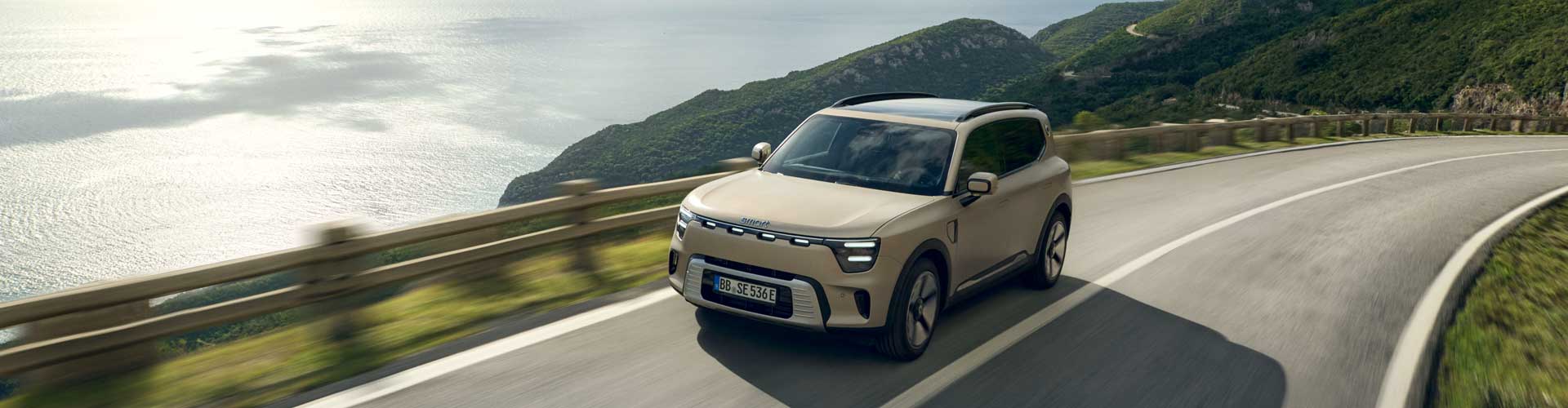
Smart has confirmed its largest electric SUV will come to Australia, more than two years after the Smart #5 made its global debut in Byron Bay.
The announcement comes alongside a $5000 price reduction across the existing Smart #1 and Smart #3 ranges, pushing the brand’s Australian starting price below $50,000 before on-road costs.
The compact Smart #1 now starts from $49,900 plus on-road costs, down from $54,900, while the coupé-styled Smart #3 has fallen from $57,900 to $52,900.
However, Smart has not confirmed when the #5 will reach local showrooms, saying only that full launch details will be revealed soon. Australian pricing, variants and specifications also remain under wraps.
Smart #5 arrives later than expected
The Smart #5 was unveiled in Byron Bay in August 2024, an unusual choice given Australia was not among its first launch markets.
Smart initially said the model was expected locally in late 2025 or early 2026. Its Australian launch was subsequently pushed into the second half of 2026 because of production demand in overseas markets.
The September announcement confirms the #5 remains in Smart’s Australian plans, although it stops short of providing a firm arrival date.
At 4705mm long, 1920mm wide and 1705mm high, the five-seat #5 is a very different proposition from the tiny city cars that established the Smart name.
It is slightly longer than a Toyota RAV4 and has a 2900mm wheelbase, placing it firmly in the mid-size electric SUV category.
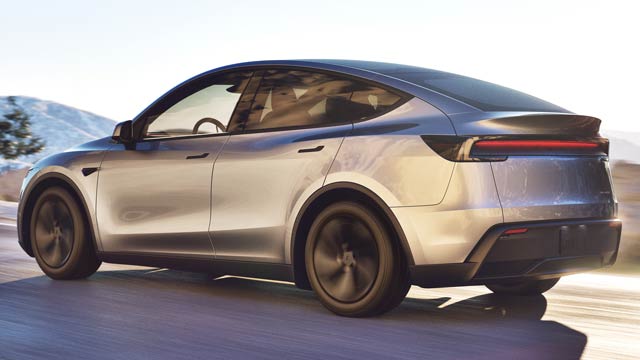
That positions it against some of Australia’s most popular EVs, including the Tesla Model Y, BYD Sealion 7, Zeekr 7X, Kia EV5 and Skoda Enyaq, though this will depend on pricing.
How much range will the Smart #5 offer?
Australian specifications have not been confirmed, but overseas versions provide an indication of what buyers can expect.
European models are offered with either a 76kWh lithium iron phosphate battery or a larger 100kWh nickel manganese cobalt battery.
Versions fitted with the larger battery use an 800-volt electrical architecture and can accept up to 400kW from a compatible DC fast charger. Smart claims these models can charge from 10 to 80 per cent in about 18 minutes.
Maximum WLTP range reaches 590km in the rear-wheel-drive Premium, while more powerful all-wheel-drive versions trade some range for performance.
The nearby right-hand-drive New Zealand market receives Pro+, Premium and Brabus variants. The Pro+ and Premium use a 267kW rear motor, while the flagship Brabus produces 475kW through a dual-motor all-wheel-drive system and can accelerate from 0-100km/h in 3.8 seconds.
Australia may receive a similar line-up, although Smart has yet to confirm whether all three versions will be offered here.
The #5 has also received a five-star Euro NCAP safety rating and was named the organisation’s Best in Class large SUV for 2025. It has not yet received a separate ANCAP rating.
Smart #1 now takes on the Volvo EX30
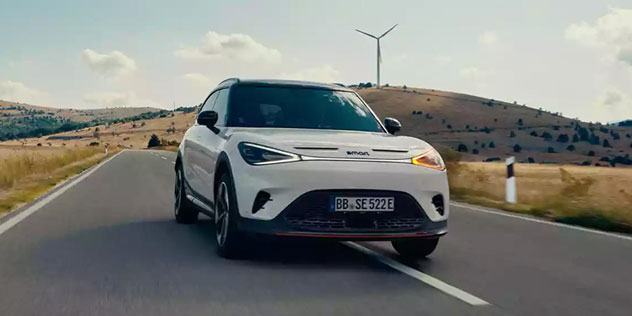
Its revised price places the Smart #1 almost directly alongside the Volvo EX30, which starts from $49,990 before on-road costs.
It also faces renewed competition from the closely related Zeekr X, now priced from $48,900 drive away. All three brands sit within the wider Geely group and share elements of their underlying electric vehicle architecture.
The Smart #1 and #3 use a 66kWh battery and are offered in rear-wheel-drive Pro+ and Premium forms, along with dual-motor Brabus performance variants.
Power outputs range from 200kW in the rear-wheel-drive models to 315kW in the Brabus, while WLTP range spans 400km to 455km depending on the model and variant.
Both vehicles carry five-star ANCAP safety ratings.
How many Smart cars have sold in Australia?
Smart returned to Australia in 2024 after withdrawing from the market in 2015. Its new-generation vehicles are designed by Mercedes-Benz and developed through the German car maker’s joint venture with China’s Geely.
Smart does not report monthly sales to either the Federal Chamber of Automotive Industries or the Electric Vehicle Council, which means the #1 and #3 are absent from the regular VFacts and electric vehicle sales tables.
Smart reportedly delivered almost 500 vehicles in Australia during 2025, with the #3 accounting for around 60 per cent of sales and the #1 making up the remaining 40 per cent.
Current 2026 sales figures have not been released, making it difficult to determine how the brand is performing as Australia’s wider EV market grows.
Its physical retail presence also remains relatively small. Smart currently lists showrooms through Mercedes-Benz dealerships in Sydney, Melbourne and Brisbane, while customers can configure and order vehicles through Smart Australia's website.
The arrival of the #5 will give Smart a model in the much larger family SUV market. Its eventual price, and whether Australia receives the long-range 800-volt versions, will determine how effectively it can compete with an increasingly crowded field of electric SUVs.