Electrified cars set to overtake petrol and diesel
At a glance
- Electrified vehicles reached 49.16 per cent market share in Q2 2026
- BEV sales more than doubled to 69,414 vehicles
- BEVs became the leading fuel type among medium SUVs
Electrified vehicles, including battery electric vehicles (BEVs), plug-in hybrids (PHEVs) and hybrids, are on the verge of overtaking conventional petrol and diesel vehicles, according to new data from the Australian Automobile Association’s EV Index.
June quarter figures put the combined market share of electrified vehicles at 49.16 per cent, just 1.68 percentage points behind internal combustion engine (ICE) vehicles on 50.84 per cent. How soon these ‘new energy’ vehicles will surpass the five-oh milestone is another question.
Electric vehicle sales more than double
The AAA EV Index, which tracks Australia’s transition between vehicle technologies, recorded new market-share highs for both BEVs and PHEVs during the three months to June 30.
There were 69,414 BEVs sold during the quarter, more than double the 34,435 delivered in the first three months of 2026. BEV market share rose from 12.25 to 21.03 per cent, marking the largest quarterly increase in battery-electric sales the index has recorded.
PHEV sales also accelerated, rising from 19,184 to 34,937 vehicles quarter-on-quarter. Their share of the national light vehicle market increased from 6.82 to 10.58 per cent.
Conventional hybrids reached an all-time quarterly sales high of 57,919 vehicles, giving them a 17.55 per cent share. Despite that growth, BEVs overtook hybrids for the first time since the second quarter of 2023.
Meanwhile, ICE vehicle sales fell from 180,539 to 167,840. Their market share dropped from 64.23 to 50.84 per cent, both the lowest share and largest quarterly fall recorded by the EV Index.
The change came during a record quarter for the wider market, with 330,111 new light vehicles sold. In other words, electrified vehicles were not simply gaining share in a shrinking market. Their growth was more than enough to offset falling petrol and diesel sales.
Medium SUVs lead the switch
The changing make-up of Australia’s medium SUV market is perhaps the clearest sign that electrified vehicles have moved into the mainstream.
Medium SUVs were Australia’s largest new-vehicle segment during the June quarter, with 109,371 sold across April, May and June. That was roughly one-third of all new light vehicles delivered during the period.
By the June quarter of 2026, BEVs had become the leading fuel type with a 37.30 per cent share. That put them ahead of conventional hybrids on 24.51 per cent, ICE vehicles on 22.44 per cent and PHEVs on 15.74 per cent.
Together, BEVs, hybrids and PHEVs accounted for 77.55 per cent of medium SUV sales. The BEV share alone was 14.86 percentage points higher than that of petrol and diesel models.
Tesla surge gives BEV sales an extra push
One unusually strong run of Tesla deliveries played a sizeable role in the quarterly result.
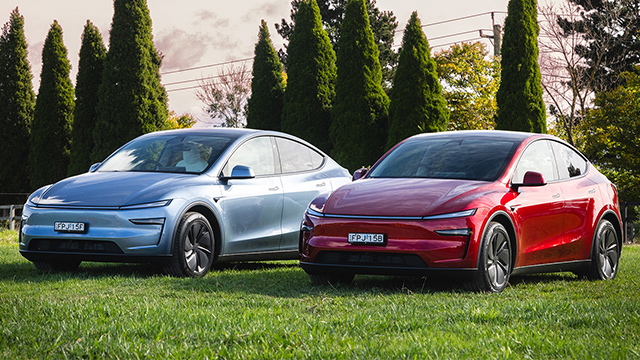
Tesla delivered 15,103 vehicles across May and June, including a record 8,670 vehicles in June alone. The Model Y accounted for 8072 of those June deliveries, becoming Australia’s bestselling new vehicle for the second month running.
That result eclipsed Tesla’s previous monthly record, set only a month earlier. It also means the quarter was influenced by a particularly large delivery wave from one carmaker, so the September quarter figures will give a clearer indication of whether that growth is sustained.
The success of the Tesla Model Y has clearly contributed, but it is now competing with a much wider field of electric and electrified family SUVs.
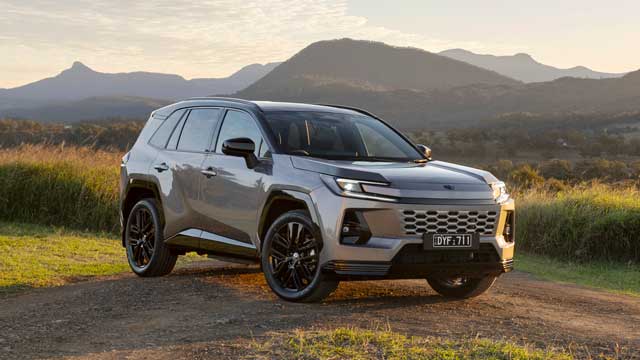
Toyota has not offered a petrol-only RAV4 in Australia since 2024, with the model now sold exclusively as a conventional hybrid or PHEV. This means every Toyota RAV4 delivered during the quarter was counted as electrified rather than ICE.
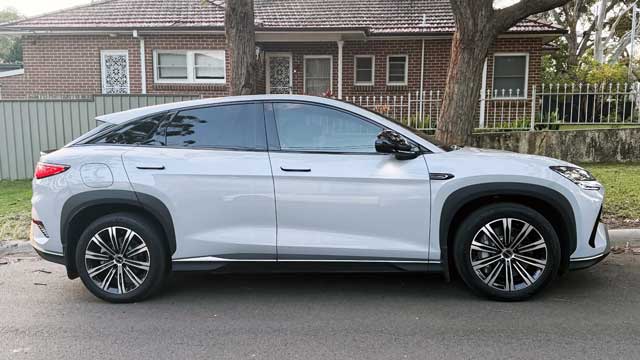
Together, the Model Y and RAV4 represented 24 per cent of medium SUV sales. Add 8,048 deliveries of the battery-electric BYD Sealion 7, and the three electrified models accounted for 31.3 per cent, or almost one in three medium SUVs sold during the quarter.
Other medium electric SUV competitors include the Geely EX5, Kia EV5, Hyundai Elexio, Zeekr 7X and a growing number of new arrivals.
Chinese-built vehicles reshape the market
The shift towards electrified SUVs is taking place alongside a broader change in where Australia’s cars are built.
Chinese-built vehicles overtook Japanese-built vehicles for the first time during the first half of 2026, with 175,151 sales compared with 144,430.
That comparison refers to country of manufacture rather than the nationality of the brand. The China figure includes the Shanghai-built Tesla Model Y as well as vehicles from brands such as BYD, GWM, Chery, MG, Geely and Zeekr.
Nevertheless, it highlights the role Chinese production is playing in expanding Australia’s choice of EVs, PHEVs and hybrids, particularly in the small and medium SUV segments.
Read more: Australia’s bestselling vehicles in the first half of 2026
Fuel costs remain part of the equation
The sales surge has coincided with uncertainty over fuel prices and supply, giving motorists another reason to consider how much petrol or diesel their next car might use.
The federal government’s temporary fuel excise relief is due to run until August 2. The final stage reduced petrol and diesel excise by 16 cents a litre during July, saving about $11 on a 65-litre tank, according to Treasury.
Fuel prices alone do not explain the quarterly jump. New-model launches, improved vehicle availability, lower EV entry prices and the New Vehicle Efficiency Standard are also changing the market.
Nor does one strong quarter guarantee that electrified vehicles will immediately overtake petrol and diesel sales. Tesla’s outsized May and June figures may prove difficult to repeat.
Even so, the gap has narrowed far more quickly than expected. The more important change may be where the growth is occurring: Australians are not abandoning SUVs to buy electric cars. Increasingly, the family SUV they want is itself electric or hybrid.