Half-yearly report: Australia’s best-selling vehicles in 2026
.jpg?h=500&iar=0&w=1920&hash=C7AEEB4EEF1B9D284CBE1121BD48CA2E)
While most manufacturers in the Australian car market suffered declining sales during the first half of 2026, six Chinese brands recorded astonishing year-on-year increases of between 100 and 1000 per cent.
The June 2026 VFACTS report, issued by the Federal Chamber of Automotive Industries, showed nearly all the major marques recorded a drop in sales compared with the first six months of 2025.
Nissan (-32.8 per cent), Mitsubishi (-25.7 per cent), Subaru (-25.6 per cent) and Toyota (-24.4 per cent) were among the hardest hit, while Volkswagen saw a 16.5 per cent loss and Ford shed 10.6 per cent.
In contrast, comparatively new-to-market Chinese vehicles registered skyrocketing sales.
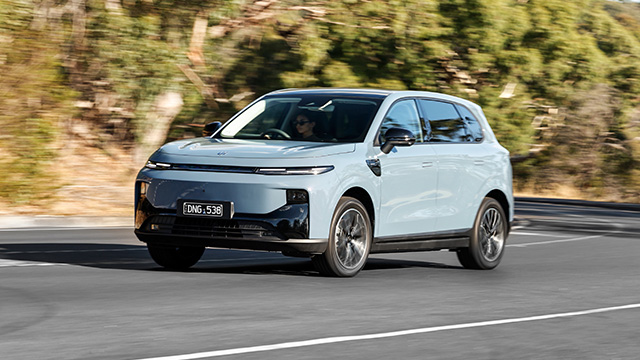
Zeekr led the charge with 5825 sales in the first half of 2026, representing a nearly 1300 per cent increase on its 2025 figure of 450.
Not far behind was Omoda Jaecoo, which went from just 690 sales in January-June 2025 to 8808 for the same period in 2026.
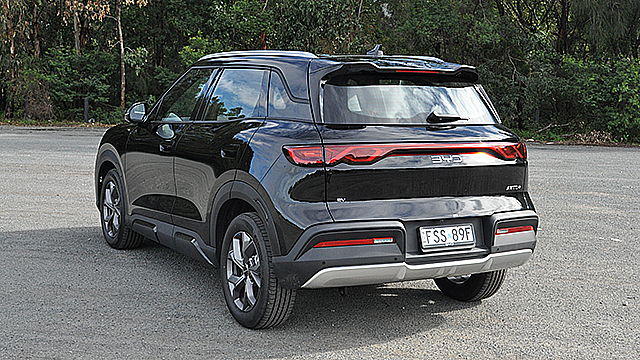
BYD, Deepal, Geely and Leapmotor all recorded sales growth well in excess of 100 per cent year-on-year for the January-June period.
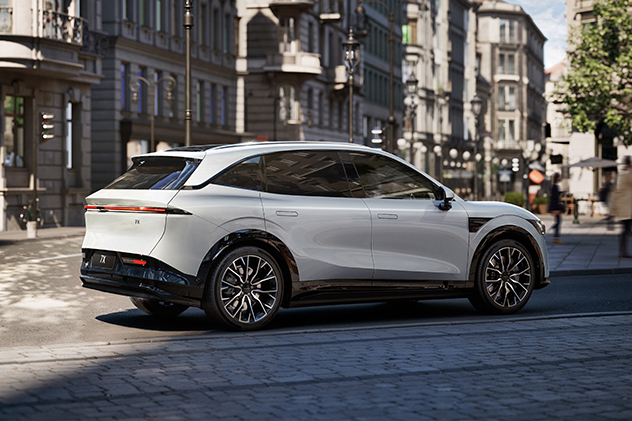
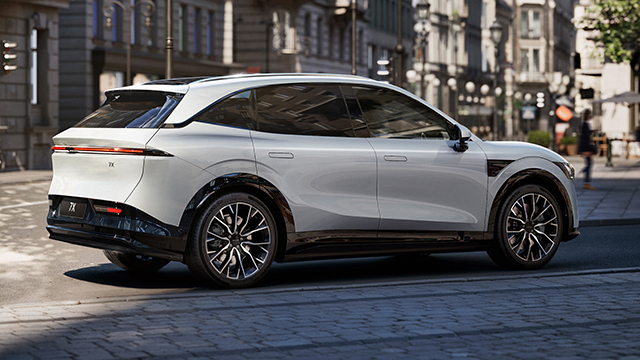
The Zeeker 7X chalked up more than 5500 sales in the first half of 2026.
Fuel prices and economy drive change
The VFACTS figures confirm a seismic shift in the Australian car market during H1 2026, with value-focused Chinese manufacturers putting pressure on traditional heavyweights and fuel price volatility lifting interest in electric vehicles.
For the first time in Australian automotive history an EV topped monthly sales charts, too, with the Tesla Model Y outselling the long-dominant Toyota HiLux and Ford Ranger in May and June of 2026.
Perhaps the most telling statistic is country of manufacture, with China (175,151) for the first time overtaking Japan (144,430) as Australia’s most prolific car supplier in 2026.
The trend towards Chinese dominance is not limited to Australia, with Toyota’s global vice chairman, Koji Sato, calling for Japanese automakers to collaborate on standardised vehicle parts to counter the rapid global expansion of Chinese rivals.
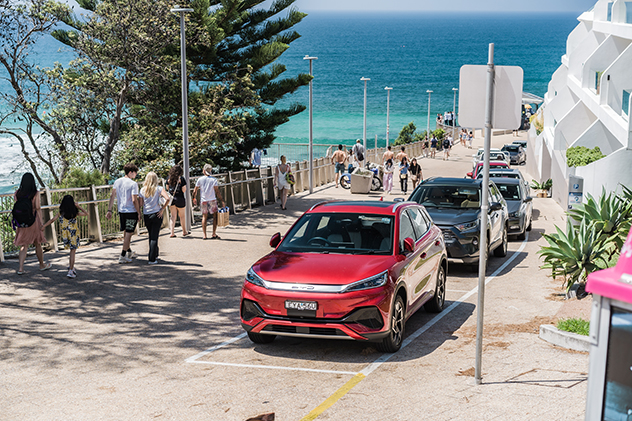
BYD outsold Ford for the first time in H1 2026.
It’s not quite panic stations for Toyota, however, as it was still by far the biggest-selling marque in Australia for the first half of 2026.
It claimed 15.7 per cent of all sales during that period – a substantial drop on 2025’s 19.9 per cent, but still streets ahead of BYD (8.6 per cent) and Ford (seven per cent).
Kia and Hyundai were among the few established mainstream brands to record positive sales growth, with 2.7 and 1.6 per cent respectively.
Bestselling marques Jan-June 2026
1. Toyota - 95,141
2. BYD - 52,335
3. Ford - 42,296
4. Kia - 41,846
5. Mazda - 40,502
6. Hyundai - 39,590
7. GWM - 30,359
8. Chery - 24,964
9. Mitsubishi - 24,802
10. Tesla - 23,588
SUVs continue to rule the roost
The Aussie love-affair with SUVs continues unabated, jumping from 365,205 sales in the first half of 2025 to 382,932 for the same period in 2026.
Although interest in passenger cars (sedans and hatchbacks) declined, the downward trend appears to have tapered off compared to recent years, with just a 4.7 per cent fall year-on-year and rental car companies actually buying more (up 35.1 per cent).
Light commercial vehicles, which includes utes and vans, saw a 9.3 per cent slump in popularity, driven largely by the private (-19.4 per cent) and government (-18.5 per cent) sectors. Business purchases remained relatively steady, seeing a -2.5 per cent fall.
Petrol and diesel drop off as electric surges
Australians were already moving towards hybrid vehicles in greater numbers, and the conflict over the Strait of Hormuz has only hastened this trend.
With global oil prices pushing petrol and diesel above $2 per litre, many Australian consumers began considering hybrids and EVs seriously for the first time.
This is reflected in the VFACTS figures, which show an 84.7 per cent increase in EV sales, an 82.6 per cent jump in plug-in hybrid (PHEV) sales, and a 6.8 per cent rise in other hybrid vehicles year-on-year for H1 2026.
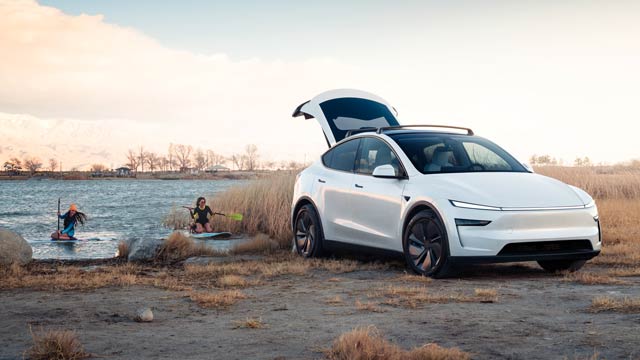
Most EV sales have been SUVs, such as the Tesla Model Y.
Meanwhile, diesel-powered vehicle sales dropped 12 per cent, and petrol ICE vehicles slumped by 23.6 per cent.
It’s worth noting VFACTS does not record Tesla or Polestar data, so the EV figure would be even higher with Tesla’s 20,396 sales for the first half of 2026 factored in.
Electric SUVs are the main EV sales driver, up from just 23,456 in 2025 to 63,166 in 2026 – a 170 per cent increase.
Although EVs remain only a tiny fraction of the light commercial market, they did see a healthy 185.5 per cent growth from 296 vehicles in 2025 to 845 in 2026.
Old favourites hanging in there
While geopolitical unrest and Chinese manufacturing have reshaped the Australian car market, a look at the top-selling models for H1 2026 shows several familiar faces.
The Ford Ranger and Toyota Hilux have long duked it out for the mantel of Australia’s most popular vehicle and they are still front runners in total sales.
They remain a nose in front of the Tesla Model Y, which is by far Australia’s biggest-selling electric vehicle.
Other long-time favourites – the Toyota RAV4, Hyundai Kona, Isuzu D-Max and Hyundai Tucson – continue to hold their own against Chinese upstarts such as the Chery Tiggo 4 and BYD Sealion 7.
Bestselling models Jan-June 2026
1. Ford Ranger - 26,314
2. Toyota HiLux - 22,607
3. Tesla Model Y - 20,396
4. Toyota RAV4 - 15,551
5. Chery Tiggo 4 - 13,638
6. Hyundai Kona - 13,132
7. Isuzu D-Max - 12,908
8. BYD Sealion 7 - 12,516
9. GWM Haval Jolion - 11,480
10. Hyundai Tucson - 11,236