Best electric SUVs to buy in Australia

Mid-sized SUVs are one of the most popular segments in today’s auto market, and as electric cars in Australia gain traction, which mid-size electric SUV to buy is a common question. We break down what’s out there and what to look out for in best value electric cars to make the decision easier for you. Read Open Road’s independent and trusted electric car reviews here.
Today’s electric mid-sized SUVs start from just above $40,000 and there are a few new updates to note. The new BYD Atto 3 Evo jumps up $2000 over the old Atto 3, and sitting in the $50,000 to $60,000 bracket for entry-level variants are the Tesla Model Y Long and refreshed XPeng G6, Toyota bZ4X and Zeekr 7X models.
Choice is wide in this competitive segment – there are more than two dozen models out there. Top models in this price range include:
- Tesla Model Y starting from $58,900
- BYD Sealion 7 starting from $54,990
- Geely EX5 starting from $40,990
- Zeekr 7X starting from $57,990
- Kia EV5 starting from $56,770
- BYD Atto 3 Evo starting from $41,990
- Tesla Model Y L starting from $74,900
- Toyota bZ4X starting from $55,990
- XPeng G6 starting from $51,800
- GAC Aion V starting from $42,590
Not sure where to start?
Not sure where to start?
Tesla Model Y (from 466km WLTP)

The Tesla Model Y remains the benchmark against which many electric SUVs are measured in Australia, and for good reason. Having just topped June new car sales for the second month running as the financial year closes, and for the first half of 2026, it combines strong driving range, excellent charging access and clever packaging in a body style that suits families, commuters and long-distance drivers alike.
The latest Tesla Model Y builds on the formula that made it Australia’s best-known electric SUV: a minimalist cabin, strong performance, and over-the-air software updates. Inside, the Model Y is spacious and pared back, with most major functions controlled through the central touchscreen. This design might not suit everyone, but it does give the car a clean, uncluttered feel, and the software-orientated interface allows Tesla to keep improving features over time.
For Australian buyers, the Model Y’s biggest strength is its maturity. It is not the newest electric SUV on the market, nor always the cheapest, but it remains one of the easiest EVs to live with thanks to its efficiency, charging ecosystem, storage space, and proven popularity.
BYD Sealion 7 (from 482km WLTP)
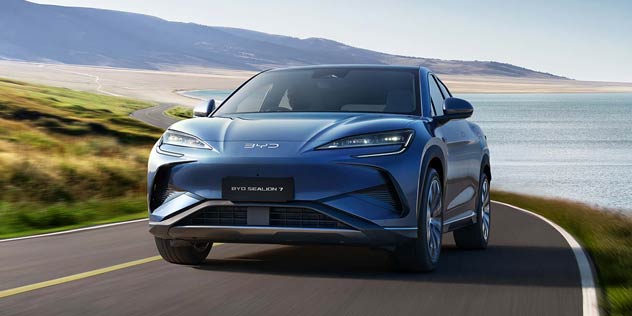
The BYD Sealion 7 has arrived in Australia at exactly the right time, stepping into the fast-growing electric SUV market with sharp pricing, a generous equipment list, and the kind of showroom presence that gives established players plenty to think about.
Sitting above the Atto 3, the Sealion 7 is BYD's top-selling model and givesa more premium, family-friendly electric SUV with a sleeker profile and stronger performance credentials. It is the sort of car likely to appeal to buyers who want the running-cost benefits of an EV, but still want the space, comfort and road presence of a larger SUV.
The cabin leans heavily into BYD’s tech-rich formula, with a large central screen, plenty of standard features, and a modern, clean layout. Depending on the variant, buyers can choose between rear-wheel drive efficiency or dual-motor all-wheel drive performance.
For Australian families, the Sealion 7’s appeal is straightforward: it offers usable range, strong value and a bigger footprint than the Atto 3, without pushing into luxury SUV money. It also gives BYD a serious rival to the Tesla Model Y, Kia EV5, Geely EX5 and Volkswagen ID.4.
Geely EX5 (from 430km WLTP)
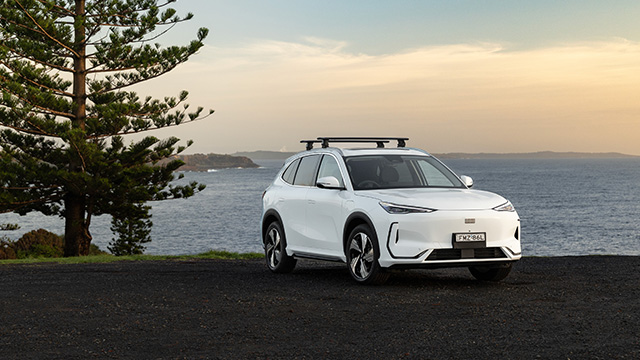
The Geely EX5 is one of the more interesting arrivals in Australia’s electric SUV market, bringing a value-focused pitch from Geely, one of China’s largest car groups and owner of more familiar marque Volvo. It lands in the same broad space as the BYD Atto 3, Kia EV5 and Deepal S07, and uses the same EV-only platform as premium stablemate to Volvo’s EX range, but with equipment and pricing that makes it hard to ignore.
For Australian buyers, the EX5’s appeal starts with its size and practicality. It is a medium electric SUV with enough room for family duties, a comfortable cabin and a relatively conventional design that should help it appeal beyond early adopters. It does not look or feel too experimental, which may be a strength for buyers moving out of a petrol or hybrid SUV for the first time.
The EX5 also benefits from Geely’s broader EV experience, with the company sitting behind brands including Volvo, Polestar and Zeekr. That gives the car some useful engineering credibility, even though the Geely badge itself may still be building awareness locally.
Against rivals, the EX5’s pitch is simple: give buyers a lot of electric SUV for the money. It may not have the badge recognition of Tesla or Kia, but its price, range and features make it one of the stronger value plays in the segment.
Zeekr 7X (from 480km WLTP)

The updated 2027 Zeekr 7X arrives with more power, faster acceleration and extra equipment, increasing $3000 from its original $54,990 starting price. It’s now priced from $57,900 before on-road costs for the RWD, with the Long Range RWD from $63,900 and the Performance AWD from $72,900. That gives buyers three distinct versions of the same roomy electric SUV – an entry model with a 75kWh LFP battery and two 100kWh NCM variants.
The Long Range RWD is the range leader, with a claimed 627km WLTP between charges. The RWD is rated for up to 482km, while the Performance AWD delivers up to 544km and a claimed 0-100km/h time of 3.7 seconds. All three now make 25kW more power than before. The 800-volt system supports DC charging of up to 450kW, with a claimed 10-80 per cent charge in as little as 11 minutes, provided the charger and conditions allow it.
There are useful upgrades inside, too. Every grade gets a 16-inch central touchscreen, rear privacy glass, and a built-in dashcam. The Long Range RWD adds Nappa leather, a refrigerator, ventilated and massage front seats, and an augmented-reality head-up display. The Performance AWD adds air suspension and a 66-litre front boot. Cargo space remains 539 litres, expanding to 1978 litres with the rear seats folded.
The 7X’s appeal is the breadth of the range: buyers can choose value, longer range or high performance without moving into luxury-brand pricing. Its generous equipment and rapid-charging claims make it a strong contender against the Tesla Model Y, BYD Sealion 7 and Kia EV5. The top charging rate is an impressive headline, but it depends on access to a suitably powerful charger; for most buyers, the Long Range RWD’s 627km range and lower price than the Performance AWD may be the more compelling combination.
Kia EV5 (from 400km WLTP)

The Kia EV5 is a strong choice for Australian families because it brings Kia’s familiar ownership proposition into a more affordable and practical EV package. It sits below the larger EV9, but keeps the blocky, modern design language that has helped Kia’s electric range stand out from the sleeker Tesla vehicles. Read about Kia EV5 going up against the Tesla Model Y.
Unlike some newer entrants, Kia already has a strong dealer network and a well-established reputation in Australia. That gives the EV5 an advantage with buyers who want the benefits of an electric SUV without feeling like they are taking a punt on an unfamiliar brand.
The EV5 is pitched squarely at family use, with a roomy cabin, useful technology and the sort of upright SUV shape that makes daily life easier. Depending on variant, buyers can choose between standard-range and long-range batteries, while higher grades add extra comfort and convenience features.
Its real strength is balance. The EV5 is not trying to be the most radical EV on sale, nor the cheapest. Instead, it offers a sensible pathway into electric driving for households that already understand Kia’s strengths: value, warranty, practicality, and broad appeal. That makes it one of the strongest mainstream electric SUV contenders in Australia.
BYD Atto 3 Evo (from 420km WLTP)
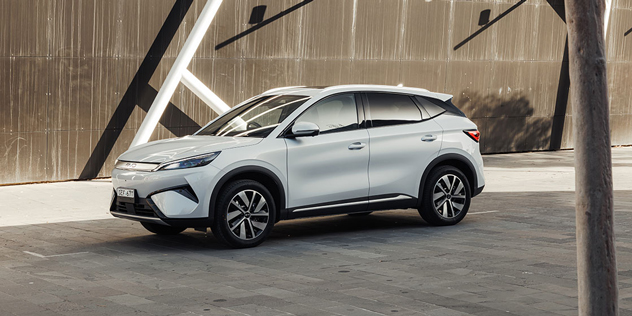
While categorically a small SUV, the Atto 3 Evo deserves a mention as it is a substantial update to one of Australia’s best-known electric SUVs, with sharper styling, a more restrained cabin and a wider gap between its two grades. The Dynamic starts at $41,990 before on-road costs and keeps front-wheel drive, a 60.48kWh LFP battery and a claimed 420km WLTP range. It is the more affordable everyday option, but its 110kW maximum DC charging rate and 7kW AC charging are modest beside newer rivals.
The $46,990 Premium takes a different approach. It switches to rear-wheel drive, adds a larger 74.88kWh battery and lifts range to 510km WLTP. Its 220kW DC charging capability gives the Premium a much stronger case for longer trips, while the 490-litre boot and 101-litre front boot make better use of the rear-drive layout. It also brings more power, reaching 100km/h in a claimed 5.5 seconds.
Inside, BYD has kept some of the Atto 3’s quirky character, including its guitar-string door pockets, but toned down the cabin design. A column-mounted gear selector frees up console space, while the larger touchscreen and 50-watt wireless phone charger bring the tech up to date.
The Premium is the more complete electric SUV, but that $5000 step-up buys more than extra equipment: it brings a bigger battery, faster charging and a different drivetrain. The Dynamic keeps the entry price lower, though buyers focused on range and road-trip flexibility may find the Premium’s stronger specification worth the difference.
Tesla Model Y L (681km WLTP)
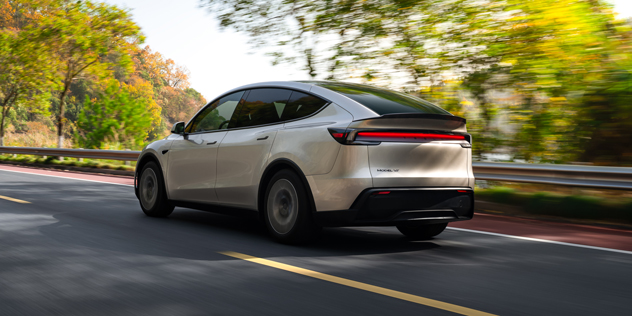
The Model Y L stretches Tesla’s familiar mid-size SUV into a six-seat family car. It adds a longer wheelbase and a third row, with two individual seats in the second row and two more in the back. That layout makes it a more useful option for families who regularly carry five or six people or want easier access to the third row than a bench seat allows.
The extra seats – plus more range – come at a price: the Model Y L costs $6000 more than the five-seat Long Range AWD. It’s available in one all-wheel-drive grade, priced from $74,900 before on-road costs. Its 681km WLTP range is longer than the five-seat Model Y Long Range AWD’s, and the L retains Tesla’s minimalist cabin, central touchscreen and access to the Supercharger network. Its V2L function also lets the car power external devices.
The Model Y L is also a niche choice for households that need six seats often enough to justify the larger, more expensive version. Buyers who rarely use a third row may find the regular Model Y a better-value fit.
Toyota bZ4X (from 591km WLTP)
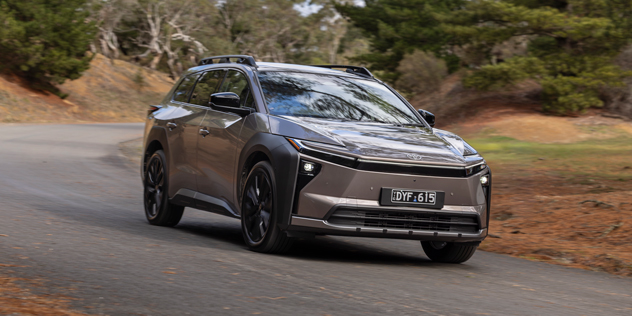
Toyota’s first mainstream electric SUV, the Toyota bZ4X, has a stronger case after a 2026 update brought a larger battery, more power and a longer claimed range – and better sales figures suggest the update is paying off. The front-wheel-drive version is rated for up to 591km WLTP, while the all-wheel-drive model offers up to 517km. The range starts at $55,990 before on-road costs for the 2WD, with the AWD priced at $67,990.
The bZ4X’s strongest point may be what it brings beyond the spec sheet: Toyota’s established dealer network and brand familiarity. That could make the switch to electric feel more straightforward for buyers who want an EV from a company they already know. The 2WD’s range is also competitive with more expensive electric SUVs, while the AWD gives buyers extra traction and power.
There are trade-offs. The front-drive model is the one to choose for maximum range, while the AWD costs considerably more and has a shorter claimed range. Toyota has also added the bZ4X Touring for buyers who need more luggage space, though that larger version sits at the top of the range.
XPeng G6 (from 480km WLTP)
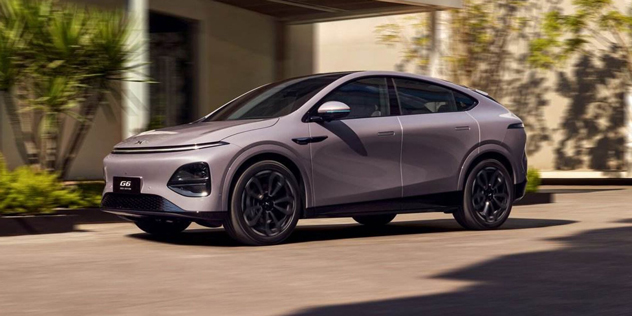
The XPeng G6 is a technology-focused mid-size SUV with a spacious cabin, 571-litre boot and a large central touchscreen. The updated range starts at $51,800 before on-road costs for the rear-wheel-drive Standard Range, rated for up to 480km WLTP on 18-inch wheels. The Long Range version lifts that to 525km, while the dual-motor AWD Performance model offers 510km and brisk acceleration.
Ultra-fast charging is one of the G6’s strongest selling points. XPeng quotes peak DC rates of up to 382kW for the Standard Range and 451kW for the Long Range and Performance grades, with a claimed 10-80 per cent charge in 12 minutes. Those peak figures depend on conditions and the rate of the charger it’s using, so they are best viewed as a technical ceiling rather than a promise for every charging stop.
The G6 gives buyers a lot of range, performance and cabin tech for the money, and undercuts some established rivals. Its weakness is the brand’s shorter track record in Australia. Buyers weighing it against a Tesla Model Y or Kia EV5 will want to factor in local service coverage and long-term support as well as the equipment list.
GAC Aion V (510km WLTP)
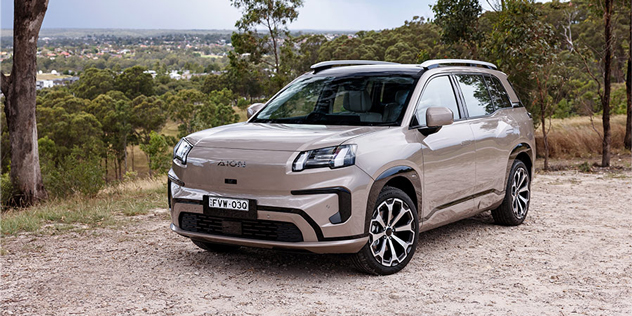
The Aion V is one of the more affordable ways into a mid-size electric SUV. Prices start at $42,590 before on-road costs, and its 75kWh LFP battery is paired with a front-wheel-drive motor producing 150kW and 210Nm. GAC claims a 510km WLTP range, while DC charging is rated up to a respectable 180kW. Vehicle-to-load capability is also standard.
Its value pitch is strong against better-known electric SUVs: the Aion V offers family-sized space, a long claimed range, and an eight-year vehicle warranty at a price that sits below many key rivals. GAC is an established carmaker in China, with decades of manufacturing experience and joint ventures with companies including Toyota and Honda. The Aion badge, however, is still new to Australian buyers.
That makes local support and confidence key questions. The NRMA review listed the Aion V as untested by ANCAP, so buyers should check the latest safety-rating status before deciding. It is a promising value option on paper, but its newer local presence means there is less Australian ownership history to draw on than with a Toyota, Kia or Tesla.
My NRMA Rewards member Ethan found his new electric SUV with Motor Scout - see how he did it here.