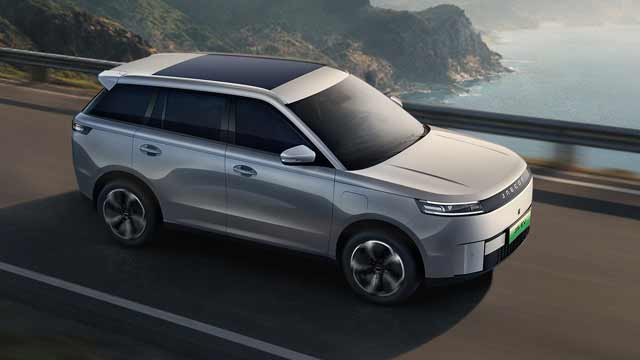
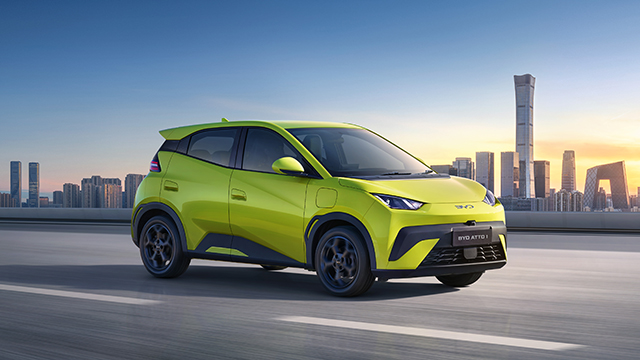
These new car brands arrived in Australia this year. How many more are coming?
If you've seen badges you're not familiar with on the road recently, you're not the only one: Australia’s new-car market is filling with unfamiliar brands at a rapid rate. Chinese auto manufacturers are leading the charge, bringing everything from value-priced electric SUVs to plug-in hybrid off-roaders and premium people movers.
Two of these newcomers you've no doubt already seen, with first deliveries already on Australian roads this year: Denza (BYD’s Chinese premium brand) and Forthing (owned by China’s Dongfeng Motor Group). Lepas has opened orders ahead of November deliveries, while GWM plans to relaunch its Wey brand before the end of the year. Six more marques have confirmed plans to arrive in 2027.
That makes eight launches due between now and the end of 2027. This count includes distinct sub-brands, and treats a brand as having arrived once its cars are being delivered to customers. It excludes brands that began selling here in 2025, such as Geely, GAC and Omoda Jaecoo.
The new car brands already here
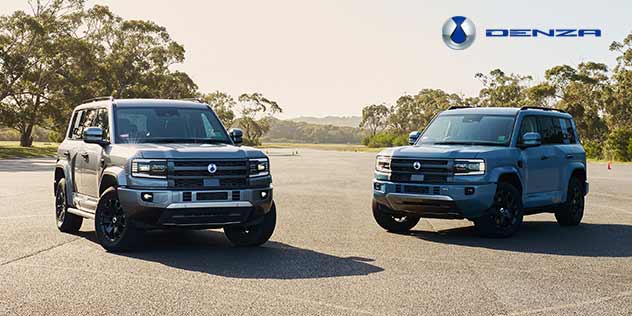
Denza is BYD’s bid for buyers who want more than the company’s mainstream EVs. Its local debut came in late 2025, before its first deliveries in January. BYD calls it a luxury marque, although “premium” may be the safer description in Australia: its first models are rugged plug-in hybrid SUVs, priced below $100,000 before on-road costs. The B5 starts at $74,990 and the larger B8 at $91,000. In China, Denza’s line-up stretches beyond SUVs to models such as the D9 people mover and Z9GT grand tourer. Its badge resembles an hourglass or flask open at the top of a circle.
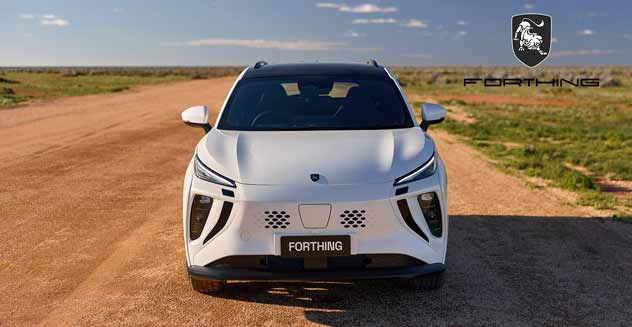
Forthing is not a start-up, even if the badge is new to most Australian buyers. Seen at Everything Electric 2026 it belongs to Dongfeng, one of China’s largest and longest-established carmakers, and the brand arrives with the Taikon 5 medium SUV. Buyers can choose a battery EV or range-extender hybrid, with drive-away prices starting at $38,990 and $36,990 respectively. Forthing also sells models such as the Friday electric SUV and a range of people movers overseas, giving it room to broaden its local line-up if the first model finds buyers. Forthing's logo is a Chinese lion in a shield shape.
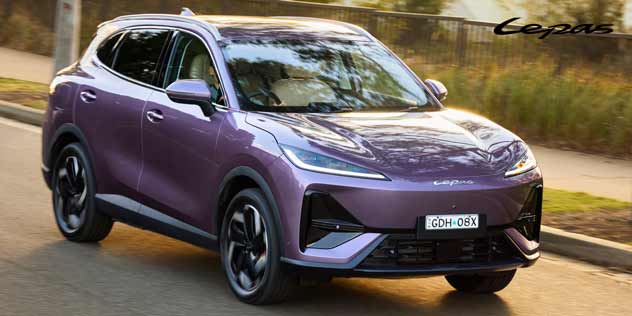
Lepas (pronounced Leh-pahs) is Chery’s new design-led, electrified export brand. A shortened portmanteau of the words leap and passion, its first Australian model is the L6 electric medium SUV, priced from $47,990 before on-road costs, with first deliveries due in November. Chery has outlined a broader local family of SUVs, including the L6 plug-in hybrid, L4, L8 and L9, though product timing has shifted and some models remain a way off. Lepas is already expanding overseas, but in Australia it will have to explain how it differs from the Chery and Omoda Jaecoo badges sharing the same parent company. The Lepas badge is a text-based logo in a script font.
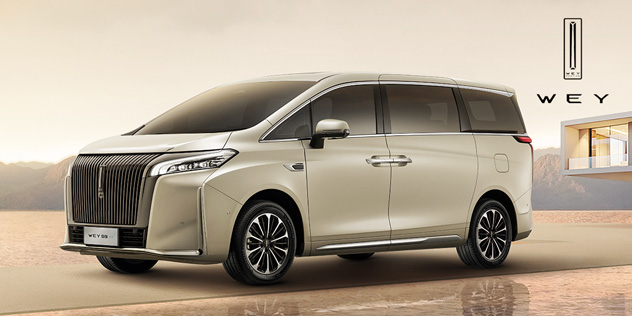
Wey is GWM's premium sub-brand, set to arrive in Australia ten years after its name was first registered locally. GWM plans to enter the market before the end of 2026, with the G9 seven-seat people mover expected to lead. The model has been approved locally in plug-in hybrid and conventional hybrid forms, but pricing is still under wraps. GWM has also flagged further SUVs for 2027, giving Wey a chance to sit above the company’s Haval and Tank offerings and challenge the growing field of Chinese premium marques. The Wey logo is a tall bevel shape in a column with the word WEY beneath.
— Bridie Schmidt
Six more brands confirmed for 2027
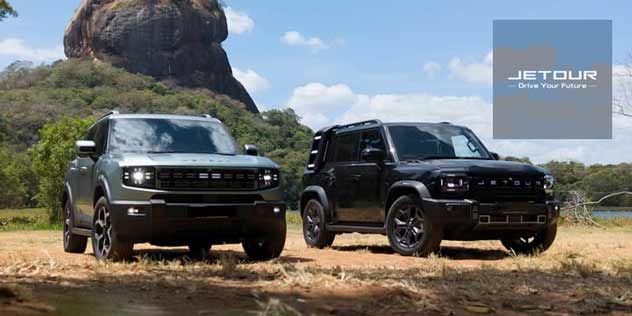
Jetour is Chery’s SUV-focused brand, with a more rugged flavour than the core Chery range. The T1 and T2 are expected to lead its Australian launch in the first quarter of 2027; local pricing has not been announced. Jetour is already a substantial player overseas: it reported more than 622,000 global sales in 2025, with the T-Series SUVs among its best-known models. While it doesn't have its own website yet, it has an Instagram presence showing a text based logo on an aqua background.
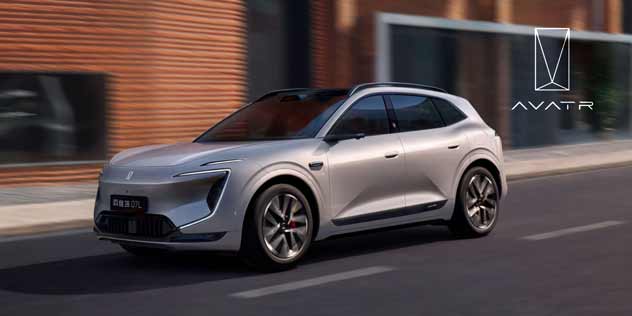
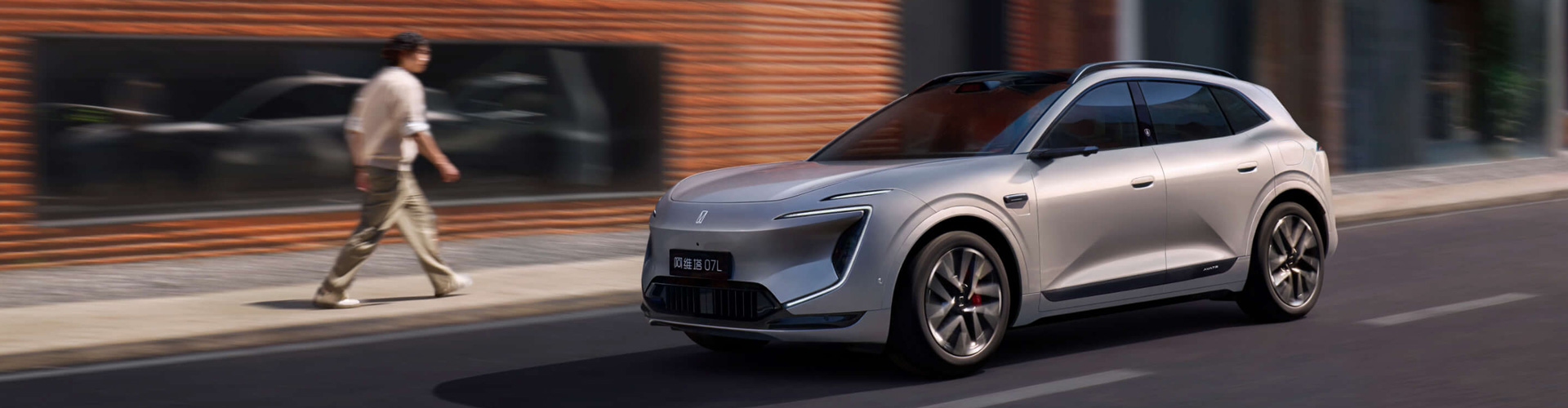
Avatr is a premium electric vehicle brand backed by major Chinese players: Changan is the carmaker, major battery maker CATL supplies the batteries and tech giant Huawei is its technology partner. Its first Australian model will be the 07L electric SUV, with deliveries targeted for the first half of 2027. Changan has also confirmed the 06T electric sports wagon for the second half of that year, giving Avatr a more distinctive launch line-up than another SUV-only arrival. Its global logo is a gem-like oblong above minimal text.
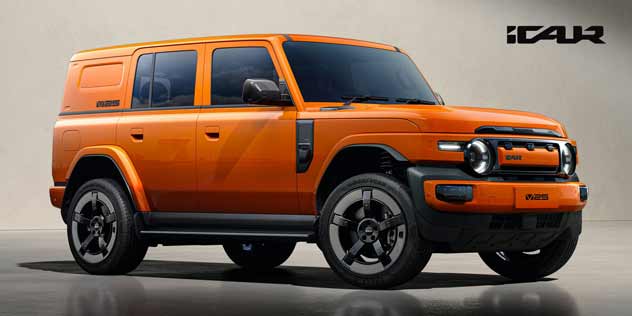
iCAUR is Chery’s boxy, adventure-styled electrified brand. The V25 is confirmed as its first Australian model in 2027, with battery-electric and range-extender versions offered overseas. A larger V27 is part of the international family, but iCAUR has not confirmed it for Australia. The brand is new internationally, so its first challenge will be building recognition in a segment already crowded with rugged-looking SUVs. It already has an Australian website, using a futuristic text-based logo.
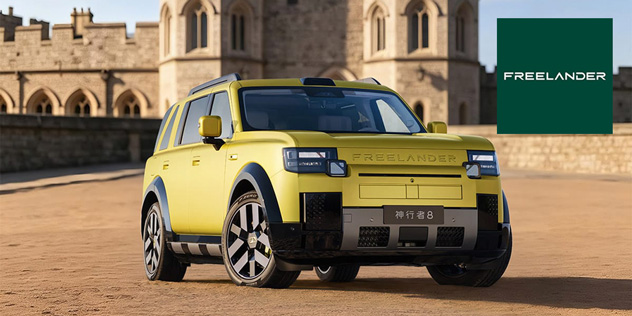
Freelander revives a familiar name as a new, standalone brand. The original Freelander was a Land Rover model; the new marque is a joint venture between JLR and Chery, with vehicles built in China. Its first Australian model will be the Freelander 8 large SUV in 2027. Overseas versions are planned with electrified powertrains, including a plug-in hybrid for export markets, but Australian pricing and final specifications are yet to be announced. It's Australian LinkedIn page shows a text-based logo on a heritage green background, evoking its traditional carmaker origins.
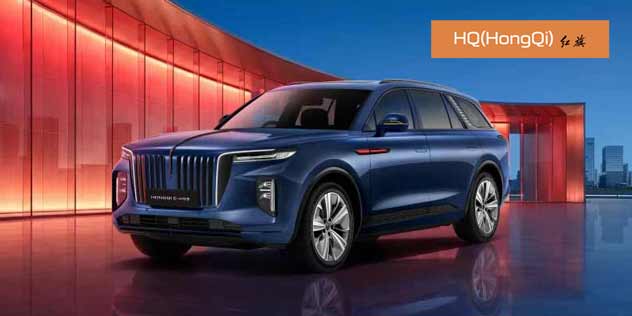
HQ (Hongqi, owned by China’s FAW Group) will bring one of China’s oldest car marques to Australia under a shortened badge. Founded in 1958, Hongqi has a long association with official state cars and is now using that history to underpin a move into export markets. Three electric SUVs are confirmed for Australia: the large E-HS9 SUV, plus the smaller EHS4 and EHS5. The brand plans to position them against premium European and electric rivals, with first customer deliveries expected from January 2027.
It already has an Australian-based website, but may still be developing its actual brand presence for Aussie roads: Its logo deviates significantly from its red and brown "tulip in a shield" shaped logo. Instead, its website shows a text-based HQ (HongQi) followed by script-like Chinese pinyin (characters). Presumably eventually we will know it simply as "HQ" (aitch-cue) but for now, it is also possibly "aitch-cue-hong-chi".
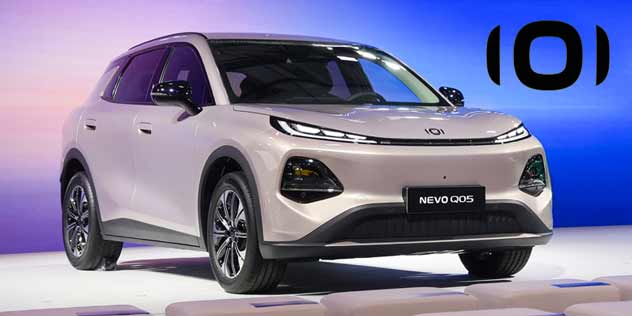
Nevo is Changan group’s mainstream electrified brand, sitting below Avatr. It launched in China in 2023 and has quickly become a significant part of Changan’s range: the company says one million customers have chosen Nevo in three years, and the Q05 small SUV has recently been a top seller in its Chinese segment. Nevo is confirmed for Australia in 2027, but no local model is locked in. The Q05 hybrid and Q06 electric SUV are possibilities, rather than confirmed arrivals. It doesn't appear to have a standalone presence here yet, but Changan has registered a text-based logo trademark most recently, while its global "circle in brackets" logo was registered here in 2023 (both are displayed separately in our image).
And what about Nio?
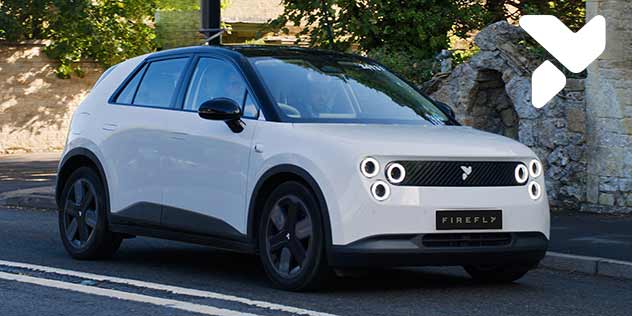
Nio is a major Chinese electric-car start-up known for premium EVs and battery-swap technology. Its small-car offshoot, Firefly, is the model most likely to make a first Australian appearance: the hatch has been approved for local sale and spotted testing here. But Nio has not named an Australian distributor or confirmed a launch date, so Firefly belongs on the watchlist rather than in the confirmed 2027 count. Overseas, it is pitched as a more upmarket small EV, not simply a budget runabout. Firefly's logo looks like a very stylised, rounded flying creature.
More choice, more questions
The newcomers are widening the choice of EVs, plug-in hybrids and range-extender hybrids, while pushing established brands to respond on price, equipment and electrification. A key selling point for many is the high level of technology they offer, bringing luxury features for less to more Australians. They are also competing with one another: several parent companies now sell multiple badges that could chase similar buyers.
For buyers, the appeal is more choice and, in some cases, plenty of technology for the money. The less visible part of the decision is how well each brand will support its cars after the sale. Dealer coverage, parts supply, servicing and warranty support matter just as much as the spec sheet once the novelty wears off.
The market is already shifting. Six recently introduced or relaunched brands — Geely, Omoda Jaecoo, Zeekr, Leapmotor, Deepal and Foton — recorded 54,465 deliveries in the first nine months of 2026, up from 6,773 in the same period of 2025. A wider group of newer Chinese marques recorded 62,460 deliveries, or 6.52 per cent of the market. Those figures don’t reveal which legacy brands lost customers to the newcomers, but they do show how quickly the sales mix is changing.
With eight new car brand launches planned or approaching by the end of 2027, Nio’s Firefly is still the biggest question mark. Plus, the real test will be whether these brands can turn a fresh badge and a sharp price into lasting buyer confidence.