The ultimate NSW ghost town road trip from Sydney

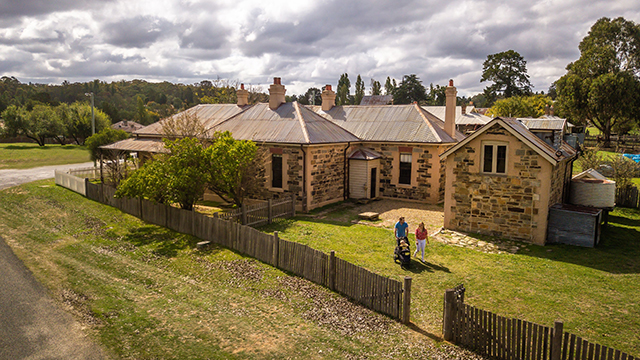
NSW’s forgotten towns are finding new life as road-trip destinations, drawing travellers with their abandoned buildings, gold rush history and beautifully preserved reminders of colonial Australia.
From Hartley in the Blue Mountains to the industrial ruins of Glen Davis and the former gold rush powerhouse of Hill End, these historic settlements are no longer just fading relics of the past — they’re becoming some of regional NSW’s most fascinating places to explore.
And at Hartley, the echoes of colonial life still linger inside the old courthouse.
“Does the prisoner have any questions for the witness? No? The court finds the prisoner, John Cullen, guilty as charged. You are sentenced to receive twenty-five lashes and then to be returned to your master.”
Poor John Cullen’s fate was sealed in the 1840s and recorded inside the courthouse at Hartley — once a bustling settlement along the Western Road and now one of the most accessible ghost towns for Sydneysiders.
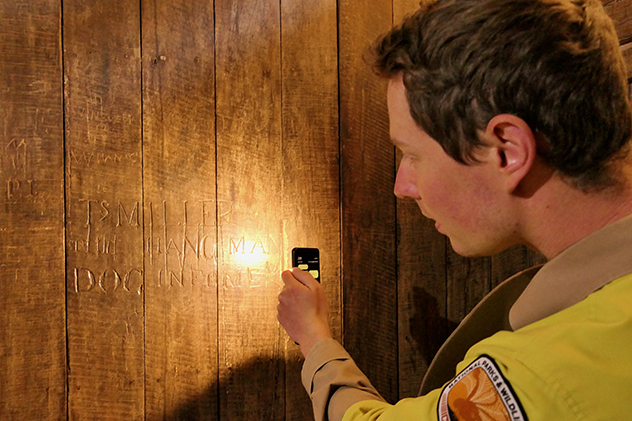
Illuminating a prisoner's inscription on the wall at Hartley Courthouse.
While some of these towns are more abandoned than others, examples like Hartley are scattered across the state. They are places where ambition collided with reality and often lost. Villages that once brimmed with hope, industry and optimistic gold prospectors now stand as quiet memorials to the endeavours of Australia’s colonial settlers.
Hartley: NSW’s closest ghost town to Sydney
Take the Finn family, who journeyed from Ireland to settle in Hartley, establishing the post office, general store and Farmers Inn during the 1840s. Back then, the town thrived as a stopover for travellers and a hub of small-scale farming. It even boasted St Bernard’s Catholic Church, built in 1848 and a rare gem of early sandstone architecture, complete with a white sandstone altar. For settlers facing the harsh colonial grind, the church offered more than faith – it was a beacon of resilience.
But Hartley’s fortunes waned when the railway bypassed it entirely, opting for a direct route between Mount Victoria and Lithgow. Progress, as it often does, chose efficiency over sentiment, leaving the town to wither into obscurity as a reminder of ambitions that, literally, ran out of steam.
It’s a spooky place to stay, but oddly comfortable. The NSW National Parks and Wildlife Service (NPWS) offers accommodation at St Bernard’s Presbytery, a charming, rustic cottage that’s steeped in history. It sleeps up to four guests and comes with a fully equipped kitchen (which you’ll need as there are no restaurants nearby), a Chesterfield lounge set, gas fire, relaxing spa bath, and a four-poster bed.
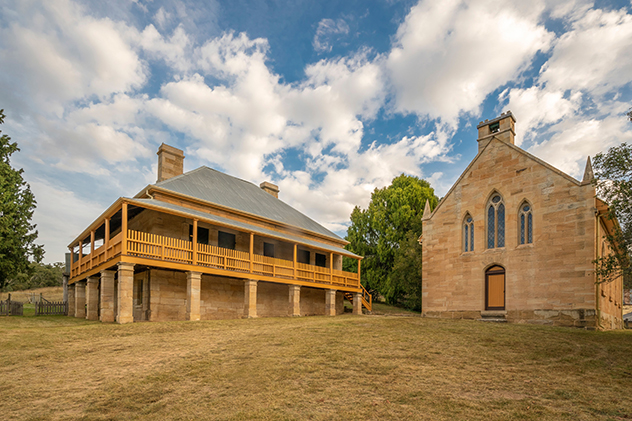
St Bernard's Presbytery now serves as unique accommodation.
Recent revitalisation efforts have added some life to Hartley, including a new café in the old post office, and a vintage garage brimming with the treasures of Gold Rush Antiques. Its star attraction is a 19th-century brougham carriage, which is parked out front as if awaiting its next passenger.
Over the road is Ron Fitzpatrick’s Talisman Gallery. His famed metalwork, ranging from intricate jewellery to bold sculptures, blends craftsmanship with the soul of the landscape. Wandering Ron’s gallery is to step into an alchemist’s den, where raw materials are transformed and Ron’s dry wit and passion are as magnetic as his art.
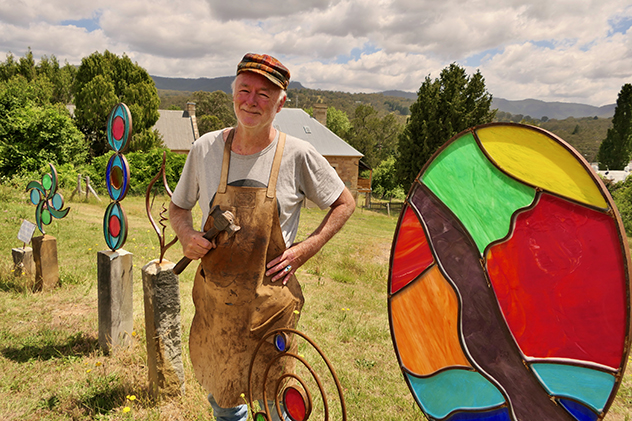
Ron Fitzpatrick shows off his artistic creations.
Later, at the information centre, we meet Luke Donnelly, Hartley Historic Site’s project officer, for a tour of the town (great value at $8). Luke’s deep knowledge and enthusiasm bring the settlement’s layered history to life. From the convict-built courthouse to the former Shamrock Inn, each structure tells a story of colonial spirit and endurance. Luke’s tour underscores the careful preservation efforts behind Hartley’s current charm, ensuring it remains a destination for history buffs and Sydney road-trippers alike.
There are two great walks here, too. One is a charming riverside walk and the other is up to a granite outcrop known as Kew-Y-Ahn to the local Aboriginal community. This 310-million-year-old formation carries deep cultural significance and likely served as an Indigenous meeting place overlooking the Hartley Valley.
Glen Davis: the abandoned industrial town reclaimed by nature
The following day, we drive to Capertee Valley and the village of Glen Davis. Framed by towering sandstone escarpments, it feels like a spaghetti western movie set waiting for its own showdown. At its heart lie the haunting ruins of Australia’s largest shale oil refinery, originally built in the 1930s and expanded during World War II to extract crude oil from kerosene shale deposits.
We’re eager to explore but find the ruins locked away on private property. Adaptability is key in our line of work, so we make some calls from a public phonebooth draped with spider webs and end up dragging Graeme Pike away from his lunch. The affable retired banker is now the local guide and he brings the refinery’s history to life on his walking tours.
Today, nature has overrun the rusted machinery and crumbling walls, evoking an eerie beauty that has been used as filming locations for Home and Away and SAS Australia. With its palisade of rusting gas canisters for fence posts, it feels like a Khrushchev-era Soviet rocket site. Its own downfall came in 1952 when the refinery’s bold ambition couldn’t overcome inefficiencies, leaving the town to fade into obscurity.
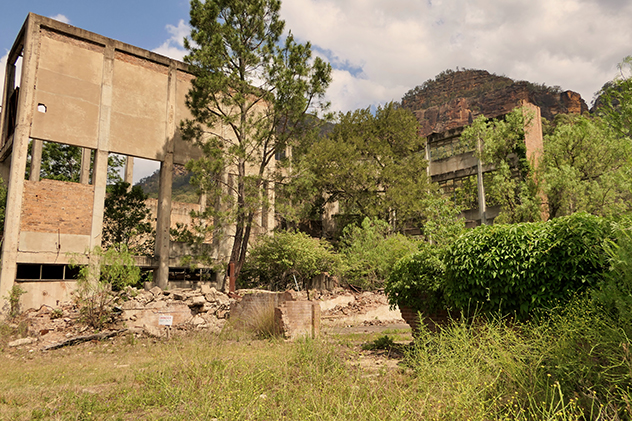
Nature has reclaimed the Glen Davis shale oil refinery.
Hill End: the gold rush town frozen in time
About 140km north of Hartley lies Hill End, once one of the richest gold towns in Australia. During its peak in the early 1870s, more than 7000 people lived here, making it one of inland NSW’s largest communities.
Back then, the thud of stamp batteries echoed through the valley as quartz was crushed in a relentless hunt for gold. Dust coated the miners’ tongues and throats and mingled with the acrid stench of long-drop privies. The town hummed with laughter, deals struck in the street, and miners swapping tales over cold beers at the Royal Hotel (now owned by the NPWS). Clarke Street was a whirlwind of energy, lined with bustling lodgings and shopfronts in service to the wealth pouring in from the goldfields.
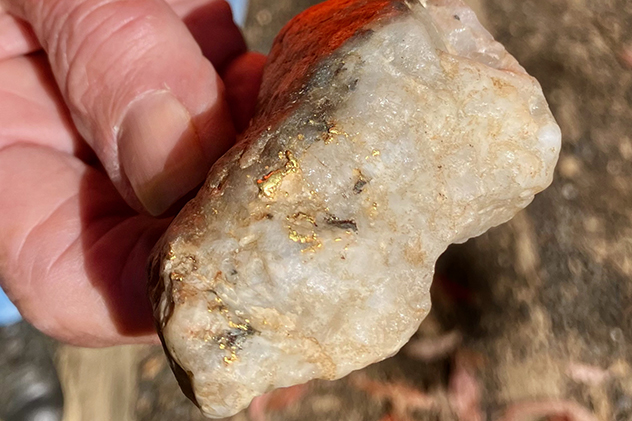
Gold (shown here in a quartz nugget) made Hill End a boom town.
But, like all economic bubbles, the gold rush boom was fleeting. Hill End’s golden age lasted just three years, peaking in 1872 with the discovery of the Holtermann Nugget, the largest gold specimen ever found. By the mid-1870s, the deposits became harder to extract. Hill End’s population dwindled as broke prospectors moved on and Clarke Street’s businesses shuttered.
A few minutes north is Tambaroora, Hill End’s quieter sibling, now little more than a scattering of ruins and memories on the former goldfield. Its fortunes also deteriorated as the gold ran dry and we can almost hear the strikes of pickaxes and miners’ shouts hidden in the rustle of the wind through gumtrees.
Back in Hill End, we check into the Post Office Residence. While St Bernard’s Presbytery offered five-star 19th-century elegance, this is its three-star cousin: cosy, functional and steeped in the town’s rich past, which we soon explore with the help of the Lorraine Purcell, a local historian and convenor of the Hill End and Tambaroora Gathering Group (heatgg.org.au).
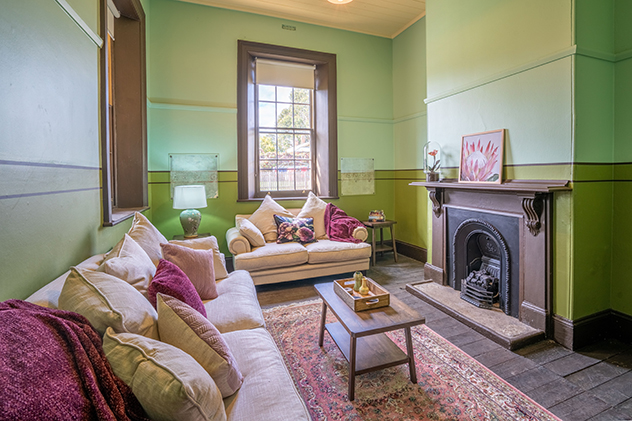
The cosy interior of the Post Office accommodation in Hill End.
Lorraine guides us through Hill End’s storied streets, weaving tales of gold rush glory and the quieter years that followed. Her anecdotes bring the town’s heyday to life, painting vivid images of miners and other residents. The NPWS has also done a great job signposting the various businesses along Hill End’s streets. A highlight is the Golden Gully, a scarred yet beautiful reminder of the gold rush frenzy. This deeply eroded landscape, created by years of mining and sluicing, feels otherworldly and is a maze of crumbling clay walls and narrow pathways.
The next day at Golden Hill Mine, we meet guides Kerri and Clare, to learn the secrets of this underground labyrinth. However, my dreams of playing intrepid explorer are short-lived. As I step into the mine’s cramped and dark tunnel, a wave of claustrophobia grips me, and I bolt back to daylight as though chased by wasps. My wife is unfazed and explores further to take some photographs.
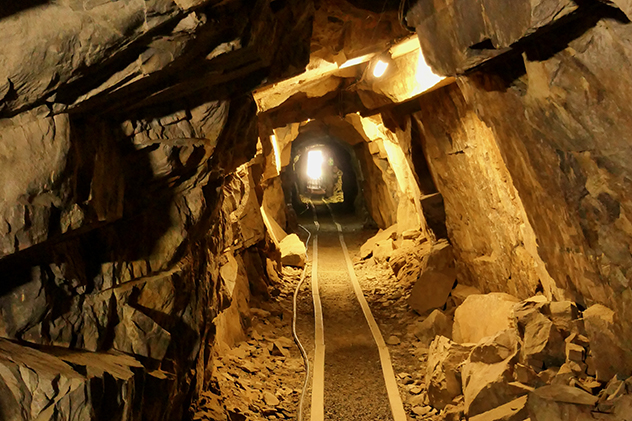
An exciting (or is it claustrophobic?) descent into Golden Hill Mine.
The artists who helped revive Hill End
Hill End experienced another unexpected revival during the 1940s and ’50s, when artists began flocking to the town seeking inspiration in its stark beauty and melancholy atmosphere.
Donald Friend, Russell Drysdale and Margaret Olley were among those drawn to Hill End’s haunting landscapes, helping cement its reputation as an artists’ colony. Their legacy still lingers throughout the town today.
The local heritage centre, opposite the Royal Hotel, explores this lesser-known chapter of Hill End’s story and helps explain why artists continue to gravitate towards the region.
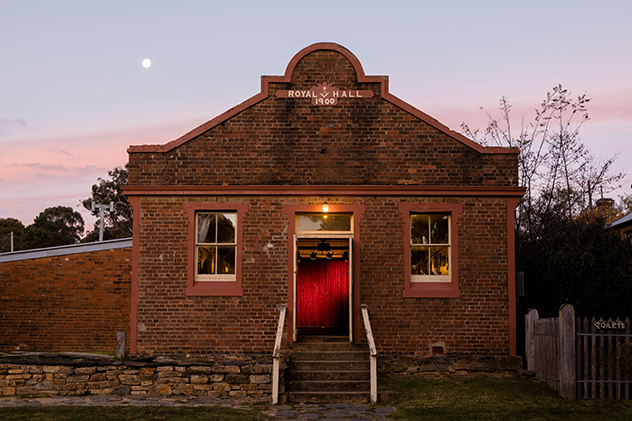
The show goes on at the Royal Hall in Hill End.
While these towns may now be shadows of their former selves, preservation and reinvention are ensuring their stories continue to resonate with modern travellers.
From Hartley’s quiet dignity to Glen Davis’s industrial grandeur and Hill End’s golden echoes, these forgotten NSW settlements offer far more than abandoned buildings. They are living reminders of colonial ambition, resilience and the inevitability of change — and today they make for one of the state’s most compelling road trips.
Looking for a longer trip?
If you want to drive a little further for your ghost town road trip, Kiandra (north-west of Cooma) is well worth the drive. Once a thriving gold rush town established in 1859, its boom was brief, peaking within a year before miners moved on to more promising fields. But Kiandra left a unique legacy as the birthplace of skiing in Australia, miners taking up the pastime in the 1860s.
Today, little remains of the original town, with bushfires and the harsh alpine climate taking their toll. However, visitors can still enjoy beautiful walking trails and the remnants of its mining history. It’s in a remote spot, but the NRMA’s Jindabyne holiday park isn’t a bad place to set off on your journey.