
How to set up your caravan
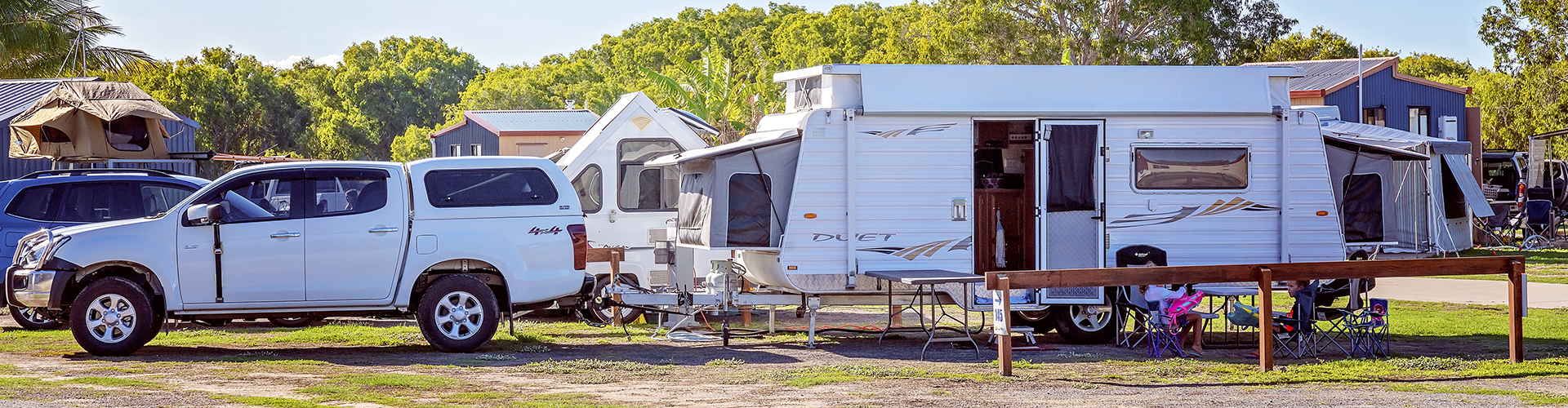
If you hire a cabin at a holiday park, it’s a simple matter of unlocking the door, dumping your bags, and setting off to spend an afternoon at the pool bar or games room. A powered caravan site costs much less per day than a cabin, but it does mean you have to set up everything on arrival.
If you’ve never been caravanning before, you might be curious to know what that setup process entails and how long it takes. In which case, you’ve found the right article.
Here’s a simple illustrated guide to what happens between arriving at your favourite NRMA holiday park and kicking back with a drink to watch the sunset.
1. Park your caravan
This isn’t a skill you want to attempt to learn in a busy (or even quiet) holiday park. Find a large, empty carpark somewhere and get to grips with reversing a caravan into a designated space before you try it in the real world – turning the wheel the right way can be extremely counter-intuitive at first.
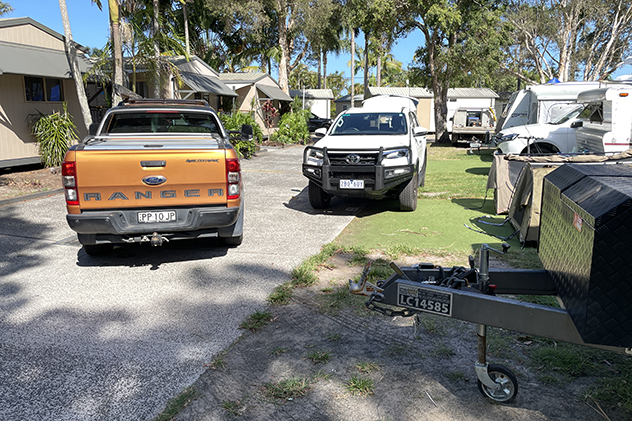
Once you’re confident, find your allocated space in the holiday park and take stock of your surroundings. These photos were taken at the NRMA Blue Dolphin Resort Yamba, which has quite densely packed spaces.
On arrival at lot 61, our experienced caravanning enthusiasts, Paul and Jo, found the sites either side occupied, and they didn’t have enough room to reverse their family-size, 21-foot-six-inch Leader Gold with extended drawbar into the allotted space.
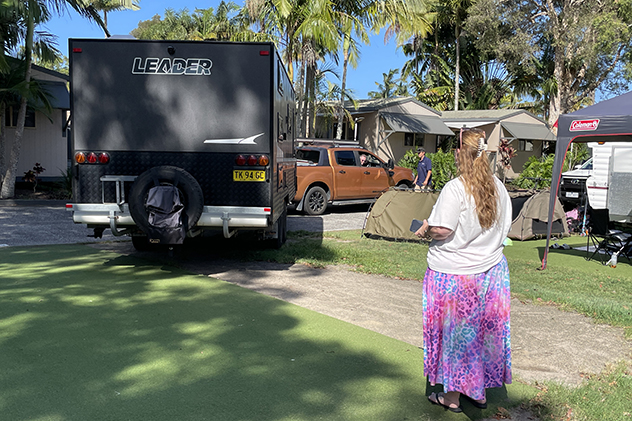
If cars, tents or other objects are preventing you from achieving the necessary approach angle, don’t be afraid to politely ask your new neighbours to move them. Caravanning is a fellowship and everyone experiences the same tribulations from time to time. If precision parking is required, NRMA park staff and other more experienced caravanners will usually be glad to help.
2. Disconnect the caravan
Once you’ve got the caravan in place, it’s time to separate it from the tow vehicle (in this case a Ford Ranger) so it becomes its own unit.
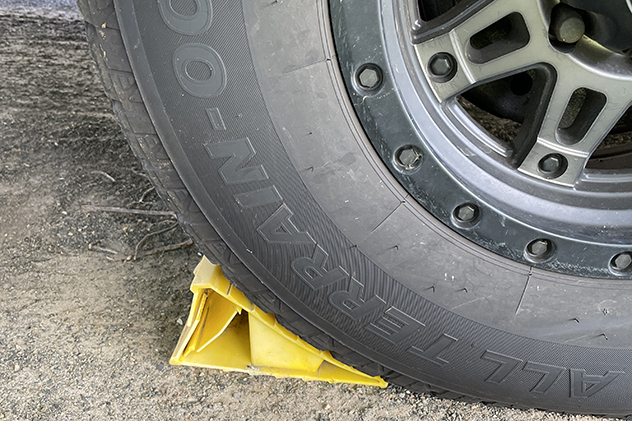
For safety, the first thing you want to do is chock the caravan’s wheels. Caravan parks are usually flat by design, but even a slight grade is enough to get a wheeled vehicle rolling unexpectedly. If the ground is particularly uneven, you may need a levelling ramp, which is a pad with a gradient shaped into it.
Next, disconnect the 12-pin plug on the wiring harness (which makes the caravan’s brake lights and indicators operate) and remove the safety chains (which are failsafe in case the normal connection between the tow vehicle and caravan is lost for some reason).
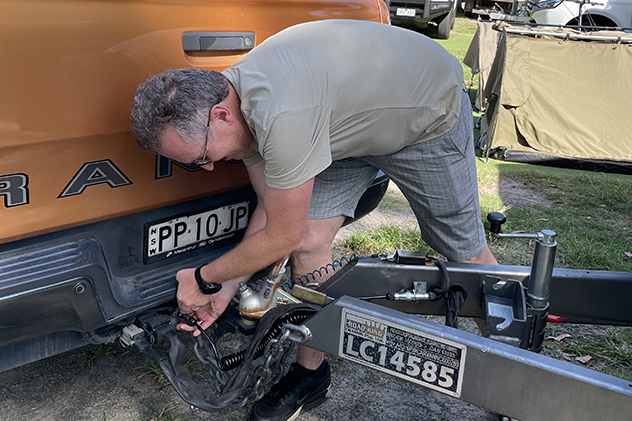
Undo the trailer coupling body, then unlock and wind up the jockey wheel so the drawbar lifts and the coupling body’s socket is clear of the tow ball. Lock the jockey wheel in place again.
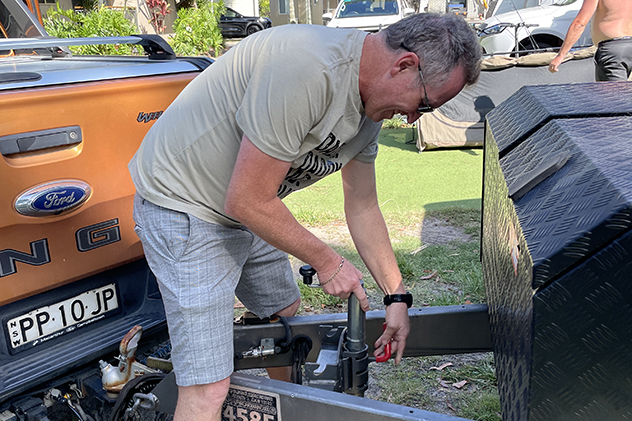
You’re now ready to drive the tow vehicle clear and park it – where will depend on available space and the rules at your chosen caravan park. Don’t forget to remove or fold in the extended mirrors on your tow vehicle.
3. Stabilise the caravan
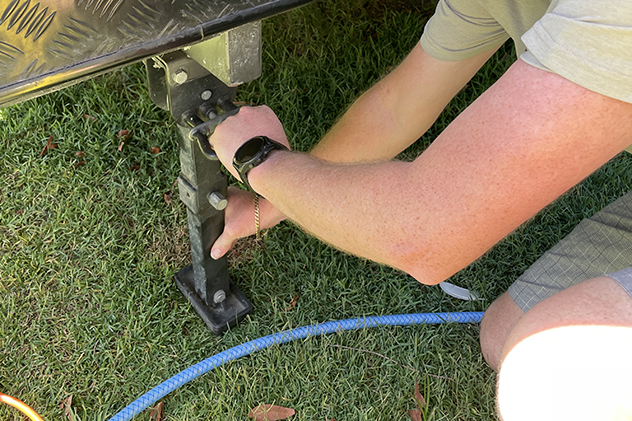
Now you can extend the caravan’s legs to create a stable dwelling – your home for the next couple of days or weeks.
Paul has installed a cross-level on the Leader Gold’s the drawbar to show if it’s sitting flat, but putting a round object such as a ball on the floor of the caravan will work just as well.
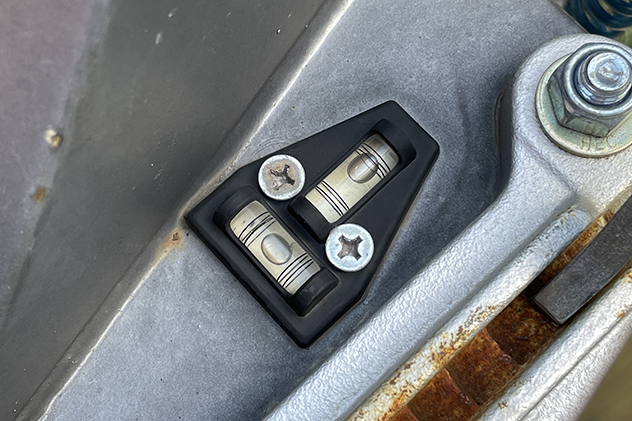
If it isn’t level you’ll need to adjust the leg lengths or, if a leg is already fully extended, prop it up with a pad.
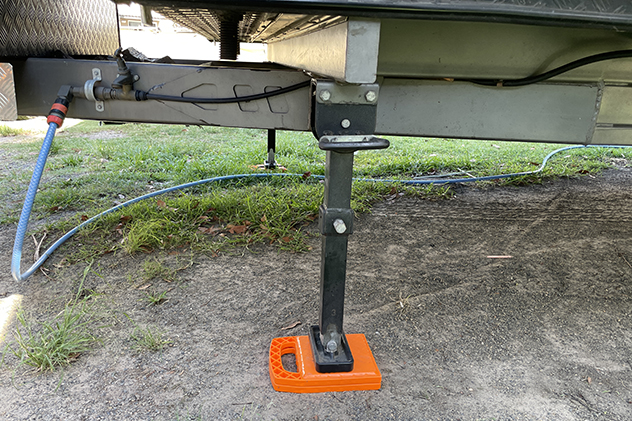
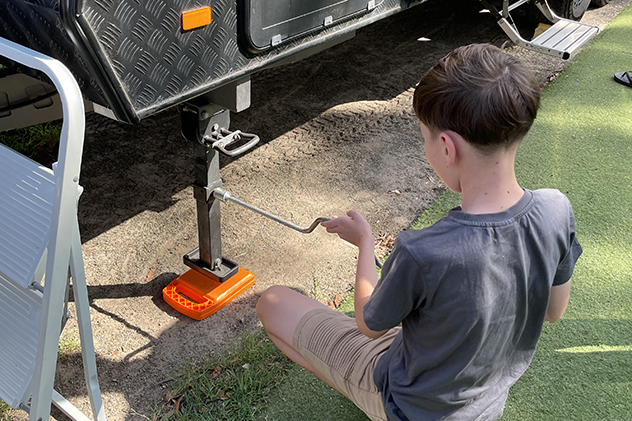
Once everything is in place and even, secure the legs with the tool supplied and make sure they’re tight – they’re taking quite a load, especially when the family is inside the caravan at night.
4. Set up the annex/awning
While an awning isn’t strictly necessary, it creates a sheltered yard for your caravan and in effect doubles your living area.
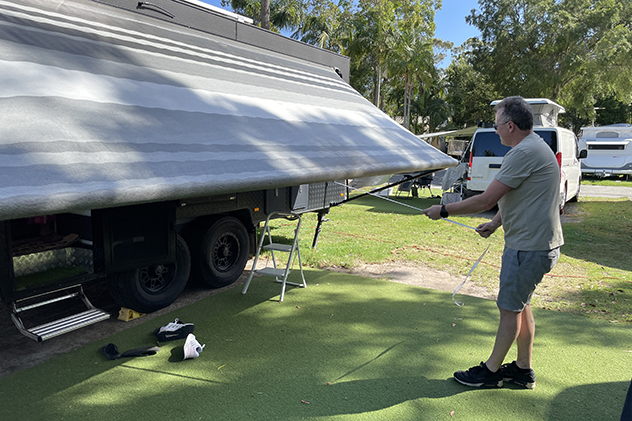
The Leader Gold’s awning is a retractable unit, much like the luggage cover on an SUV, so it’s a simple matter of disconnecting it from the housing and pulling it out. Once it’s extended, secure the struts in place.
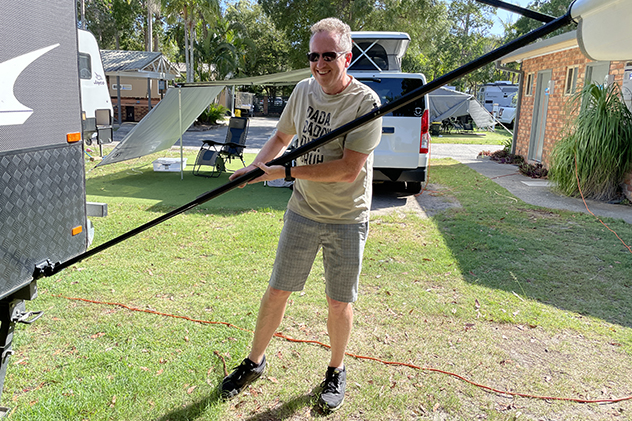
Paul also uses an anti-flap kit, so the awning doesn’t billow and flap around in the wind (which can be especially annoying at night when everyone’s trying to sleep). Using a step ladder to secure the struts and anti-flap kit is highly recommended (or even essential) for a larger van.
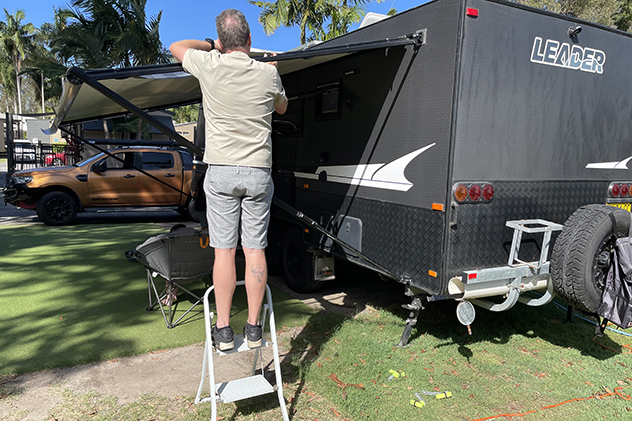
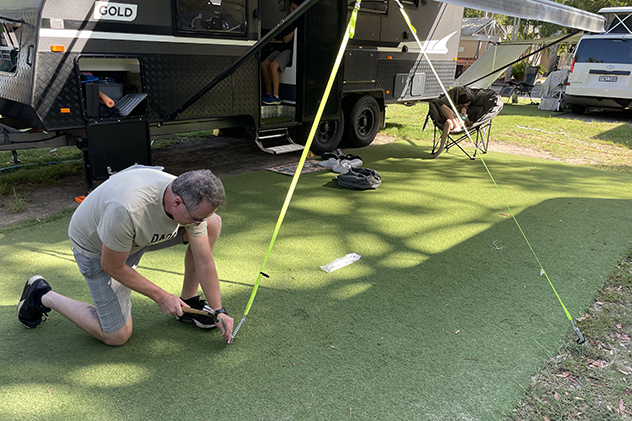
Once the awning is in place, attach straps and peg them into the ground for added assurance that it won’t take flight in a strong breeze.
5. Connect the utilities
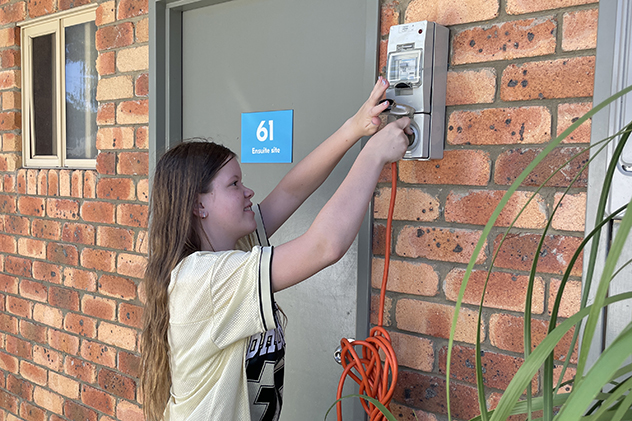
If you’re at a powered site, plug your caravan into the mains. It may be some distance to the power point, so make sure you have a long 15-amp cable. And check that the van has power before proceeding!
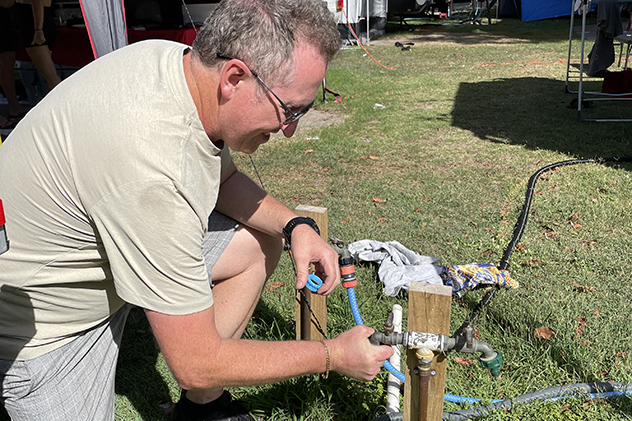
Connect a hose to the site’s tap so the caravan has running water. Make sure you have as many tap fittings as possible – different parks have different connections and you never know what you’re going to find.
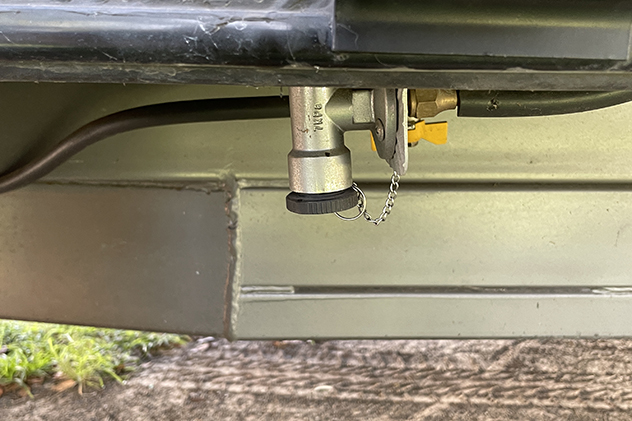
Turn on your gas bottle. The Leader Gold has a regulator so you can just turn on the gas when you arrive and then turn it off when you leave. It also has an outlet underneath the van where you can connect up a gas barbecue if you like.
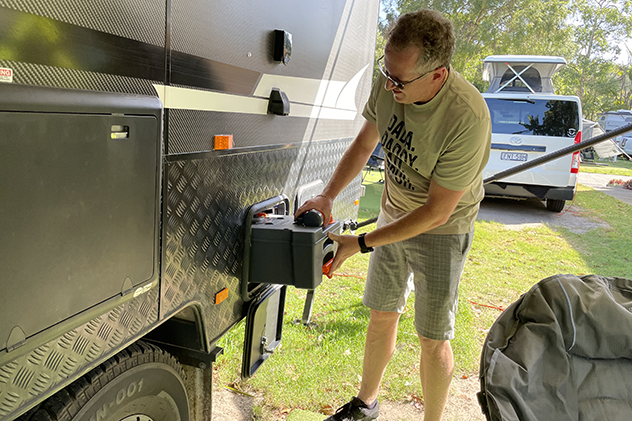
Last but not least, load in the toilet cassette. If you have an ensuite site you don’t need to use the caravan’s toilet, but putting in the cassette will save you having to going out in the cold if nature calls at night.
6. Air out the van
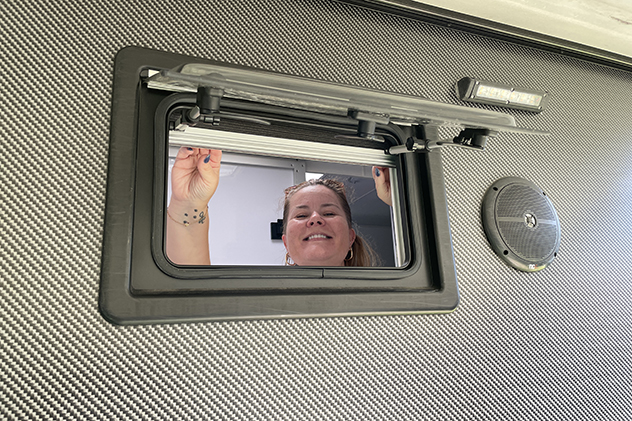
In summer a caravan gets hot and stuffy very quickly, so open all windows and vents on arrival and then, if your van has one, switch on the air conditioner. This is also a good time to let loose anything that needs to be stowed during travel, such as a television.
Jo and Paul’s setup tips
- Take your time and do everything properly. This will eliminate errors and frustration and reduce setup time in the long run.
- Setup gets easier. What takes an hour on your first attempt will soon be down to half that once you’ve had some practice.
- If you have kids, don’t be afraid to assign them age-appropriate tasks to help speed up the process, such as plugging into power, connecting to water, unfolding camp chairs.
- Setup for a pop-top camper is considerably more involved and time consuming than it is for a premium caravan like the Leader Gold featured here.


